Gwarancja zwrotu pieniędzy · 100 dni Darmowa dostawa na cały świat
449 587dzieła sztuki 30 613artyści 4 660muzea 32język
Catalogue entry

untitled (3175)

Painting.

Fig. 1. Edward Hopper, untitled (3175). Shown as the reproduction you are specifying: , .

§ 1Catalogue data

§ 2Abstract

Opis obiektu

Edward Hopper’s evocative monochrome painting captures a poignant moment of solitude amidst urban stillness—a man and woman absorbed in contemplation at a table bathed in muted yellow light, emblematic of American realism during the mid-century.

Biografia artysty

Edward Hopper – mistrz amerykańskiego realizmu, maluje samotność i miejski krajobraz z wyczarującym światłem i cieniem. Odkryj jego ikoniczne obrazy, takie jak Nighthawks!

§ 3Commentary

A Study in Stillness: The Quietude of Edward Hopper

In the vast landscape of American Realism, few works capture the profound weight of silence as effectively as Edward Hopper’s “untitled (3175)”. At first glance, the scene presents a deceptively simple tableau: two figures seated at a table within an interior space, caught in a moment of shared yet solitary occupation. However, beneath this unremarkable surface lies a psychological depth that has captivated collectors and art enthusiasts for decades. Hopper, a master of distilling complex human emotions into visual form, invites the viewer into a room where time seems to have decelerated, allowing the subtle tension of the unspoken to take center stage.

The composition is a masterclass in geometric precision and atmospheric restraint. Utilizing the hallmarks of American Regionalism, Hopper eschews grand, dramatic gestures in favor of meticulously observed details that evoke a sense of introspection. The architecture of the room—defined by straight lines and structured furniture—creates an environment of stillness and detachment. While the painting is rendered in a striking monochrome palette, the interplay of light and shadow provides a structural complexity that guides the eye across the canvas, from the focused gaze of the figures to the distant, shadowed corners of the room.

The Language of Shadow and Symbolism

Technically, “untitled (3175)” demonstrates Hopper’s incredible command over tonal gradation. Through the skillful application of hatching and cross-hatching, the artist builds a rich texture that lends weight to the figures and depth to the surrounding surfaces. This meticulous technique allows for a subtle play of light that breathes life into the inanimate objects within the frame. Every element in the room serves a symbolic purpose; even the presence of a piano in the background acts as a poignant juxtaposition, representing human aspiration and creativity set against the backdrop of quiet isolation.

The emotional resonance of the piece is deeply tied to its historical context. Painted in 1948, during the burgeoning anxieties of the post-World War II era, the work reflects the pervasive sense of alienation felt within an increasingly impersonal urban landscape. The figures, though physically close, are separated by an invisible psychological barrier. As they gaze down at a piece of paper—a symbol of communication—their lack of direct engagement underscores the profound loneliness that can exist even in moments of proximity. It is this haunting duality of connection and disconnection that makes the painting such a powerful subject for contemplation.

An Essential Piece for the Discerning Collector

For interior designers and art collectors, a high-quality reproduction of this Hopper masterpiece offers more than just aesthetic beauty; it provides an emotional anchor for a space. The stark, evocative nature of the monochrome tones allows it to integrate seamlessly into modern, minimalist, or classic sophisticated interiors. It serves as a conversation piece that invites guests to pause and reflect, much like the figures within the painting themselves.

Whether you are seeking to add a sense of contemplative calm to a study or looking for a profound statement piece for a gallery wall, “untitled (3175)” stands as a testament to the enduring power of psychological realism. Owning a reproduction of this work means preserving a fragment of mid-century American soul, bringing the masterful light and shadow of Edward Hopper into the contemporary home.

Pytania i odpowiedzi

Jaką harmonię kolorów prezentuje „untitled (3175)” – Edward Hopper?

Kolory dzieła „untitled (3175)” – Edward Hopper wykazują Balanced Harmony harmonię. Harmonia ta opisuje wzajemne relacje między barwami.

Jaki układ ma „untitled (3175)” – Edward Hopper?

„untitled (3175)” – Edward Hopper to kompozycja w formacie Landscape. Warto sprawdzić proporcje przed wyborem rozmiaru wydruku.

Czy kolory w "untitled (3175)" są intensywne czy stonowane?

„untitled (3175)” – Edward Hopper charakteryzuje się Vivid intensywnością kolorów.
§ 4The artist

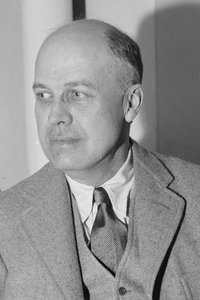
Edward Hopper

Edward Hopper

1931 - 1967, Stany Zjednoczone

Quick facts about Edward Hopper

  • Artistic Movement Or Style: Realizm
  • Artists Or Movements Influenced By This Artist: ['Ross']
  • Artists Who Influenced This Artist:
    • Chase
    • Henri
  • Date Of Birth: 22 lipca 1882
  • Date Of Death: 15 maja 1967
  • Full Name: Edward Hopper
  • Nationality: Amerykański
  • Notable Artworks:
    • Nighthawks
    • Dom samotny
    • Gas
  • Place Of Birth: Nyack, USA

Biografia artysty

A Solitude Observed: The Life and Art of Edward Hopper

Edward Hopper, a name inextricably linked to the quietude and subtle melancholy that permeated 20th-century American life, wasn’t simply a painter of scenes; he was a poet of light and shadow, a chronicler of modern isolation. Born in Nyack, New York, in 1882, to middle-class parents of Dutch ancestry, Hopper's early years provided a stable upbringing that nurtured his artistic inclinations. From childhood sketches meticulously dated and signed, it became evident that keen observation and an innate talent for drawing were central to his being. Though initially encouraged towards commercial illustration – a pragmatic suggestion from his parents – Hopper’s ambitions leaned toward fine art, leading him to the New York School of Art where he studied under William Merritt Chase and Robert Henri. These formative years instilled not only technical skill but also an appreciation for realism and a commitment to depicting the world as he saw it—unvarnished and honest. The writings of Ralph Waldo Emerson resonated deeply with Hopper, reinforcing his sense of individualism and acute observation – qualities that would become hallmarks of his artistic vision. Early travels to Paris exposed him to Impressionism, yet Hopper quickly diverged from its fleeting brushstrokes, forging a path uniquely his own.

Finding His Voice: Realism and the American Scene

Hopper’s artistic journey wasn't immediate or effortless. He grappled with discovering his distinctive voice, experimenting with various styles before settling into the realism that would define his career. This wasn’t mere replication of reality; it was a distillation of its essence, stripping away extraneous detail to reveal underlying emotional truths. His paintings began to focus on everyday scenes – houses, diners, offices, hotel rooms – imbued with a sense of stillness and often, loneliness. He possessed an extraordinary ability to capture the psychological states of his subjects, hinting at narratives without explicitly stating them. The precise rendering of light and shadow became crucial, not merely as descriptive elements but as emotional cues, creating atmospheres that were both captivating and unsettling. House by the Railroad (1925), an early masterpiece, exemplifies this approach—a seemingly simple composition radiating a profound sense of isolation and mystery. Hopper’s printmaking, often overlooked, ran parallel to his painting, sharing similar themes and stylistic qualities, demonstrating his mastery across mediums. He wasn't interested in grand historical narratives or allegorical symbolism; he focused on the mundane, elevating it through careful observation and emotional resonance.

Iconic Visions: Nighthawks and Beyond

While Hopper’s career unfolded gradually, certain works catapulted him to widespread recognition. Nighthawks (1942), arguably his most famous painting, became an instant icon of American culture. The late-night diner scene, bathed in stark fluorescent light, perfectly encapsulates the alienation and anonymity of modern urban life. The figures within are lost in their own thoughts, disconnected from one another despite their proximity—a poignant commentary on the human condition. Gas (1940), with its striking portrayal of a roadside gas station, showcases Hopper’s fascination with American landscapes and the burgeoning automobile culture. Other notable works like *Automat*, *Office in a Small City*, and *Summertime* each offer unique insights into the complexities of 20th-century American society. These paintings weren't merely depictions of places; they were explorations of mood, psychology, and the subtle dramas unfolding within ordinary settings. His wife, Josephine Nivison Hopper, played a vital role not only as his lifelong companion but also as a frequent model, contributing significantly to the characterization of his female figures.

Themes and Legacy: A Lasting Influence

Several recurring themes permeate Hopper’s oeuvre. Urban isolation is perhaps the most prominent—the sense of loneliness experienced by individuals even amidst crowds. He explored the American landscape, both rural and urban, often emphasizing its starkness and emptiness. His work delves into psychological realism, probing the inner lives of his subjects with a sensitivity that transcends mere representation. There’s also an undercurrent of nostalgia for a simpler past, juxtaposed with an acknowledgement of the complexities and anxieties of modern life. Hopper's influence on subsequent artists is undeniable. His unique style has inspired countless painters, including Pierre Sanford Ross, and continues to resonate with contemporary artists seeking to capture the essence of human experience. His paintings remain highly sought after by collectors and are exhibited in major museums worldwide, solidifying his place as a pivotal figure in American art history. More than just an artist, Edward Hopper was a visual philosopher, offering profound insights into the human condition through his masterful use of light, shadow, and composition.
  • His legacy lies not only in the beauty of his paintings but also in their enduring ability to provoke thought, evoke emotion, and remind us of the quiet solitude that often defines our lives.
  • Hopper’s work continues to captivate audiences because it speaks to universal themes of loneliness, isolation, and the search for meaning in a rapidly changing world.
  • His paintings have become iconic representations of American culture, often used to symbolize the anxieties and aspirations of the 20th century—and beyond.
  • Hopper’s aesthetic has profoundly influenced filmmakers (like Alfred Hitchcock) and writers, inspiring countless works that explore similar themes of alienation and psychological tension.
Edward Hopper's ability to capture the essence of modern American life with honesty, sensitivity, and a distinctive artistic vision ensures his place as one of the most important artists of the 20th century.

§ 5Comparanda

§ 6Questions

Najważniejsze informacje

  • Subject or theme: Urban solitude
  • Title: untitled (3175)
  • Notable elements or techniques: Precise observation; Atmospheric lighting
  • Medium: Oil on canvas
  • Artistic style: Minimalist

§ 7Cite this entry

AllPaintingsStore.com, “Edward Hopper, untitled (3175)”, https://allpaintingsstore.com/pl/art/edward-hopper-untitled-3175-9GEU8Y-en/ArtistReproduction/ (accessed 4 Październik 2026).

§ 8The reproduction

Ręcznie malowana reprodukcja olejowa

Ręcznie malowany obraz olejny na płótnie, wykonany na zamówienie przez naszych artystów w wybranym przez Ciebie wymiarze i oprawie. ( Przełącz na wydania drukowane Przejdź do wersji cyfrowej)

It is specified on the order sheet in the margin; the present state of that sheet reads as follows.

untitled (3175)

Technika reprodukcji

Wymiary reprodukcji

-

Wybitny mistrz artystyczny

Większa szczegółowość, finezja i dodatkowy czas na realizację

-

Opcje oprawy reprodukcji

-

-

W przypadku dzieł sztuki lub reprodukcji, których którykolwiek z boków przekracza 105 cm (około 41 cali), rama zostanie wysłana w formie zestawu do samodzielnego montażu. Metoda ta zapewnia bezpieczną dostawę i zapobiega uszkodzeniom podczas transportu.

Wymagany profesjonalny montaż – nie jest to produkt typu DIY.
Zestaw musi zostać złożony, a płótno naciągnięte przez doświadczonego profesjonalnego ramiarza, przy użyciu kleju do drewna (brak w zestawie), kleszczy do naciągania płótna oraz ścisków, które utrzymają krosna w równej pozycji podczas schnięcia kleju. Nieprawidłowy montaż lub nierównomierne napięcie płótna może trwale uszkodzić dzieło sztuki i nie podlega naszej gwarancji.

  • W zestawie znajdują się wszystkie listwy z litego drewna, precyzyjnie docięte do wymiarów.

  • Montaż odbywa się przy użyciu dołączonych wkrętów oraz kleju do drewna do łączenia narożników, którego zestaw nie zawiera i który musi zostać dostarczony przez ramiarza.

  • Wymagane są profesjonalne narzędzia, których nie ma w zestawie: kleszcze do naciągania płótna (napinacz) oraz zaciski, które pozwolą utrzymać listwy w równej pozycji podczas schnięcia kleju.

Ważne:
Do połączenia narożników niezbędny jest klej do drewna, listwy należy unieruchomić za pomocą ścisków do momentu całkowitego wyschnięcia kleju, a naciągnięcie płótna na złożoną ramę wymaga użycia kleszczy do naciągania płótna. Żaden z tych elementów nie jest dołączony do zestawu. Przed zamówieniem tego rozmiaru zalecamy konsultację z doświadczonym ramiarzem.

Etykieta obiektu

-

-

Lakier ochronny

Lakier z połyskiem (pogłębia kolory, chroni przed światłem i wilgocią)

-

Personalizacja dzieła

Przykłady możliwości personalizacji: zastąp twarz zdjęciem klienta; dodaj zwierzę domowe (np. zamień kota na psa); umieść ukrytą wiadomość w tle; zmień krajobraz lub elementy tła.

-

Ekspresowa

Dostawa na cały świat () w ciągu 3–4 tygodni zamiast standardowych 5 tygodni. (1 Listopad). Bez kompromisów w kwestii jakości.

-

Przesyłka ekspresowa

Dostawa na cały świat () w ciągu 5 tygodni. (8 Listopad).

W cenie

Cena całkowita

zł 1003

Included with every order

  • Bezpłatna ekspresowa wysyłka na cały świat
  • Wysokiej jakości płótno lniane
  • Pełne ubezpieczenie przesyłki
  • Gwarancja zwrotu należności celnych i podatków importowych
  • Gwarancja wiernego odwzorowania kolorów
  • 100-dniowa polityka zwrotów (tylko w przypadku wad)
  • Gwarancja 100% zwrotu pieniędzy
  • Zniżka przy zakupie wielu sztuk
Order sheet