

Painting.

§ 1Dane katalogowe


§ 2Abstrakcja
Opis obiektu
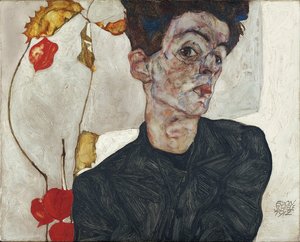
A haunting black and white exploration of human connection and existential dread, this Expressionist masterpiece by Egon Schiele captures raw vulnerability and invites you to experience his profound artistic vision.
 Rozwiń treść
Biografia artysty
Egon Schiele – ekspresjonista z Wiednia. Mocne portrety, psychologiczne tematy i unikalne linie. Odkryj jego dzieła! Reprodukcje dostępne na AllPaintingsStore.
§ 3Komentarz
A Haunting Encounter with Expressionist Rawness
To stand before Egon Schiele’s untitled (6645) is to enter a realm where the boundaries between the physical body and the psychological soul dissolve into a singular, breathless moment. This striking black and white composition serves as a profound testament to the anxieties of the early 20th century, capturing a scene that feels less like a captured moment and more like an unearthed memory. At its heart, the painting presents two figures seated upon the earth, locked in an embrace that is simultaneously intimate and fraught with an unspoken tension. Schiele, a master of the Austrian Expressionist movement, eschews the comfort of traditional beauty to instead offer a visual distillation of existential dread and human vulnerability.
The composition is masterfully orchestrated to direct the viewer’s gaze through a landscape of stark contrasts. While the central figures command our attention with their raw, naked presence, Schiele subtly anchors the scene with a solitary chair positioned in the upper left corner. This element introduces a sense of domesticity that feels strangely displaced, heightening the feeling of isolation within a minimal, almost void-like environment. The presence of other figures, partially obscured or receding into the background, adds layers of complexity to the narrative, suggesting a world that is watching, yet remains fundamentally disconnected from the central intimacy.
The Language of Line and Distorted Form
Schiele’s technique is nothing short of revolutionary, characterized by an expressive line that seems to vibrate with nervous energy. Eschewing the soft, blended transitions of his contemporaries, he utilizes bold, jagged contours to define the anatomy of his subjects. The bodies are often rendered with a deliberate distortion—elongated limbs and exaggerated musculature that amplify the emotional weight of the piece. This is not mere anatomical inaccuracy; it is a purposeful use of form to convey internal psychological states. The skin tones, even when interpreted through the monochrome lens, suggest a sickly pallor, hinting at the fragility of life and the pervasive presence of mortality that haunted Schoup’s personal history.
For the discerning collector or interior designer, this piece offers a sophisticated interplay of light and shadow. The absence of color forces the eye to focus on the structural integrity of the drawing and the dramatic tension created by the heavy blacks against the stark whites. This monochromatic palette lends the work a timeless, archival quality, making it an ideal centerpiece for spaces that value intellectual depth and avant-garde elegance. It is a work that does not merely decorate a wall; it commands the atmosphere of a room, inviting contemplation and deep emotional resonance.
Symbolism in an Age of Uncertainty
Created during the turbulent years surrounding 1916-1918, this work is deeply embedded in the historical zeitgeist of World War I. The pervasive sense of instability and the looming shadow of death are woven into the very fabric of the painting. Schiele’s obsession with the intersection of Eros and Thanatos—sexuality and death—finds its most potent expression here. The nakedness of the figures represents a total lack of defense, a stripping away of societal pretenses to reveal the primal truth of human existence. In an era defined by the collapse of old empires and the rise of psychoanalysis, Schiele’s work mirrors the collective psyche of a generation grappling with loss and the fragmentation of identity.
Investing in a high-quality reproduction of this masterpiece allows one to bring this profound dialogue between beauty and anguish into a modern setting. Whether placed in a curated gallery-style living room or a quiet study, untitled (6645) serves as a window into the turbulent heart of Modernism. It remains an enduring icon for those who find inspiration in the raw, unvarnished truth of the human condition and seek art that challenges, moves, and lingers in the mind long after the first encounter.
Pytania i odpowiedzi
Czy mogę zobaczyć obraz „untitled (6645)” – Egon Schiele w widoku rentgenowskim?
"untitled (6645)" można badać warstwa po warstwie na stronie Analiza rentgenowska, która oferuje interaktywny podgląd inspirowany stołem świetlnym konserwatora, prezentujący jedenaście optycznych odczytów obrazu.
Czy istnieje karta informacyjna o „untitled (6645)” – Egon Schiele przeznaczona dla studentów?
Przewodnik po "untitled (6645)" to strona Karta informacyjna dla uczniów dzieła sztuki – nadrukowalna karta informacyjna zawierająca opis utworu, informacje o autorstwie oraz tabelę danych (artysta, daty, technika, wymiary oryginału, kolekcja).
Jaka paleta barw została wykorzystana w „untitled (6645)” – Egon Schiele?
Kolory dzieła "untitled (6645)" tworzą Dark paletę barw. Klasyfikacja ta opisuje dominujące rodziny kolorystyczne.


 Przełącz na wydania drukowane


 W przypadku dzieł sztuki lub reprodukcji, których którykolwiek z boków przekracza 105 cm (około 41 cali), rama zostanie wysłana w formie zestawu do samodzielnego montażu. Metoda ta zapewnia bezpieczną dostawę i zapobiega uszkodzeniom podczas transportu.


