Gwarancja zwrotu pieniędzy · 100 dni Darmowa dostawa na cały świat
449 587dzieła sztuki 30 613artyści 4 660muzea 32język
Waluta
    Język
      Atelier · Est. 2015 · Paryż, Francja
      AllPaintingsStore
      allpaintingsstore.com
      Catalogue entry

      High Altar

      1577. Acrylic On Canvas. Santo Domingo el Antiguo.

      Fig. 1. El Greco, High Altar, 1577. Shown as the reproduction you are specifying: , .

      § 1Catalogue data

      § 2Abstract

      Opis obiektu

      Biografia artysty

      El Greco: Świąteczny obraz św. Franciszka przyjmującego stigmata. Dramatyczna scena wiary i cierpienia, mistyczne piękno i głębokie emocje. Odkryj dzieło geniusza!

      § 3Commentary

      A Vision of Faith Illuminated: Exploring El Greco’s High Altar

      The painting “High Altar,” completed in 1577 by Domenikos Theotokópoulos, known universally as El Greco, stands as a testament to the artist's singular ability to fuse Byzantine tradition with Renaissance fervor. More than just a depiction of religious iconography—it’s an immersive experience designed to evoke contemplation and reverence within its viewer. Located in Toledo Cathedral, Spain, this monumental artwork embodies the spiritual anxieties and artistic breakthroughs characteristic of the late Mannerist period.
      • Subject Matter & Composition: At its core lies a dramatic portrayal of Christ crucified, dominating the central panel with an arresting gaze that commands attention. Surrounding him are depictions of saints—Saint Mary Magdalene and Saint John the Evangelist—each rendered in meticulous detail, reflecting El Greco’s unwavering commitment to portraying biblical figures with palpable emotion. The overall composition is deliberately unsettling; figures are elongated, distorted, and positioned off-center, mirroring a stylistic trend that prioritized psychological intensity over realistic representation.
      • Style & Technique: El Greco's distinctive style—often termed Mannerism—is instantly recognizable. He eschewed the smooth surfaces and idealized forms favored by earlier Renaissance artists, opting instead for thick impasto brushstrokes that create a textured surface brimming with luminosity. This technique lends an ethereal quality to the painting, enhancing the dramatic impact of the scene. The artist’s use of color is equally striking—deep reds, blues, and golds dominate the palette, conveying both solemnity and grandeur.

      Historical Context: Toledo Cathedral and the Renaissance Spirit

      Toledo Cathedral represents a pivotal moment in European art history. Constructed over centuries, it exemplifies the ambition of the Spanish Habsburg monarchy to assert religious dominance following the Reconquista—the Christian reconquest of Iberia from Muslim rule. El Greco’s commission coincided with this period of fervent piety and artistic experimentation. The cathedral's architectural grandeur served as inspiration for artists like El Greco, who sought to convey spiritual truths through emotionally charged imagery. Furthermore, the painting reflects broader humanist concerns about mortality and divine grace—themes prevalent in Renaissance thought.
      • Symbolism: Each element within “High Altar” carries significant symbolic weight. The crucifix itself represents Christ’s sacrifice for humanity's salvation, while the saints embody virtues such as compassion and faith. The candles flanking the altar symbolize divine illumination and prayer—a visual reminder of the spiritual quest at the heart of Christian belief. The statue of Jesus atop the dome reinforces the cathedral’s central role as a symbol of Christendom.

      Emotional Impact & Legacy

      “High Altar” transcends mere representation; it aspires to elicit an emotional response from the viewer. El Greco's masterful manipulation of perspective and color creates a palpable sense of drama, drawing the eye inward toward the crucified Christ. The painting’s unsettling distortions serve not merely as stylistic devices but also as conduits for conveying profound psychological states—fear, sorrow, and acceptance. Its enduring influence can be seen in subsequent artistic movements, foreshadowing Expressionism's preoccupation with emotional authenticity and informing explorations of distorted forms. Today, reproductions of “High Altar” continue to captivate audiences worldwide, offering a glimpse into the visionary spirit of El Greco and the transformative power of art.

      Pytania i odpowiedzi

      Czy obraz „High Altar” – El Greco można swobodnie reprodukować?

      Status praw autorskich dla „High Altar” – El Greco: dzieło znajduje się w należy do domeny publicznej – autorskie prawa majątkowe wygasły. Określa to, czy reprodukcje obrazu mogą być sporządzane swobodnie.

      Gdzie mogę kupić cyfrową wersję dzieła „High Altar” – El Greco?

      Aby otrzymać plik cyfrowy dzieła „High Altar” – El Greco, zamów wysokiej rozdzielczości cyfrowe zdjęcie do pobrania na stronie Cyfrowy obraz.

      W jaki sposób kontrast i harmonia łączą się w "High Altar"?

      Analiza kolorystyczna dzieła „High Altar” – El Greco ukazuje Bold kontrast oraz Balanced Harmony harmonię.
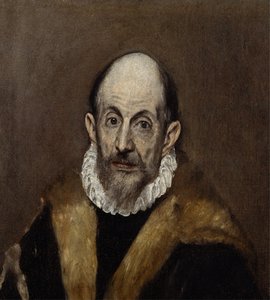
      § 4The artist

      El Greco

      El Greco

      1541 - 1614, Grecja

      Quick facts about El Greco

      • Artistic Movement Or Style: Mannerism Baroque
      • Artists Or Movements Influenced By This Artist: ['Expressionism Cubism']
      • Artists Who Influenced This Artist: ['Titian Tintoretto']
      • Date Of Birth: 1541 Cret
      • Date Of Death: 1614 Toledo
      • Full Name: Doménikos Theotokópoulos
      • Nationality: Greek-Spanish
      • Notable Artworks:
        • Burial Count Orgaz
        • View Toledo
        • El Espolio
        • St Sebastian
      • Place Of Birth: Crete Greece

      Biografia artysty

      Doménikos Theotokópoulos – El Greco: A Life Forged in Faith and Fire

      Doménikos Theotokópoulos, universally known as El Greco – “the Greek” – stands apart from his contemporaries as a painter whose artistic journey transcended conventional boundaries. Born in Crete, Greece (1541), under Venetian rule, his life was marked by both intellectual curiosity and unwavering devotion to Orthodox Christianity—a duality that profoundly shaped his distinctive style and enduring legacy. He wasn’t merely responding to the artistic currents of his time; he actively wrestled with them, synthesizing Byzantine traditions with Renaissance innovations into a visual language utterly his own. This singular vision anticipated the expressive fervor of Expressionism and the fragmented perspectives of Cubism centuries later, cementing his place as a pivotal figure in European art history.

      Early Training and Venetian Influences

      El Greco’s formative years were spent honing his skills within the Byzantine artistic milieu—a tradition characterized by meticulous detail, symbolic representation, and profound spiritual contemplation. He studied under Antonios Pizzorno, a Venetian artist who instilled in him a disciplined approach to technique and an appreciation for classical ideals. Recognizing the dynamism of Venetian painting – particularly the works of Titian, Tintoretto, and Veronese – El Greco embarked on a transformative voyage to Venice around 1567. This immersion proved decisive; he absorbed their mastery of color, composition, and dramatic lighting, fundamentally altering his artistic sensibilities. He moved away from the rigid conventions of Mannerism, embracing looser brushwork and experimenting with oil paints—a medium that allowed him to achieve unprecedented levels of luminosity and expressive power. *St. Sebastian* (1600), painted during this Venetian period, exemplifies this stylistic shift beautifully. Anatomical accuracy blends seamlessly with theatrical lighting, conveying a palpable sense of pathos and spiritual torment – a hallmark of El Greco’s oeuvre.

      Toledo: The Crucible of Spiritual Expression

      Around 1577, El Greco relocated to Toledo, Spain—a city steeped in religious fervor during the Counter-Reformation. This move proved crucial for solidifying his artistic identity and unlocking his creative potential. Toledo offered a fertile environment for artists seeking patronage from devout Catholic institutions, fostering an atmosphere conducive to exploring themes of faith, suffering, and divine grace. It was here that El Greco produced many of his most iconic paintings—works imbued with an unparalleled intensity of emotion and spiritual conviction. The Museo de Arte Público de Toledo houses numerous masterpieces by El Greco, including *The Burial of the Count of Orgaz*, arguably his magnum opus. This monumental painting depicts a miraculous event – the descent of saints to bury a nobleman – employing a masterful blend of realism and stylized figures to convey a profound meditation on mortality and redemption. The elongated forms of the saints—a stylistic characteristic that would become synonymous with El Greco’s name—are not merely decorative; they represent an attempt to transcend earthly limitations and capture the sublime beauty of divine presence.

      A Style Defined by Distortion and Emotion

      El Greco's artistic style is instantly recognizable – and profoundly unsettling for those accustomed to more conventional representations of religious subjects. His figures are often dramatically elongated, their bodies twisted into poses that convey a sense of spiritual ecstasy or agonizing torment. This isn’t mere stylistic indulgence; it’s an intentional distortion designed to communicate the intangible realities of faith—the experience of encountering God beyond the confines of rational thought. He achieved this effect through masterful manipulation of color – employing vibrant hues that defied naturalistic conventions—and dramatic lighting—creating stark contrasts between light and shadow that heighten the emotional impact of his canvases. The use of chiaroscuro, a technique perfected by Caravaggio, further intensified the theatrical quality of El Greco’s paintings, drawing viewers into the heart of the depicted drama.

      Legacy and Influence

      Despite facing considerable challenges during his lifetime—limited recognition in Rome and sporadic commissions—El Greco's artistic vision endured beyond his death in 1614. His distinctive style captivated artists like Picasso and Braque who recognized him as a precursor to modern art, particularly Cubism, admiring his fragmented forms and unconventional perspectives. El Greco’s influence extended far beyond the immediate stylistic realm; he inspired generations of painters to explore themes of spirituality and emotion with uncompromising honesty—a legacy that continues to resonate powerfully in contemporary artistic discourse. He remains an artist whose work compels us to confront fundamental questions about human experience, faith, and the sublime beauty of transcendence—a testament to his enduring power as a visionary innovator who dared to reimagine the visual language of religion.

      § 5Comparanda

      § 6Questions

      Najważniejsze informacje

      • Artistic style: Expressive; stylized realism
      • Location: Toledo Cathedral, Spain
      • Movement: Spanish Mannerism
      • Influences: Byzantine art"; "Italian Renaissance
      • Year: 1577

      Quiz o sztuce

      Do każdego pytania dotyczy tylko jedna poprawna odpowiedź.

      Pytanie 1:
      What is the primary subject depicted in El Greco’s ‘High Altar’?
      Pytanie 2:
      The image shows a church altar adorned with what prominent artistic element?
      Pytanie 3:
      El Greco’s style is characterized by:
      Pytanie 4:
      In what historical period was ‘High Altar’ created?
      Pytanie 5:
      What artistic influence is El Greco's style often compared to?

      § 7Cite this entry

      AllPaintingsStore.com, “El Greco, High Altar (1577)”, https://allpaintingsstore.com/pl/art/el-greco-high-altar-8Y3C2U-en/ (accessed 2 Październik 2026).

      § 8The reproduction

      Ręcznie malowana reprodukcja olejowa

      Ręcznie malowany obraz olejny na płótnie, wykonany na zamówienie przez naszych artystów w wybranym przez Ciebie wymiarze i oprawie. ( Przełącz na wydania drukowane Przejdź do wersji cyfrowej)

      It is specified on the order sheet in the margin; the present state of that sheet reads as follows.

      High Altar

      Technika reprodukcji

      Wymiary reprodukcji

      -

      Wybitny mistrz artystyczny

      Większa szczegółowość, finezja i dodatkowy czas na realizację

      -

      Opcje oprawy reprodukcji

      -

      -

      W przypadku dzieł sztuki lub reprodukcji, których którykolwiek z boków przekracza 105 cm (około 41 cali), rama zostanie wysłana w formie zestawu do samodzielnego montażu. Metoda ta zapewnia bezpieczną dostawę i zapobiega uszkodzeniom podczas transportu.

      Wymagany profesjonalny montaż – nie jest to produkt typu DIY.
      Zestaw musi zostać złożony, a płótno naciągnięte przez doświadczonego profesjonalnego ramiarza, przy użyciu kleju do drewna (brak w zestawie), kleszczy do naciągania płótna oraz ścisków, które utrzymają krosna w równej pozycji podczas schnięcia kleju. Nieprawidłowy montaż lub nierównomierne napięcie płótna może trwale uszkodzić dzieło sztuki i nie podlega naszej gwarancji.

      • W zestawie znajdują się wszystkie listwy z litego drewna, precyzyjnie docięte do wymiarów.

      • Montaż odbywa się przy użyciu dołączonych wkrętów oraz kleju do drewna do łączenia narożników, którego zestaw nie zawiera i który musi zostać dostarczony przez ramiarza.

      • Wymagane są profesjonalne narzędzia, których nie ma w zestawie: kleszcze do naciągania płótna (napinacz) oraz zaciski, które pozwolą utrzymać listwy w równej pozycji podczas schnięcia kleju.

      Ważne:
      Do połączenia narożników niezbędny jest klej do drewna, listwy należy unieruchomić za pomocą ścisków do momentu całkowitego wyschnięcia kleju, a naciągnięcie płótna na złożoną ramę wymaga użycia kleszczy do naciągania płótna. Żaden z tych elementów nie jest dołączony do zestawu. Przed zamówieniem tego rozmiaru zalecamy konsultację z doświadczonym ramiarzem.

      Etykieta obiektu

      -

      -

      Lakier ochronny

      Lakier z połyskiem (pogłębia kolory, chroni przed światłem i wilgocią)

      -

      Personalizacja dzieła

      Przykłady możliwości personalizacji: zastąp twarz zdjęciem klienta; dodaj zwierzę domowe (np. zamień kota na psa); umieść ukrytą wiadomość w tle; zmień krajobraz lub elementy tła.

      -

      Ekspresowa

      Dostawa na cały świat () w ciągu 3–4 tygodni zamiast standardowych 5 tygodni. (30 Październik). Bez kompromisów w kwestii jakości.

      -

      Przesyłka ekspresowa

      Dostawa na cały świat () w ciągu 5 tygodni. (6 Listopad).

      W cenie

      Cena całkowita

      zł 1002

      Included with every order

      • Bezpłatna ekspresowa wysyłka na cały świat
      • Wysokiej jakości płótno lniane
      • Pełne ubezpieczenie przesyłki
      • Gwarancja zwrotu należności celnych i podatków importowych
      • Gwarancja wiernego odwzorowania kolorów
      • 100-dniowa polityka zwrotów (tylko w przypadku wad)
      • Gwarancja 100% zwrotu pieniędzy
      • Zniżka przy zakupie wielu sztuk
      Order sheet