Émile Munier: A Master of Gentle Beauty
Émile Munier, born in the heart of Paris on June 2nd, 1840, wasn’t merely a painter; he was a weaver of dreams, an architect of tranquility. His life unfolded within the vibrant tapestry of late 19th-century France, inextricably linked to artistic lineage and a profound dedication to capturing moments of quiet grace. From his earliest days, surrounded by the creative spirit of his family – his father, Pierre François Munier, an artist upholsterer at the prestigious Gobelins Manufactory, and his mother, Marie Louise Carpentier, a skilled polisher of cashmere cloth – Émile inherited not just a profession but a deep-seated appreciation for beauty and meticulous craftsmanship. This familial connection ignited within him a natural inclination towards artistic expression, a talent that blossomed early on, evidenced by the self-portraits he produced as a teenager—intimate glimpses into a young artist’s burgeoning vision. His formal training commenced at the Gobelins, under the watchful eye of Abel Lucas, where he honed his foundational skills in draftsmanship and design – skills that would prove indispensable to his future success. It was here, amidst the workshops and studios of Paris, that Émile's artistic journey truly began to take shape.
The Crucible of Influence: Bouguereau’s Enduring Legacy
A pivotal moment arrived in 1861 with his marriage to Henriette Lucas, Abel Lucas’ daughter – a union that not only solidified his connection to a prominent artistic family but also immersed him more deeply within the Parisian creative community. Tragedy, however, soon cast its shadow; Henriette passed away after giving birth to their son, Émile Henri, a loss that undoubtedly shaped the artist's later work with an undercurrent of poignant tenderness. Yet, Munier persevered, finding solace and renewed purpose in his art, channeling his grief into a profound exploration of human emotion and domesticity. It was during this period that he encountered William-Adolphe Bouguereau – a meeting that would fundamentally alter the trajectory of his artistic development. Bouguereau’s meticulous technique, his idealized figures, and his ability to evoke a sense of serene beauty captivated Munier entirely. He became an ardent follower of the master, drawn to Bouguereau's refined aesthetic and unwavering commitment to academic principles. This devotion wasn’t merely superficial; it was a deep-seated emulation, a conscious effort to absorb and internalize Bouguereau’s artistic philosophy. Munier frequently visited Bouguereau’s studio, seeking guidance and inspiration, and the influence of the master is readily apparent in Munier's own work – particularly in his choice of subject matter, his delicate rendering of light and shadow, and his harmonious compositions. The artist even earned the affectionate nickname “la sagesse” (wisdom) or “le sage Munier” from Bouguereau himself, a testament to his thoughtful approach to art and his quiet dedication to his craft.
A Palette of Innocence: Themes and Subjects
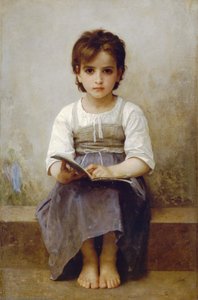
Munier’s artistic output during the 1860s was marked by recognition at the prestigious Beaux-Arts, culminating in three earned medals and consistent exhibition at the Paris Salon beginning in 1869. However, it was his exploration of childhood innocence and domestic harmony that truly defined his legacy. He eschewed grand historical narratives or dramatic scenes, instead focusing on intimate moments of everyday life—children playing with beloved pets, glimpses into rural settings, and tender portraits of family members. These weren’t simply idyllic depictions; they were imbued with a profound sense of warmth, nostalgia, and quiet contemplation. His most celebrated work, *Trois Amis* (Three Friends), exemplifies this approach perfectly – a charming portrayal of a young girl accompanied by a kitten and a dog, capturing the simple joy of companionship and childhood wonder. Other notable works include the deeply moving *Angel Comforting His Grieving Mother*, commissioned as a poignant memorial to Jane Stanford’s son, Leland Stanford Jr., and now housed at the Cantor Arts Center at Stanford University – a testament to Munier's ability to evoke profound emotion through seemingly simple scenes. *La jeune fille et le panier de chatons* (The Young Girl and Basket of Kittens), completed shortly before his death, encapsulates the artist’s enduring fascination with childhood innocence and the beauty of domestic life. The recurring presence of family members in his paintings—his daughter Marie-Louise often serving as a model—adds a personal touch to these idealized scenes, imbuing them with an intimate warmth that resonates deeply with viewers.
Beyond Technique: A Lasting Impression
Munier’s artistic reputation extended far beyond the borders of France, garnering significant recognition in America. Patrons like Chapman H. Hyams and his wife amassed a substantial collection of Munier's work, now housed at the New Orleans Museum of Art – a testament to the artist’s international appeal. His inclusion in the 1893 Chicago World’s Fair further solidified his standing as a prominent figure in the art world, exposing his paintings to a wider audience and earning critical acclaim. Émile Munier passed away on June 29th, 1895, leaving behind a body of work that continues to captivate viewers with its exquisite craftsmanship, sentimental appeal, and timeless depiction of an idealized vision of domestic life. His legacy isn’t simply one of technical mastery; it's a testament to his ability to evoke feelings of warmth, nostalgia, and enduring human connection—a reminder that beauty can be found in the simplest of moments.
Key Characteristics & Artistic Style
- Academic Realism: Munier’s work is firmly rooted in the academic tradition, characterized by meticulous attention to detail, anatomical accuracy, and a refined technique.
- Idyllic Subject Matter: He favored scenes of domestic tranquility, childhood innocence, and pastoral beauty, often depicting children with pets or engaged in simple pleasures.
- Bouguereau’s Influence: The influence of William-Adolphe Bouguereau is evident in Munier's idealized figures, soft lighting, and harmonious compositions.
- Emotional Resonance: Despite adhering to academic conventions, Munier imbued his paintings with a genuine emotional warmth and tenderness that resonated with audiences.
- Technical Skill: He possessed exceptional skill in rendering textures, fabrics, and skin tones, creating a sense of realism and tactile quality.


 Rozwiń treść




 Przełącz na wydania drukowane


 W przypadku dzieł sztuki lub reprodukcji, których którykolwiek z boków przekracza 105 cm (około 41 cali), rama zostanie wysłana w formie zestawu do samodzielnego montażu. Metoda ta zapewnia bezpieczną dostawę i zapobiega uszkodzeniom podczas transportu.


