Gwarancja zwrotu pieniędzy · 100 dni Darmowa dostawa na cały świat
449 587dzieła sztuki 30 613artyści 4 660muzea 32język
Waluta
    Język
      Atelier · Est. 2015 · Paryż, Francja
      AllPaintingsStore
      allpaintingsstore.com
      Catalogue entry

      Urban image

      Acrylic On Canvas.

      Fig. 1. Ernst Ludwig Kirchner, Urban image. Shown as the reproduction you are specifying: , .

      § 1Catalogue data

      § 2Abstract

      Opis obiektu

      Biografia artysty

      Ernst Ludwig Kirchner (1880-1938): Kluczowy ekspresjonista i współzałożyciel Die Brücke. Odkryj jego wyraziste obrazy miasta, nagości i krajobrazów – głos wczesnych lat XX wieku.

      § 3Commentary

      Urban Image: A Snapshot of Expressionist Dynamism

      Kirchner’s “Urban Image” stands as a testament to the fervor and anxieties defining German Expressionism—a movement that sought to convey raw emotion rather than objective representation. Painted circa 1908-1909, this artwork captures a bustling street scene in Dresden, Germany, rendered with an uncompromising palette of bold colors and fractured perspectives that immediately resonate with the stylistic hallmarks of its era. The painting isn’t merely depicting a cityscape; it's channeling the palpable energy of urban life—a feeling of restless movement and fragmented experience.

      Composition and Technique: Flattened Space and Energetic Brushstrokes

      The artist employs a deliberately flattened perspective, characteristic of Expressionist aesthetics, prioritizing emotional impact over realistic spatial accuracy. Buildings recede into the background at varying angles, creating an illusion of depth that feels subtly destabilized. Dominating the central space is a tram or trolley car—a symbol of modernity and industrial progress—surrounded by figures engaged in everyday activities: pedestrians hurrying along sidewalks, their faces turned away from the viewer. Kirchner’s technique is marked by visible brushstrokes—thick, impasto marks that convey texture and dynamism. These strokes aren't blended smoothly; instead, they build up layers of pigment to create a surface that pulsates with energy, mirroring the turbulent emotions underlying the scene. The artist skillfully utilizes color to heighten this effect, layering hues in ways that defy naturalistic convention.

      Color Palette and Symbolism: Contrasting Hues Reflect Inner Turmoil

      The artwork’s color palette is deliberately jarring—a clash of warm reds and yellows juxtaposed against cool blues and greens. This chromatic dissonance isn't accidental; it serves as a visual representation of psychological tension, mirroring the anxieties prevalent in German society at the time. The dominant red hue evokes feelings of passion, urgency, and perhaps even danger – reflecting the artist’s own preoccupation with themes of isolation and alienation. Simultaneously, cooler tones convey melancholy and uncertainty, hinting at the pervasive sense of disillusionment that characterized the Expressionist movement's core concerns.

      Historical Context: Capturing the Spirit of Dresden

      Painted during a period of significant social upheaval—the burgeoning industrial revolution and growing anxieties about societal change—"Urban Image" encapsulates the spirit of Dresden in 1908. Kirchner’s Dresden was undergoing rapid transformation, grappling with issues of urbanization and social stratification. The painting reflects this atmosphere of unease through its fragmented composition and emotionally charged color palette – a deliberate rejection of academic idealism in favor of subjective experience.

      Emotional Impact: A Window into Kirchner's Inner Landscape

      Ultimately, “Urban Image” transcends mere visual depiction; it’s an invitation to contemplate the complexities of human emotion. The distorted forms and expressive brushstrokes compel viewers to confront uncomfortable truths about modern life—the isolation inherent in urban environments and the pervasive sense of disorientation that accompanies rapid societal change. Like many Expressionist works, this piece seeks not to portray reality as it appears but rather to convey the artist’s inner psychological state – a powerful testament to Kirchner's ability to translate personal turmoil into compelling artistic expression.

      Pytania i odpowiedzi

      Gdzie mogę obejrzeć „Urban image” – Ernst Ludwig Kirchner w formie pokazu slajdów?

      Dzieło „Urban image” – Ernst Ludwig Kirchner można obejrzeć w formie pokazu slajdów na stronie Prezentacja slajdów danego dzieła.

      Z jakiej techniki wykorzystano "Urban image"?

      Technika wykonania dzieła „Urban image” – Ernst Ludwig Kirchner to Acrylic On Canvas. Reprodukcje mają na celu wierne oddanie wyglądu tej techniki.

      Do czego zaleca się wykorzystanie reprodukcji „Urban image” – Ernst Ludwig Kirchner?

      Zalecanym zastosowaniem wydruku "Urban image" jest Accent.
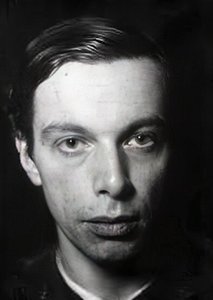
      § 4The artist

      Ernst Ludwig Kirchner

      Ernst Ludwig Kirchner

      1880 - 1938, Niemcy

      Quick facts about Ernst Ludwig Kirchner

      • Artistic Movement Or Style: Ekspresjonizm
      • Artists Or Movements Influenced By This Artist:
        • Die Brücke
        • Nowoczesny sztuka
      • Artists Who Influenced This Artist:
        • Dürer
        • Van Gogh
        • Munch
      • Date Of Birth: 6 maja 1880
      • Date Of Death: 15 czerwca 1938
      • Full Name: Ernst Ludwig Kirchner
      • Nationality: Niemiec
      • Notable Artworks:
        • The Street
        • Leaping Dancer
      • Place Of Birth: Aschaffenburg, Niemcy

      Biografia artysty

      A Life Forged in Expression: The World of Ernst Ludwig Kirchner

      Ernst Ludwig Kirchner, a name inextricably linked to the raw emotional intensity of German Expressionism, emerged from a Germany poised on the cusp of profound transformation. His birth in Aschaffenburg, Bavaria, in 1880, wasn’t merely an arrival into the world; it was the beginning of a life deeply interwoven with artistic innovation and shadowed by personal struggles. The shifting landscapes that defined his early years – dictated by his father's profession as a paper chemist – instilled within him a persistent sense of displacement, a feeling that would become a recurring theme in his art. From Frankfurt to Perlen, nestled beside Lake Lucerne, and finally settling in Chemnitz, Kirchner absorbed the anxieties and rapid modernization sweeping across Germany. Initially pursuing architecture at the Königliche Technische Hochschule in Dresden, he ultimately found his true calling in painting, fueled by an admiration for masters like Albrecht Dürer – particularly his masterful woodcuts – and a growing disillusionment with the constraints of academic tradition. He discovered kinship amongst fellow rebels: Fritz Bleyl, Karl Schmidt-Rottluff, and Erich Heckel, forging bonds that would irrevocably shape the trajectory of 20th-century art.

      The Bridge Between Worlds: Die Brücke and Artistic Revolution

      In 1905, Kirchner became a founding member of *Die Brücke* (“The Bridge”), an artistic collective dedicated to bridging the gap between established aesthetics and a more visceral, emotionally charged form of expression. This wasn’t simply a stylistic decision; it represented a fundamental philosophical stance. The group sought inspiration from sources often overlooked by the art establishment – the primal art of Africa and Oceania, the intensely colored works of Vincent van Gogh, and the haunting psychological depth of Edvard Munch. Rejecting the idealized beauty championed by academic painting, *Die Brücke* embraced distortion, jarring color palettes, and expressive brushwork to convey the anxieties and alienation inherent in modern life. Kirchner’s early works, born from this collaborative spirit, pulsed with a restless energy, reflecting the group's shared desire to break free from artistic conventions. The studio became a crucible for experimentation, a space where social norms were challenged alongside artistic traditions. The exploration of the human form, particularly the female nude, within both urban and natural settings, became a recurring motif, allowing Kirchner to delve into themes of movement, emotion, and the complexities of modern existence.

      Berlin’s Concrete Heart: Urban Landscapes and Psychological Depth

      Following his relocation to Berlin in 1911, Kirchner's artistic focus intensified, centering on the city’s stark realities. He captured the frenetic energy of urban life with a distinctive intensity – not merely depicting streets and buildings, but conveying the psychological impact of being immersed within them. Paintings like *The Street* (1908) are powerful portraits of alienation, reflecting the anonymity and isolation experienced by individuals navigating the sprawling metropolis. Kirchner’s use of color became even more dramatic, employing bold contrasts to heighten the sense of unease and disorientation. He wasn't interested in romanticizing urban life; instead, he presented a brutally honest depiction of its anxieties, capturing the feeling of being overwhelmed by the sheer scale and relentless pace of modern existence. This unflinching gaze established him as a chronicler of his time, an artist who dared to confront the darker undercurrents of societal progress.

      A Style Defined: Color, Distortion, and Emotional Resonance

      Kirchner’s artistic style is immediately recognizable for its distinctive characteristics. He wielded color not as a tool for faithful representation, but as a means of evoking powerful emotional responses – vibrant, often non-naturalistic hues that amplified the sense of unease or intensity within his compositions. His brushstrokes were energetic and visible, contributing to the overall feeling of immediacy and raw emotion. Figures and objects were frequently distorted or elongated, reflecting a subjective rather than objective reality. Kirchner’s work is characterized by a deliberate rejection of traditional perspective and a preference for flattened planes and simplified forms. This stylistic approach wasn't merely an aesthetic choice; it was a conscious effort to convey the psychological impact of his subjects – to capture their inner turmoil and emotional state. The influence of artists like Van Gogh, with his expressive brushwork and intense color palettes, is readily apparent in Kirchner’s work, as is the haunting psychological depth found in Munch's paintings.

      Tragedy and Legacy: A Lasting Impact

      Kirchner’s life was tragically marked by personal struggles. The horrors of World War I triggered a severe mental breakdown, forcing him to retreat to Switzerland in search of solace. However, even during his exile, he continued to create, his work reflecting the lingering trauma and isolation he experienced. The rise of Nazism brought further hardship; over 600 of his works were confiscated and deemed “degenerate” art – a devastating blow that underscored the political climate’s hostility towards modern artistic expression. Facing persecution and declining health, Kirchner tragically took his own life in Davos, Switzerland, in 1938. Despite this heartbreaking end, Ernst Ludwig Kirchner's legacy remains profoundly influential. He stands as a central figure of German Expressionism, inspiring generations of artists with his bold style, emotionally resonant depictions of modern life, and unwavering commitment to artistic truth. His work continues to be exhibited in major museums worldwide, serving as a powerful reminder of the enduring power of art to confront, challenge, and ultimately illuminate the human condition.
      • Influenced By: Albrecht Dürer, Vincent van Gogh, Edvard Munch, Primitive Art (African & Oceanic)
      • Influenced: Kirchner’s work profoundly impacted subsequent generations of Expressionist and Modern artists. His exploration of psychological themes and his innovative use of color and form continue to inspire contemporary art practices.
      Current Meta Description: Ernst Ludwig Kirchner (1880-1938): Key German Expressionist & Die Brücke co-founder. Explore bold, emotive paintings of urban life, nudes & landscapes. Current Meta Keywords: Ernst Ludwig Kirchner, Kirchner paintings, German Expressionism, Die Brücke, Expressionist art, Berlin street scenes, Woodcut prints, Modern German art, Nude figures, Kirchner artwork

      § 5Comparanda

      § 6Questions

      Najważniejsze informacje

      • Title: Urban image
      • Subject or theme: Urban life
      • Influences: Dürer
      • Artist: Ernst Ludwig Kirchner

      Quiz o sztuce

      Do każdego pytania dotyczy tylko jedna poprawna odpowiedź.

      Pytanie 1:
      What artistic movement is Ernst Ludwig Kirchner’s ‘Urban Image’ primarily associated with?
      Pytanie 2:
      The painting utilizes a flattened perspective. What does this technique convey about the artist's intention?
      Pytanie 3:
      Kirchner’s use of bold colors and angular lines contributes to what overall feeling in the artwork?
      Pytanie 4:
      According to the description, what is prominent in the central space of ‘Urban Image’?
      Pytanie 5:
      What stylistic element distinguishes Kirchner's work from academic painting traditions?

      § 7Cite this entry

      AllPaintingsStore.com, “Ernst Ludwig Kirchner, Urban image”, https://allpaintingsstore.com/pl/art/ernst-ludwig-kirchner-urban-image-8LHTTR-en/ArtistReproduction/ (accessed 1 Październik 2026).

      § 8The reproduction

      Ręcznie malowana reprodukcja olejowa

      Ręcznie malowany obraz olejny na płótnie, wykonany na zamówienie przez naszych artystów w wybranym przez Ciebie wymiarze i oprawie. ( Przełącz na wydania drukowane Przejdź do wersji cyfrowej)

      It is specified on the order sheet in the margin; the present state of that sheet reads as follows.

      Urban image

      Technika reprodukcji

      Wymiary reprodukcji

      -

      Wybitny mistrz artystyczny

      Większa szczegółowość, finezja i dodatkowy czas na realizację

      -

      Opcje oprawy reprodukcji

      -

      -

      W przypadku dzieł sztuki lub reprodukcji, których którykolwiek z boków przekracza 105 cm (około 41 cali), rama zostanie wysłana w formie zestawu do samodzielnego montażu. Metoda ta zapewnia bezpieczną dostawę i zapobiega uszkodzeniom podczas transportu.

      Wymagany profesjonalny montaż – nie jest to produkt typu DIY.
      Zestaw musi zostać złożony, a płótno naciągnięte przez doświadczonego profesjonalnego ramiarza, przy użyciu kleju do drewna (brak w zestawie), kleszczy do naciągania płótna oraz ścisków, które utrzymają krosna w równej pozycji podczas schnięcia kleju. Nieprawidłowy montaż lub nierównomierne napięcie płótna może trwale uszkodzić dzieło sztuki i nie podlega naszej gwarancji.

      • W zestawie znajdują się wszystkie listwy z litego drewna, precyzyjnie docięte do wymiarów.

      • Montaż odbywa się przy użyciu dołączonych wkrętów oraz kleju do drewna do łączenia narożników, którego zestaw nie zawiera i który musi zostać dostarczony przez ramiarza.

      • Wymagane są profesjonalne narzędzia, których nie ma w zestawie: kleszcze do naciągania płótna (napinacz) oraz zaciski, które pozwolą utrzymać listwy w równej pozycji podczas schnięcia kleju.

      Ważne:
      Do połączenia narożników niezbędny jest klej do drewna, listwy należy unieruchomić za pomocą ścisków do momentu całkowitego wyschnięcia kleju, a naciągnięcie płótna na złożoną ramę wymaga użycia kleszczy do naciągania płótna. Żaden z tych elementów nie jest dołączony do zestawu. Przed zamówieniem tego rozmiaru zalecamy konsultację z doświadczonym ramiarzem.

      Etykieta obiektu

      -

      -

      Lakier ochronny

      Lakier z połyskiem (pogłębia kolory, chroni przed światłem i wilgocią)

      -

      Personalizacja dzieła

      Przykłady możliwości personalizacji: zastąp twarz zdjęciem klienta; dodaj zwierzę domowe (np. zamień kota na psa); umieść ukrytą wiadomość w tle; zmień krajobraz lub elementy tła.

      -

      Ekspresowa

      Dostawa na cały świat () w ciągu 3–4 tygodni zamiast standardowych 5 tygodni. (29 Październik). Bez kompromisów w kwestii jakości.

      -

      Przesyłka ekspresowa

      Dostawa na cały świat () w ciągu 5 tygodni. (5 Listopad).

      W cenie

      Cena całkowita

      zł 1475

      Included with every order

      • Bezpłatna ekspresowa wysyłka na cały świat
      • Wysokiej jakości płótno lniane
      • Pełne ubezpieczenie przesyłki
      • Gwarancja zwrotu należności celnych i podatków importowych
      • Gwarancja wiernego odwzorowania kolorów
      • 100-dniowa polityka zwrotów (tylko w przypadku wad)
      • Gwarancja 100% zwrotu pieniędzy
      • Zniżka przy zakupie wielu sztuk
      Order sheet