

1949. Oil On Canvas.

§ 1Dane katalogowe


§ 2Abstrakcja
Opis obiektu
Explore Fernand Léger’s ‘Recreation on a red background,’ a vibrant Cubist masterpiece! Discover its dynamic energy, bold lines & unique machine aesthetic – a key work by a modern art pioneer.
 Rozwiń treść
Biografia artysty
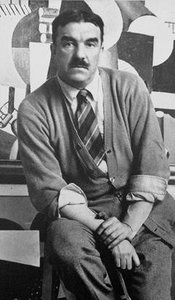
Fernand Léger (1881-1955) – francuski malarz i rzeźbiarz, pionier Kubizmu i Tubismu. Jego obrazy celebrują nowoczesność, maszynę i ludzką formę. Kluczowy dla sztuki XX wieku.
§ 3Komentarz
A Symphony of Motion and Crimson: The Vitality of Léger’s Vision
In the vibrant landscape of mid-century modernism, few works capture the pulse of contemporary life as electrifyingly as Fernand Léger’s 1949 masterpiece, Recreation on a Red Background. At first glance, the viewer is met with an explosion of saturated color—a profound, commanding red that serves not merely as a backdrop, but as a living, breathing stage for the drama of existence. This is not a quiet scene of rest; rather, it is a dynamic celebration of movement and leisure. Figures and bicycles are woven into a complex, fragmented tapestry, where the boundaries between human form and mechanical object begin to blur. The composition dances with an asymmetrical energy, pulling the eye across a flattened space that feels simultaneously intimate and infinitely expansive.
Léger, a pioneer who famously sought to integrate the machine aesthetic into the soul of fine art, employs what is often termed Tubism—a robust, sculptural evolution of Cubism. In this work, the analytical fragmentation of his predecessors is replaced by something much more tactile and rhythmic. The figures are rendered with bold, geometric simplicity, reminiscent of folk art, yet they possess a structural strength that speaks to the industrial age. There is a delightful tension here between the naïve charm of the simplified shapes and the sophisticated, complex interplay of overlapping planes. For the collector or designer, this duality offers a rare versatility; the painting possesses a graphic clarity that commands attention in a minimalist setting, yet its rich textures invite deep, contemplative study.
The Texture of Modernity: Technique and Emotional Resonance
To look closely at Recreation on a Red Background is to encounter the physical presence of the artist’s hand. Léger masterfully utilizes an impasto technique, building up layers of oil paint that lend the canvas a sculptural, three-dimensional quality. These thick, deliberate brushstrokes create a surface that catches the light, adding a sense of weight and permanence to the fleeting moment of recreation being depicted. The bold outlines that define each element act as structural anchors, preventing the chaotic arrangement from losing its cohesion and instead guiding the viewer through a rhythmic, almost musical, visual journey.
Historically, this work emerges from the post-World War II era, a period defined by both the scars of conflict and a burgeoning sense of technological optimism. Léger’s fascination with the mechanical—the wheels, the frames, the very geometry of progress—reflects a world rebuilding itself through industry and innovation. The painting serves as a profound metaphor for the human spirit's ability to find joy and rhythm within the gears of modern life. It is an invitation to find beauty in the structured, the bold, and the bright. For those looking to infuse a space with character, this reproduction offers more than just decoration; it brings an enduring sense of vitality, strength, and the unyielding pulse of modern existence into the home.
Pytania i odpowiedzi
Jaki nastrój oddaje „Recreation on a red background” – Fernand Léger w ramach nurtu Cubism?
W nurcie Cubism dzieło „Recreation on a red background” zostało ujęte w Energetic tonie.
Z jakiej techniki wykorzystano "Recreation on a red background"?
„Recreation on a red background” wykonano w technice Oil On Canvas.
Z czego wynika obecny status praw autorskich dzieła "Recreation on a red background"?
Dzieło "Recreation on a red background" autorstwa Fernand Léger znajduje się w należy do domeny publicznej – autorskie prawa majątkowe wygasły. Okres ochrony praw autorskich liczony jest od daty śmierci artysty, a Fernand Léger zmarł(a) w 1955.


 Przełącz na wydania drukowane


 W przypadku dzieł sztuki lub reprodukcji, których którykolwiek z boków przekracza 105 cm (około 41 cali), rama zostanie wysłana w formie zestawu do samodzielnego montażu. Metoda ta zapewnia bezpieczną dostawę i zapobiega uszkodzeniom podczas transportu.


