František Kupka: A Pioneer of Abstract Vision
František Kupka, a name inextricably linked to the dawn of abstract art, was born in Opočno, Bohemia – a landscape that would subtly inform his lifelong exploration of form and color. His artistic journey wasn’t a swift ascent but rather a gradual unfolding, deeply rooted in spiritual inquiry and an unwavering pursuit of visual truth. Initially immersed in historical and patriotic themes during his studies at the Prague Academy of Fine Arts and later Vienna, Kupka's early work possessed technical skill yet lacked the distinctive voice that would soon define him. It was his relocation to Paris in 1894, however, that proved pivotal, plunging him into a vibrant artistic milieu where he briefly attended the École des Beaux-Arts and engaged with the intellectual currents of fin-de-siècle – a period characterized by burgeoning interest in symbolism, Neo-Impressionism, and Fauvism. These influences ignited within him a profound desire to transcend mere representation and tap into deeper realms of experience, ultimately leading him toward radical abstraction.
The Seeds of Abstraction: Spiritual Influences and Early Experiments
Kupka’s artistic trajectory wasn't solely driven by aesthetic considerations; it was profoundly shaped by philosophical and spiritual explorations. His engagement with Theosophy – a mystical system blending Eastern religions and Western esotericism – proved particularly transformative. This belief system posited an underlying unity to all things, suggesting that art could access these hidden realities through the manipulation of color, form, and line. He began to believe that art wasn’t simply about mirroring the external world but about revealing its inner essence. This conviction fueled his experimentation with blurring the boundaries between figuration and abstraction, as evidenced in works like *The Beginning of Life*. Here, symbolic imagery – reminiscent of religious iconography – intertwined with nascent abstract elements, creating a visual dialogue between the known and the unknown. Kupka’s interest extended beyond purely spiritual concepts; he was deeply fascinated by scientific theories regarding color and light, seeking to understand their psychological effects on the viewer and incorporating these insights into his artistic process. He wasn't merely interested in replicating colors but in exploring their emotional resonance and potential for evoking specific sensations. This fusion of spiritual inquiry and scientific observation became a defining characteristic of his work throughout his career.
Orphic Cubism and the Language of Color
By the early 1910s, Kupka had embarked on a path that would lead him to become one of the pioneers of abstract art. His paintings from this period – such as *Amorpha: Fugue in Two Colors* (1912) – were among the first truly non-representational works exhibited publicly, challenging conventional notions of artistic representation. He wasn’t simply dismantling form—as some Cubists were doing—but rather creating a new visual language based on pure abstraction. This led to his association with Orphic Cubism (also known as Orphism), a movement spearheaded by Robert Delaunay that emphasized the dynamic interplay of color and light. However, Kupka's approach differed from Delaunay’s; while both explored abstract forms, Kupka often retained a sense of underlying structure and rhythm, evoking musical compositions in his paintings – hence the frequent use of terms like “fugue” and “disks.” His *Disks of Newton* series exemplifies this exploration, depicting circular forms that seem to vibrate with energy and suggest the forces governing the universe. He wasn’t merely creating aesthetically pleasing arrangements; he was attempting to visualize underlying cosmic principles. Kupka's work during this period can be seen as a deliberate attempt to move beyond the limitations of traditional perspective and representation, seeking instead to capture the essence of experience through pure color and form.
Key Works and Lasting Legacy
Throughout his career, Kupka produced a remarkable body of work that continues to fascinate and inspire. *The Colored One* (1908) is considered one of his most significant early abstract paintings, demonstrating his exploration of color relationships and the potential for pure abstraction. *Around a Point* (1913) showcases his interest in geometric forms and their dynamic interplay. His later works, such as *War* (1916-17), reflect the turmoil of World War I, utilizing stark colors and fragmented shapes to convey feelings of chaos and uncertainty. Kupka’s influence extended beyond his individual paintings; he played a vital role in establishing Abstraction-Création in 1931, an international group dedicated to promoting abstract art. His work was recognized internationally, featured in landmark exhibitions such as “Cubism and Abstract Art” at the Museum of Modern Art in New York in 1936. Despite often being overshadowed by more prominent figures like Kandinsky or Mondrian, František Kupka’s pioneering spirit and unique visual language have secured his place as a crucial figure in the history of abstract art – a testament to his unwavering commitment to exploring the boundless possibilities of pure abstraction.
Museum Collections Featuring Kupka's Art
- Solomon R. Guggenheim Museum (New York, United States) - Extensive collection including *The Colored One* and *Around a Point*.
- The Paris Museum of Modern Art (Paris, France) – Houses a significant selection of his early works.
- Galerie Manés (Prague, Czech Republic) – Offers a curated display of Kupka’s paintings and drawings.


 Dowiedz się więcej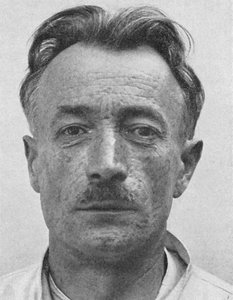


 Przełącz na wydania drukowane


 W przypadku dzieł sztuki lub reprodukcji, których którykolwiek z boków przekracza 105 cm (około 41 cali), rama zostanie wysłana w formie zestawu do samodzielnego montażu. Metoda ta zapewnia bezpieczną dostawę i zapobiega uszkodzeniom podczas transportu.


