


 Zobacz w skali 1:1
 Wyślij
 Udostępnij
 Szczegóły
 Guide
Guide

 Pobierz plik obrazu
 Podobne obiekty
 RTG
RTG Pokaz slajdów
 Statystyki
Krajobraz z Dwoma Chłopcami Łowiącymi
 Olej na płótnie
- Sztuka ścienna
- Romantic Landscape
 67.0 x 78.0 cm
 Government Art Collection
 Czytaj więcej
Ręcznie malowana reprodukcja olejowa
Ręcznie malowany obraz olejny na płótnie, wykonany na zamówienie przez naszych artystów w wybranym przez Ciebie wymiarze i oprawie. ( Przełącz na wersję drukowaną Przełącz na wersję cyfrową)




P118B $10

P118H $10

P118W $10

P438Z $10

P508JH $12

P508YH $12

P805H $10

P805Z $10

P919BZ $10

P919G $10

P919XJ $10

P959ZH $10

P968JZ $12

W106C $8

W218G $10

W218JH $8

W218Y $10

W307PJ $10

W316G $10

W316PJ $8

W316Y $10

W398PJ $8

W4111J $10

W500HY $15

W500JH $15

W692G $12

W849H $8

W940BG $15

W953PJ $8




Wybierz spośród naszych standardowych rozmiarów, które zachowują oryginalne proporcje dzieła sztuki.

Możesz wprowadzić własne wymiary, aby dopasować obraz do konkretnej ramy lub przestrzeni. Jeśli wybrany rozmiar nie będzie odpowiadał proporcjom oryginału, przytniecie dzieło sztuki lub rozszerzymy je o dodatkowe elementy, ręcznie domalowane przez artystę. Przed rozpoczęciem produkcji wyślemy projekt cyfrowy do Twojej akceptacji.
Należy pamiętać, że podgląd na ekranie nie odzwierciedla rzeczywistego przycinania ani rozszerzania obrazu. Tylko projekt dokładnie pokaże ostateczną kompozycję.
Choć oferujemy możliwość zamówienia niestandardowych rozmiarów, zalecamy wybór wymiaru z gotowej listy, aby zachować oryginalne proporcje dzieła.
Po złożeniu zamówienia zespół AllPaintingsStore.com skontaktuje się z klientem drogą mailową w celu uzyskania instrukcji i prześle wizualizację projektu
Dostawa na całym świecie () w ciągu 3–4 tygodni zamiast standardowych 5 tygodni. (21 Wrzesień). Bez kompromisów w kwestii jakości.

Bezpłatna ekspresowa wysyłka na cały świat

Wysokiej jakości płótno lniane

Pełne ubezpieczenie transportowe

Gwarancja zwrotu należności celnych i podatków importowych

Gwarancja idealnego odwzorowania barw

100-dniowy okres na zwrot dzieła w przypadku wykrycia wad produkcyjnych

Gwarancja 100% zwrotu pieniędzy

Oferta przy zakupie wielu sztuk
 Opcja ze szkłem jest dostępna wyłącznie w rozmiarach poniżej 110 cm

Krajobraz z Dwoma Chłopcami Łowiącymi
Technika wykonania
Rozmiar reprodukcji
-


Suma do zapłaty
$ 258
George Barret Sr.: A Painter of Tranquility – Landscape with Two Boys Fishing
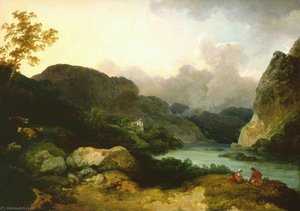
Landscape with Two Boys Fishing by George Barret the Elder (c. 1766–1767) stands as a testament to the elegance and contemplative spirit of Irish landscape painting during the mid-18th century. Executed in oil on canvas, this artwork transports viewers back to a serene moment nestled within the verdant hills of Ireland—a scene brimming with understated beauty and imbued with philosophical resonance.A Vision Inspired by Burke
The genesis of “Landscape with Two Boys Fishing” lies firmly rooted in the intellectual currents of its time. George Barret Sr., deeply influenced by Edmund Burke’s *A Philosophical Enquiry into the Origin of Our Ideas of the Sublime and Beautiful*, approached his artistic endeavors with a profound understanding of how art could evoke powerful emotions. Burke's exploration of the sublime – characterized by awe, terror, and grandeur – contrasted sharply with the beautiful – associated with harmony, pleasure, and tranquility – served as a guiding principle for Barret’s compositional choices. As evidenced in this painting, he skillfully blends elements of both categories to create an experience that is simultaneously captivating and calming.Detailed Observation & Atmospheric Rendering
Barret's meticulous technique exemplifies the prevailing artistic standards of his era. He employed painstaking brushwork to capture the textures of the rocky outcrop upon which two boys engage in fishing—the rough surface mirroring the ruggedness of the Irish landscape. Similarly, he rendered the flowing river with remarkable fluidity and precision, reflecting the shimmering light of an evening sky dappled with scattered clouds. The artist’s masterful use of atmospheric perspective – diminishing size and tonal gradation – establishes a palpable sense of depth, drawing the eye towards the distant horizon and immersing the viewer in the scene's tranquil ambiance.Symbolism of Leisure & Connection
Beyond its aesthetic merits, “Landscape with Two Boys Fishing” carries symbolic weight. The depiction of boys fishing speaks to themes of pastoral idyll—a celebration of simple pleasures and a harmonious relationship between humanity and nature. It embodies Burke’s notion that beauty inspires contemplation and elevates the soul, fostering an appreciation for the natural world's restorative power. The muted color palette – dominated by earthy greens and blues – reinforces this feeling of serenity, creating an artwork that transcends mere visual representation to convey profound emotional resonance.A Legacy of Irish Art
George Barret Sr.’s “Landscape with Two Boys Fishing” remains a captivating exemplar of Irish landscape painting from the late Stuart period. Its enduring appeal stems not only from its exquisite craftsmanship but also from its ability to transport us back to a time when art served as a conduit for philosophical contemplation and emotional experience—a legacy that continues to inspire admiration and appreciation today.Podobne dzieła




Biografia artysty
George Barret Sr.: Life & Legacy
George Barret Sr., born between 1728 and 1732 in Libertyville, Ireland – the son of a cloth merchant – stands as a pivotal figure in the history of British landscape painting. His artistic journey began humbly, apprenticed initially as a staymaker before an unexpected discovery ignited his passion for drawing, ultimately shaping him into one of the foremost artists of his era and a founding member of the Royal Academy.Early Life and Training
His formative years were marked by disciplined training at Robert West’s Academy in Dublin around 1747, generously supported by the Royal Dublin Society. This institution fostered his burgeoning talent and established him as a skilled draughtsman, laying the groundwork for his future artistic endeavors. Notably, he forged an enduring friendship with Edmund Burke during Burke's time at Trinity College, Dublin – a relationship that would prove invaluable throughout Barret’s life, influencing both his intellectual pursuits and artistic sensibilities.Early Artistic Development & Influences
Barret’s early canvases frequently depicted idealized classical landscapes and mythological subjects—a stylistic choice profoundly impacted by the philosophical writings of Edmund Burke. Specifically, *A Philosophical Enquiry into the Origin of Our Ideas of the Sublime and Beautiful* instilled in him a deep appreciation for capturing emotions of awe and grandeur within his artistic vision. He commenced his artistic career by meticulously reworking engravings of Italianate scenes created by artists like Claude Lorrain – demonstrating an unwavering commitment to established conventions and mastering techniques honed by masters of the past. Despite portraying landscapes inspired by Italy, there’s no documented evidence that Barret ever undertook a personal voyage to explore its artistic heritage.Move to London and Rise to Prominence
Driven by ambition and seeking greater creative opportunities, Barret relocated to London in 1762 – cementing his position as a rising star within the burgeoning art world. Within months, he garnered considerable acclaim for his landscape paintings, attracting the patronage of influential collectors and securing prominent exhibitions at the Society of Artists of Great Britain. Perhaps most significantly, in 1768, Barret joined forces with fellow artists to establish the Royal Academy – an audacious step that fundamentally reshaped British art history and propelled him into a position of leadership within the burgeoning artistic community.Artistic Style and Themes
Barret’s stylistic evolution mirrored broader trends in eighteenth-century painting, transitioning from meticulously crafted Italianate landscapes to more nuanced depictions of English and Irish scenery. He undertook extensive expeditions across Britain, Wales, Scotland, and Ireland – diligently documenting breathtaking vistas and capturing the essence of diverse environments. Recurring motifs included tranquil meadows bathed in sunlight, dramatic waterfalls like *The Powerscourt Waterfall*, and expansive panoramas showcasing the grandeur of aristocratic estates. His paintings skillfully blended observation with artistic interpretation, conveying not merely visual representations but also a palpable sense of atmosphere and emotion. Furthermore, Barret’s compositions often incorporated figures within the landscape—a technique that added scale and narrative depth to his works.Later Life & Patronage
Throughout his life, Barret faced personal challenges – notably asthma which prompted him to relocate to Westbourne Green in 1772 for improved health conditions. Despite achieving considerable financial success, he was described as “feckless” with money and occasionally experienced periods of hardship. However, his enduring friendship with Edmund Burke provided crucial support—both materially and professionally—ensuring Barret’s continued artistic vitality. In 1782, Burke championed Barret's candidacy for the role of Master Painter at Chelsea Hospital – a position he held until his untimely death in 1784, leaving behind a legacy as one of Britain’s most respected landscape artists and a champion of artistic excellence. His works continue to inspire admiration and offer invaluable insights into the aesthetic sensibilities of the era.
George Barret Senior
1732 - 1784 , Irlandia
Najważniejsze informacje
- Artistic Movement Or Style: Romanticizm
- Artists Or Movements Influenced By This Artist: Claude Lorrain
- Artists Who Influenced This Artist: Edmund Burke, Claude Lorrain
- Date Of Birth: 1732
- Date Of Death: 1784
- Full Name: George Barret Sr.
- Nationality: Irlandzka
- Notable Artworks:
- The Powerscourt Waterfall
- A Prospect of Southwick Park
- Llyn Nantlle
- North Side of Danson
- Place Of Birth: Libertyville, Irlandia
Zobacz także powiązane artykuły

Idylliczne Wizje: Pastoralna Scena w Sztuce – Od Arkadii do Współczesności
Odkryj fascynującą historię sztuki pastoralnej – od arkadyjskich wizji po współczesne interpretacje. Analiza symboliki, wpływ na malarstwo i rysunek. Ekspercka wiedza o renesansie, baroku i rokoko.
Georges Braque: 25 Arcydzieł Kubizmu i Nowoczesnej Sztuki | AllPaintingsStore.com
Odkryj 25 arcydzieł Georges'a Braque – pioniera kubizmu i malarstwa nowoczesnego. Poznaj historię, techniki i inspiracje za jego najsłynniejszymi obrazami. Reprodukcje najwyższej jakości na AllPaintingsStore.com! Eksploruj pełną kolekcję online.

George Barret the Elder: Pioneering British Pastoral Painting & Landscape's Rise
Explore the life & art of George Barret Sr., a pioneer of British pastoral painting. Discover his influence on Romantic landscape art, patronage, and collecting tips from AllPaintingsStore.

Georges Seurat: 25 Arcydzieł Punktalizmu dla Twojego Domu | AllPaintingsStore.com
Odkryj 25 arcydzieł Georges'a Seurata! Poznaj historię punktalizmu, impresjonistyczne pejzaże i fascynującą technikę malarską. Reprodukcje obrazów najwyższej jakości na AllPaintingsStore.com – inspiracje do Twojego wnętrza. Eksploruj pełną kolekcję online!

Idyllic Visions: Exploring the Pastoral Tradition in Western Art – Themes, Techniques & Enduring Appeal
Explore the rich history of pastoral art from classical Arcadia to contemporary interpretations. Discover key artists, themes & collecting tips at AllPaintingsStore.


