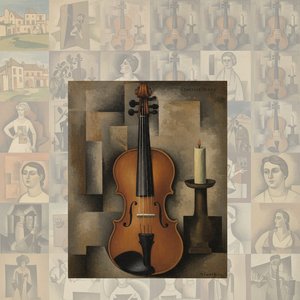
Akryl na płótnie.

§ 1Catalogue data

§ 2Abstract
Opis obiektu
Meta Description: Kontemplacyjna portretowa twórczość George'a Romneya przedstawiająca Williama Henry’ego Kavendish’a Bentynka III księcia Portlandzkiego – ikoniczny obraz XVIII wieku, ukazujący władzę i elegancję angielskiej rodziny królewskiej.
 Rozwiń treść
Biografia artysty
George Romney (1734-1802) – brytyjski malarz portretowy, znany z eleganckich portretów arystokracji. Jego prace charakteryzują subtelny wdzięk i psychologiczna głębia. Odkryj jego świat!
§ 3Commentary
William Henry Cavendish Bentinck: A Portrait of Power and Dignity by George Romney
George Romney’s depiction of William Henry Cavendish Bentinck, the 3rd Duke of Portland, stands as a testament to the grandeur of Georgian England and exemplifies the meticulous artistry characteristic of its finest portrait painters. Painted around 1799, this artwork transcends mere likeness; it embodies an idealized representation of aristocratic authority and ambition, skillfully capturing both physical presence and inner character.Subject Matter & Composition
The central figure dominates the canvas – William Henry Cavendish Bentinck himself—a man who held positions of considerable influence within British politics during a period marked by turbulent shifts in power dynamics. Romney’s compositional choices prioritize clarity and impact. The Duke is positioned squarely in the frame, facing slightly to his left, creating an impression of controlled composure despite the subtle dynamism conveyed through his posture. His hands rest casually on his hip, projecting confidence and conveying a sense of dignified repose—a deliberate gesture designed to communicate power without ostentation. The dark background serves as a crucial element, isolating Bentinck against a void that amplifies his stature and reinforces the solemn atmosphere of the portrait.Style & Technique: Romney’s Mastery
Romney's artistic approach is rooted in the prevailing stylistic conventions of his time—a commitment to realism underpinned by an unwavering dedication to technical precision. Employing oil paints with painstaking brushstrokes, he achieved remarkable textural accuracy, meticulously rendering the subtleties of skin tones and capturing the rich sheen of velvet fabric adorning Bentinck’s coat. This technique reflects a profound understanding of light and shadow, skillfully manipulating illumination to sculpt form and imbue the painting with dramatic depth. Romney's meticulous attention to detail extends beyond mere surface representation; he strives to convey not just what is seen but also what is felt—a hallmark of Romantic portraiture that anticipates the expressive tendencies of later artistic movements.Symbolism & Historical Context: Layers of Meaning
The portrait’s symbolism speaks volumes about Bentinck's social standing and the broader context of Georgian society. The prominent crown atop his head immediately proclaims his noble lineage and connection to the monarchy, symbolizing power and prestige. Furthermore, the Duke’s opulent attire—a scarlet coat embellished with gold embroidery, a sash bearing royal insignia, and a powdered wig—underscores his wealth and social dominance. Painted during a period of significant political upheaval – marked by debates over parliamentary reform and shifting alliances between Whigs and Tories – Romney's artwork serves as a visual record of the era’s anxieties and aspirations. It encapsulates the spirit of Georgian England, reflecting its values of tradition, hierarchy, and aristocratic patronage.Emotional Impact & Artistic Legacy
Ultimately, George Romney’s portrait transcends mere documentation; it aspires to evoke an emotional response in the viewer—a feeling of admiration for Bentinck's character and a contemplation of his role within history. The subdued palette – dominated by deep reds and muted blues – contributes to the painting’s solemn mood, reinforcing its sense of gravitas. Romney’s masterful technique ensures that the Duke’s likeness remains remarkably vivid across time, cementing his place as one of Britain's most celebrated portraitists and securing a lasting legacy within the annals of art history.Pytania i odpowiedzi
Do jakiego pomieszczenia polecane jest dzieło „William Henry Cavendish Bentinck” – George Romney?
Zalecaną przestrzenią dla „William Henry Cavendish Bentinck” – George Romney jest Salon lub strefa dzienna. Sugestia ta może być oczywiście dostosowana do Twojego wnętrza.
Z czego wynika obecny status praw autorskich dzieła "William Henry Cavendish Bentinck"?
Status praw autorskich do dzieła „William Henry Cavendish Bentinck” – należy do domeny publicznej – autorskie prawa majątkowe wygasły – wynika z faktu, że artysta zmarł w 1802.
W jaki sposób nurt i epoka przenikają się w „William Henry Cavendish Bentinck” – George Romney?
"William Henry Cavendish Bentinck" należy do nurtu Georgian Portraiture, a jego twórca tworzył w epoce – Wczesna nowożytność.


 Przełącz na wydania drukowane


 W przypadku dzieł sztuki lub reprodukcji, których którykolwiek z boków przekracza 105 cm (około 41 cali), rama zostanie wysłana w formie zestawu do samodzielnego montażu. Metoda ta zapewnia bezpieczną dostawę i zapobiega uszkodzeniom podczas transportu.