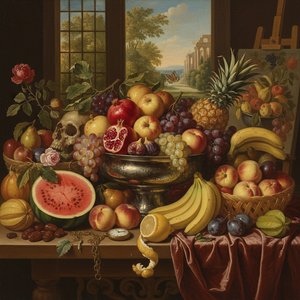
Oil On Canvas.

§ 1Catalogue data


Ten utwór podlega ochronie prawem autorskim
Dzieło sztuki prezentowane na tej stronie podlega ochronie prawem autorskim, co oznacza, że nie mamy prawa do tworzenia ani sprzedaży jego identycznej reprodukcji. Ochrona ta jest egzekwowana na mocy umów międzynarodowych, takich jak Konwencja berneńska oraz przez przepisy prawa krajowego, w tym te określone w Prawo autorskie USA – Tytuł 17.
Jako pełną szacunku i legalną alternatywę oferujemy personalizowane, malowane ręcznie dzieła sztuki inspirowane oryginałem. Nasi wykwalifikowani i profesjonalni artyści starannie analizują styl, nastrój oraz artystyczną esencję pierwowzoru, aby stworzyć nowe, unikalne dzieło, które przywołuje te same emocje – pozostając jednocześnie w pełni oryginalną kreacją.
Metoda ta jest w pełni zgodna z przepisami prawa autorskiego, ponieważ nie polega na kopiowaniu ani powielaniu chronionego dzieła. Stanowi ona kreatywną reinterpretację – nowy obraz, który czerpie inspirację z oryginału, ale nie jest z nim tożsamy.
 Dowiedz się więcej
§ 2Abstract
Opis obiektu
Georges Braque’s Still Life captures vibrant fruits – bananas, lemons, and oranges – in a classic Cubist style. This iconic artwork showcases the artist's innovative approach to form and color, perfect for art lovers and collectors.
Biografia artysty
Poznaj Georges’a Braque'a (1882-1963): pioniera Kubizmu i mistrza Fauwizmu! Eksploruj jego innowacyjne dzieła sztuki, od „Domów przy L’Estaque” po oszałamiające kolaże. Jego twórczość zmieniła oblicze sztuki nowoczesnej!
§ 3Commentary
Georges Braque’s Still Life: A Study in Cubist Fragmentation
This meticulously rendered still life by Georges Braque offers a profound glimpse into the artist's pivotal role in the development of Cubism, a movement that irrevocably altered the course of modern art. Executed with a precision born from his early training as a house painter – a lineage he deeply valued for its understanding of form and structure – the painting transcends a simple depiction of fruit; it’s an exploration of perception itself. The bowl, brimming with vibrant bananas, lemons, and oranges, isn't presented in a single, unified perspective. Instead, Braque employs a radical fragmentation of space and object, anticipating the core tenets of Cubism that would soon be championed by Picasso.
- Subject Matter: The arrangement is deceptively straightforward – a bowl of fruit on a table. However, this commonplace subject becomes an arena for artistic experimentation.
- Style & Technique: Braque’s approach aligns with the early phase of Cubism, often referred to as Analytical Cubism. Notice the deliberate flattening of perspective, the geometric reduction of forms into interlocking planes, and the multiple viewpoints presented simultaneously. The brushwork is precise yet subtly textured, contributing to a sense of tangible realism despite the fractured composition.
Historical Context: The Birth of a New Vision
Created during a period of immense artistic ferment in Paris – roughly 1909-1910 – this still life reflects the intellectual and aesthetic currents swirling around Braque. He was deeply influenced by Paul Cézanne’s emphasis on geometric forms underlying natural subjects, as well as the radical ideas being explored by artists like Henri Matisse and Pablo Picasso. The painting represents a crucial transitional moment in art history, bridging the gap between traditional representational techniques and the revolutionary concepts of Cubism. It's a testament to Braque's courage in challenging established norms and forging new pathways for artistic expression.
- Cézanne’s Influence: Braque’s use of simplified geometric shapes echoes Cézanne’s exploration of underlying structure, particularly evident in the reduction of the fruit to basic forms.
- The Parisian Avant-Garde: The painting exists within a vibrant artistic community where experimentation and innovation were actively encouraged.
Symbolism and Emotional Resonance
While seemingly a simple still life, Braque’s work is rich in symbolic potential. Fruit has long been associated with abundance, fertility, and the passage of time – themes that resonate throughout art history. The specific choice of bananas, lemons, and oranges adds layers of meaning. Bananas, often linked to tropical exoticism, introduce a touch of the unfamiliar. Lemons, traditionally symbols of purity and vigilance, offer a counterpoint to the richness of the other fruits. Oranges, representing warmth and vitality, ground the composition with their bold color. The overall effect is one of quiet contemplation, inviting the viewer to engage in a dialogue with the artwork’s inherent ambiguities.
- Color Palette: The vibrant hues of the fruit – yellows, oranges, and greens – contribute significantly to the painting's emotional impact, evoking feelings of freshness and energy.
- Compositional Tension: The fragmented forms create a subtle sense of tension, reflecting the intellectual and emotional complexities of the era.
A Masterpiece Recreated
AllPaintingsStore offers a meticulously crafted hand-painted reproduction of this seminal work by Georges Braque. Utilizing archival quality materials and employing traditional painting techniques, our artisans faithfully recreate the artist’s vision, capturing every nuance of color, texture, and composition. This is more than just an image; it's a tangible connection to one of the most important moments in art history – a piece that will enrich any interior space and spark endless conversation.
Pytania i odpowiedzi
Jaki jest format dzieła "Still life"?
„Still life” – Georges Braque to kompozycja w formacie Landscape. Warto sprawdzić proporcje przed wyborem rozmiaru wydruku.
Czy „Still life” – Georges Braque to jasne czy ciemne dzieło?
Postrzegana jasność dzieła „Still life” – Georges Braque wynosi brilliant. Można ją dopasować do oświetlenia w docelowym pomieszczeniu.
Dla kogo "Still life" jest polecane jako prezent i do jakiego zastosowania?
„Still life” – Georges Braque jest polecane jako prezent dla Birthday, szczególnie na Accent. Reprodukcję dzieła można podarować jako upominek.


 Przełącz na wydania drukowane


 W przypadku dzieł sztuki lub reprodukcji, których którykolwiek z boków przekracza 105 cm (około 41 cali), rama zostanie wysłana w formie zestawu do samodzielnego montażu. Metoda ta zapewnia bezpieczną dostawę i zapobiega uszkodzeniom podczas transportu.