


 Podgląd w skali 1:1
 Wyślij jako kartkę
 Udostępnij
 Szczegóły dzieła
 Przewodnik

 Pobierz obraz
 Podobne obiekty
 RTG
RTG Pokaz slajdów
 Pytania i odpowiedzi
 Statystyki
Odwiedziny

- 78.0 x 74.0 cm


 Rozwiń treść
Giclée / Wydruk artystyczny
Wydruki giclée lub płótna o jakości muzealnej, szybka realizacja i szeroki wybór opcji wykończenia. ( Zamów ręcznie malowaną reprodukcję Przejdź do wersji cyfrowej)




P118B zł10

P118H zł10

P118W zł10

P438Z zł10

P508JH zł12

P508YH zł12

P805H zł10

P805Z zł10

P919BZ zł10

P919G zł10

P919XJ zł10

P959ZH zł10

P968JZ zł12

W106C zł8

W218G zł10

W218JH zł8

W218Y zł10

W307PJ zł10

W316G zł10

W316PJ zł8

W316Y zł10

W398PJ zł8

W4111J zł10

W500HY zł15

W500JH zł15

W692G zł12

W849H zł8

W940BG zł15

W953PJ zł8




Wybierz spośród naszych standardowych rozmiarów, które zachowują oryginalne proporcje dzieła sztuki.

Wpisz wymaganą szerokość i wysokość, aby dopasować grafikę do ramy lub ściany. Wydruk można jedynie przyciąć, nigdy nie powiększając go poza oryginalny obraz, dlatego format o innych proporcjach spowoduje utratę części kompozycji. Przed rozpoczęciem druku prześlemy Ci cyfrowy podgląd do zatwierdzenia. Obraz wyświetlany na tej stronie nie pokazuje rzeczywistego przycięcia — jedynie podgląd oddaje ten efekt.
Dostawa na cały świat () w ciągu 2 tygodni zamiast standardowych 4/5 tygodni. (7 Listopad)

Bezpłatna ekspresowa wysyłka na cały świat

Wysokiej jakości płótno lniane

Pełne ubezpieczenie przesyłki

Gwarancja zwrotu należności celnych i podatków importowych

Gwarancja wiernego odwzorowania kolorów

100-dniowa polityka zwrotów (tylko w przypadku wad)

Gwarancja 100% zwrotu pieniędzy

Zniżka przy zakupie wielu sztuk
 Opcja ze szkłem jest dostępna wyłącznie w rozmiarach poniżej 110 cm

Odwiedziny
Giclée / Wydruk artystyczny
Wymiary reprodukcji
-


Cena całkowita
zł 254
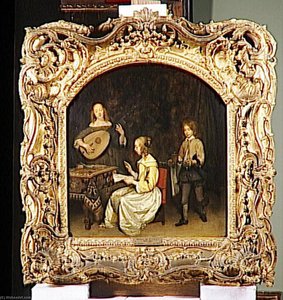
Gerard Ter Borch: A Window Into Dutch Domestic Life
Gerard ter Borch (1617 – 1681) stands as a pivotal figure in the Dutch Golden Age, recognized not merely for his prolific output but for establishing a distinctive genre of painting—domestic interiors imbued with psychological depth and subtle realism. Unlike many contemporaries who favored grand historical narratives or mythological allegories, ter Borch focused on capturing the quiet moments of everyday existence within bourgeois homes, offering viewers an unparalleled glimpse into the inner lives of his subjects. His artistic journey began in Zwolle, Netherlands, where he honed his skills alongside his sister, Gesina ter Borch, a fellow artist who shared his passion for portraying human emotion with remarkable sensitivity.The Style and Technique of Ter Borch’s Masterpieces
Ter Borch's signature style is characterized by an almost obsessive attention to detail—a hallmark that distinguishes him from other artists of the period. He employed oil paint on canvas, utilizing a technique known as *sfumato*, which involved blending colors imperceptibly to create soft gradations and atmospheric haze. This masterful manipulation of light and shadow wasn’t simply decorative; it served to heighten the emotional impact of the scene and convey a profound sense of intimacy. The artist meticulously rendered textures—the weave of fabrics, the sheen of polished surfaces—creating an illusion of palpable reality that captivated audiences. Consider “The Letter,” for example – its luminous illumination and delicately modeled drapery exemplify ter Borch’s unparalleled command of artistic craft.A Portrait of Quiet Conversation: Composition and Symbolism
“The Visit” exemplifies ter Borch's compositional genius. Four figures occupy the canvas—two women seated on a bench, accompanied by two men standing nearby—engaged in what appears to be an earnest conversation. The placement of these individuals is deliberate, guiding the viewer’s gaze across the scene and emphasizing the importance of interpersonal connection. Ter Borch skillfully utilized color palettes – muted browns and blues dominate, reflecting the subdued atmosphere of the bedroom setting. Furthermore, the inclusion of a small dog adds to the domestic tranquility, symbolizing companionship and familial warmth. These elements contribute to a broader symbolic narrative concerning social status, emotional vulnerability, and the complexities of human relationships—themes that resonate powerfully with viewers even today.Historical Context: The Dutch Golden Age and Domestic Ideals
Ter Borch’s work emerged during the zenith of the Dutch Republic's cultural flourishing – the Dutch Golden Age (approximately 1648–1702). This era witnessed unprecedented economic prosperity, fueled by maritime trade and colonial expansion, fostering a burgeoning middle class eager to express its newfound wealth and status through art. Ter Borch’s depictions of bourgeois interiors reflected prevailing societal ideals concerning family life, moral virtue, and refined taste—values that were championed by intellectuals and artists alike. His paintings served as visual embodiments of these aspirations, documenting the rituals and customs of respectable households during a transformative period in European history.Emotional Resonance: Capturing Human Psyche
Ultimately, ter Borch’s enduring appeal lies in his ability to capture the elusive essence of human emotion—a feat achieved through painstaking observation and masterful artistic execution. Unlike artists who sought to portray grand narratives or idealized figures, ter Borch focused on conveying subtle nuances of psychological experience—expressions of thoughtfulness, apprehension, and quiet contemplation. His canvases invite viewers into a realm of intimacy and introspection, prompting reflection upon the complexities of human relationships and the significance of everyday moments. “The Glass of Lemonade,” similarly, showcases ter Borch’s talent for portraying inner states with remarkable precision – an achievement that cements his legacy as one of the most perceptive artists of his time.Pytania i odpowiedzi
Czy „Odwiedziny” – Gerard ter Borch należy do najbardziej pożądanych dzieł w nurcie Dutch Golden Age?
„Odwiedziny” – Gerard ter Borch jest klasyfikowane jako Uznany/a i należy do nurtu Dutch Golden Age.
Jaki jest dominujący kolor dzieła „Odwiedziny” – Gerard ter Borch?
„Odwiedziny” skłania się ku Od bursztynu po szafran tonacji.
Jakie emocje budzi "Odwiedziny"?
„Odwiedziny” budzi Spokój emocje. Ton emocjonalny opisuje wrażenie, jakie wywołuje to dzieło.
Podobne dzieła




Biografia artysty
Gerard ter Borch
Gerard ter Borch lub Terborch (ur. w grudniu 1617 w Zwolle, zm. 8 grudnia 1681 w Deventer) – holenderski malarz i rysownik okresu baroku, przedstawiciel malarstwa rodzajowego.
Jego ojciec, Gerard ter Borch starszy, także był malarzem. W 1635 roku Gerard ter Borch młodszy wyruszył w 5-letnią podróż, podczas której odwiedził Anglię, Włochy i Francję. Jego edukacja otrzymał od ojca, który również posiadał umiejętności artystyczne, co stanowiło doskonałe przygotowanie do dalszego rozwoju talentu.
W latach 1640–41 przebywał we Włoszech i Hiszpanii, a między 1646 i 1648 odwiedził Münster, gdzie namalował obraz Traktat pokojowy z Münster. Przede wszystkim jednak malował sceny rodzajowe i portrety.
Początkowo jego twórczość koncentrowała się na przedstawieniach ubogich ludzi, co odzwierciedlało wpływ stylu manierystycznego, który był wówczas popularny wśród europejskich artystów.
- Early Life and Influences
- Notable Works and Achievements
- Museums and Collections Featuring Ter Borch’s Work
- Legacy and Impact
Early Life and Influences
Gerard ter Borch urodził się w grudniu 1617 roku w Zwolle, prowincji Overijssel, Republiki Holenderskiej.
Jego ojciec, Gerard ter Borch starszy, także był malarzem i posiadał doskonałą wiedzę anatomiczną oraz umiejętności rysunkowe. Dzięki temu młodszy Gerard otrzymał wyjątkową edukację.
W 1635 roku odbył podróż do Londynu, gdzie studiował prawdopodobnie pod wpływem Willema Cornelisa Duystera lub Piotra Codde. Jego zainteresowania sztuką kształtowały się również dzięki kontaktom z innymi artystami europejskimi, co wpłynęło na jego indywidualny styl.
Jego siostra Gesina także zajęła się twórczością i stała się znaną malarką, co dodatkowo wzmocniło rodzinne tradycje artystyczne.
Notable Works and Achievements
Największym osiągnięciem Gerarda ter Borcha był obraz „List” (ok. 1655), który znajduje się w Mauritshuisie w Hadze.
Jest to doskonałe przykładowe dzieło jego twórczości, ukazujące umiejętność artysty uchwycenia faktury i światła.
Jego prace charakteryzują się niezwykłą szczegółowością oraz emocjonalną głębią. Ter Borch wykorzystywał technikę olejową na płótnie, która pozwalała mu uzyskać realistyczne odwzorowanie obrazu.
Znane są również jego sceny rodzajowe przedstawiające życie codziennego ludzi – „Chłopiec iskający psa” oraz „Dziewczyna obierająca jabłko”. Obrazy te świadczą o jego umiejętności obserwacji i zdolności przekazywania emocji odbiorcy.
Museums and Collections Featuring Ter Borch’s Work
Obrazy Gerarda ter Borcha znajdują się w zbiorach wielu renomowanych muzeów na całym świecie.
Największą kolekcję posiada Ermitaż w Sankt Petersburgu, gdzie prezentowane są sześć jego dzieł.
Kolekcję Berlina liczy również sześć obrazów Terborcha i stanowi jedno z najważniejszych źródeł wiedzy o twórczości tego artysty.
Getty Center posiada trzy obrazy Gerarda ter Borch i jest jednym z najbardziej prestiżowych miejsc wystawienniczych na świecie.
Legacy and Impact
Gerard ter Borch wyznaczył nowy kierunek dla malarstwa rodzajowego, koncentrując się na przedstawieniach codziennego życia ludzi.
Jego twórczość zainspirowała innych artystów, takich jak Gabriel Metsu, Gerrit Dou oraz Johannes Vermeer.
Jego umiejętność uchwycenia emocji i atmosfery obrazu wpłynęła na rozwój stylu baroku w Holandii.
Ter Borch jest uznawany za jednego z pionierów holenderskiego malarstwa rodzajowego i jego dzieła stanowią ważną część historii sztuki.

Gerard ter Borch
1617 - 1681 , Holandia
Krótka nota
- Artistic Movement Or Style: Barok
- Artists Or Movements Influenced By This Artist: ['Gabriel Metsu']
- Artists Who Influenced This Artist: ['Nicolaes Berchem']
- Date Of Birth: 1617-12-01 Zwolle
- Date Of Death: 1681-12-08 Deventer
- Full Name: Gerard ter Borch
- Nationality: Holenderski
- Notable Artworks: ['List']
- Place Of Birth: Zwolle, Netherlands
Powiązane artykuły
Holenderski Barok: 10 Arcydzieł, Które Zdefiniowały Epokę | AllPaintingsStore
Poznaj 10 arcydzieł holenderskiego baroku! Odkryj historie Rembrandta, Vermeera i innych mistrzów XVII wieku. Reprodukcje obrazów najwyższej jakości – idealne do Twojego wnętrza. AllPaintingsStore.com

Gerard ter Borch: Intimacy & Light in the Dutch Golden Age
Explore the captivating world of Gerard ter Borch, a master of Dutch Golden Age genre painting. Discover his intimate scenes, masterful light, and lasting influence on art history. Learn more at AllPaintingsStore.
Złoty Wiek Niderlandów: Światło, Realizm i Kulturowe Innowacje w Malarstwie Barokowym
Odkryj fascynujący świat malarstwa holenderskiego Złotego Wieku! Poznaj arcydzieła Rembrandta, Vermeera i innych mistrzów. Analiza technik, gatunków i wpływu na sztukę europejską.

Chiaroscuro and Character: A Definitive Guide to Light and Shadow in the Dutch Baroque Era
Explore the dramatic mastery of the Dutch Baroque era. Discover how masters like Rembrandt used chiaroscuro to transform everyday life into timeless art. An expert guide for collectors and enthusiasts seeking to understand the profound interplay of light and shadow.

Gerard van Honthorst: Illuminating the Dutch Golden Age with Caravaggism & Courtly Grace
Explore the captivating world of Gerard van Honthorst, a Dutch Golden Age master renowned for his dramatic chiaroscuro & courtly portraits. Discover his life, art, and lasting influence on Baroque painting.


