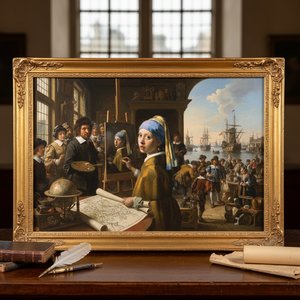
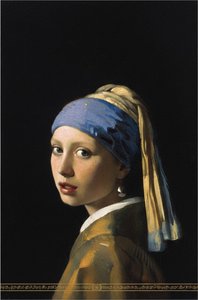
1660. Oil On Canvas, 74.0 x 64.0 cm. Rijksmuseum.

§ 1Catalogue data

- 74.0 x 64.0 cm


§ 2Abstract
Opis obiektu
Gerrit Dou, born in Leiden in 1613, died in 1675, was a prolific painter of the Dutch Golden Age renowned for his meticulous genre scenes and trompe l'oeil 'niche' paintings. His signature style combined realism with illusionistic techniques.
 Rozwiń treść
Biografia artysty
Poznaj wyjątkowe malarstwo złotego wieku holenderskiego Gerarda Doua (1613-1675). Znany z niezwykle szczegółowego stylu fijnschilderij, scen rodzajowych oraz mistrzowskiego wykorzystania światła w świecących wnętrzach. Odkryj jego dziedzictwo i dzieła!
§ 3Commentary
A Window into Scholarly Reflection: Gerrit Dou’s “The Night School”
Gerrit Dou’s “The Night School,” painted in 1660, stands as a quintessential emblem of the Dutch Golden Age—a period defined by artistic innovation and meticulous realism. More than just a depiction of an evening study session, this monochrome masterpiece delves into themes of intellectuality, contemplation, and the enduring pursuit of knowledge, offering viewers a glimpse into the spirit of its time.
- Composition & Perspective: Dou skillfully employs central perspective to draw attention directly to the table at the heart of the scene. The arrangement of figures—seated and standing—creates a triangular composition that reinforces the importance of this focal point, mirroring the humanist ideals prevalent during the Baroque era.
- Light & Shadow – Chiaroscuro Mastery: The painting’s dramatic impact stems primarily from Dou’s masterful use of chiaroscuro, a technique perfected by artists like Rembrandt. A single candle and lantern illuminate the room with focused beams, casting deep shadows that heighten the sense of intimacy and underscore the seriousness of the scholarly endeavor.
- Material & Technique: Executed in oil on canvas, “The Night School” demonstrates Dou’s meticulous attention to detail. Thin glazes of paint were layered upon each other—a hallmark of Baroque painting—allowing for subtle gradations of tone and creating a palpable illusion of depth. This painstaking process reflects the artist's commitment to capturing the nuances of reality.
Symbolism & Emotional Resonance
Beyond its technical brilliance, “The Night School” resonates with profound symbolic meaning. The candle itself serves as a potent metaphor for enlightenment and illumination—representing not only physical light but also intellectual understanding. Surrounded by figures absorbed in their studies, the painting evokes feelings of quiet concentration and introspection, inviting contemplation on the value of learning and the importance of reasoned thought.
Historical Context – The Leiden Fijnschilders
Gerrit Dou’s work belongs to the Leiden Fijnschilders—a group of artists who championed a refined style characterized by meticulous detail and psychological insight. This movement sought to elevate genre painting beyond mere representation, aiming instead to convey emotional depth and intellectual contemplation. “The Night School” embodies these aspirations perfectly.
Notable Collections & Inspirations
“The Night School” resides in the Rijksmuseum’s collection, alongside numerous other masterpieces of Dutch Baroque art. Its influence can be seen in subsequent artistic endeavors—particularly among those exploring themes of domestic life and intellectual pursuits. Consider commissioning a high-quality reproduction to bring Dou's evocative vision into your home or studio.
Pytania i odpowiedzi
Jaka jest technika i data powstania „The Night School” – Gerrit Dou?
"The Night School" powstało w 1660 roku przy użyciu techniki Oil On Canvas. Materiał i data opisują, w jaki sposób oraz kiedy wykonano oryginał.
Do jakiego nurtu należy "The Night School"?
„The Night School” to dzieło należące do nurtu Baroque. Nurt ten określa tradycję artystyczną, w której osadzone jest dzieło.
Gdzie mogę znaleźć przewodnik do "The Night School"?
Przewodnik po "The Night School" to strona Karta informacyjna dla uczniów dzieła sztuki – nadrukowalna karta informacyjna zawierająca opis utworu, informacje o autorstwie oraz tabelę danych (artysta, daty, technika, wymiary oryginału, kolekcja).


 Przełącz na wydania drukowane


 W przypadku dzieł sztuki lub reprodukcji, których którykolwiek z boków przekracza 105 cm (około 41 cali), rama zostanie wysłana w formie zestawu do samodzielnego montażu. Metoda ta zapewnia bezpieczną dostawę i zapobiega uszkodzeniom podczas transportu.