![The Passion [detail] — Hans Holbein Młodszy](/media-resize/960/artworks/images-full/0d/73/0d73c3453baad96a61c46326bf23a3ba.jpg.webp)
 Zobacz w skali 1:1
 Wyślij
 Udostępnij
 Szczegóły
 Guide
Guide

 Pobierz plik obrazu
 Podobne obiekty
 RTG
RTG Pokaz slajdów
 Statystyki
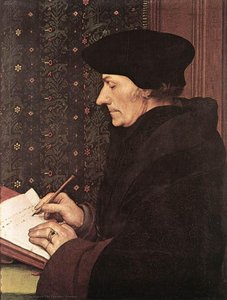
The Passion [detail]


 Czytaj więcej
Ręcznie malowana reprodukcja olejowa
Ręcznie malowany obraz olejny na płótnie, wykonany na zamówienie przez naszych artystów w wybranym przez Ciebie wymiarze i oprawie. ( Przełącz na wersję drukowaną Przełącz na wersję cyfrową)




P118B $10

P118H $10

P118W $10

P438Z $10

P508JH $12

P508YH $12

P805H $10

P805Z $10

P919BZ $10

P919G $10

P919XJ $10

P959ZH $10

P968JZ $12

W106C $8

W218G $10

W218JH $8

W218Y $10

W307PJ $10

W316G $10

W316PJ $8

W316Y $10

W398PJ $8

W4111J $10

W500HY $15

W500JH $15

W692G $12

W849H $8

W940BG $15

W953PJ $8




Wybierz spośród naszych standardowych rozmiarów, które zachowują oryginalne proporcje dzieła sztuki.

Możesz wprowadzić własne wymiary, aby dopasować obraz do konkretnej ramy lub przestrzeni. Jeśli wybrany rozmiar nie będzie odpowiadał proporcjom oryginału, przytniecie dzieło sztuki lub rozszerzymy je o dodatkowe elementy, ręcznie domalowane przez artystę. Przed rozpoczęciem produkcji wyślemy projekt cyfrowy do Twojej akceptacji.
Należy pamiętać, że podgląd na ekranie nie odzwierciedla rzeczywistego przycinania ani rozszerzania obrazu. Tylko projekt dokładnie pokaże ostateczną kompozycję.
Choć oferujemy możliwość zamówienia niestandardowych rozmiarów, zalecamy wybór wymiaru z gotowej listy, aby zachować oryginalne proporcje dzieła.
Po złożeniu zamówienia zespół AllPaintingsStore.com skontaktuje się z klientem drogą mailową w celu uzyskania instrukcji i prześle wizualizację projektu
Dostawa na całym świecie () w ciągu 3–4 tygodni zamiast standardowych 5 tygodni. (21 Wrzesień). Bez kompromisów w kwestii jakości.

Bezpłatna ekspresowa wysyłka na cały świat

Wysokiej jakości płótno lniane

Pełne ubezpieczenie transportowe

Gwarancja zwrotu należności celnych i podatków importowych

Gwarancja idealnego odwzorowania barw

100-dniowy okres na zwrot dzieła w przypadku wykrycia wad produkcyjnych

Gwarancja 100% zwrotu pieniędzy

Oferta przy zakupie wielu sztuk
 Opcja ze szkłem jest dostępna wyłącznie w rozmiarach poniżej 110 cm

The Passion [detail]
Technika wykonania
Rozmiar reprodukcji
-


Suma do zapłaty
$ 258
A Moment Frozen in Time: The Spiritual Weight of Holbein’s Vision
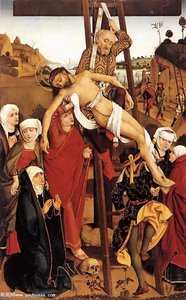
In the quiet corridors of art history, few works command the same visceral attention as Hans Holbein the Younger’s The Passion. This particular detail, a fragment of a much larger, monumental altarpiece executed between 1524 and 1525, serves as a profound window into the soul of the Northern Renaissance. At its heart lies a moment of staggering intensity: the physical and spiritual lifting of Jesus Christ toward the cross. It is not merely a depiction of a historical event, but a masterclass in capturing the heavy, breathless atmosphere of sacrifice. As viewers, we are drawn into a tight circle of figures, their bodies straining with the weight of divine destiny, creating an intimacy that feels both ancient and immediate.
Holbein, a master who would later become the preeminent portraitist of the English Tudor court, demonstrates here his unparalleled ability to blend anatomical precision with deep psychological resonance. The scene is thick with the tension of human effort and divine sorrow. Through the subtle interplay of light and shadow—the technique known as chiaroscuro—Holbein sculpts the musculature of those lifting the Savior, imbuing their movements with a palpable sense of gravity. Every furrowed brow and downward gaze tells a story of devotion, anguish, and the inexorable march toward the crucifixion.
Technical Mastery and the Luminosity of Oil on Panel
To behold this detail is to appreciate the sheer technical virtuosity required by the medium of oil paint on linden wood. Unlike the flatter, more opaque qualities of tempera, Holbein utilized the slow-drying nature of oils to build layers of translucent glaze. This method allowed him to achieve a breathtaking luminosity, where light seems to emanary from within the skin of the figures themselves. The richness of the pigments—the deep, somber tones of the clothing contrasted against the pale, vulnerable flesh of Christ—creates a chromatic depth that invites the eye to linger on every meticulously rendered fold of fabric and every bead of sweat.
The artist’s dedication to observation, inherited from his father Hans Holbein the Elder, is evident in the way he handles texture. One can almost feel the rough grain of the wooden cross and the heavy weight of the garments worn by the onlookers. This level of detail does more than showcase skill; it anchors the theological drama in a tangible, physical reality. For the collector or the interior designer, such a piece offers more than mere decoration; it provides a focal point of immense character, capable of anchoring a room with its historical gravity and sophisticated aesthetic complexity.
A Legacy of Emotion for the Discerning Collector
Beyond the technical brilliance lies the enduring emotional impact of the work. The Passion is a testament to the power of art to distill complex human emotions—faith, suffering, and determination—into a single, cohesive visual narrative. It is a piece that demands contemplation, making it an ideal acquisition for those who seek art that speaks to the human condition. Whether placed in a private study, a grand library, or a curated gallery space, a high-quality reproduction of this masterpiece brings with it the spirit of the Northern Renaissance.
For those looking to infuse their surroundings with a sense of history and profound beauty, this detail offers an unparalleled opportunity. It is a fragment of a larger theological epic, yet it stands alone as a triumph of composition and light. Owning such a work is an invitation to engage with the past, to witness the moment where human hands meet divine purpose, and to surround oneself with the eternal elegance of Holbein’s incomparable hand.
Podobne dzieła




Biografia artysty
A Life Etched in Detail: The World of Hans Holbein the Younger
Born around 1497 in Augsburg, Germany, Hans Holbein the Younger emerged as a defining figure of the Northern Renaissance—a master portraitist whose work continues to resonate with breathtaking realism and psychological depth. His upbringing within an artistically gifted family laid the foundation for his exceptional talent; his father, Hans Holbein the Elder, was a respected painter and printmaker who instilled in young Hans a meticulous approach to observation and technique. This early training wasn’t merely about mastering brushstrokes or mixing pigments—it was about learning to *see*, to capture not just likeness but the very essence of a subject. Holbein's initial artistic explorations occurred within his father’s workshop, where he honed his skills before embarking on a journey that would lead him through Switzerland and ultimately to the heart of the English court.From Basel to the Tudor Court: A Rising Star
After completing his apprenticeship, Holbein traveled extensively throughout Switzerland, establishing himself as an independent artist with a growing reputation. He spent several formative years in Basel, creating not only striking portraits but also religious works and intricate woodcut designs—most notably the haunting series depicting the *Dance of Death*. These early pieces reveal a burgeoning mastery of composition and a developing fascination with capturing the complexities of human emotion. He admired the work of Albrecht Dürer and other German masters while also studying Italian art during his travels, absorbing their techniques and incorporating them into his own unique style. His innovative compositions further enhanced the impact of his work, often employing symbolic objects or backgrounds to convey deeper meaning. It was in 1526 that fate intervened, drawing Holbein towards England, an event that would irrevocably alter his artistic trajectory. He arrived bearing a letter of introduction from Erasmus, the renowned humanist scholar, which opened doors to the influential circles of English society. His talent quickly captivated prominent figures like Sir Thomas More, who became both a patron and a subject for several compelling portraits. This connection proved pivotal, leading to Holbein’s appointment as a court painter to King Henry VIII in 1536—a position he held, with some interruptions, until his untimely death in 1543.The Art of Perception: Style and Masterpieces
Holbein's artistic style is characterized by an extraordinary commitment to realism, achieved through painstaking attention to detail in rendering textures, fabrics, and the subtle nuances of facial features. He didn’t simply *paint* portraits; he meticulously constructed them, layer upon layer, capturing not just physical appearances but also the personality and inner life of his sitters. His innovative compositions further enhanced the impact of his work, often employing symbolic objects or backgrounds to convey deeper meaning. The Ambassadors (1533) stands as a testament to this approach—a complex and symbolically rich double portrait showcasing both Holbein’s technical brilliance and intellectual depth. The anamorphic skull subtly embedded within the painting serves as a stark *memento mori*, reminding viewers of the inevitability of death. He employed meticulous observation, blending scientific accuracy with artistic sensitivity – techniques that would become hallmarks of his oeuvre. His numerous portraits of Henry VIII established a lasting image of Tudor power, while his depiction of Erasmus of Rotterdam captures the scholar's profound intellectual gravitas. Other notable works include the stunning *Portrait of Nikolaus Kratzer* (1528), a masterpiece of realism and scientific detail.Legacy and Influence: A Lasting Impression
Holbein’s artistic journey was shaped by a confluence of influences, blending the precision of German artistic traditions with the compositional principles of the Italian Renaissance. His legacy is profound; Holbein’s portraits set a new standard for realism and psychological insight in portraiture, influencing generations of artists who followed. His depictions of key figures during the Tudor period provide invaluable insights into the lives and personalities of those who shaped English history.- His meticulous attention to detail revolutionized portrait painting, elevating it to an art form that prioritized psychological accuracy alongside visual beauty.
- He championed humanist ideals—celebrating intellect and human dignity—reflecting the spirit of his time.
- Holbein’s work continues to inspire artists today, demonstrating the enduring power of observation and artistic innovation.
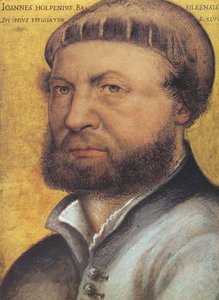
Hans Holbein Młodszy
1497 - 1543 , Niemcy
Najważniejsze informacje
- Artistic Movement Or Style: Renesans północny
- Artists Or Movements Influenced By This Artist: ['Późniejsi malarze portretowi']
- Artists Who Influenced This Artist: ['Albrecht Dürer']
- Date Of Birth: c. 1497
- Date Of Death: October or November 1543
- Full Name: Hans Holbein der Jüngere
- Nationality: Niemcy i Szwajcaria
- Notable Artworks:
- Ambasadorowie
- Portret Henryka VIII
- Portret Erasma
- Place Of Birth: Augsburg, Germany
Zobacz także powiązane artykuły

The Northern Renaissance: A Masterclass in Hyper-Realism, Oil Innovation, and Symbolic Depth
Explore the profound mastery of Northern Renaissance art. Discover the technical brilliance of Flemish oil painting, the intricate symbolism of Bosch and Bruegel, and the revolutionary realism that redefined European art history through an expert historical lens.

Mastering Detail: The Captivating World of Hans Holbein the Younger’s Northern Renaissance Masterpieces
Explore the breathtaking precision of Hans Holbein the Younger. From Tudor royal portraits to intricate Northern Renaissance details, discover the mastery behind his legendary works and learn how to bring this historical grandeur into your collection with museum-quality reproductions.

Hans Holbein the Younger: A Renaissance Portraitist's Mastery of Realism & Psychological Insight
Explore the life & art of Hans Holbein the Younger, a Renaissance master renowned for his strikingly realistic portraits and psychological insight. Discover iconic works like 'The Ambassadors' and delve into his lasting legacy.

Trwała Spuścizna Malarstwa Olejnego: Technika, Historia i Estetyczny Wpływ
Poznaj historię i technikę malarstwa olejnego! Eksperckie artykuły o konserwacji, renowacji oraz współczesnych zastosowaniach. Dowiedz się więcej o mistrzach i trwałości obrazów olejnych.

Arcydzieła Północnego Renesansu: 10 Obrazów, które Zmieniły Sztukę | AllPaintingsStore.com
Poznaj 10 arcydzieł Północnego Renesansu! Odkryj historie van Eycka, Dürera i Holbeina. Reprodukcje obrazów najwyższej jakości dla Twojego wnętrza. Inspiracje i zakup dzieł sztuki na AllPaintingsStore.com.