Gwarancja zwrotu pieniędzy · 100 dni Darmowa dostawa na cały świat
449 564dzieła sztuki 30 613artyści 4 660muzea 32język
Wpis do katalogu

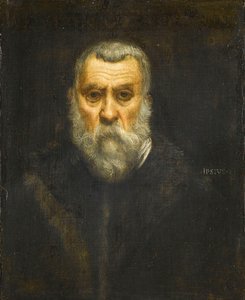
A Philosopher

1570. Oil On Canvas. Biblioteca Marciana.

Ryc. 1. Jacopo Tintoretto, A Philosopher, 1570. Przedstawiono jako wybraną przez Ciebie reprodukcję: , .

§ 1Dane katalogowe

§ 2Abstrakcja

Opis obiektu

Explore Tintoretto’s ‘A Philosopher,’ a dramatic Renaissance oil painting showcasing chiaroscuro, symbolism & classical composition. Discover Venetian art at its finest!

Biografia artysty

Jacopo Tintoretto – włoski mistrz renesansu i baroku z Wenecji, słynący z dramatycznych kompozycji, ekspresywnej techniki oraz pionierskiego wykorzystania światła. Odkryj jego ikoniczne dzieła!

§ 3Komentarz

A Vision of Wisdom: Exploring Tintoretto’s “A Philosopher”

This captivating oil painting by Jacopo Tintoretto, created in 1570, presents a compelling portrait of an elderly scholar – a *philosopher* immersed in thought and surrounded by the tools of his trade. The work exemplifies Tintoretto's mastery of Venetian Renaissance style, blending meticulous detail with dramatic lighting and a palpable sense of intellectual depth.

Style & Historical Context

Tintoretto (1518-1594), known as *Il Furioso* (“the furious one”) for his energetic brushwork, was a pivotal figure in the Venetian School. He moved beyond the High Renaissance classicism of earlier masters like Titian, embracing a more dynamic and emotionally charged Mannerist style. This painting reflects that transition – while adhering to classical proportions and realistic representation, it foreshadows the Baroque period with its dramatic use of light and shadow (*chiaroscuro*) and heightened emotional intensity. Venice in the 16th century was a thriving center of commerce and culture, fostering an environment where intellectual pursuits were highly valued. This work likely reflects that societal reverence for knowledge and learning.

Composition & Technique

The composition is powerfully centered on the figure, framed by an arched doorway that draws the viewer’s eye inward. Tintoretto's technique is characterized by layered thin glazes of oil paint, building up color and luminosity to create a rich, textured surface. The linear quality of the architecture and drapery contrasts beautifully with the organic forms created by the folds in the robe and the scattered books and scrolls. Notice how the light dramatically illuminates the philosopher’s face and hands, highlighting his age and wisdom while casting much of the background into deep shadow – a technique that heightens the sense of mystery and contemplation.

Symbolism & Meaning

The painting is rich in symbolic elements. The globe represents knowledge, exploration, and the vastness of the world; the scrolls symbolize accumulated wisdom and learning; and the aged figure himself embodies experience, contemplation, and the pursuit of truth. These objects aren’t merely props but integral components that speak to the philosopher's life dedicated to intellectual inquiry. The doorway itself can be interpreted as a threshold – a passage between the known and the unknown, or perhaps even a symbolic representation of mortality.

Emotional Impact & Interpretation

“A Philosopher” evokes a sense of quiet dignity and profound contemplation. The subject’s gaze is directed inward, suggesting deep thought and introspection. The warm color palette – dominated by golds, ochres, and ambers – creates an atmosphere of warmth and intellectual stimulation. This isn't simply a portrait; it’s a meditation on the power of knowledge, the weight of experience, and the enduring human quest for understanding. It invites viewers to reflect on their own pursuit of wisdom and meaning.

For Collectors & Designers

This painting – or a high-quality reproduction – would be a stunning addition to any collection. Its classic composition and rich color palette make it versatile enough to complement a variety of interior design styles, from traditional libraries to modern living spaces. The artwork’s intellectual gravitas adds a touch of sophistication and timeless elegance to any room. It serves as both a beautiful aesthetic object and a powerful symbol of the enduring human spirit.

Pytania i odpowiedzi

Kiedy i z jakich materiałów wykonano "A Philosopher"?

"A Philosopher" powstało w 1570 roku przy użyciu Oil On Canvas.

Kto jest autorem dzieła "A Philosopher"?

Autorem dzieła „A Philosopher” jest Jacopo Tintoretto. Praca ta figuruje w katalogu pod nazwiskiem Jacopo Tintoretto.

Jakie emocje wywołują kolory w „A Philosopher” – Jacopo Tintoretto?

W "A Philosopher" kolorystyka Earthy współgra z Reflective nastrojem.
§ 4Artysta

Jacopo Tintoretto

Jacopo Tintoretto

1518 - 1594, Włochy

Krótkie informacje o Jacopo Tintoretto

  • Artistic Movement Or Style: Renesans, Mannerismus
  • Artists Or Movements Influenced By This Artist:
    • Caravaggio
    • Barok
  • Artists Who Influenced This Artist:
    • Tycjan
    • Michał Anioł
  • Date Of Birth: 1518
  • Date Of Death: 1594
  • Full Name: Jacopo Robusti
  • Nationality: Włoski
  • Notable Artworks:
    • Mirakiel św. Marka
    • Ostatnia Wieczerza
  • Place Of Birth: Wenecja, Italia

Biografia artysty

A Venetian Master of Drama and Light

Jacopo Tintoretto, born Jacopo Robusti in Venice around 1518, remains one of the most compelling and enigmatic figures of the High Renaissance and early Baroque periods. His very nickname, “Tintoretto” – little dyer – speaks to his family’s trade, yet it belies the immense artistry that would distinguish him from all others. Unlike many artists who benefited from structured apprenticeships, Tintoretto's path was largely self-directed, fueled by an insatiable curiosity and a relentless drive for innovation. While accounts suggest a brief and unsuccessful stint under Titian, the acknowledged master of Venetian colorism, it seems the experience proved more contentious than formative. Titian’s alleged dismissal of the young Jacopo – whether due to jealousy or artistic disagreement – spurred Tintoretto toward an independent course, one characterized by audacious experimentation and a uniquely dynamic style. He immersed himself in anatomical study, reportedly through dissection, and honed his skills by meticulously copying classical sculpture and the works of other masters. This dedication laid the foundation for a career that would redefine Venetian painting.

Forging a Distinctive Style: *Il Furioso*

Tintoretto’s artistic development was marked by an almost feverish energy, earning him another evocative nickname: *Il Furioso* – “the Furious One.” This moniker wasn't merely descriptive of his working pace but also captured the intensity and emotional charge that permeated his canvases. His early works already hinted at a departure from traditional Venetian conventions. While acknowledging Titian’s influence in color, Tintoretto gravitated towards Michelangelo’s powerful figures and dramatic compositions. He synthesized these influences into something entirely new: a style characterized by elongated forms, swirling draperies, and an innovative use of perspective that often created a sense of dizzying depth and movement. He abandoned the meticulous finish favored by his contemporaries, opting instead for a rapid, almost sketch-like brushstroke that conveyed immediacy and raw emotion. This technique, combined with his masterful manipulation of light and shadow – *chiaroscuro* – allowed him to create scenes of unparalleled drama and psychological intensity. He wasn’t simply depicting events; he was conveying their emotional core. His compositions were often asymmetrical, creating a sense of dynamism and instability that reflected the turbulent spirit of the age.

Monumental Achievements: San Rocco and Beyond

Tintoretto's prodigious output spanned decades, encompassing religious narratives, historical allegories, and portraits. However, his most significant achievement lies in the cycle of paintings he created for the Scuola Grande di San Rocco, a Venetian confraternity dedicated to Saint Roch. Over a period of more than fifty years, Tintoretto adorned the Scuola’s halls with over sixty canvases, transforming it into a breathtaking visual testament to faith and human experience. Works like “The Last Supper,” completed late in his life, demonstrate his continued experimentation with perspective and composition. Departing from traditional depictions, Tintoretto placed the scene in a dramatically lit, architecturally unstable space, emphasizing the emotional turmoil of Christ’s final meal with his disciples. Other notable works include “The Miracle of St Mark Freeing the Slave,” a powerful display of dynamic composition and foreshortening, and numerous paintings for Venetian churches and palaces that showcase his mastery of scale and narrative storytelling. These monumental projects cemented Tintoretto's reputation as one of Venice’s most important artists. He was known to work incredibly quickly, often finishing a painting in just a few days – a remarkable feat considering the complexity and detail of his works.

Influences and Artistic Connections

Tintoretto’s artistic journey was shaped by a diverse range of influences. While Titian undoubtedly provided an initial foundation in color and Venetian tradition, he also drew inspiration from Michelangelo's powerful figures and dramatic compositions, as well as the classical sculptures that adorned Venice’s palaces. His early work shows traces of Andrea Schiavone, another influential Venetian painter who had spent much of his career in Italy. However, Tintoretto quickly developed a unique style that transcended these influences, forging a path all his own. He was also known to study anatomy through dissection, a practice considered controversial at the time but which undoubtedly informed his understanding of human form and movement. Interestingly, he maintained a somewhat reclusive existence, rarely sharing his techniques or methods with other artists, contributing to the mystery surrounding his creative process.

Legacy and Historical Significance

Jacopo Tintoretto died in Venice in 1594, leaving behind a vast and influential body of work. He bridged the gap between the High Renaissance and the Baroque period, anticipating many of the stylistic innovations that would define the latter. His dramatic compositions, expressive brushwork, and innovative use of light and shadow profoundly influenced artists such as Caravaggio, Rembrandt, and Delacroix. He wasn’t merely a painter; he was a visual storyteller who understood how to harness the power of art to evoke emotion and inspire awe. As one of the three great Venetian painters of the 16th century – alongside Titian and Paolo Veronese – Tintoretto played a crucial role in shaping the artistic landscape of Venice during its golden age. His work reflects not only the religious fervor and political tensions of his time but also a uniquely personal vision that continues to resonate with audiences today, solidifying his place as one of history’s most important and captivating artists. His legacy is a testament to the enduring power of artistic innovation and the transformative potential of human creativity.

§ 5Podobne dzieła

§ 6Pytania

Najważniejsze informacje

  • style: Realistic, Dramatic Chiaroscuro
  • medium: Oil on canvas
  • year: 1570
  • title: A Philosopher
  • movement: Mannerism, Venetian School, Renaissance

Quiz o sztuce

Do każdego pytania dotyczy tylko jedna poprawna odpowiedź.

Pytanie 1:
To which artistic period does 'A Philosopher' primarily belong?
Pytanie 2:
What is a prominent technique used in this painting to create dramatic contrast and depth?
Pytanie 3:
Which of the following symbolic elements appears in 'A Philosopher' and often represents knowledge and exploration?
Pytanie 4:
Tintoretto was known for his painting speed and bold brushwork, earning him what nickname?

§ 7Cytuj ten wpis

AllPaintingsStore.com, “Jacopo Tintoretto, A Philosopher (1570)”, https://allpaintingsstore.com/pl/art/jacopo-tintoretto-a-philosopher-8Y3JU5-en/ArtistReproduction/ (dostęp dnia 10 Październik 2026).

§ 8Reprodukcja dzieła

Ręcznie malowana reprodukcja olejowa

Ręcznie malowany obraz olejny na płótnie, wykonany na zamówienie przez naszych artystów w wybranym przez Ciebie wymiarze i oprawie. ( Przełącz na wydania drukowane Przejdź do wersji cyfrowej)

Informacja ta widnieje na marginesie arkusza zamówienia; obecny stan tego arkusza przedstawia się następująco.

A Philosopher

Technika reprodukcji

Wymiary reprodukcji

-

Wybitny mistrz artystyczny

Większa szczegółowość, finezja i dodatkowy czas na realizację

-

Opcje oprawy reprodukcji

-

-

W przypadku dzieł sztuki lub reprodukcji, których którykolwiek z boków przekracza 105 cm (około 41 cali), rama zostanie wysłana w formie zestawu do samodzielnego montażu. Metoda ta zapewnia bezpieczną dostawę i zapobiega uszkodzeniom podczas transportu.

Wymagany profesjonalny montaż – nie jest to produkt typu DIY.
Zestaw musi zostać złożony, a płótno naciągnięte przez doświadczonego profesjonalnego ramiarza, przy użyciu kleju do drewna (brak w zestawie), kleszczy do naciągania płótna oraz ścisków, które utrzymają krosna w równej pozycji podczas schnięcia kleju. Nieprawidłowy montaż lub nierównomierne napięcie płótna może trwale uszkodzić dzieło sztuki i nie podlega naszej gwarancji.

  • W zestawie znajdują się wszystkie listwy z litego drewna, precyzyjnie docięte do wymiarów.

  • Montaż odbywa się przy użyciu dołączonych wkrętów oraz kleju do drewna do łączenia narożników, którego zestaw nie zawiera i który musi zostać dostarczony przez ramiarza.

  • Wymagane są profesjonalne narzędzia, których nie ma w zestawie: kleszcze do naciągania płótna (napinacz) oraz zaciski, które pozwolą utrzymać listwy w równej pozycji podczas schnięcia kleju.

Ważne:
Do połączenia narożników niezbędny jest klej do drewna, listwy należy unieruchomić za pomocą ścisków do momentu całkowitego wyschnięcia kleju, a naciągnięcie płótna na złożoną ramę wymaga użycia kleszczy do naciągania płótna. Żaden z tych elementów nie jest dołączony do zestawu. Przed zamówieniem tego rozmiaru zalecamy konsultację z doświadczonym ramiarzem.

Etykieta obiektu

-

-

Lakier ochronny

Lakier z połyskiem (pogłębia kolory, chroni przed światłem i wilgocią)

-

Personalizacja dzieła

Przykłady możliwości personalizacji: zastąp twarz zdjęciem klienta; dodaj zwierzę domowe (np. zamień kota na psa); umieść ukrytą wiadomość w tle; zmień krajobraz lub elementy tła.

-

Ekspresowa

Dostawa na cały świat () w ciągu 3–4 tygodni zamiast standardowych 5 tygodni. (8 Listopad). Bez kompromisów w kwestii jakości.

-

Przesyłka ekspresowa

Dostawa na cały świat () w ciągu 5 tygodni. (15 Listopad).

W cenie

Cena całkowita

zł 1009

W każdym zamówieniu

  • Bezpłatna ekspresowa wysyłka na cały świat
  • Wysokiej jakości płótno lniane
  • Pełne ubezpieczenie przesyłki
  • Gwarancja zwrotu należności celnych i podatków importowych
  • Gwarancja wiernego odwzorowania kolorów
  • 100-dniowa polityka zwrotów (tylko w przypadku wad)
  • Gwarancja 100% zwrotu pieniędzy
  • Zniżka przy zakupie wielu sztuk
Arkusz zamówień