Gwarancja zwrotu pieniędzy · 100 dni Darmowa dostawa na cały świat
449 581dzieła sztuki 30 617artyści 4 705muzea 32języki
Waluta
    Język
      Atelier · Est. 2015 · Paryż, Francja
      AllPaintingsStore
      allpaintingsstore.com
      Zobacz w skali 1:1 Zobacz w AR Przełącz na wersję drukowaną Przełącz na wersję cyfrową Wyślij
      Szczegóły Przewodnik Dodaj do ulubionych Pobierz plik obrazu Podobne obiekty RTG Pokaz slajdów Statystyki

      Dumpy level

      Discover Jacques Canivet’s ‘Dumpy Level,’ a 1733 scientific instrument painting. Admire this brass masterpiece from the Naval Museum, Madrid. A unique historical art piece!

      Discover Jacques Canivet, a renowned French scientific instrument maker (1714-1773). Explore his compasses, quadrants, and astronomical tools crafted in Paris.

      Ręcznie malowana reprodukcja olejowa

      Ręcznie malowany obraz olejny na płótnie, wykonany na zamówienie przez naszych artystów w wybranym przez Ciebie wymiarze i oprawie. ( Przełącz na wersję drukowaną Przełącz na wersję cyfrową)

      Corner sample of the P118B picture frame: polistyren formowany, 5 cm wide and 3 cm thick
      P118B 10
      Corner sample of the P118H picture frame: polistyren formowany, 5 cm wide and 3 cm thick
      P118H 10
      Corner sample of the P118W picture frame: polistyren formowany, 5 cm wide and 3 cm thick
      P118W 10
      Corner sample of the P438Z picture frame: polistyren formowany, 5.5 cm wide and 3.5 cm thick
      P438Z 10
      Corner sample of the P508JH picture frame: polistyren formowany, 7 cm wide and 3.5 cm thick
      P508JH 12
      Corner sample of the P508YH picture frame: polistyren formowany, 7 cm wide and 3.5 cm thick
      P508YH 12
      Corner sample of the P805H picture frame: polistyren formowany, 5 cm wide and 3.5 cm thick
      P805H 10
      Corner sample of the P805Z picture frame: polistyren formowany, 5 cm wide and 3.5 cm thick
      P805Z 10
      Corner sample of the P919BZ picture frame: polistyren formowany, 7 cm wide and 3.5 cm thick
      P919BZ 10
      Corner sample of the P919G picture frame: polistyren formowany, 7 cm wide and 3.5 cm thick
      P919G 10
      Corner sample of the P919XJ picture frame: polistyren formowany, 7 cm wide and 3.5 cm thick
      P919XJ 10
      Corner sample of the P959ZH picture frame: polistyren formowany, 5 cm wide and 3 cm thick
      P959ZH 10
      Corner sample of the P968JZ picture frame: polistyren formowany, 6 cm wide and 4 cm thick
      P968JZ 12
      Corner sample of the W106C picture frame: lite drewno, 5 cm wide and 3 cm thick
      W106C 8
      Corner sample of the W218G picture frame: lite drewno, 5 cm wide and 3 cm thick
      W218G 10
      Corner sample of the W218JH picture frame: lite drewno, 5 cm wide and 3 cm thick
      W218JH 8
      Corner sample of the W218Y picture frame: lite drewno, 5 cm wide and 3 cm thick
      W218Y 10
      Corner sample of the W307PJ picture frame: lite drewno, 6 cm wide and 3 cm thick
      W307PJ 10
      Corner sample of the W316G picture frame: lite drewno, 6 cm wide and 3 cm thick
      W316G 10
      Corner sample of the W316PJ picture frame: lite drewno, 6 cm wide and 3 cm thick
      W316PJ 8
      Corner sample of the W316Y picture frame: lite drewno, 6 cm wide and 3 cm thick
      W316Y 10
      Corner sample of the W398PJ picture frame: lite drewno, 5 cm wide and 3 cm thick
      W398PJ 8
      Corner sample of the W4111J picture frame: lite drewno, 6.5 cm wide and 3.5 cm thick
      W4111J 10
      Corner sample of the W500HY picture frame: lite drewno, 7 cm wide and 5 cm thick
      W500HY 15
      Corner sample of the W500JH picture frame: lite drewno, 7 cm wide and 5 cm thick
      W500JH 15
      Corner sample of the W692G picture frame: lite drewno, 8 cm wide and 4 cm thick
      W692G 12
      Corner sample of the W849H picture frame: lite drewno, 5 cm wide and 3 cm thick
      W849H 8
      Corner sample of the W940BG picture frame: lite drewno, 7.5 cm wide and 4.5 cm thick
      W940BG 15
      Corner sample of the W953PJ picture frame: lite drewno, 6 cm wide and 3.5 cm thick
      W953PJ 8

      Standardowy
      na zamówienie
      CM
      INCH

      Wybierz spośród naszych standardowych rozmiarów, które zachowują oryginalne proporcje dzieła sztuki.

      szerokość
      wysokość

      Możesz wprowadzić własne wymiary, aby dopasować obraz do konkretnej ramy lub przestrzeni. Jeśli wybrany rozmiar nie będzie odpowiadał proporcjom oryginału, przytniecie dzieło sztuki lub rozszerzymy je o dodatkowe elementy, ręcznie domalowane przez artystę. Przed rozpoczęciem produkcji wyślemy projekt cyfrowy do Twojej akceptacji.
      Należy pamiętać, że podgląd na ekranie nie odzwierciedla rzeczywistego przycinania ani rozszerzania obrazu. Tylko projekt dokładnie pokaże ostateczną kompozycję.
      Choć oferujemy możliwość zamówienia niestandardowych rozmiarów, zalecamy wybór wymiaru z gotowej listy, aby zachować oryginalne proporcje dzieła.

      Przykłady możliwych zmian: Zamień twarz na zdjęcie klienta; Dodaj zwierzę domowe (np. zamień kota na psa); Ukryj wiadomość w tle; Zmień krajobraz lub elementy tła.
      Po złożeniu zamówienia zespół AllPaintingsStore.com skontaktuje się z klientem drogą mailową w celu uzyskania instrukcji i prześle wizualizację projektu

      Dostawa na całym świecie () w ciągu 3–4 tygodni zamiast standardowych 5 tygodni. (13 Październik). Bez kompromisów w kwestii jakości.

      Bezpłatna ekspresowa wysyłka na cały świat
      Wysokiej jakości płótno lniane
      Pełne ubezpieczenie transportowe
      Gwarancja zwrotu należności celnych i podatków importowych
      Gwarancja idealnego odwzorowania barw
      100-dniowy okres na zwrot dzieła w przypadku wykrycia wad produkcyjnych
      Gwarancja 100% zwrotu pieniędzy
      Oferta przy zakupie wielu sztuk

      Cena całkowita

      zł 970

      Dumpy level

      Technika wykonania

      Rozmiar reprodukcji

      -

      Suma do zapłaty

      zł 970

      This instrument is used to identify horizontal lines in topography and geodesy, the latter meaning the study of the shape and size of the Earth and the positions of points on or above its surface. It has a solid metal frame on which there are 2 eyepieces, with their horizontal lines of vision arranged so that each corresponds to the lens of the other. The upper section has a suspension point and plumb line, while the lower section has a silver arc on which degree increments are engraved. When the wire crosses the center of the scale, the eyepiece optical axes are perfectly horizontal.

      Pytania i odpowiedzi

      Czy kolory w "Dumpy level" wydają się intensywne czy łagodne?

      Nasycenie barw w dziele „Dumpy level” wynosi Monochromatic. Intensywność określa, jak mocne wydają się kolory.

      Jak opisuje się paletę kolorystyczną dzieła „Dumpy level” autorstwa Jacques Canivet?

      Paleta dzieła „Dumpy level” autorstwa Jacques Canivet jest opisywana jako Earthy. Stanowi ona zwięzłe zestawienie barw użytych w pracy.

      W jaki sposób "Dumpy level" balansuje światło i cień?

      Dumpy level” charakteryzuje się ogólną jasnością na poziomie bright, a jej luminancja wynosi Gentle Luminance.

      Jakie pochodzenie narodowe stoi za Neoclassicism dzieła "Dumpy level"?

      "Dumpy level" łączy nurt Neoclassicism z France poprzez miejsce urodzenia jego twórcy.

      Czy istnieją dzieła podobne do „Dumpy level”?

      Dzieła podobne do „Dumpy level” autorstwa Jacques Canivet zostały zgromadzone na stronie Podobne dzieła danego dzieła.

      Na czym polega kompozycja kolorystyczna dzieła „Dumpy level” autorstwa Jacques Canivet?

      Analiza kolorystyczna dzieła „Dumpy level” autorstwa Jacques Canivet rejestruje Balanced kontrast oraz Unified Palette harmonię.

      W którym roku powstało dzieło "Dumpy level"?

      Dzieło "Dumpy level" pochodzi z 1733 roku. Data ta pozwala umiejscowić pracę w kontekście twórczości Jacques Canivet oraz epoki, w której powstała.

      Jaki poziom kontrastu prezentuje „Dumpy level” autorstwa Jacques Canivet?

      Kontrast jasności w dziele "Dumpy level" wynosi Balanced. Kontrast określa stopień zróżnicowania między obszarami jasnymi a ciemnymi.


      Biografia artysty

      Jacques Canivet: The Silent Maker of Parisian Instruments

      Jacques Canivet (1714-1773) remains a figure shrouded in scholarly curiosity, largely absent from the popular narrative of 18th-century France. Yet, his contribution to scientific instrumentation—a legacy quietly shaping the intellectual landscape of Paris—is undeniable. Born into a family steeped in craftsmanship and tradition, Canivet’s path diverged from the grand salons of Versailles, finding its focus instead within the workshops of Lordelle and Jean Chapotot, where he honed his skills alongside Claude Langlois, establishing himself as a pivotal figure in the burgeoning field of scientific measurement.
      • Early Life & Apprenticeship: Canivet’s formative years were spent mastering the art of instrument making—a craft passed down through generations—laying the groundwork for his future endeavors. His association with Langlois, a celebrated maker known for his meticulous attention to detail and innovative designs, proved invaluable in shaping his artistic sensibilities.
      • The Workshop Legacy: Following Langlois’s death in 1756, Canivet assumed leadership of the workshop, inheriting not only expertise but also a reputation for excellence. This continuity ensured that the traditions of precision and artistry persisted—a testament to the enduring power of familial craftmanship.
      • Instrument Production & Innovation: Canivet’s output spanned an impressive array of instruments – compasses, graphometers, astronomical quadrants, transit instruments, drawing instruments, and even parallactic machines. These creations weren't merely tools; they were embodiments of Enlightenment ideals—instruments designed to unlock the secrets of the cosmos and advance scientific understanding.

      A Patron of Science & Artistic Vision

      Canivet’s involvement extended beyond mere fabrication. He served as supplier of instruments to the Académie Royale des Sciences in Paris, actively collaborating with leading thinkers and scientists of his time. This engagement fostered a symbiotic relationship between artistic skill and intellectual pursuit—a hallmark of the era—demonstrating that beauty could be found within the realm of mathematics and observation.
      • Commissioned Artwork: Notably, Canivet was entrusted with crafting instruments for Napoleon Bonaparte’s expedition to Egypt. These commissions demanded not only technical proficiency but also an understanding of artistic symbolism—a reflection of Napoleon's ambition to elevate France as a beacon of enlightenment.
      • Influence & Legacy: Canivet’s meticulous craftsmanship and dedication to accuracy established him as a benchmark for instrument makers, influencing subsequent generations. His work exemplifies the spirit of the Enlightenment—a commitment to empirical observation and reasoned inquiry that continues to resonate today.

      Notable Instruments & Artistic Style

      Canivet’s instruments are characterized by their exceptional quality and aesthetic refinement. He prioritized precision, utilizing techniques honed over years of experience—resulting in creations that were both functional and visually striking. His designs incorporated elegant curves and subtle ornamentation—reflecting the prevailing stylistic trends of the period while upholding the highest standards of craftsmanship.
      • Compasses & Graphometers: Canivet’s compasses and graphometers stand out for their meticulous construction and graceful proportions—testaments to his mastery of geometric principles and artistic sensibilities.
      • Astronomical Quadrants: His astronomical quadrants exemplify the pursuit of scientific knowledge through visual observation—incorporating innovative designs that maximized accuracy and clarity.

      Concluding Reflections

      Jacques Canivet’s contribution to French science and art deserves greater recognition. Though he remained largely outside the spotlight of aristocratic circles, his unwavering dedication to craftsmanship and innovation cemented his place as a pivotal figure in shaping the intellectual landscape of Paris during the Enlightenment—a silent maker whose instruments continue to inspire awe and admiration.
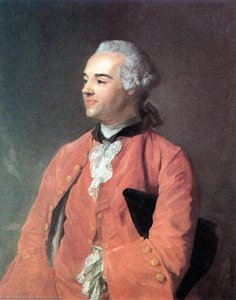
      Jacques Canivet

      Jacques Canivet

      1714 - 1773 , France

      Najważniejsze informacje

      • Full Name: Jacques Canivet
      • Nationality: French
      • Date Of Birth: 1714
      • Date Of Death: 1773
      • Place Of Birth: France
      • Notable Artworks:
        • The Death of Marat
        • Portrait of Madame Vigée Le Brun
      • Artistic Movement Or Style: Neoclassical
      • Artists Who Influenced This Artist: ['Claude Langlois']
      • Artists Or Movements Influenced By This Artist: ['Classical Art']