Gwarancja zwrotu pieniędzy · 100 dni Darmowa dostawa na cały świat
449 587dzieła sztuki 30 613artyści 4 660muzea 32język
Waluta
    Język
      Atelier · Est. 2015 · Paryż, Francja
      AllPaintingsStore
      allpaintingsstore.com
      Catalogue entry

      Śmierć Marata

      1793. Akryl na płótnie, 162.0 x 128.0 cm. Musées Royaux des Beaux-Arts.

      Fig. 1. Jacques-Louis David, Śmierć Marata, 1793. Shown as the reproduction you are specifying: , .

      § 1Catalogue data

      § 2Abstract

      Opis obiektu

      Śmierć Marata - ikoniczny obraz Jacques-Louisa Davida przedstawiający śmierć filozofa Maksymiliana Robespierrego, symbole Rewolucji Francuskiej i klasycznej elegancji.

      Biografia artysty

      Jacques-Louis David – pionier neoklasycyzmu i twórca obrazów rewolucyjnych oraz glorifikujących Napoleona Bonapartego. Jego dzieła, takie jak „Oaths of the Horatii”, symbolizują bohaterstwo i piękno klasycznej sztuki.

      § 3Commentary

      A Monument to Grief and Revolutionary Idealism: Examining Jacques Louis David’s “The Death of Marat”

      David’s “The Death of Marat,” completed in 1793, stands as arguably the most iconic image of the French Revolution. More than just a depiction of death—though undeniably visceral—it's a carefully constructed tableau designed to galvanize public opinion and solidify Napoleon Bonaparte’s ascension to power. The painting captures Jean-Paul Marat, the radical journalist and assassin who spearheaded the Jacobin movement, slumped on his bed in Aix-en-Provence shortly before his assassination. This dramatic scene wasn’t merely spontaneous; it was meticulously planned by David, a staunch supporter of Robespierre and Napoleon, to portray Marat as a martyr for liberty – a figure deserving of veneration and remembrance.

      The Style of Neoclassicism: Precision and Emotion

      David adhered rigorously to the principles of Neoclassicism, rejecting the frivolity and ornamentation characteristic of Rococo art. The composition is strikingly balanced, utilizing geometric forms—particularly the rectangle formed by Marat’s bed—to convey stability and dignity. However, this apparent restraint serves a crucial purpose: it amplifies the emotional impact of the scene. David skillfully employs chiaroscuro – dramatic contrasts between light and dark – to sculpt Marat's body and highlight his pallid complexion, emphasizing vulnerability and suffering. The artist’s meticulous attention to detail—from the folds of Marat’s shirt to the quill pen clutched in his hand—underscores the seriousness of the subject matter.

      Symbolism Woven into Every Element

      Beyond its formal elegance lies a rich tapestry of symbolism. The books scattered around Marat's bed represent Enlightenment ideals and intellectual pursuits, mirroring Marat’s commitment to disseminating revolutionary ideas. The cup placed beside him symbolizes compassion and remembrance – an offering of solace for the deceased hero. Crucially, David deliberately positioned Marat’s body in a pose reminiscent of Michelangelo’s Pietà, elevating him to the status of sacred martyr and invoking Christian iconography to evoke feelings of piety and sorrow. The blood flowing from Marat's nose and mouth isn’t merely gruesome realism; it symbolizes sacrifice and martyrdom—the ultimate price paid for upholding republican values.

      Technique: Oil Paintsmanship at Its Finest

      David employed oil paint, a medium favored by Neoclassical artists for its ability to achieve luminous colors and subtle tonal gradations. He painstakingly layered thin glazes upon thicker underpaintings, creating an illusion of depth and texture that captures the physicality of Marat’s body with remarkable accuracy. The artist's mastery of brushwork is evident in the smooth surfaces of Marat’s skin and the expressive rendering of his facial features—a testament to David’s dedication to anatomical precision and artistic virtuosity. This meticulous technique contributes significantly to the painting’s enduring power, transporting viewers back to the turbulent atmosphere of revolutionary Paris.

      Emotional Resonance: A Legacy of Remembrance

      “The Death of Marat” continues to resonate powerfully with audiences today because it transcends mere historical documentation. It speaks directly to universal themes of grief, loss, and heroism—inspiring contemplation on the sacrifices made in pursuit of noble ideals. David’s masterful portrayal captures not only Marat's physical demise but also his spiritual transcendence – transforming him into a symbol of republican virtue and unwavering conviction. This enduring legacy ensures that David’s masterpiece remains a cornerstone of Western art history and an unforgettable reminder of the transformative power of artistic expression.

      Pytania i odpowiedzi

      Gdzie mogę kupić wydruk „Śmierć Marata” – Jacques-Louis David?

      Odbitkę dzieła „Śmierć Marata” – Jacques-Louis David można zamówić bezpośrednio na stronie Wydruk artystyczny premium: szlachetna odbitka na płótnie bawełnianym lub archiwalnym papierze o strukturze płótna.

      Jaki nastrój oddaje „Śmierć Marata” – Jacques-Louis David w ramach nurtu Neoclassical Style?

      Melancholijny emocja dzieła „Śmierć Marata” współgra z jego stylem Neoclassical Style.

      Gdzie mogę znaleźć dzieła sztuki podobne do „Śmierć Marata” – Jacques-Louis David?

      Strona Podobne dzieła dzieła „Śmierć Marata” – Jacques-Louis David prezentuje powiązane utwory.
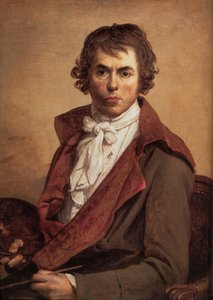
      § 4The artist

      Jacques-Louis David

      Jacques-Louis David

      1748 - 1800, Francja

      Quick facts about Jacques-Louis David

      • Artistic Movement Or Style: Neoklasycyzm
      • Artists Or Movements Influenced By This Artist:
        • Ingres
        • Matisse
      • Artists Who Influenced This Artist:
        • Vien
        • Poussin
      • Date Of Birth: 30 VIII 1748
      • Date Of Death: 29 DC 1825
      • Full Name: Jacques-Louis David
      • Nationality: Francuz
      • Notable Artworks:
        • Oaths Horatii
        • Śmierć Marata
        • Napoleon na Alpach
      • Place Of Birth: Paryż, Francja

      Biografia artysty

      A Brushstroke Across Revolution: The Life and Art of Jacques-Louis David

      Jacques-Louis David, born in Paris in 1748, was more than just a painter; he was a visual chronicler of an era defined by upheaval, idealism, and the relentless pursuit of new orders. His life mirrored the dramatic shifts unfolding across France – from the waning opulence of the Rococo to the austere clarity of Neoclassicism, and ultimately, through the tumultuous years of revolution and Napoleonic glory. A childhood marked by the early loss of his father and a facial impediment that initially hindered his speech seemed only to sharpen his observational skills and fuel an unwavering dedication to artistic mastery. Though initially apprenticed to François Boucher, David quickly found himself drawn to the more morally resonant work of Joseph-Marie Vien, whose emphasis on history painting and classical subjects resonated with a burgeoning sense of purpose within the young artist. His early attempts to win the prestigious Prix de Rome were fraught with frustration, yet these repeated setbacks only intensified his resolve, forging a relentless perfectionism that would characterize his entire career.

      The Birth of Neoclassical Drama

      David’s artistic evolution wasn't merely a stylistic shift; it was a philosophical statement. He rejected the frivolous ornamentation and playful themes of the Rococo, embracing instead the clarity, order, and moral seriousness inherent in classical antiquity. This commitment was profoundly influenced by archaeological discoveries at Pompeii and Herculaneum, which unveiled a world of Roman art and architecture previously lost to time. These unearthed ruins provided him with an idealized vision of republican virtue and civic duty – principles he would translate into his paintings. His breakthrough came with “Oath of the Horatii” (1784), a painting that transcended mere artistic skill to become an emblem of civic virtue and patriotic sacrifice. The stark composition, dramatic lighting, and precise draftsmanship were revolutionary, signaling a decisive break from the past. It wasn’t simply *what* he painted but *how* – a deliberate construction designed to evoke powerful emotional responses and inspire contemplation on themes of duty, honor, and self-sacrifice. The figures are rendered with an almost sculptural quality, their bodies conveying both strength and vulnerability, while the pyramidal composition creates a sense of stability and order. This work didn't just announce a new style; it foreshadowed the ideological currents that would soon sweep across France.

      Revolution and Remembrance: Art as Political Weapon

      As the French Revolution erupted in 1789, David was not merely an observer but an active participant. A fervent supporter of the revolutionary cause and a close associate of Maximilien Robespierre, he saw art as a powerful tool for shaping public opinion and immortalizing the ideals of the new republic. His paintings during this period became potent symbols of revolutionary martyrdom and republican fervor. Perhaps his most iconic work from this era is “The Death of Marat” (1793), a hauntingly realistic depiction of the assassinated journalist, transformed into a secular saint. The painting’s stark simplicity – the pale body, the makeshift desk, the poignant letter clutched in Marat's hand – elevates the scene to a level of profound emotional resonance. David deliberately chose to depict Marat in a state of vulnerability and suffering, emphasizing his sacrifice for the cause of liberty. This image was widely circulated throughout revolutionary Paris, serving as a powerful reminder of the price of freedom. He also created “The Death of Socrates” (1787) and "The Lictors Bringing Brutus the Bodies of His Sons" (1789), both exploring themes of sacrifice and civic duty in the face of tyranny. During this time, David served on the Committee of Public Safety, a testament to his commitment to the revolution.

      From Revolution to Empire: Serving Napoleon

      The fall of Robespierre marked another turning point in David’s career. With remarkable adaptability, he navigated the shifting political landscape and aligned himself with Napoleon Bonaparte, becoming the First Consul’s official court painter. This new patronage ushered in a period of grand-scale commissions designed to glorify Napoleon’s victories and achievements. “Napoleon Crossing the Alps” (1801-1805) is perhaps the most famous example – a masterful piece of propaganda that presents Napoleon as a heroic, almost mythical figure conquering both nature and adversity. The painting utilizes dramatic lighting, dynamic composition, and carefully chosen details to create an image of unparalleled grandeur and power. “The Coronation of Napoleon” (1807), an immense canvas capturing the opulence and grandeur of the imperial ceremony, further cemented David’s position as the preeminent artist of the Napoleonic era. During this time, his palette subtly shifted, incorporating warmer Venetian colours while maintaining the precision and clarity that defined his style. He also produced portraits of Napoleon and other prominent figures, solidifying his role as the Emperor's official visual propagandist.

      Legacy and Influence

      The Bourbon Restoration in 1814 brought renewed peril for David, whose association with the fallen Napoleon made him a target of persecution. He chose exile in Brussels in 1816, where he continued to paint and teach until his death on December 29, 1825. Despite facing political challenges, David’s influence remained profound. He trained numerous pupils, including Jean-Auguste-Dominique Ingres, who would become one of the most important neoclassical painters of the 19th century. David's emphasis on draftsmanship, composition, and historical accuracy left an indelible mark on French art. *His legacy extends beyond mere imitation*; his expressive distortions of form and space even foreshadowed the innovations of later artists like Henri Matisse and Pablo Picasso. Jacques-Louis David was not simply a painter of his time; he *defined* it, capturing its spirit of revolution, ambition, and enduring ideals on canvas for generations to come.

      § 5Comparanda

      § 6Questions

      Najważniejsze informacje

      • Dimensions: 162 x 128 cm
      • Artist: Jacques-Louis David
      • Location: Muzeum Narodowe Paryża
      • Medium: Olej na płótnie
      • Movement: Neoklasycyzm
      • Notable elements or techniques: Realizm emocjonalny

      Quiz o sztuce

      Do każdego pytania dotyczy tylko jedna poprawna odpowiedź.

      Pytanie 1:
      Jak nazywa się obraz Jacquesa Louisa Davida?
      Pytanie 2:
      Kiedy powstał obraz "Śmierć Marata"?
      Pytanie 3:
      Kim był Jacques Louis David?
      Pytanie 4:
      Co przedstawiono na obrazie "Śmierć Marata"?
      Pytanie 5:
      Jakiego stylu malarski reprezentuje obraz "Śmierć Marata"?

      § 7Cite this entry

      AllPaintingsStore.com, “Jacques-Louis David, Śmierć Marata (1793)”, https://allpaintingsstore.com/pl/art/jacques-louis-david-smierc-marata-8Y36FW-pl/ArtistReproduction/ (accessed 2 Październik 2026).

      § 8The reproduction

      Ręcznie malowana reprodukcja olejowa

      Ręcznie malowany obraz olejny na płótnie, wykonany na zamówienie przez naszych artystów w wybranym przez Ciebie wymiarze i oprawie. ( Przełącz na wydania drukowane Przejdź do wersji cyfrowej)

      It is specified on the order sheet in the margin; the present state of that sheet reads as follows.

      Śmierć Marata

      Technika reprodukcji

      Wymiary reprodukcji

      -

      Wybitny mistrz artystyczny

      Większa szczegółowość, finezja i dodatkowy czas na realizację

      -

      Opcje oprawy reprodukcji

      -

      -

      W przypadku dzieł sztuki lub reprodukcji, których którykolwiek z boków przekracza 105 cm (około 41 cali), rama zostanie wysłana w formie zestawu do samodzielnego montażu. Metoda ta zapewnia bezpieczną dostawę i zapobiega uszkodzeniom podczas transportu.

      Wymagany profesjonalny montaż – nie jest to produkt typu DIY.
      Zestaw musi zostać złożony, a płótno naciągnięte przez doświadczonego profesjonalnego ramiarza, przy użyciu kleju do drewna (brak w zestawie), kleszczy do naciągania płótna oraz ścisków, które utrzymają krosna w równej pozycji podczas schnięcia kleju. Nieprawidłowy montaż lub nierównomierne napięcie płótna może trwale uszkodzić dzieło sztuki i nie podlega naszej gwarancji.

      • W zestawie znajdują się wszystkie listwy z litego drewna, precyzyjnie docięte do wymiarów.

      • Montaż odbywa się przy użyciu dołączonych wkrętów oraz kleju do drewna do łączenia narożników, którego zestaw nie zawiera i który musi zostać dostarczony przez ramiarza.

      • Wymagane są profesjonalne narzędzia, których nie ma w zestawie: kleszcze do naciągania płótna (napinacz) oraz zaciski, które pozwolą utrzymać listwy w równej pozycji podczas schnięcia kleju.

      Ważne:
      Do połączenia narożników niezbędny jest klej do drewna, listwy należy unieruchomić za pomocą ścisków do momentu całkowitego wyschnięcia kleju, a naciągnięcie płótna na złożoną ramę wymaga użycia kleszczy do naciągania płótna. Żaden z tych elementów nie jest dołączony do zestawu. Przed zamówieniem tego rozmiaru zalecamy konsultację z doświadczonym ramiarzem.

      Etykieta obiektu

      -

      -

      Lakier ochronny

      Lakier z połyskiem (pogłębia kolory, chroni przed światłem i wilgocią)

      -

      Personalizacja dzieła

      Przykłady możliwości personalizacji: zastąp twarz zdjęciem klienta; dodaj zwierzę domowe (np. zamień kota na psa); umieść ukrytą wiadomość w tle; zmień krajobraz lub elementy tła.

      -

      Ekspresowa

      Dostawa na cały świat () w ciągu 3–4 tygodni zamiast standardowych 5 tygodni. (30 Październik). Bez kompromisów w kwestii jakości.

      -

      Przesyłka ekspresowa

      Dostawa na cały świat () w ciągu 5 tygodni. (6 Listopad).

      W cenie

      Cena całkowita

      zł 1002

      Included with every order

      • Bezpłatna ekspresowa wysyłka na cały świat
      • Wysokiej jakości płótno lniane
      • Pełne ubezpieczenie przesyłki
      • Gwarancja zwrotu należności celnych i podatków importowych
      • Gwarancja wiernego odwzorowania kolorów
      • 100-dniowa polityka zwrotów (tylko w przypadku wad)
      • Gwarancja 100% zwrotu pieniędzy
      • Zniżka przy zakupie wielu sztuk
      Order sheet