

Oil On Canvas.

§ 1Dane katalogowe


§ 2Abstrakcja
Opis obiektu
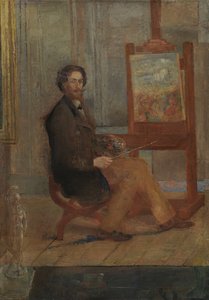
A haunting blend of expressionism and surrealism captures James Ensor playing the organ amidst a curious crowd in this 1933 masterpiece, inviting you to explore the profound depths of his enigmatic artistic vision.
 Rozwiń treść
Biografia artysty
James Ensor (1860-1949) – belgijski malarz, pionier ekspresjonizmu i surrealizmu. Jego dzieła pełne są masek, karnawału i groteskowych scen. Odkryj świat jego niepokojących obrazów!
§ 3Komentarz
A Portrait of Isolation Amidst Spectacle: Examining James Ensor’s “1933 Ensor dans son atelier ou Ensor a l' harmonium”
James Ensor, a Belgian painter and printmaker born in Ostend in 1860, stands as an enigmatic figure within the annals of modern art. His oeuvre defies easy categorization, oscillating between expressionism’s visceral anxieties and surrealism’s dreamlike distortions—a stylistic duality that cemented his place as one of the most influential artists of his time. “1933 Ensor dans son atelier ou Ensor a l' harmonium,” painted in 1933, offers a profound glimpse into this artist’s psyche and artistic vision, presenting a scene both familiar and unsettling.- Subject Matter: The canvas depicts James Ensor seated at an organ within his studio, surrounded by a curious audience observing his performance. This seemingly mundane tableau belies a deeper exploration of human interaction and the anxieties inherent in public display.
- Style & Technique: Ensor’s masterful technique blends elements of expressionism and surrealism. Thick impasto strokes dominate the composition, conveying a palpable sense of physicality and emotional intensity—a characteristic hallmark of his artistic style. The artist employs bold color palettes, favoring muted hues punctuated by jarring accents that heighten the dramatic effect.
Historical Context: Expressionist Roots and Artistic Rebellion
Ensor’s work emerged during a period of significant artistic upheaval—the early 20th century witnessed the rise of expressionism, spearheaded by artists like Edvard Munch and Ernst Ludwig Kirchner. Rejecting academic conventions, Ensor sought to capture subjective experience rather than objective reality, mirroring the broader intellectual currents of his era. His fascination with masks and grotesque imagery reflected a preoccupation with psychological complexities and anxieties about societal norms—themes that resonated powerfully with audiences grappling with the uncertainties of wartime Europe.
Symbolism & Emotional Resonance
Beyond its formal elements, “1933 Ensor dans son atelier ou Ensor a l' harmonium” is laden with symbolic significance. The organ itself represents authority and tradition, juxtaposed against the faces of the audience—each gaze scrutinizing Ensor’s performance. This visual tension underscores the artist’s struggle to assert individuality amidst societal pressures. Furthermore, Ensor’s deliberate use of unsettling imagery – distorted perspectives and grotesque figures – invites contemplation on themes of isolation, fear, and the darker recesses of human consciousness.
A Legacy Enduring Inspiration
James Ensor's influence extends far beyond his own lifetime. Artists who followed embraced similar stylistic approaches, exploring psychological landscapes and confronting uncomfortable truths about the human condition. “1933 Ensor dans son atelier ou Ensor a l' harmonium” serves as a testament to Ensor’s enduring legacy—a captivating artwork that continues to inspire artists and collectors alike. To experience this masterpiece in exquisite detail, explore AllPaintingsStore.com for high-quality reproductions crafted with meticulous care.
Pytania i odpowiedzi
Co przedstawia „1933 Ensor dans son atelier ou Ensor a l' harmonium” – James Ensor i jaki ma nastrój?
"1933 Ensor dans son atelier ou Ensor a l' harmonium" przedstawia organ music, studio scene, audience spectators, belgium artist, mask imagery, surreal elements, performance art, a jego nastrojowy charakter można określić jako Dramatic.
Jaki nastrój wprowadzi 1933 Ensor dans son atelier ou Ensor a l' harmonium do wnętrza?
„1933 Ensor dans son atelier ou Ensor a l' harmonium” – James Ensor ma Dramatic atmosferę i jest polecane do Living Room. Nastrój to to, co dzieło wnosi do otaczającej je przestrzeni.
Czy "1933 Ensor dans son atelier ou Ensor a l' harmonium" wpisuje się w typową tematykę twórczości James Ensor?
„1933 Ensor dans son atelier ou Ensor a l' harmonium” przedstawia organ music, studio scene, audience spectators, belgium artist, mask imagery, surreal elements, performance art, podczas gdy powracające motywy u James Ensor to expressionist symbolism, psychological depth exploration, belgian artistic tradition, ritualistic observation, social critique reflection, existential anxiety, ensor’s visionary style, recurring motif presence. Porównanie tych dwóch elementów ukazuje, jak dzieło nawiązuje do typowej dla tego artysty tematyki.


 Przełącz na wydania drukowane


 W przypadku dzieł sztuki lub reprodukcji, których którykolwiek z boków przekracza 105 cm (około 41 cali), rama zostanie wysłana w formie zestawu do samodzielnego montażu. Metoda ta zapewnia bezpieczną dostawę i zapobiega uszkodzeniom podczas transportu.


