


 Podgląd w skali 1:1
 Wyślij jako kartkę
 Udostępnij
 Szczegóły dzieła
 Przewodnik

 Pobierz obraz
 Podobne obiekty
 RTG
RTG Pokaz slajdów
 Q&A
Q&A Statystyki
Lucca Madonna

- 49.0 x 65.0 cm


 Rozwiń treść
Giclée / Wydruk artystyczny
Wydruki giclée lub płótna o jakości muzealnej, szybka realizacja i szeroki wybór opcji wykończenia. ( Zamów ręcznie malowaną reprodukcję Przejdź do wersji cyfrowej)




P118B zł10

P118H zł10

P118W zł10

P438Z zł10

P508JH zł12

P508YH zł12

P805H zł10

P805Z zł10

P919BZ zł10

P919G zł10

P919XJ zł10

P959ZH zł10

P968JZ zł12

W106C zł8

W218G zł10

W218JH zł8

W218Y zł10

W307PJ zł10

W316G zł10

W316PJ zł8

W316Y zł10

W398PJ zł8

W4111J zł10

W500HY zł15

W500JH zł15

W692G zł12

W849H zł8

W940BG zł15

W953PJ zł8




Wybierz spośród naszych standardowych rozmiarów, które zachowują oryginalne proporcje dzieła sztuki.

Wpisz wymaganą szerokość i wysokość, aby dopasować grafikę do ramy lub ściany. Wydruk można jedynie przyciąć, nigdy nie powiększając go poza oryginalny obraz, dlatego format o innych proporcjach spowoduje utratę części kompozycji. Przed rozpoczęciem druku prześlemy Ci cyfrowy podgląd do zatwierdzenia. Obraz wyświetlany na tej stronie nie pokazuje rzeczywistego przycięcia — jedynie podgląd oddaje ten efekt.
Dostawa na cały świat () w ciągu 2 tygodni zamiast standardowych 4/5 tygodni. (31 Październik)

Bezpłatna ekspresowa wysyłka na cały świat

Wysokiej jakości płótno lniane

Pełne ubezpieczenie przesyłki

Gwarancja zwrotu należności celnych i podatków importowych

Gwarancja wiernego odwzorowania kolorów

100-dniowa polityka zwrotów (tylko w przypadku wad)

Gwarancja 100% zwrotu pieniędzy

Zniżka przy zakupie wielu sztuk
 Opcja ze szkłem jest dostępna wyłącznie w rozmiarach poniżej 110 cm

Lucca Madonna
Giclée / Wydruk artystyczny
Wymiary reprodukcji
-


Cena całkowita
zł 249
Jan van Eyck’s Lucca Madonna: A Silent Symphony of Faith and Detail
Jan van Eyck's Lucca Madonna, painted in 1437, isn’t merely a depiction of the Virgin and Child; it’s an immersive experience, a meticulously crafted jewel box offering glimpses into the burgeoning world of Early Netherlandish art. More than six centuries after its creation, this small panel radiates with an almost unsettling intensity – a testament to van Eyck's revolutionary techniques and his profound understanding of symbolism. Housed within the Städel Museum in Frankfurt, it invites viewers to linger, to decipher the layers of meaning embedded within its serene yet complex composition.
The painting immediately captivates with its luminous quality, a hallmark of van Eyck’s pioneering use of oil paint. Unlike the tempera-based pigments favored by his predecessors, oil allowed for unprecedented detail and depth – each fold in Mary's crimson gown, each glint of light on the infant Christ’s face, is rendered with astonishing precision. This mastery isn’t simply technical; it’s a deliberate choice to draw the viewer into the scene, creating an illusion of tangible reality. The palette itself is restrained yet rich, dominated by deep reds and blues offset by earthy browns and golds, lending the image a sense of quiet dignity.
A Throne of Wisdom: Symbolism in Every Detail
The composition is meticulously structured around the concept of divine authority. Mary isn’t simply seated; she occupies a throne – not one of earthly power, but a symbolic representation of Solomon's throne, adorned with twelve lion statues crafted from brass. This immediately elevates her status, connecting her to biblical precedent and reinforcing her role as Queen of Heaven. The placement of the figures within the room is equally deliberate. The narrow space, reminiscent of a small chapel, directs the viewer’s gaze towards Mary and Christ, creating a sense of intimacy and reverence.
- The Bowl: Positioned near the bottom right corner, this simple bowl symbolizes purity and innocence – a visual echo of the Virgin's own immaculate conception.
- The Vase: Situated on the far right side, the vase represents Mary’s role as a vessel for Christ, mirroring the concept of the Eucharist and her connection to the sacrament.
- The Cup: Above the bowl, a cup signifies the Eucharist, further emphasizing the central theme of sacrifice and redemption.
- The Book: Found towards the top right corner, this book symbolizes knowledge and wisdom – qualities associated with both Mary and Christ.
Beyond these primary symbols, subtle details contribute to the painting’s richness. The window behind them, crafted from crown glass, reflects light and adds depth to the scene. A shelf holds a half-filled carafe, suggesting domestic tranquility alongside spiritual devotion. Even the floor tiles, patterned with geometric designs, speak to an ordered universe governed by divine principles.
A Window into a Renaissance Mind
The Lucca Madonna is more than just a beautiful painting; it’s a window into the intellectual and artistic landscape of the Early Northern Renaissance. Van Eyck's meticulous attention to detail, his innovative use of oil paint, and his profound understanding of symbolism reflect the era’s fascination with realism, religious devotion, and human potential. It stands as a testament to the burgeoning humanist ideals that were beginning to challenge medieval orthodoxies, while simultaneously reaffirming the importance of faith and tradition.
Considered alongside other works by Jan van Eyck, such as the Ghent Altarpiece and the Portrait of Giovanni Arnolfini, the Lucca Madonna offers a compelling glimpse into the artist’s evolving style and his mastery of technique. Its enduring appeal lies not only in its aesthetic beauty but also in its ability to evoke a sense of wonder and contemplation – a reminder of the power of art to transcend time and connect us to something larger than ourselves.
For those seeking a high-quality reproduction, AllPaintingsStore offers stunning reproductions of this masterpiece. To learn more about Jan van Eyck and his legacy, visit AllPaintingsStore’s page or explore the Northern Renaissance on Wikipedia: Wikipedia.
Artist Information: Jan van Eyck (c. 1390-1441) was a Flemish painter active in Bruges who was one of the early innovators of what became known as Early Netherlandish painting, and one of the supreme figures of the Early Northern Renaissance. Such was his legacy, that he has been called “the inventor of oil-painting” by Vasari, Ernst Gombrich, and others, although this claim is now considered an oversimplification.
Surviving records date his birth at around 1390 or 1395, in Maastricht, Limburg, which is located in present-day Belgium. He took employment in The Hague around 1422, when he was already a “master” and working in the service of John III the Pitiless, ruler of Holland, Hainault and Zeeland. By this time he had assembled a small workshop and was involved in redecorating the Binnenhof palace in The Hague.
Around the time of his settlement, or shortly afterward, he began his only surviving documented work, the Ghent Altarpiece in St Bavo’s Cathedral, Ghent. However, the painting was not finished until six years after his death, in 1432, so the degree to which the surviving altarpiece reflects his work, rather than that of Jan who took it over, remains much discussed.
Writing in 1933, art historian Bryson Burroughs, who at that time attributed to Hubert the Crucifixion and Last Judgement diptych, describing him as “the fountainhead of northern painting”, suggests he did the underdrawing for the Ghent Altarpiece with Jan painting in after his brother’s death; some form of this view remains common among specialists. Modern scientific investigation reveals various changes between the finished work and the lower painted levels and the underdrawing.
He died on or before 18 September 1426, probably still in his thirties, and was buried in Saint Bavo’s Cathedral, next to his sister Margareta according to the 16th-century writer van Vaernewijck, who says she was also a painter and unmarried.
His heirs paid taxes relating to properties in Ghent.
Additional Research: The division of surviving works between Hubert, early Jan van Eyck, and other painters has been the subject of great debate among art historians, involving the Ghent Altarpiece, the many different hands that can be detected in the Turin-Milan Hours, and other pieces.
The Ghent Altarpiece is a monumental achievement of Early Netherlandish painting. It is considered to be one of the finest examples of oil paint technique and symbolism. Its intricate detail and luminous colors continue to fascinate viewers today.
Pytania i odpowiedzi
Co wyjaśnia sytuację prawną dotyczącą praw autorskich do „Lucca Madonna” – Jan van Eyck?
„Lucca Madonna” – Jan van Eyck jest należy do domeny publicznej – autorskie prawa majątkowe wygasły. Okres ochrony praw autorskich liczony jest od śmierci artysty, która nastąpiła w 1441.
Co to za dzieło: "Lucca Madonna"?
"Lucca Madonna" to Sztuka ścienna.
Czy kolory w „Lucca Madonna” – Jan van Eyck są nasycone, czy stonowane?
Dzieło „Lucca Madonna” – Jan van Eyck charakteryzuje się Subtelna kolorystyka nasyceniem kolorów.
Podobne dzieła


Biografia artysty
Początki i Formowanie się Artysty
Jan van Eyck, jedno z najważniejszych imion w historii malarstwa niderlandzkiego, a zarazem prekursor nowożytnej techniki olejnej, pozostaje postacią owianą tajemnicą pomimo ogromnego wpływu na rozwój sztuki. Urodzony około 1390 roku w Maastricht, w dzisiejszych Niderlandach, wywodził się z rodziny o artystycznych tradycjach – jego starszy brat Hubert również był malarzem, choć szczegóły dotyczące jego twórczości pozostają niejasne. Choć dokładne informacje biograficzne są skąpe, zwłaszcza te dotyczące wczesnych lat życia, wiadomo, że Jan posiadał niezwykły talent i szybko zyskał uznanie w artystycznych kręgach. Już w 1422 roku założył warsztat w Hadze, zatrudniając pomocników i realizując zamówienia świadczące o jego mistrzostwie. Ten wczesny sukces nie opierał się jedynie na umiejętnościach technicznych; van Eyck był człowiekiem inteligentnym i godnym zaufania, cechy te wkrótce przyciągnęły go do służby potężnych patronów.Dwór Burgundzki: Dyplomacja i Rozkwit Twórczości
Przełomowym momentem w karierze van Eycka był jego nominacja na dwór burgundzki, najpierw pod panowaniem Jana III Bezlitościwego, a później Filipa Dobrego. Nie była to jedynie relacja patronacka; van Eyck powierzono misje dyplomatyczne, co świadczyło o zaufaniu księcia do jego dyskrecji i inteligencji. Podróże po Europie – w tym wyprawy do Portugalii i Hiszpanii – wystawiły go na różnorodne wpływy kulturowe i artystyczne, subtelnie kształtując jego ewoluujący styl. Dwór zapewnił nie tylko bezpieczeństwo finansowe, ale także dostęp do zasobów umożliwiających realizację ambitnych projektów, przesuwających granice możliwości artystycznych. Van Eyck nie był jedynie malarzem *dla* burgundzkiej elity; stał się integralną częścią ich świata, odzwierciedlając i wzmacniając ich prestiż poprzez swoją sztukę. Ta wyjątkowa pozycja zapewniła mu poziom artystycznej wolności rzadko spotykany w tamtej epoce, umożliwiając eksperymentowanie i innowacje, które na zawsze zmieniły bieg malarstwa.Alchemia Oleju: Rewolucja Techniki Malarskiej
Choć nie był wynalazcą farby olejnej – jej stosowanie sięga wcześniejszych okresów – to bez wątpienia jest jej mistrzem i perfekcjonistą. Przed jego innowacjami tempera była dominującym medium, oferując ograniczone możliwości mieszania kolorów i relatywnie matowe wykończenie. Van Eyck odkrył pełny potencjał farby olejnej poprzez skrupulatne nakładanie przezroczystych warstw lazury, osiągając bezprecedensowy poziom szczegółowości, luminacji i realizmu. Ta technika pozwalała na subtelne gradacje tonów, bogatsze kolory oraz tworzenie tekstur imitujących prawdziwe życie. Efekt był transformacyjny; powierzchnie wydawały się emanować światłem od wewnątrz, tkaniny posiadały namacalną jakość, a portrety uchwyciły nie tylko podobieństwo, ale także głębię psychologiczną. Jego mistrzostwo nie było jedynie techniczne – to był proces alchemiczny, przekształcający pigmenty w coś na kształt żywej rzeczywistości. Ta innowacja nie pozostała niezauważona; stała się fundamentem dla pokoleń kolejnych malarzy, fundamentalnie zmieniając krajobraz sztuki zachodniej.Arcydzieła i Trwałe Dziedzictwo
Artystyczne dziedzictwo van Eycka utrwalone zostało w stosunkowo niewielkim, lecz niezwykle wpływowym dorobku twórczym. Ołtarz Gandawski (1432), monumentalny poliptyk, stanowi jego najbardziej ambitne przedsięwzięcie – złożoną tapiserię symboliki religijnej i technicznej doskonałości. Równie słynny jest Portret Giovanniego Arnolfiniego i jego żony (1434), przełomowe dzieło portretowe, celebrowane za realizm, skomplikowane detale i enigmatyczną symbolikę. Innymi godnymi uwagi pracami są Tryptyk Drezdeński, ukazujący jego umiejętność przedstawiania scen religijnych z niezwykłą klarownością, oraz uderzający Mężczyzna w niebieskim turbanie, świadectwo jego zdolności do uchwycenia indywidualnego charakteru. Te obrazy to nie tylko wizualne reprezentacje; to okna na inny świat – świat skrupulatnie odtworzony z obsesyjną dbałością o szczegóły. Wpływ van Eycka wykracza daleko poza te ikoniczne dzieła, kształtując rozwój malarstwa niderlandzkiego i inspirując niezliczonych artystów przez wieki. Zmarł w Brugii w 1441 roku, pozostawiając po sobie dziedzictwo, które do dziś rezonuje, przypominając o sile sztuki w iluminowaniu ludzkiej egzystencji.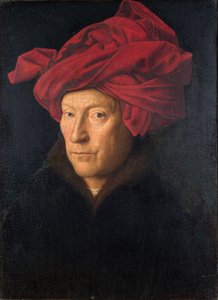
Jan van Eyck
1390 - 1441 , Holandia
Krótka nota
- Artyści/Ruchy, Które Go Zainspirowały: ['Wczesnorenascy malarze']
- Data Urodzenia: ok. 1390
- Data Śmierci: 1441
- Miejsce Urodzenia: Maastricht, Holandia
- Narodowość: Flamandzki
- Pełne Imię I Nazwisko: Jan van Eyck
- Styl Artystyczny: Wczesnorenaski malarstwo
- Znane Dzieła:
- Ołtarz Gandawski
- Portret Arnolfinich
Powiązane artykuły

Północny Renesans: Rozkwit Realizmu, Reformacji Religijnej i Artystycznych Innowacji
Poznaj fascynujący świat Północnego Renesansu! Odkryj realizm flamandzkich mistrzów, wpływ reformacji na sztukę i arcydzieła van Eycka, Weydena i Boscha. Ekspercka analiza historii i innowacji artystycznych.

Rembrandt van Rijn: 25 Najwybitniejszych Dzieł Sztuki – Reprodukcje i Inspiracje do Wnętrz
Poznaj 25 arcydzieł Rembrandta van Rijn! Odkryj fascynujące historie, techniki i wpływ holenderskiego mistrza baroku na świat sztuki. Reprodukcje obrazów najwyższej jakości – inspiracje do wnętrz na AllPaintingsStore.com

10 Arcydzieł Wczesnoniderlandzkiego Malarstwa, które Zdefiniowały Epokę | Reprodukcje Obrazów
Odkryj 10 arcydzieł wczesnoniderlandzkiego malarstwa! Poznaj historie van Eycka, Weydena i Memlinga. Reprodukcje obrazów najwyższej jakości dla Twojego wnętrza. Inspiracje i dekoracje ścienne na AllPaintingsStore.com

10 Arcydzieł Wczesnego Renesansu Niderlandzkiego: Sztuka i Dekoracja Domu
Odkryj 10 arcydzieł wczesnego renesansu niderlandzkiego! Poznaj historie van Eycka, Rogiera van der Weydena i innych mistrzów. Reprodukcje obrazów najwyższej jakości dla Twojego wnętrza – AllPaintingsStore.com
Jan van Eyck: Innovation, Symbolism & the Dawn of Early Netherlandish Painting
Explore the revolutionary art of Jan van Eyck! Discover his groundbreaking oil painting techniques, hidden symbolism, and lasting impact on the Early Netherlandish Renaissance. A deep dive for art enthusiasts.


