Gwarancja zwrotu pieniędzy · 100 dni Darmowa dostawa na cały świat
449 564dzieła sztuki 30 613artyści 4 660muzea 32język
Catalogue entry

Numbers in Color

Oil On Canvas.

Fig. 1. Jasper Johns, Numbers in Color. Shown as the reproduction you are specifying: , .

§ 1Catalogue data

§ 2Abstract

Opis obiektu

Jasper Johns’ ‘Numbers in Color’ is a chaotic abstract expressionist masterpiece featuring layered red & blue squares, evoking data & unsettling visuals. Explore this unique artwork.

Biografia artysty

Jasper Johns (1930) – pionier pop-artu i abstrakcjonizmu! Odkryj ikoniczne dzieła, takie jak 'Flaga', mapy i tarcze – redefinicję sztuki współczesnej.

§ 3Commentary

A Symphony of Numbers: Decoding Jasper Johns’ Abstract Vision

Numbers in Color is a captivating work by American artist Jasper Johns, embodying the spirit of abstract expressionism while simultaneously forging new ground in post-war art. This piece isn't about depicting reality; it’s an exploration of perception, representation, and the very act of painting itself.

Subject & Style: Beyond Representation

The artwork presents a dense field populated by repeated numbers encased within irregularly shaped, overlapping squares. There is no traditional subject matter here – no landscape, portrait, or still life. Instead, Johns focuses on fundamental visual elements: color, form, and texture. The style leans heavily into Abstract Expressionism’s emphasis on non-representational imagery, yet hints at Cubist fragmentation through the deconstruction of space and form. It's a deliberate move away from the emotional intensity of earlier abstract expressionists like Pollock or Rothko, opting for a more intellectual and analytical approach.

Technique & Materials: A Tactile Surface

Johns’ technique is characterized by a layered application of paint – likely oil on canvas – creating a rich, tactile surface. The brushstrokes are visible within the squares, adding depth and energy to the composition. This isn't about smooth perfection; it’s about revealing the process of creation itself. The density of the layering contributes to a flattened picture plane, minimizing traditional perspective and emphasizing the two-dimensionality of the canvas.

Historical Context: Bridging Abstract Expressionism & Pop Art

Created during a pivotal moment in art history, Numbers in Color reflects Johns’ transition from abstract expressionism towards what would become known as Pop Art. While still rooted in abstraction, the use of recognizable elements – numbers – foreshadows his later incorporation of everyday imagery like flags and targets. This work exists at an intersection, questioning the boundaries between high art and popular culture. It emerged during a period where artists were challenging established norms and exploring new ways to engage with the world around them.

Symbolism & Interpretation: Data, Time, and Chaos

The repetition of numbers invites multiple interpretations. They could represent data points in an increasingly information-driven society, or perhaps symbolize the relentless march of time. The chaotic arrangement suggests a sense of disorder, mirroring the anxieties of the Cold War era. However, Johns deliberately avoids definitive meaning, encouraging viewers to bring their own associations and experiences to the work. The numbers are not *about* something; they *are* something – visual elements with inherent power.

Emotional Impact & Interior Design

Numbers in Color evokes a complex emotional response. Its density and lack of clear focal points can create a sense of unease or disorientation, while the vibrant color palette offers moments of visual excitement. This piece is ideal for those seeking artwork that sparks conversation and challenges conventional notions of beauty. In an interior design context, it would serve as a striking statement piece in a modern or contemporary space, adding depth and intellectual intrigue to any room. Its bold colors and dynamic composition can anchor a minimalist aesthetic or provide a compelling contrast within a more eclectic setting.
  • Perfect for: Modern & Contemporary Interiors
  • Mood: Intellectual, Dynamic, Thought-Provoking
  • Color Palette: Red, Blue, Yellow, Green, Orange – a vibrant and energetic mix.

Pytania i odpowiedzi

Jak duży jest kontrast w „Numbers in Color” – Jasper Johns?

Poziom kontrastu dzieła „Numbers in Color” – Jasper Johns wynosi Serene.

Do jakiego nurtu w sztuce należy „Numbers in Color” – Jasper Johns?

„Numbers in Color” to dzieło należące do nurtu Abstract Expressionism. Nurt ten określa tradycję artystyczną, w której osadzone jest dzieło.

W jaki sposób nurt i epoka przenikają się w „Numbers in Color” – Jasper Johns?

W „Numbers in Color” – Jasper Johns nurt Abstract Expressionism łączy się z epoką Modernizm.
§ 4The artist

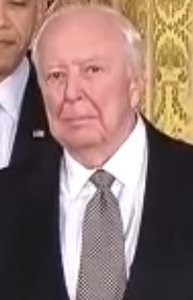
Jasper Johns

Jasper Johns

1930 - , Stany Zjednoczone

Quick facts about Jasper Johns

  • Artistic Movement Or Style: Pop Art, Abstrakcjonizm
  • Artists Or Movements Influenced By This Artist:
    • Andy Warhol
    • Roy Lichtenstein
  • Artists Who Influenced This Artist: ['Marcel Duchamp']
  • Date Of Birth: 15 maja 1930
  • Full Name: Jasper Johns
  • Nationality: Amerykański
  • Notable Artworks:
    • Flag
    • Target
    • Mapa
  • Place Of Birth: Augusta, USA

Biografia artysty

A Life Painted in Symbols: The World of Jasper Johns

Jasper Johns emerged as a pivotal figure in the landscape of American art, bridging the emotive intensity of Abstract Expressionism with the burgeoning Pop Art movement that would soon redefine artistic boundaries. Born in Augusta, Georgia, in 1930, his early life was marked by a sense of displacement following his parents’ divorce, an experience that perhaps subtly informed his later explorations of identity and belonging within the context of American iconography. His formative years unfolded across various schools before he briefly attended the University of South Carolina, but it wasn't until his move to New York City in 1949 that Johns truly began to forge his artistic path. A period of service during the Korean War further shaped his perspective, exposing him to a world far removed from the burgeoning art scene he was eager to embrace upon his return.

Breaking with Abstraction: The Dawn of a New Visual Language

The post-war American art world was dominated by Abstract Expressionism—a style characterized by spontaneous gesture and deeply personal emotional expression. While initially influenced by this movement, Johns felt compelled to move beyond its purely non-representational approach. He sought a new visual language, one that incorporated recognizable imagery not as illustrations but as vehicles for deeper contemplation. This wasn’t simply about *depicting* the world; it was about questioning how we perceive and interpret symbols within it. Key influences guided his departure: Marcel Duchamp's radical readymades challenged conventional notions of art-making, while the emphasis on materiality in Abstract Expressionism informed Johns’ early techniques. However, it was the everyday objects and potent symbols of American culture—flags, targets, maps, numbers—that truly became central to his artistic vocabulary. He wasn’t interested in escaping representation; he wanted to dissect it, layer it with meaning, and ultimately reveal its inherent ambiguities.

Iconic Images: Flags, Targets, and the Language of Symbols

Johns' breakthrough works arrived in the mid-1950s, instantly establishing him as a force to be reckoned with. His paintings of flags, most notably *Flag* (1954–55), were not patriotic declarations but rather investigations into the very nature of representation. Rendered in a semi-abstract style, using encaustic—pigment mixed with hot wax—and collage techniques, these flags weren’t simply images; they were textured surfaces laden with symbolic weight. The *Flag* series wasn't about celebrating American nationalism, but rather exploring themes of perception, memory, and the relationship between image and reality. The target series, beginning in 1958, further explored this fascination with recognizable forms, questioning perception and meaning through the seemingly straightforward image of a bullseye. *Map* (1961), with its fragmented and layered depictions of the United States, delved into themes of geography, identity, and the complexities of national representation. Works like *False Start* (1959) demonstrated his experimentation with language and visual codes, creating complex compositions that challenged viewers to decipher their underlying meanings. Even *White Flag* (1955), a seemingly simple monochrome canvas, prompted profound questions about absence, surrender, and the very act of seeing.

Influences and Techniques

Johns’ artistic development was shaped by a diverse range of influences. The work of Marcel Duchamp profoundly impacted his thinking about representation, encouraging him to question the traditional boundaries between art and reality. The emphasis on materiality in Abstract Expressionism—particularly the use of texture and surface—provided a foundation for his later techniques. He experimented with various media, including encaustic, collage, lithography, and woodcut, often combining them in innovative ways. His meticulous attention to detail and his willingness to incorporate found objects into his work reflected a deep engagement with the physical world. The influence of Robert Rauschenberg, with whom he collaborated closely during the early 1950s, was also significant, fostering a spirit of experimentation and pushing the boundaries of artistic practice.

Recognition and Enduring Impact

Jasper Johns has received numerous accolades throughout his illustrious career. He was awarded the Golden Lion at the Venice Biennale in 1988, the National Medal of Arts in 1990, and the Presidential Medal of Freedom in 2011 – a testament to his profound impact on American art. His works are held in major museum collections across the globe—the Museum of Modern Art, the Whitney Museum of American Art, the Metropolitan Museum of Art in New York, and Tate Modern in London, to name just a few. Beyond his paintings, Johns’ contributions extend to sculpture and printmaking, demonstrating his versatility and unwavering commitment to artistic innovation. His enduring legacy lies not only in the iconic images he created but also in the profound questions he raised about the nature of representation, symbolism, and the very essence of what it means to be an artist in a rapidly changing world. He remains an active artist, constantly evolving his approach and solidifying his position as one of the most important figures in 20th and 21st-century art.

§ 5Comparanda

§ 6Questions

Najważniejsze informacje

  • medium: likely oil paints on canvas
  • artist: Jasper Johns
  • style: Abstract, Chaotic
  • movement: Abstract Expressionism, Pop Art, Cubism

Quiz o sztuce

Do każdego pytania dotyczy tylko jedna poprawna odpowiedź.

Pytanie 1:
Jasper Johns' 'Numbers in Color' is most closely associated with which art movements?
Pytanie 2:
What is a dominant characteristic of the composition in 'Numbers in Color'?
Pytanie 3:
Which colors are most prominent in Jasper Johns’ ‘Numbers in Color’?
Pytanie 4:
Based on the description, what is a likely medium used to create 'Numbers in Color'?

§ 7Cite this entry

AllPaintingsStore.com, “Jasper Johns, Numbers in Color”, https://allpaintingsstore.com/pl/art/jasper-johns-numbers-in-color-AE3MVL-en/ArtistReproduction/ (accessed 5 Październik 2026).

§ 8The reproduction

Ręcznie malowana reprodukcja olejowa

Ręcznie malowany obraz olejny na płótnie, wykonany na zamówienie przez naszych artystów w wybranym przez Ciebie wymiarze i oprawie. ( Przełącz na wydania drukowane Przejdź do wersji cyfrowej)

It is specified on the order sheet in the margin; the present state of that sheet reads as follows.

Numbers in Color

Technika reprodukcji

Wymiary reprodukcji

-

Wybitny mistrz artystyczny

Większa szczegółowość, finezja i dodatkowy czas na realizację

-

Opcje oprawy reprodukcji

-

-

W przypadku dzieł sztuki lub reprodukcji, których którykolwiek z boków przekracza 105 cm (około 41 cali), rama zostanie wysłana w formie zestawu do samodzielnego montażu. Metoda ta zapewnia bezpieczną dostawę i zapobiega uszkodzeniom podczas transportu.

Wymagany profesjonalny montaż – nie jest to produkt typu DIY.
Zestaw musi zostać złożony, a płótno naciągnięte przez doświadczonego profesjonalnego ramiarza, przy użyciu kleju do drewna (brak w zestawie), kleszczy do naciągania płótna oraz ścisków, które utrzymają krosna w równej pozycji podczas schnięcia kleju. Nieprawidłowy montaż lub nierównomierne napięcie płótna może trwale uszkodzić dzieło sztuki i nie podlega naszej gwarancji.

  • W zestawie znajdują się wszystkie listwy z litego drewna, precyzyjnie docięte do wymiarów.

  • Montaż odbywa się przy użyciu dołączonych wkrętów oraz kleju do drewna do łączenia narożników, którego zestaw nie zawiera i który musi zostać dostarczony przez ramiarza.

  • Wymagane są profesjonalne narzędzia, których nie ma w zestawie: kleszcze do naciągania płótna (napinacz) oraz zaciski, które pozwolą utrzymać listwy w równej pozycji podczas schnięcia kleju.

Ważne:
Do połączenia narożników niezbędny jest klej do drewna, listwy należy unieruchomić za pomocą ścisków do momentu całkowitego wyschnięcia kleju, a naciągnięcie płótna na złożoną ramę wymaga użycia kleszczy do naciągania płótna. Żaden z tych elementów nie jest dołączony do zestawu. Przed zamówieniem tego rozmiaru zalecamy konsultację z doświadczonym ramiarzem.

Etykieta obiektu

-

-

Lakier ochronny

Lakier z połyskiem (pogłębia kolory, chroni przed światłem i wilgocią)

-

Personalizacja dzieła

Przykłady możliwości personalizacji: zastąp twarz zdjęciem klienta; dodaj zwierzę domowe (np. zamień kota na psa); umieść ukrytą wiadomość w tle; zmień krajobraz lub elementy tła.

-

Ekspresowa

Dostawa na cały świat () w ciągu 3–4 tygodni zamiast standardowych 5 tygodni. (2 Listopad). Bez kompromisów w kwestii jakości.

-

Przesyłka ekspresowa

Dostawa na cały świat () w ciągu 5 tygodni. (9 Listopad).

W cenie

Cena całkowita

zł 1005

Included with every order

  • Bezpłatna ekspresowa wysyłka na cały świat
  • Wysokiej jakości płótno lniane
  • Pełne ubezpieczenie przesyłki
  • Gwarancja zwrotu należności celnych i podatków importowych
  • Gwarancja wiernego odwzorowania kolorów
  • 100-dniowa polityka zwrotów (tylko w przypadku wad)
  • Gwarancja 100% zwrotu pieniędzy
  • Zniżka przy zakupie wielu sztuk
Order sheet