Gwarancja zwrotu pieniędzy · 100 dni Darmowa dostawa na cały świat
449 587dzieła sztuki 30 613artyści 4 660muzea 32język
Catalogue entry

El sol rojo

Acrylic On Canvas.

Fig. 1. Joan Miró, El sol rojo. Shown as the reproduction you are specifying: , .

§ 1Catalogue data

§ 2Abstract

Opis obiektu

Delve into Joan Miró's surrealist masterpiece 'El Sol Rojo'! This vibrant canvas blends bold strokes & abstract forms against a blue sky, capturing Catalan spirit and dreamlike beauty – explore stunning reproductions at AllPaintingsStore.

Biografia artysty

Poznaj świat Joana Miró! Odkryj Surrealizm i abstrakcję, katalońską symbolikę oraz zabawne kształty. Pionier sztuki nowoczesnej – zobacz dzieła w AllPaintingsStore!

§ 3Commentary

A Catalan Visionary: The Life and Art of Joan Miró

Joan Miró i Ferrà, born in Barcelona in 1893, stands as one of the most significant figures in 20th-century art. His journey was not merely a progression through styles but an exploration of inner worlds, translating dreams, memories, and Catalan identity onto canvas with a uniquely poetic visual language. From humble beginnings marked by illness and initial parental reservations about his artistic pursuits, Miró persevered, driven by an innate need to express the intangible—the emotions, sensations, and subconscious currents that lie beneath the surface of reality. His early life was steeped in the traditions of Barcelona, a city brimming with architectural marvels thanks to Antoni Gaudí, whose organic forms would subtly influence Miró’s later abstractions. The goldsmithing profession of his father instilled an appreciation for meticulous craftsmanship, while the rugged Catalan landscape became a recurring motif and source of inspiration.

The Birth of Surrealism: Exploring Inner Landscapes

Miró's artistic development coincided with the burgeoning movement of Surrealism, spearheaded by André Breton and fueled by psychoanalytic theories championed by Sigmund Freud. Rejecting rational thought and embracing the irrational, Surrealists sought to liberate creativity from the constraints of logic, tapping into the realm of dreams and unconscious desires. Miró wholeheartedly embraced this ethos, distilling his personal experiences—childhood illness, familial anxieties—into fantastical imagery that defied conventional representation. He wasn’t attempting to depict what he *saw*; rather, he aimed to convey what he *felt*, channeling primal instincts and subconscious associations into vibrant compositions brimming with symbolic resonance.

El Sol Rojo: Decoding the Symbolism of Light and Darkness

“El Sol Rojo,” or “The Red Sun,” exemplifies Miró’s distinctive style perfectly. Created in 1948, this oil on canvas painting immediately captivates with its bold palette—dominantly crimson against a serene azure sky—a deliberate juxtaposition reflecting the duality inherent in human experience. The central sun, rendered as an amorphous blob of scarlet pigment, isn't merely a celestial body; it embodies vitality, passion, and perhaps even danger. Surrounding this radiant orb are abstracted shapes – spirals, circles, and fragmented forms – reminiscent of organic matter and hinting at hidden depths. These elements intertwine with two smaller faces peering from the canvas, adding layers of complexity to the visual narrative. The inclusion of these faces speaks to Miró’s preoccupation with human psychology and his belief in the power of symbolism to communicate unspoken truths.

Technique and Artistic Vision: A Dance Between Abstraction and Emotion

Miró's technique was characterized by loose brushwork—a deliberate rejection of academic precision—allowing for an expressive fluidity that mirrored the dynamism of his inner vision. He employed a layering process, applying thin washes of color over thicker impasto strokes to build up texture and create visual depth. This approach wasn’t about meticulous detail; it was about capturing the essence of feeling through evocative marks on the canvas. The artist's unwavering commitment to experimentation—incorporating collage elements and incorporating unconventional materials—further solidified his reputation as a pioneer of modern art, pushing boundaries and redefining artistic conventions.

Legacy and Inspiration: An Enduring Influence

Joan Miró’s influence extends far beyond the confines of Surrealism, resonating throughout Abstract Expressionism and influencing generations of artists who followed. His unwavering belief in intuition and imagination continues to inspire creatives today, reminding us that true artistry lies not in replicating reality but in transforming it—revealing hidden dimensions of consciousness and conveying profound emotional truths. To experience the captivating beauty and symbolic richness of “El Sol Rojo” firsthand, explore high-quality reproductions at AllPaintingsStore or visit the Fundació Joan Miró museum in Barcelona – a testament to the enduring legacy of this Catalan visionary.

Pytania i odpowiedzi

Jak technika i ruch łączą się w "El sol rojo"?

„El sol rojo” – Joan Miró łączy technikę Acrylic On Canvas z nurtem Surrealism. Technika i styl określają sposób wykonania oraz estetykę dzieła.

Czy El sol rojo jest w ogólnym ujęciu jasny?

Pod względem postrzeganej jasności, „El sol rojo” – Joan Miró jest deep_shadow.

Jaki to rodzaj dzieła sztuki: „El sol rojo” – Joan Miró?

"El sol rojo" to WallArt.
§ 4The artist

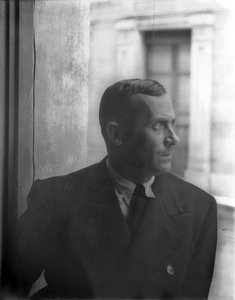
Joan Miró

Joan Miró

1893 - 1983, Hiszpania

Quick facts about Joan Miró

  • Artistic Movement Or Style: Surrealizm
  • Artists Who Influenced This Artist:
    • Pablo Picasso
    • Wasilij Kandinskij
  • Date Of Birth: 20 kwietnia 1893
  • Date Of Death: 25 grudnia 1983
  • Full Name: Joan Miró i Ferrà
  • Nationality: Hiszpanka
  • Notable Artworks:
    • Farm
    • Dutch Interiors
    • Painting
  • Place Of Birth: Barcelona, Hiszpania

Biografia artysty

A Catalan Visionary: The Life and Art of Joan Miró

Joan Miró i Ferrà, born in Barcelona in 1893, stands as one of the most significant figures in 20th-century art. His journey was not merely a progression through styles but an exploration of inner worlds, translating dreams, memories, and Catalan identity onto canvas with a uniquely poetic visual language. From humble beginnings marked by illness and initial parental reservations about his artistic pursuits, Miró persevered, driven by an innate need to express the intangible—the emotions, sensations, and subconscious currents that lie beneath the surface of reality. His early life was steeped in the traditions of Barcelona, a city brimming with architectural marvels thanks to Antoni Gaudí, whose organic forms would subtly influence Miró’s later abstractions. The goldsmithing profession of his father instilled an appreciation for meticulous craftsmanship, while the rugged Catalan landscape became a recurring motif and source of inspiration throughout his career.

Early Influences and the Path to Surrealism

Miró's formal artistic training began at La Llotja in Barcelona, where he honed his skills in traditional techniques. However, it was exposure to the avant-garde movements sweeping through Paris that truly ignited his creative evolution. The vibrant colors of Fauvism and the fragmented forms of Cubism resonated deeply, prompting him to move to Paris in 1920. This period proved pivotal as he encountered artists like Pablo Picasso and began experimenting with increasingly abstract compositions. Yet, Miró didn’t simply adopt these styles; he synthesized them, forging a path toward his own distinctive aesthetic. He sought to distill forms to their essence, stripping away representational details in favor of symbolic shapes and evocative colors. This exploration led him to the Surrealist group in 1924, aligning him with artists such as Max Ernst and Salvador Dalí. While embracing the Surrealist interest in the subconscious, Miró maintained a unique sensibility—his work was less about shocking imagery or Freudian symbolism than it was about creating a world of playful forms and poetic suggestion. He famously recounted that he returned to his Parisian studio at Rue Blomet without dinner and began sketching in his notebook, stating: “Those shapes appeared to me on the ceiling.”

The Language of Symbols: Key Works and Artistic Innovations

Throughout the 1920s and 30s, Miró developed his signature visual vocabulary—a universe populated by biomorphic shapes, floating forms, and vibrant colors. The Farm (1922) exemplifies this transition. It’s not merely a depiction of rural life but an evocation of Catalan identity and a symbolic representation of the natural world. His collaborative spirit led to innovative techniques like *grattage*, pioneered with Max Ernst in 1926 for designs intended for Sergei Diaghilev's ballet, where textures were revealed by scraping paint across canvas. The Dutch Interiors (1928) series demonstrated his ability to reinterpret the Old Masters through a distinctly modern lens, transforming domestic scenes into dreamlike abstractions. Painting (1933) encapsulates Miró’s exploration of the subconscious and his rejection of conventional artistic boundaries—bold colors and simplified forms conveying a profound emotional resonance. Beyond painting, Miró fearlessly experimented with sculpture, ceramics, and printmaking, expanding his creative horizons and demonstrating a remarkable versatility.

Legacy and Enduring Influence

Joan Miró's impact on 20th-century art is undeniable. He wasn’t simply a painter; he was a visionary who challenged the very definition of artistic expression. His work paved the way for abstract expressionism and continues to inspire artists across disciplines. He established two foundations—the Fundació Joan Miró in Barcelona (1975) and the Fundació Pilar i Joan Miró in Palma de Mallorca (1981)—ensuring that his legacy would endure, providing spaces for artistic exploration and education. Throughout his long career, he remained committed to pushing boundaries, questioning conventions, and exploring the depths of human imagination. Miró’s art is a testament to the power of abstraction, symbolism, and poetic expression—a vibrant celebration of life, dreams, and the enduring spirit of Catalan culture. His work continues to resonate with audiences worldwide, inviting us to enter a world where anything is possible and the boundaries between reality and fantasy blur into a captivating dance of color and form.

§ 5Comparanda

§ 6Questions

Najważniejsze informacje

  • Year: 1948
  • Artistic style: Abstract Expressionism
  • Notable elements or techniques: Bold strokes & vibrant hues
  • Movement: Surrealism
  • Artist: Joan Miró

§ 7Cite this entry

AllPaintingsStore.com, “Joan Miró, El sol rojo”, https://allpaintingsstore.com/pl/art/joan-miro-el-sol-rojo-8EWKUE-en/ArtistReproduction/ (accessed 4 Październik 2026).

§ 8The reproduction

Ręcznie malowana reprodukcja olejowa

Ręcznie malowany obraz olejny na płótnie, wykonany na zamówienie przez naszych artystów w wybranym przez Ciebie wymiarze i oprawie. ( Przełącz na wydania drukowane Przejdź do wersji cyfrowej)

It is specified on the order sheet in the margin; the present state of that sheet reads as follows.

El sol rojo

Technika reprodukcji

Wymiary reprodukcji

-

Wybitny mistrz artystyczny

Większa szczegółowość, finezja i dodatkowy czas na realizację

-

Opcje oprawy reprodukcji

-

-

W przypadku dzieł sztuki lub reprodukcji, których którykolwiek z boków przekracza 105 cm (około 41 cali), rama zostanie wysłana w formie zestawu do samodzielnego montażu. Metoda ta zapewnia bezpieczną dostawę i zapobiega uszkodzeniom podczas transportu.

Wymagany profesjonalny montaż – nie jest to produkt typu DIY.
Zestaw musi zostać złożony, a płótno naciągnięte przez doświadczonego profesjonalnego ramiarza, przy użyciu kleju do drewna (brak w zestawie), kleszczy do naciągania płótna oraz ścisków, które utrzymają krosna w równej pozycji podczas schnięcia kleju. Nieprawidłowy montaż lub nierównomierne napięcie płótna może trwale uszkodzić dzieło sztuki i nie podlega naszej gwarancji.

  • W zestawie znajdują się wszystkie listwy z litego drewna, precyzyjnie docięte do wymiarów.

  • Montaż odbywa się przy użyciu dołączonych wkrętów oraz kleju do drewna do łączenia narożników, którego zestaw nie zawiera i który musi zostać dostarczony przez ramiarza.

  • Wymagane są profesjonalne narzędzia, których nie ma w zestawie: kleszcze do naciągania płótna (napinacz) oraz zaciski, które pozwolą utrzymać listwy w równej pozycji podczas schnięcia kleju.

Ważne:
Do połączenia narożników niezbędny jest klej do drewna, listwy należy unieruchomić za pomocą ścisków do momentu całkowitego wyschnięcia kleju, a naciągnięcie płótna na złożoną ramę wymaga użycia kleszczy do naciągania płótna. Żaden z tych elementów nie jest dołączony do zestawu. Przed zamówieniem tego rozmiaru zalecamy konsultację z doświadczonym ramiarzem.

Etykieta obiektu

-

-

Lakier ochronny

Lakier z połyskiem (pogłębia kolory, chroni przed światłem i wilgocią)

-

Personalizacja dzieła

Przykłady możliwości personalizacji: zastąp twarz zdjęciem klienta; dodaj zwierzę domowe (np. zamień kota na psa); umieść ukrytą wiadomość w tle; zmień krajobraz lub elementy tła.

-

Ekspresowa

Dostawa na cały świat () w ciągu 3–4 tygodni zamiast standardowych 5 tygodni. (1 Listopad). Bez kompromisów w kwestii jakości.

-

Przesyłka ekspresowa

Dostawa na cały świat () w ciągu 5 tygodni. (8 Listopad).

W cenie

Cena całkowita

zł 1004

Included with every order

  • Bezpłatna ekspresowa wysyłka na cały świat
  • Wysokiej jakości płótno lniane
  • Pełne ubezpieczenie przesyłki
  • Gwarancja zwrotu należności celnych i podatków importowych
  • Gwarancja wiernego odwzorowania kolorów
  • 100-dniowa polityka zwrotów (tylko w przypadku wad)
  • Gwarancja 100% zwrotu pieniędzy
  • Zniżka przy zakupie wielu sztuk
Order sheet