Gwarancja zwrotu pieniędzy · 100 dni Darmowa dostawa na cały świat
449 564dzieła sztuki 30 613artyści 4 660muzea 32język
Wpis do katalogu

Study of a Cloudy Sky

1825. , 26.0 x 33.0 cm. Yale Center for British Art.

Ryc. 1. John Constable, Study of a Cloudy Sky, 1825. Przedstawiono jako wybraną przez Ciebie reprodukcję: , .

§ 1Dane katalogowe

Wymiary
26.0 x 33.0 cm

§ 2Abstrakcja

Opis obiektu

Admire John Constable’s ‘Study of a Cloudy Sky,’ an exquisite 1825 oil painting capturing nature's beauty. Explore impressionistic details & own a piece of art history with AllPaintingsStore.com!

Biografia artysty

John Constable (1776-1837) – brytyjski malarz krajobrazowy, rewolucjonista gatunku. Jego emocjonalne obrazy z Suffolku, takie jak 'Wagon na siano', inspirują do podziwiania piękna natury.

§ 3Komentarz

A Symphony of Atmosphere: John Constable’s ‘Study of a Cloudy Sky’

John Constable's *Study of a Cloudy Sky*, painted in 1825, is more than just a depiction of weather; it’s an intimate exploration of the English countryside and a pivotal work within the Romantic movement. Measuring a modest 26 x 33 cm, this oil on canvas currently resides at the Yale Center for British Art, where its subtle power continues to captivate viewers.

Decoding the Composition

The painting presents a deceptively simple scene: a field gently sloping towards distant trees beneath a dramatically shifting sky. However, it’s in this simplicity that Constable's genius lies. The lower portion of the canvas is anchored by muted greens and browns, providing a grounding element to the expansive vista above. The horizon line remains low, deliberately emphasizing the immensity and dynamism of the cloud formations. These aren’t static puffs of white; they are rendered with an incredible sense of movement and weight, suggesting an impending storm or the aftermath of rainfall. The trees in the middle ground act as silhouetted sentinels, further enhancing the depth and atmospheric perspective.

Constable's Revolutionary Technique

Constable was a master of *plein air* painting – working directly from nature – and this immediacy is palpable in *Study of a Cloudy Sky*. He employed loose, expressive brushstrokes, building up layers of paint to capture the fleeting effects of light and shadow. This technique, revolutionary for its time, moved away from the highly finished, academic style prevalent in early 19th-century art. The impasto – thick application of paint – is particularly noticeable in the clouds, giving them a three-dimensional quality that seems to lift them off the canvas. He wasn’t striving for photographic realism but rather an *impression* of nature, focusing on its emotional and atmospheric qualities. His meticulous study of light, as evidenced here, would profoundly influence Impressionist painters like Monet decades later.

Historical Context & Artistic Significance

Born in 1776, Constable lived during a period of significant social and political change in England. The Industrial Revolution was transforming the landscape, and there was a growing sense of nostalgia for the rural past. Constable’s paintings became emblematic of this sentiment, celebrating the beauty and tranquility of the English countryside. He rejected the prevailing Grand Manner history painting favored by the Royal Academy, instead choosing to elevate everyday scenes – landscapes – to the level of high art. *Study of a Cloudy Sky* exemplifies this approach; it's not a grand narrative but a deeply felt observation of nature’s power and beauty. His work was initially met with resistance in England, but gained significant recognition in France, influencing artists associated with the Barbizon school.

Symbolism & Emotional Resonance

While seemingly straightforward, *Study of a Cloudy Sky* carries subtle symbolic weight. The turbulent sky can be interpreted as reflecting the emotional turmoil often experienced by individuals navigating life’s challenges. The impending storm might symbolize change or uncertainty, while the enduring presence of the land suggests resilience and continuity. More broadly, the painting evokes a sense of awe and reverence for the natural world – a feeling that resonates deeply with viewers even today. The overall mood is one of quiet contemplation and melancholic beauty.

A Timeless Piece for Your Space

*Study of a Cloudy Sky* offers a versatile aesthetic appeal. Its muted color palette and atmospheric quality make it suitable for a variety of interior design styles, from traditional to contemporary. The painting’s relatively small size makes it ideal for smaller spaces or as part of a larger gallery wall arrangement. A high-quality reproduction captures the nuances of Constable's brushwork and allows you to bring this masterpiece into your home, offering a daily reminder of nature’s enduring beauty and emotional power.

Explore More by John Constable

  • Hay Wain (1821): Perhaps his most famous work, depicting a rural scene with a horse-drawn wagon.
  • Dedham Vale (1821-22): A quintessential example of Constable’s idyllic landscapes.
  • Stonehenge (1835): Demonstrating his ability to capture the grandeur of historical sites.
  • Salisbury Cathedral from the Meadows (1836): A powerful depiction of architectural majesty within a natural setting.

Pytania i odpowiedzi

Z jakiego kraju pochodzi dzieło Impressionism pt. "Study of a Cloudy Sky"?

"Study of a Cloudy Sky" powstało dzięki John Constable, urodzonemu w Wielka Brytania, w ramach nurtu Impressionism. Pochodzenie artysty wiąże to dzieło z Impressionism w wydaniu twórców z Wielka Brytania.

Jak kolory w dziele "Study of a Cloudy Sky" współgrają ze sobą?

„Study of a Cloudy Sky” – John Constable prezentuje Strong Color Unity harmonię kolorystyczną.

Czy mogę przyjrzeć się bliżej dziełu "Study of a Cloudy Sky"?

Widok rentgenowski dzieła „Study of a Cloudy Sky” – John Constable jest dostępny na stronie Analiza rentgenowska: to interaktywna analiza obrazu obejmująca jedenaście warstw optycznych.
§ 4Artysta

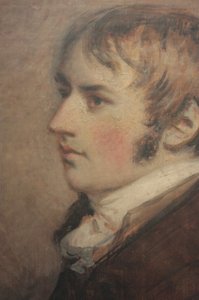
John Constable

John Constable

1776 - 1837, Wielka Brytania

Krótkie informacje o John Constable

  • Artistic Movement Or Style: Romanticizm
  • Artists Or Movements Influenced By This Artist: ['Barbizon School']
  • Artists Who Influenced This Artist:
    • Claude Lorrain
    • Ruisdael
  • Date Of Birth: 11 czerwca 1776
  • Date Of Death: 31 marca 1837
  • Full Name: John Constable
  • Nationality: Brytyjski
  • Notable Artworks:
    • The Hay Wain
    • Hadleigh Castle
    • Salisbury Cathedral
  • Place Of Birth: East Bergholt, UK

Biografia artysty

A Life Rooted in the English Landscape

John Constable, born in 1776 in the idyllic Suffolk village of East Bergholt, wasn’t merely a painter of landscapes; he was a poet of the land, translating its subtle moods and enduring beauty onto canvas with an unprecedented emotional depth. His father, a prosperous corn merchant who owned both Dedham Vale and mills along the River Stour, provided not only financial security but also the very subject matter that would define Constable’s artistic life. This early immersion in the rural world – the slow rhythm of agricultural life, the ever-changing light on fields and water, the intimate details of nature – became indelibly etched into his sensibility. While initially destined to follow his father into business, a burgeoning passion for art, nurtured by local patrons like George Beaumont who introduced him to the works of Claude Lorrain, ultimately steered him toward a different path. Constable’s artistic journey wasn’t immediate; it was a gradual unfolding, shaped by careful observation and a persistent desire to capture not just *what* he saw, but *how* it felt to be present within the landscape.

Breaking with Convention: A New Vision of Nature

Constable’s artistic development was marked by a deliberate rejection of prevailing academic conventions. Dissatisfied with the idealized and often theatrical landscapes favored by the Royal Academy, he sought instead a truthful representation of nature, imbued with personal feeling. He wasn't interested in grand historical narratives or mythological scenes; his focus remained steadfastly on the familiar countryside surrounding him. This commitment to depicting ordinary subjects – hay wains, farm buildings, village life – was initially met with resistance from critics who deemed his work too commonplace and lacking in ambition. However, Constable persevered, driven by a conviction that beauty resided in the everyday. He pioneered a technique of *plein air* painting, venturing outdoors to directly observe and capture the fleeting effects of light and weather. This direct engagement with nature allowed him to infuse his canvases with an immediacy and vitality previously unseen in British landscape art. His brushwork became increasingly loose and expressive, employing impasto – thick layers of paint – to create texture and convey a sense of movement and atmosphere. He wasn’t simply recording what he saw; he was translating his emotional response to the land into visual form.

Iconic Works and Lasting Influence

Constable's most celebrated works stand as testaments to his unique vision. The Hay Wain (1821), perhaps his most recognizable painting, depicts a quintessential rural scene on the River Stour, capturing the tranquility and harmony of agricultural life. Hadleigh Castle (1829) showcases his dramatic use of light and atmospheric effects, transforming a crumbling ruin into a powerful symbol of time’s passage. The series of paintings depicting Salisbury Cathedral from the Meadows (1823) demonstrates his ability to evoke different moods and times of day, revealing the cathedral as an integral part of the natural landscape. Netley Abbey (1824), with its evocative depiction of architectural grandeur amidst encroaching nature, exemplifies his skill in blending human creation with the wild beauty of the countryside. Despite facing initial struggles for recognition in England, Constable achieved considerable acclaim in France, where his innovative techniques and emotional depth resonated deeply with artists seeking a more naturalistic approach to landscape painting. He influenced the Barbizon School, a group of French painters who shared his commitment to *plein air* painting and direct observation of nature.

Personal Life & Final Years

Constable’s personal life was marked by both joy and sorrow. He married Maria Bicknell in 1816, and they had seven children, though sadly several did not survive infancy. His marriage provided him with emotional support but also financial strain. Elected a Royal Academician in 1829, he continued to face criticism from some quarters, particularly regarding his unconventional techniques. His later years were shadowed by Maria’s declining health and eventual death in 1828, an event that deeply affected him. Despite these hardships, Constable remained dedicated to his art, continuing to paint until his own passing on March 31, 1837. He left behind a rich artistic legacy—a testament to his unwavering commitment to capturing the beauty and emotional resonance of the English countryside. His paintings remain powerful evocations of a bygone era, inviting viewers to experience the landscape through his uniquely sensitive eyes.

Influences & Artistic Development

Constable’s artistic journey was shaped by several key influences. Initially, he was drawn to the works of Gainsborough, a fellow Suffolk painter known for his depictions of rural life and portraits. He also deeply admired the landscapes of 17th-century Dutch masters, particularly Jacob Ruisdael, whose atmospheric effects and use of light resonated with Constable’s own artistic sensibilities. The introduction to Claude Lorrain by George Beaumont proved pivotal, exposing him to the idealized beauty of classical landscapes and influencing his early compositions. However, Constable quickly moved beyond mere imitation, developing a distinctly personal style characterized by loose brushwork, vibrant colors, and an intense emotional response to nature. He was a keen observer of light and weather, meticulously studying how these elements transformed the landscape throughout the day. His dedication to *plein air* painting—working directly from nature—was revolutionary for his time, challenging the established conventions of academic art.

A Legacy of Emotional Resonance

John Constable’s historical significance lies not only in his artistic innovations but also in his profound impact on the development of landscape painting. He challenged academic conventions, elevated the status of ordinary subjects, and paved the way for a more personal and emotionally expressive approach to art. His emphasis on direct observation, atmospheric effects, and truthful representation of nature anticipated many of the concerns of later Impressionist painters. He demonstrated that landscape could be a vehicle for profound emotional expression, capable of evoking feelings of nostalgia, tranquility, and awe. Though he faced financial hardship throughout much of his career, and died relatively young in 1837, his legacy endures. Today, Constable is celebrated as one of Britain’s greatest artists, whose paintings continue to captivate audiences with their beauty, sincerity, and enduring power. His work serves as a poignant reminder of the profound connection between humanity and the natural world, and the transformative potential of art to capture its essence.

§ 5Podobne dzieła

§ 6Pytania

Najważniejsze informacje

  • medium: Oil on canvas
  • artist: John Constable
  • location: Yale Center for British Art, New Haven, United States
  • dimensions: 26 x 33 cm
  • year: 1825
  • movement: Romanticism

Quiz o sztuce

Do każdego pytania dotyczy tylko jedna poprawna odpowiedź.

Pytanie 1:
In what year was John Constable's 'Study of a Cloudy Sky' created?
Pytanie 2:
Where is 'Study of a Cloudy Sky' currently housed?
Pytanie 3:
What is a prominent characteristic of Constable’s artistic style as demonstrated in this work?
Pytanie 4:
Based on the image description, what is a key technique used by Constable in 'Study of a Cloudy Sky'?
Pytanie 5:
What does the image description suggest about the overall mood or feeling conveyed by the painting?

§ 7Cytuj ten wpis

AllPaintingsStore.com, “John Constable, Study of a Cloudy Sky (1825)”, https://allpaintingsstore.com/pl/art/john-constable-study-of-a-cloudy-sky-AQTMD8-en/ (dostęp dnia 9 Październik 2026).

§ 8Reprodukcja dzieła

Ręcznie malowana reprodukcja olejowa

Ręcznie malowany obraz olejny na płótnie, wykonany na zamówienie przez naszych artystów w wybranym przez Ciebie wymiarze i oprawie. ( Przełącz na wydania drukowane Przejdź do wersji cyfrowej)

Informacja ta widnieje na marginesie arkusza zamówienia; obecny stan tego arkusza przedstawia się następująco.

Study of a Cloudy Sky

Technika reprodukcji

Wymiary reprodukcji

-

Wybitny mistrz artystyczny

Większa szczegółowość, finezja i dodatkowy czas na realizację

-

Opcje oprawy reprodukcji

-

-

W przypadku dzieł sztuki lub reprodukcji, których którykolwiek z boków przekracza 105 cm (około 41 cali), rama zostanie wysłana w formie zestawu do samodzielnego montażu. Metoda ta zapewnia bezpieczną dostawę i zapobiega uszkodzeniom podczas transportu.

Wymagany profesjonalny montaż – nie jest to produkt typu DIY.
Zestaw musi zostać złożony, a płótno naciągnięte przez doświadczonego profesjonalnego ramiarza, przy użyciu kleju do drewna (brak w zestawie), kleszczy do naciągania płótna oraz ścisków, które utrzymają krosna w równej pozycji podczas schnięcia kleju. Nieprawidłowy montaż lub nierównomierne napięcie płótna może trwale uszkodzić dzieło sztuki i nie podlega naszej gwarancji.

  • W zestawie znajdują się wszystkie listwy z litego drewna, precyzyjnie docięte do wymiarów.

  • Montaż odbywa się przy użyciu dołączonych wkrętów oraz kleju do drewna do łączenia narożników, którego zestaw nie zawiera i który musi zostać dostarczony przez ramiarza.

  • Wymagane są profesjonalne narzędzia, których nie ma w zestawie: kleszcze do naciągania płótna (napinacz) oraz zaciski, które pozwolą utrzymać listwy w równej pozycji podczas schnięcia kleju.

Ważne:
Do połączenia narożników niezbędny jest klej do drewna, listwy należy unieruchomić za pomocą ścisków do momentu całkowitego wyschnięcia kleju, a naciągnięcie płótna na złożoną ramę wymaga użycia kleszczy do naciągania płótna. Żaden z tych elementów nie jest dołączony do zestawu. Przed zamówieniem tego rozmiaru zalecamy konsultację z doświadczonym ramiarzem.

Etykieta obiektu

-

-

Lakier ochronny

Lakier z połyskiem (pogłębia kolory, chroni przed światłem i wilgocią)

-

Personalizacja dzieła

Przykłady możliwości personalizacji: zastąp twarz zdjęciem klienta; dodaj zwierzę domowe (np. zamień kota na psa); umieść ukrytą wiadomość w tle; zmień krajobraz lub elementy tła.

-

Ekspresowa

Dostawa na cały świat () w ciągu 3–4 tygodni zamiast standardowych 5 tygodni. (6 Listopad). Bez kompromisów w kwestii jakości.

-

Przesyłka ekspresowa

Dostawa na cały świat () w ciągu 5 tygodni. (13 Listopad).

W cenie

Cena całkowita

zł 1009

W każdym zamówieniu

  • Bezpłatna ekspresowa wysyłka na cały świat
  • Wysokiej jakości płótno lniane
  • Pełne ubezpieczenie przesyłki
  • Gwarancja zwrotu należności celnych i podatków importowych
  • Gwarancja wiernego odwzorowania kolorów
  • 100-dniowa polityka zwrotów (tylko w przypadku wad)
  • Gwarancja 100% zwrotu pieniędzy
  • Zniżka przy zakupie wielu sztuk
Arkusz zamówień