Gwarancja zwrotu pieniędzy · 100 dni Darmowa dostawa na cały świat
449 587dzieła sztuki 30 613artyści 4 660muzea 32język
Catalogue entry

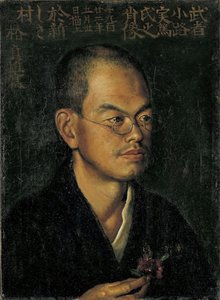
Portret

1917. Akryl na płótnie, 51.0 x 73.0 cm. Aichi Prefectural Museum of Art.

Fig. 1. Kohno Michisei, Portret, 1917. Shown as the reproduction you are specifying: , .

§ 1Catalogue data

Wymiary
51.0 x 73.0 cm

§ 2Abstract

Opis obiektu

Portret Michiego Kōno z roku 1917 - Mistrz realizmu i wpływy stylu japonizmu oraz Dżurea. Eksponat Muzeum Sztuki Azjatyckiej w Waszyngtonie. Szczegółowe informacje i historia dzieła.

Biografia artysty

Kohno Michisei (1895-1950) was a pivotal Japanese painter of the Yōga movement, blending Western techniques with traditional styles like Ukiyo-e & Japonism. Known for landscapes, portraits, and woodblock prints reflecting the Taishō period.

§ 3Commentary

Kohno Michisei’s Self-Portrait: A Window Into Taishō Japonism

The painting “Self-Portrait” by Kohno Michisei (1895–1950) stands as a remarkable testament to the confluence of Western artistic influences and deeply rooted Japanese traditions during the Taishō period (1912–1926). More than just a depiction of an individual, it embodies a broader exploration of identity—both personal and cultural—within a rapidly changing landscape. Exhibited at the Bunten 文展 in 1917, this piece garnered considerable acclaim for its masterful realism, reflecting the prevailing aesthetic sensibilities of the time and cementing Michisei’s position as a leading figure in Yōga (Western-style painting).
  • Subject Matter: The portrait presents Kohno Michisei himself—a young artist poised on the cusp of artistic maturity—seated calmly before a backdrop dominated by an expansive oak grove. This deliberate choice wasn’t merely decorative; it served as a symbolic reference to classical Western art, specifically Albrecht Dürer's iconic self-portrait from 1500, which Michisei meticulously studied during his formative years.
  • Style & Technique: Michisei skillfully blended techniques honed in the studio with observations gleaned from the natural world. Employing oil paint on canvas—a technique favored by Western artists—he achieved an unprecedented level of detail and tonal gradation, capturing the subtle nuances of light and shadow with remarkable precision. The artist’s meticulous attention to texture—evident in the rendering of the oak leaves and robe—demonstrates a commitment to conveying both visual accuracy and emotional resonance.
  • Historical Context: The Taishō period witnessed a fervent debate regarding Japan's artistic future. While the academy championed naturalism, younger artists like Michisei sought inspiration from European masters and embraced stylistic innovations that challenged established conventions. This willingness to experiment—coupled with his grounding in traditional Japanese aesthetics—characterized the broader Yōga movement and distinguishes Michisei’s oeuvre from its more conservative counterparts.
  • Symbolism: Beyond its formal realism, *Self-Portrait* is laden with symbolic significance. The solitary oak grove represents resilience and permanence against the backdrop of a turbulent era. The artist's gaze—direct and unflinching—suggests introspection and an awareness of his own role as an innovator within Japanese art history. Furthermore, the inclusion of two clocks—one on the left shoulder and another on the right—adds a layer of complexity, hinting at themes of time, reflection, and perhaps even mortality.
  • Emotional Impact: Michisei’s masterful execution transcends mere representation; it communicates an inner state of contemplation and quiet confidence. The painting's subdued palette—dominated by earthy tones—creates a sense of serenity and invites viewers to engage in a dialogue with the artist’s psyche. Ultimately, *Self-Portrait* remains a poignant reminder of Michisei’s artistic vision and his unwavering belief in the transformative power of art.
Provenance: Gift of Shuntatsu Kohno and the Kohno family in memory of their father. National Museum of Asian Art Collection

Pytania i odpowiedzi

Co przedstawia „Portret” – Kohno Michisei?

Tematyka dzieła "Portret" to japanese painting, self-portraiture, renaissance influence, orientalism, taishō period art, western techniques, symbolic imagery.

Jak mogę pobrać obraz „Portret” – Kohno Michisei?

„Portret” – Kohno Michisei można pobrać ze strony Pobierz plik cyfrowy dzieła jako wysokiej rozdzielczości cyfrowe zdjęcie do pobrania.

Jaka technika i styl charakteryzują „Portret” – Kohno Michisei?

W "Portret" technika Akryl na płótnie łączy się z nurtem Yōga Movement.

§ 4The artist

Kohno Michisei

Kohno Michisei

1895 - 1950, Japan

Quick facts about Kohno Michisei

  • Full Name: Kohno Michisei (Kono Petoru Tsusei)
  • Nationality: Japanese
  • Date Of Birth: 1895
  • Date Of Death: 1950
  • Place Of Birth: N/A, Japan
  • Notable Artworks:
    • Self-Portrait (1917)
    • Adam and Eve painting
  • Artistic Movement Or Style: Yōga, Japonism
  • Artists Who Influenced This Artist:
    • Albrecht Dürer
    • Michelangelo
  • Artists Or Movements Influenced By This Artist:
    • Kishida Ryūsei
    • Kokugakai

Biografia artysty

**early life and career**

kohno michisei, also known as kono petoru tsusei, was a renowned japanese painter, illustrator, and printmaker born in 1895 in japan. his work is characterized by its association with the yōga movement of the early 20th century, making him a representative figure of the taishō period in japanese art.

**artistic style and influences**

kohno's artistic style was deeply influenced by western techniques, which he incorporated into his traditional japanese art. this blend of styles is reflective of the yōga movement, which sought to modernize japanese art while maintaining its cultural essence. his work often featured elements of the japonism art movement, a french term that refers to the popularity and influence of japanese art and design among western european artists in the nineteenth century.

**notable works and techniques**

* **the ukiyo-e art movement**: kohno's work was also influenced by ukiyo-e, a genre of japanese art that flourished from the 17th through 19th centuries. this is evident in his use of woodblock prints and paintings depicting various subjects. * **one hundred famous views of edo**: inspired by the works of ando hiroshige, kohno's own landscapes series, though not as widely known, showcased his skill in capturing the essence of japanese scenery.

**legacy and museum collections**

kohno michisei's work can be found in various museum collections, including the gulbenkian museum foundation in lisbon, portugal. this renowned art museum houses one of the world's most important private art collections, featuring works from ancient egypt to the early 20th century.
  • key dates: born in 1895, japan; passed away in 1950
  • art movement: yōga movement, japonism art movement, ukiyo-e
  • notable works: influenced by ando hiroshige's landscapes series
  • museum collections: the gulbenkian museum foundation, lisbon, portugal

**conclusion**

kohno michisei's contribution to the yōga movement and his influence on japanese art are undeniable. his work, though lesser known compared to some of his contemporaries, remains a vital part of japan's artistic heritage. as an artist who bridged traditional and modern techniques, kohno michisei's legacy continues to inspire artists and art enthusiasts alike.

§ 5Comparanda

§ 6Questions

Najważniejsze informacje

  • Notable elements or techniques: Detailed realism; Use of oak leaves
  • Artist: kohno michisei
  • Subject or theme: Portraiture
  • Title: Self-Portrait
  • Location: National Museum of Asian Art
  • Movement: Yōga

§ 7Cite this entry

AllPaintingsStore.com, “Kohno Michisei, Portret (1917)”, https://allpaintingsstore.com/pl/art/kohno-michisei-portret-D4DM4B-pl/ (accessed 4 Październik 2026).

§ 8The reproduction

Ręcznie malowana reprodukcja olejowa

Ręcznie malowany obraz olejny na płótnie, wykonany na zamówienie przez naszych artystów w wybranym przez Ciebie wymiarze i oprawie. ( Przełącz na wydania drukowane Przejdź do wersji cyfrowej)

It is specified on the order sheet in the margin; the present state of that sheet reads as follows.

Portret

Technika reprodukcji

Wymiary reprodukcji

-

Wybitny mistrz artystyczny

Większa szczegółowość, finezja i dodatkowy czas na realizację

-

Opcje oprawy reprodukcji

-

-

W przypadku dzieł sztuki lub reprodukcji, których którykolwiek z boków przekracza 105 cm (około 41 cali), rama zostanie wysłana w formie zestawu do samodzielnego montażu. Metoda ta zapewnia bezpieczną dostawę i zapobiega uszkodzeniom podczas transportu.

Wymagany profesjonalny montaż – nie jest to produkt typu DIY.
Zestaw musi zostać złożony, a płótno naciągnięte przez doświadczonego profesjonalnego ramiarza, przy użyciu kleju do drewna (brak w zestawie), kleszczy do naciągania płótna oraz ścisków, które utrzymają krosna w równej pozycji podczas schnięcia kleju. Nieprawidłowy montaż lub nierównomierne napięcie płótna może trwale uszkodzić dzieło sztuki i nie podlega naszej gwarancji.

  • W zestawie znajdują się wszystkie listwy z litego drewna, precyzyjnie docięte do wymiarów.

  • Montaż odbywa się przy użyciu dołączonych wkrętów oraz kleju do drewna do łączenia narożników, którego zestaw nie zawiera i który musi zostać dostarczony przez ramiarza.

  • Wymagane są profesjonalne narzędzia, których nie ma w zestawie: kleszcze do naciągania płótna (napinacz) oraz zaciski, które pozwolą utrzymać listwy w równej pozycji podczas schnięcia kleju.

Ważne:
Do połączenia narożników niezbędny jest klej do drewna, listwy należy unieruchomić za pomocą ścisków do momentu całkowitego wyschnięcia kleju, a naciągnięcie płótna na złożoną ramę wymaga użycia kleszczy do naciągania płótna. Żaden z tych elementów nie jest dołączony do zestawu. Przed zamówieniem tego rozmiaru zalecamy konsultację z doświadczonym ramiarzem.

Etykieta obiektu

-

-

Lakier ochronny

Lakier z połyskiem (pogłębia kolory, chroni przed światłem i wilgocią)

-

Personalizacja dzieła

Przykłady możliwości personalizacji: zastąp twarz zdjęciem klienta; dodaj zwierzę domowe (np. zamień kota na psa); umieść ukrytą wiadomość w tle; zmień krajobraz lub elementy tła.

-

Ekspresowa

Dostawa na cały świat () w ciągu 3–4 tygodni zamiast standardowych 5 tygodni. (1 Listopad). Bez kompromisów w kwestii jakości.

-

Przesyłka ekspresowa

Dostawa na cały świat () w ciągu 5 tygodni. (8 Listopad).

W cenie

Cena całkowita

zł 1004

Included with every order

  • Bezpłatna ekspresowa wysyłka na cały świat
  • Wysokiej jakości płótno lniane
  • Pełne ubezpieczenie przesyłki
  • Gwarancja zwrotu należności celnych i podatków importowych
  • Gwarancja wiernego odwzorowania kolorów
  • 100-dniowa polityka zwrotów (tylko w przypadku wad)
  • Gwarancja 100% zwrotu pieniędzy
  • Zniżka przy zakupie wielu sztuk
Odkryj dzieła sztuki uporządkowane według tematów, stylów i cech charakterystycznych.
Order sheet