Gwarancja zwrotu pieniędzy · 100 dni Darmowa dostawa na cały świat
449 564dzieła sztuki 30 613artyści 4 658muzea 32język
Wpis do katalogu

Space concept

Acrylic On Canvas, 5.0 x 110.0 cm. MAGA - Museo Arte Gallarate.

Ryc. 1. Lucio Fontana, Space concept. Przedstawiono jako wybraną przez Ciebie reprodukcję: , .

§ 1Dane katalogowe

Wymiary
5.0 x 110.0 cm

§ 2Abstrakcja

Opis obiektu

Biografia artysty

Lucio Fontana – rewolucjonista sztuki! Jego pionierskie płótna z rozcięciami i koncepty przestrzenne zmieniły oblicze współczesnego malarstwa i rzeźby. Odkryj świat Spatializmu!

§ 3Komentarz

Exploring Spatial Horizons: Lucio Fontana’s “Space Concept”

Lucio Fontana's "Space Concept," a deceptively simple painting featuring a stark white canvas punctuated by meticulously placed black dots, transcends mere visual representation. It embodies the core tenets of Spatialism—a revolutionary artistic movement that sought to dismantle traditional notions of flatness and explore the infinite possibilities inherent in three-dimensional space. Created sometime before Fontana’s death in 1968, this unassuming piece resides at MAGA - Museo Arte Gallarate in Italy, offering visitors a tangible connection to the genesis of conceptual art.

The Genesis of Spatialism

Fontana's artistic breakthrough occurred during his formative years in Milan and Buenos Aires. Influenced by Surrealist explorations of subconsciousness and Dada’s rejection of bourgeois conventions, he began experimenting with techniques that challenged conventional painting practices. Spatialism wasn’t merely about depicting space; it was about actively disrupting its boundaries—a deliberate provocation against the established visual language of his time. Artists like Fontana recognized that painting could be transformed into a tool for conceptual inquiry, prioritizing ideas over purely aesthetic considerations.

A Technique Defined by Precision

The execution of “Space Concept” speaks volumes about Fontana’s meticulous approach to artmaking. Employing oil paint on canvas—a familiar medium but reimagined with radical intent—Fontana achieved remarkable precision in the placement of his black dots. These aren't random marks; they are carefully calculated points that create a subtle ripple effect across the surface, mimicking the appearance of waves or ripples within space itself. This technique underscores Fontana’s fascination with mathematics and geometry, reflecting his belief that artistic expression could be governed by rational principles.

Symbolism Beyond Surface Appearance

Beyond its technical mastery lies a profound symbolic resonance. The white canvas represents the void—the infinite expanse of space—while the black dots symbolize punctures or incisions into this emptiness. Fontana famously referred to these perforations as “cuts into the fourth dimension,” elevating them beyond mere decoration and transforming them into emblems of liberation from representational constraints. This gesture embodies a desire to transcend materiality, inviting viewers to contemplate the intangible realm of thought and imagination.

Emotional Impact: A Dialogue with Infinity

“Space Concept” isn’t intended to elicit immediate emotional gratification; rather, it compels contemplation. Its understated elegance encourages viewers to engage in a dialogue with infinity—to consider the vastness of existence and the limitations of human perception. The painting's simplicity serves as a powerful reminder that art can communicate complex ideas through deceptively simple forms. It’s a piece that lingers in the mind long after viewing, prompting reflection on fundamental questions about space, time, and consciousness.

Pytania i odpowiedzi

Jaki format i orientacja druku są sugerowane dla „Space concept” – Lucio Fontana?

Rozmiar Large, orientacja Landscape: to sugerowane parametry druku dla dzieła „Space concept” – Lucio Fontana.

Czy dzieło "Space concept" jest dostępne jako wysokiej jakości wydruk artystyczny?

Odbitkę dzieła „Space concept” – Lucio Fontana można zamówić bezpośrednio na stronie Wydruk artystyczny premium: szlachetna odbitka na płótnie bawełnianym lub archiwalnym papierze o strukturze płótna.

Jak zbudowana jest kompozycja kolorystyczna „Space concept” – Lucio Fontana?

W "Space concept" Serene kontrast łączy się z Unified Palette harmonią.
§ 4Artysta

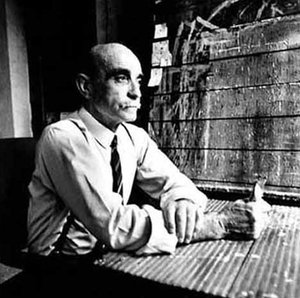
Lucio Fontana

Lucio Fontana

1899 - 1968, Argentyna

Krótkie informacje o Lucio Fontana

  • Artistic Movement Or Style: Spatializm
  • Artists Or Movements Influenced By This Artist:
    • Zero
    • Nouveau Réalisme
  • Artists Who Influenced This Artist:
    • Jan Grzegorz Stanisławski
    • Vincent van Gogh
  • Date Of Birth: 1899
  • Date Of Death: 1968
  • Full Name: Lucio Fontana
  • Nationality: Argentyńsko-Włoski
  • Notable Artworks:
    • Concetto Spaziale
    • Soffitto Spaziale
  • Place Of Birth: Rosario, Argentyna

Biografia artysty

A Life Forged in Spatialism

Lucio Fontana, a name synonymous with radical innovation in 20th-century art, was born into a world poised between tradition and modernity. His journey began not in Italy, the nation he would come to define within the artistic landscape, but in Rosario, Argentina, in 1899. The son of an Italian sculptor, Luigi Fontana, young Lucio inherited a craftsman’s sensibility alongside a burgeoning artistic vision. This early exposure to form and material proved foundational, even as his life became a series of geographical and stylistic explorations. Returning to Italy with his family, he absorbed the rich cultural heritage of Europe, studying at the Brera Academy in Milan and immersing himself in the avant-garde movements that were beginning to challenge established norms. However, the pull of his origins remained strong; multiple returns to Argentina punctuated his career, shaping his perspective and fueling a desire to transcend conventional artistic boundaries. Fontana’s early work reflected this duality – initially rooted in figurative sculpture and painting, it gradually evolved towards abstraction, hinting at the revolutionary path he was destined to forge.

Breaking the Canvas: The Birth of Spatialism

The devastation of World War II proved a catalyst for Fontana's most groundbreaking artistic endeavor. Witnessing the destruction and upheaval firsthand, he felt compelled to redefine art’s purpose in a world irrevocably altered. This led to the formulation of *Spatialism*, a movement that sought not merely to represent space but to incorporate it as an integral element of the artwork itself. Fontana believed traditional painting was limited by its two-dimensionality, confining art within a static plane. He envisioned a new form of expression that would break down these barriers, acknowledging the infinite depth and potential of space beyond the canvas. This wasn’t simply about creating illusions of depth; it was about physically opening up the artwork to reveal what lay *beyond*. Beginning in the late 1940s, Fontana began his now-iconic series of slashed and punctured canvases – the *Concetti Spaziali* (Spatial Concepts). These weren't acts of destruction but rather deliberate interventions, revealing a void that symbolized the vastness of the cosmos. The slashes, often executed with a razor blade, were precise and purposeful, transforming the canvas into a window onto another dimension. He wasn’t destroying the painting; he was liberating it from its limitations.

Influences and Artistic Kinship

Fontana's artistic development wasn’t born in isolation. He engaged with a diverse range of influences, absorbing and transforming them into his unique visual language. The expressive power of Vincent van Gogh resonated deeply within him, particularly the emotional intensity conveyed through brushwork. He also admired the satirical edge of Pieter Bruegel the Elder, finding inspiration in the older master’s ability to critique societal flaws. However, a pivotal encounter with the work of Polish artist Jan Grzegorz Stanisławski proved particularly transformative. Stanisławski's exploration of light and color within his 'Mullein' series profoundly impacted Fontana’s approach to abstraction and spatial representation. Furthermore, his participation in groups like *Abstraction-Création* in Paris exposed him to a broader network of avant-garde artists, fostering an exchange of ideas that fueled his experimentation. While distinctively original, Fontana’s work also shares affinities with other post-war movements such as Zero and Nouveau Réalisme, all striving to redefine the boundaries of art and challenge conventional perceptions.

The Evolution of Technique: From Slash to Hole

Fontana's technique evolved dramatically over time. Initially, the *Concetti Spaziali* were characterized by bold, decisive slashes that created a dramatic contrast between the painted surface and the exposed canvas behind it. These works immediately captured attention and sparked debate about their meaning and purpose. However, Fontana didn’t remain static. He began to experiment with more subtle interventions, creating *hole paintings* – canvases meticulously pierced with tiny holes to reveal the underlying support. This technique, developed in the late 1950s and early 1960s, further emphasized the concept of spatial depth and invited viewers to contemplate the relationship between the surface and the void. He also ventured into sculpture, producing works that echoed the themes of volume and void found in his two-dimensional pieces – monumental installations that blurred the boundaries between painting, sculpture, and architecture. The *Soffitto Spaziale* (Spatial Ceiling) projects were particularly ambitious, transforming entire rooms into immersive environments designed to evoke a sense of infinite space.

A Lasting Resonance

Lucio Fontana’s death in Comabbio, Italy, in 1968, marked the end of a remarkable career but not the end of his influence. Today, his works are held in prestigious museum collections worldwide – from The Metropolitan Museum of Art to the Ballarat Fine Art Gallery in Australia – testament to his enduring legacy. He remains a pivotal figure in post-war abstract art, celebrated for his courage to challenge conventions and redefine the very essence of artistic expression. Fontana didn’t simply paint *on* canvas; he engaged with space itself, creating works that invite viewers to contemplate the infinite possibilities beyond the visible world. His legacy is not merely a collection of slashed canvases but a profound invitation to perceive reality in new and expansive ways. He demonstrated that art could be more than representation—it could be an exploration of existence itself.

§ 5Podobne dzieła

§ 6Pytania

Najważniejsze informacje

  • Notable elements or techniques: Holes pierced into canvas
  • Influences: Cubism
  • Artistic style: Minimalist
  • Medium: Oil on Canvas
  • Title: Space Concept

Quiz o sztuce

Do każdego pytania dotyczy tylko jedna poprawna odpowiedź.

Pytanie 1:
What artistic movement is Lucio Fontana’s ‘Space Concept’ primarily associated with?
Pytanie 2:
The painting depicts a simple yet impactful visual element: what?
Pytanie 3:
Where can viewers experience Lucio Fontana’s ‘Space Concept’?
Pytanie 4:
What material was used to create Lucio Fontana’s ‘Space Concept’?
Pytanie 5:
‘Space Concept’ represents a significant departure from traditional artistic conventions by exploring what fundamental idea?

§ 7Cytuj ten wpis

AllPaintingsStore.com, “Lucio Fontana, Space concept”, https://allpaintingsstore.com/pl/art/lucio-fontana-space-concept-D7JRZR-en/ArtistReproduction/ (dostęp dnia 11 Październik 2026).

§ 8Reprodukcja dzieła

Ręcznie malowana reprodukcja olejowa

Ręcznie malowany obraz olejny na płótnie, wykonany na zamówienie przez naszych artystów w wybranym przez Ciebie wymiarze i oprawie. ( Przełącz na wydania drukowane Przejdź do wersji cyfrowej)

Informacja ta widnieje na marginesie arkusza zamówienia; obecny stan tego arkusza przedstawia się następująco.

Space concept

Technika reprodukcji

Wymiary reprodukcji

-

Wybitny mistrz artystyczny

Większa szczegółowość, finezja i dodatkowy czas na realizację

-

Opcje oprawy reprodukcji

-

-

W przypadku dzieł sztuki lub reprodukcji, których którykolwiek z boków przekracza 105 cm (około 41 cali), rama zostanie wysłana w formie zestawu do samodzielnego montażu. Metoda ta zapewnia bezpieczną dostawę i zapobiega uszkodzeniom podczas transportu.

Wymagany profesjonalny montaż – nie jest to produkt typu DIY.
Zestaw musi zostać złożony, a płótno naciągnięte przez doświadczonego profesjonalnego ramiarza, przy użyciu kleju do drewna (brak w zestawie), kleszczy do naciągania płótna oraz ścisków, które utrzymają krosna w równej pozycji podczas schnięcia kleju. Nieprawidłowy montaż lub nierównomierne napięcie płótna może trwale uszkodzić dzieło sztuki i nie podlega naszej gwarancji.

  • W zestawie znajdują się wszystkie listwy z litego drewna, precyzyjnie docięte do wymiarów.

  • Montaż odbywa się przy użyciu dołączonych wkrętów oraz kleju do drewna do łączenia narożników, którego zestaw nie zawiera i który musi zostać dostarczony przez ramiarza.

  • Wymagane są profesjonalne narzędzia, których nie ma w zestawie: kleszcze do naciągania płótna (napinacz) oraz zaciski, które pozwolą utrzymać listwy w równej pozycji podczas schnięcia kleju.

Ważne:
Do połączenia narożników niezbędny jest klej do drewna, listwy należy unieruchomić za pomocą ścisków do momentu całkowitego wyschnięcia kleju, a naciągnięcie płótna na złożoną ramę wymaga użycia kleszczy do naciągania płótna. Żaden z tych elementów nie jest dołączony do zestawu. Przed zamówieniem tego rozmiaru zalecamy konsultację z doświadczonym ramiarzem.

Etykieta obiektu

-

-

Lakier ochronny

Lakier z połyskiem (pogłębia kolory, chroni przed światłem i wilgocią)

-

Personalizacja dzieła

Przykłady możliwości personalizacji: zastąp twarz zdjęciem klienta; dodaj zwierzę domowe (np. zamień kota na psa); umieść ukrytą wiadomość w tle; zmień krajobraz lub elementy tła.

-

Ekspresowa

Dostawa na cały świat () w ciągu 3–4 tygodni zamiast standardowych 5 tygodni. (8 Listopad). Bez kompromisów w kwestii jakości.

-

Przesyłka ekspresowa

Dostawa na cały świat () w ciągu 5 tygodni. (15 Listopad).

W cenie

Cena całkowita

zł 1009

W każdym zamówieniu

  • Bezpłatna ekspresowa wysyłka na cały świat
  • Wysokiej jakości płótno lniane
  • Pełne ubezpieczenie przesyłki
  • Gwarancja zwrotu należności celnych i podatków importowych
  • Gwarancja wiernego odwzorowania kolorów
  • 100-dniowa polityka zwrotów (tylko w przypadku wad)
  • Gwarancja 100% zwrotu pieniędzy
  • Zniżka przy zakupie wielu sztuk
Arkusz zamówień