Gwarancja zwrotu pieniędzy · 30 dni Darmowa dostawa na cały świat
449 332dzieła sztuki 30 637artyści 4 753muzea 32języki
Waluta
Język
Atelier · Est. 2015 · Paryż, Francja
AllPaintingsStore
allpaintingsstore.com
Moje konto Lista życzeń Koszyk
Podgląd w skaliPodgląd w skali Podgląd ARPodgląd AR Zamów wydruk Zamów wydrukPrzełącz na obraz Przełącz na obraz Wyślij jako kartkęWyślij jako kartkę
Szczegóły dziełaSzczegóły dzieła Dodaj do ulubionych Dodaj do ulubionych PobierzPobierz Podobne obiektyPodobne obiekty RTGRTG Pokaz slajdówPokaz slajdów

Spatial Concept

The artwork's aesthetic is characterized by minimalist composition, geometric abstraction, and the use of color (primarily blue and purple) to create depth and visual intrigue. Fontana’s exploration of space and materiality profoundly impacted subsequent artistic developments.

Lucio Fontana – rewolucjonista sztuki! Jego pionierskie płótna z rozcięciami i koncepty przestrzenne zmieniły oblicze współczesnego malarstwa i rzeźby. Odkryj świat Spatializmu!

Ręcznie malowana reprodukcja olejowa

Ręcznie malowany obraz olejny na płótnie, wykonany na zamówienie przez naszych artystów w wybranym przez Ciebie wymiarze i oprawie. (Zamów wydruk Zamów wydrukPrzełącz na obraz Przełącz na obraz)

P118B $10
P118H $10
P118W $10
P438Z $10
P508JH $12
P508YH $12
P805H $10
P805Z $10
P919BZ $10
P919G $10
P919XJ $10
P959ZH $10
P968JZ $12
W106C $8
W218G $10
W218JH $8
W218Y $10
W307PJ $10
W316G $10
W316PJ $8
W316Y $10
W398PJ $8
W4111J $10
W500HY $15
W500JH $15
W692G $12
W849H $8
W940BG $15
W953PJ $8

Standard
custom
CM
INCH

Wybierz spośród naszych standardowych rozmiarów, które zachowują oryginalne proporcje dzieła sztuki.

szerokość
wysokość

Możesz wprowadzić własne wymiary, aby dopasować obraz do konkretnej ramy lub przestrzeni. Jeśli wybrany rozmiar nie będzie odpowiadał proporcjom oryginału, przytniecie dzieło sztuki lub rozszerzymy je o dodatkowe elementy, ręcznie domalowane przez artystę. Przed rozpoczęciem produkcji wyślemy projekt cyfrowy do Twojej akceptacji.
Należy pamiętać, że podgląd na ekranie nie odzwierciedla rzeczywistego przycinania ani rozszerzania obrazu. Tylko projekt dokładnie pokaże ostateczną kompozycję.
Choć oferujemy możliwość zamówienia niestandardowych rozmiarów, zalecamy wybór wymiaru z gotowej listy, aby zachować oryginalne proporcje dzieła.

Przykłady możliwych zmian: Zamień twarz na zdjęcie klienta; Dodaj zwierzę domowe (np. zamień kota na psa); Ukryj wiadomość w tle; Zmień krajobraz lub elementy tła.
Po złożeniu zamówienia zespół AllPaintingsStore.com skontaktuje się z klientem drogą mailową w celu uzyskania instrukcji i prześle wizualizację projektu

Dostawa na całym świecie () w ciągu 3–4 tygodni zamiast standardowych 5 tygodni. (11 Sierpień). Bez kompromisów w kwestii jakości.

why_choose_icon
Bezpłatna ekspresowa wysyłka na cały świat
why_choose_icon
Wysokiej jakości płótno lniane
why_choose_icon
Pełne ubezpieczenie przesyłki
why_choose_icon
Gwarancja zwrotu należności celnych i podatków importowych
why_choose_icon
Gwarancja wiernego odwzorowania kolorów
why_choose_icon
Polityka 60-dniowego zwrotu (tylko w przypadku wad)
why_choose_icon
Gwarancja 100% zwrotu kosztów
why_choose_icon
Zniżka przy zamówieniu wielu produktów

Suma całkowita

$ 258

reproduction

Spatial Concept

Technika reprodukcji

Wymiary reprodukcji

-

Cena całkowita

$ 258

Szybki podgląd

  • Dimensions: 95 x 175 cm
  • Influences: Futurism
  • Notable elements or techniques: Slashing; Circular perforations
  • Medium: Mixed Media on Canvas
  • Title: Spatial Concept
  • Artistic style: Minimalist abstraction
  • Location: Royal Museum of Fine Arts, Antwerp

Quiz o sztuce

Do każdego pytania dotyczy tylko jedna poprawna odpowiedź.

Pytanie 1:
What artistic movement is Lucio Fontana primarily associated with?
Pytanie 2:
The painting depicts a prominent element – what specifically?
Pytanie 3:
What is the dominant technique employed in 'Spatial Concept'?
Pytanie 4:
In what museum can you find this artwork?
Pytanie 5:
What was Fontana’s aim in creating works like Spatial Concept?

Opis dzieła

A Portal to the Infinite: The Visionary World of Lucio Fontana

In the mid-twentieth century, as the world grappled with the dawn of the nuclear age and the dizzying expansion of cosmic discovery, a radical new language of art began to emerge. At the heart of this revolution was Lucio Fontana, an artist who refused to be confined by the flat, two-dimensional boundaries of the traditional canvas. His 1956 masterpiece, Spatial Concept, serves as a profound testament to his role as the pioneer of Spatialism. This is not merely a painting to be observed; it is an invitation to step beyond the frame and encounter a new dimension of existence. Through a mesmerizing interplay of color and form, Fontana challenges our very perception of what art can be, transforming a simple rectangular surface into a gateway to the infinite.

The composition of Spatial Concept is both deceptively simple and deeply enigmatic. Upon first encounter, the eye is drawn to a singular, symbolic figure—a fish—suspended within a dreamlike landscape. With its vibrant blue tail and deep purple head, the creature appears to drift through a celestial sea, surrounded by a constellation of scattered circles. These circular motifs vary in size and hue, creating a rhythmic pulse that moves across the canvas. The technique employed here is nothing short of audacious; Fontana did not just apply pigment, but physically interacted with the medium. By combining delicate brushwork with precise incisions and perforations, he disrupted the perceived boundaries of the painting. These small, intentional wounds in the fabric allow light and shadow to play in ways that traditional painting cannot, mirroring the scientific fascination with the vast, empty expanses of the cosmos during the 1950s.

The Alchemy of Space and Symbolism

To understand Spatial Concept is to understand the tension between presence and absence. Fontana’s work was deeply rooted in the intellectual currents of Futurism and Surrealism, yet he sought to transcend them by embracing the concept of "emptiness." The fish, often a symbol of life and movement, becomes an inhabitant of a void that is not empty, but rather pregnant with possibility. The scattered circles act as celestial bodies, suggesting a universe in constant motion. This technique of sgraffito and perforation serves to blur the distinction between the artwork and the space surrounding it, effectively pulling the viewer into the work's internal atmosphere.

For the discerning collector or interior designer, this piece offers an unparalleled emotional resonance. It possesses a quiet, meditative power that can anchor a room, providing a focal point of intellectual depth and sophisticated modernism. The way the light interacts with the textured surface and the physical depth of the incisions creates a dynamic experience that changes depending on one's perspective. It is a work that demands contemplation, offering a sense of tranquility paired with an underlying energy of discovery.

A Timeless Addition to the Modern Interior

Bringing a high-quality reproduction of Spatial Concept into a curated space is an act of celebrating art history's most daring moments. Whether placed in a minimalist gallery setting or as a bold statement piece in a contemporary living space, the artwork radiates an aura of avant-garde elegance. It speaks to a refined taste that values innovation, complexity, and the beauty of the unknown. As a tribute to Fontana’s legacy, this piece remains a vital, breathing part of the modern aesthetic, reminding us all that art has the power to tear through the veil of reality and reveal the infinite wonders waiting just beneath the surface.


O artyście

A Life Forged in Spatialism

Lucio Fontana, a name synonymous with radical innovation in 20th-century art, was born into a world poised between tradition and modernity. His journey began not in Italy, the nation he would come to define within the artistic landscape, but in Rosario, Argentina, in 1899. The son of an Italian sculptor, Luigi Fontana, young Lucio inherited a craftsman’s sensibility alongside a burgeoning artistic vision. This early exposure to form and material proved foundational, even as his life became a series of geographical and stylistic explorations. Returning to Italy with his family, he absorbed the rich cultural heritage of Europe, studying at the Brera Academy in Milan and immersing himself in the avant-garde movements that were beginning to challenge established norms. However, the pull of his origins remained strong; multiple returns to Argentina punctuated his career, shaping his perspective and fueling a desire to transcend conventional artistic boundaries. Fontana’s early work reflected this duality – initially rooted in figurative sculpture and painting, it gradually evolved towards abstraction, hinting at the revolutionary path he was destined to forge.

Breaking the Canvas: The Birth of Spatialism

The devastation of World War II proved a catalyst for Fontana's most groundbreaking artistic endeavor. Witnessing the destruction and upheaval firsthand, he felt compelled to redefine art’s purpose in a world irrevocably altered. This led to the formulation of *Spatialism*, a movement that sought not merely to represent space but to incorporate it as an integral element of the artwork itself. Fontana believed traditional painting was limited by its two-dimensionality, confining art within a static plane. He envisioned a new form of expression that would break down these barriers, acknowledging the infinite depth and potential of space beyond the canvas. This wasn’t simply about creating illusions of depth; it was about physically opening up the artwork to reveal what lay *beyond*. Beginning in the late 1940s, Fontana began his now-iconic series of slashed and punctured canvases – the *Concetti Spaziali* (Spatial Concepts). These weren't acts of destruction but rather deliberate interventions, revealing a void that symbolized the vastness of the cosmos. The slashes, often executed with a razor blade, were precise and purposeful, transforming the canvas into a window onto another dimension. He wasn’t destroying the painting; he was liberating it from its limitations.

Influences and Artistic Kinship

Fontana's artistic development wasn’t born in isolation. He engaged with a diverse range of influences, absorbing and transforming them into his unique visual language. The expressive power of Vincent van Gogh resonated deeply within him, particularly the emotional intensity conveyed through brushwork. He also admired the satirical edge of Pieter Bruegel the Elder, finding inspiration in the older master’s ability to critique societal flaws. However, a pivotal encounter with the work of Polish artist Jan Grzegorz Stanisławski proved particularly transformative. Stanisławski's exploration of light and color within his 'Mullein' series profoundly impacted Fontana’s approach to abstraction and spatial representation. Furthermore, his participation in groups like *Abstraction-Création* in Paris exposed him to a broader network of avant-garde artists, fostering an exchange of ideas that fueled his experimentation. While distinctively original, Fontana’s work also shares affinities with other post-war movements such as Zero and Nouveau Réalisme, all striving to redefine the boundaries of art and challenge conventional perceptions.

The Evolution of Technique: From Slash to Hole

Fontana's technique evolved dramatically over time. Initially, the *Concetti Spaziali* were characterized by bold, decisive slashes that created a dramatic contrast between the painted surface and the exposed canvas behind it. These works immediately captured attention and sparked debate about their meaning and purpose. However, Fontana didn’t remain static. He began to experiment with more subtle interventions, creating *hole paintings* – canvases meticulously pierced with tiny holes to reveal the underlying support. This technique, developed in the late 1950s and early 1960s, further emphasized the concept of spatial depth and invited viewers to contemplate the relationship between the surface and the void. He also ventured into sculpture, producing works that echoed the themes of volume and void found in his two-dimensional pieces – monumental installations that blurred the boundaries between painting, sculpture, and architecture. The *Soffitto Spaziale* (Spatial Ceiling) projects were particularly ambitious, transforming entire rooms into immersive environments designed to evoke a sense of infinite space.

A Lasting Resonance

Lucio Fontana’s death in Comabbio, Italy, in 1968, marked the end of a remarkable career but not the end of his influence. Today, his works are held in prestigious museum collections worldwide – from The Metropolitan Museum of Art to the Ballarat Fine Art Gallery in Australia – testament to his enduring legacy. He remains a pivotal figure in post-war abstract art, celebrated for his courage to challenge conventions and redefine the very essence of artistic expression. Fontana didn’t simply paint *on* canvas; he engaged with space itself, creating works that invite viewers to contemplate the infinite possibilities beyond the visible world. His legacy is not merely a collection of slashed canvases but a profound invitation to perceive reality in new and expansive ways. He demonstrated that art could be more than representation—it could be an exploration of existence itself.
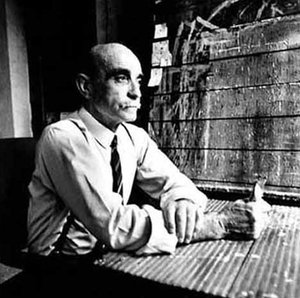
Lucio Fontana

Lucio Fontana

1899 - 1968 , Argentyna

Krótka nota

  • Artistic Movement Or Style: Spatializm
  • Artists Or Movements Influenced By This Artist:
    • Zero
    • Nouveau Réalisme
  • Artists Who Influenced This Artist:
    • Jan Grzegorz Stanisławski
    • Vincent van Gogh
  • Date Of Birth: 1899
  • Date Of Death: 1968
  • Full Name: Lucio Fontana
  • Nationality: Argentyńsko-Włoski
  • Notable Artworks:
    • Concetto Spaziale
    • Soffitto Spaziale
  • Place Of Birth: Rosario, Argentyna
Odkryj dzieła sztuki uporządkowane według tematów, stylów i cech charakterystycznych.