

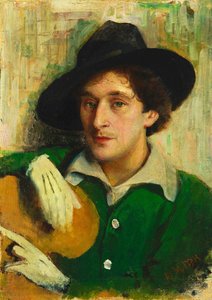
1923. Acrylic On Canvas.

§ 1Catalogue data


Ten utwór podlega ochronie prawem autorskim
Dzieło sztuki prezentowane na tej stronie podlega ochronie prawem autorskim, co oznacza, że nie mamy prawa do tworzenia ani sprzedaży jego identycznej reprodukcji. Ochrona ta jest egzekwowana na mocy umów międzynarodowych, takich jak Konwencja berneńska oraz przez przepisy prawa krajowego, w tym te określone w Prawo autorskie USA – Tytuł 17.
Jako pełną szacunku i legalną alternatywę oferujemy personalizowane, malowane ręcznie dzieła sztuki inspirowane oryginałem. Nasi wykwalifikowani i profesjonalni artyści starannie analizują styl, nastrój oraz artystyczną esencję pierwowzoru, aby stworzyć nowe, unikalne dzieło, które przywołuje te same emocje – pozostając jednocześnie w pełni oryginalną kreacją.
Metoda ta jest w pełni zgodna z przepisami prawa autorskiego, ponieważ nie polega na kopiowaniu ani powielaniu chronionego dzieła. Stanowi ona kreatywną reinterpretację – nowy obraz, który czerpie inspirację z oryginału, ale nie jest z nim tożsamy.
 Dowiedz się więcej
§ 2Abstract
Opis obiektu
Biografia artysty
Poznaj fascynujący świat Marc Chagalla (1887-1985), rosyjskiego i francuskiego mistrza sztuki, znanego z obrazów pełnych snu i folklorystycznych motywów oraz pięknych witraży. Odkryj jego dziedzictwo!
§ 3Commentary
Asking the Way: A Dreamscape in Black Ink
Marc Chagall’s “Asking the Way,” created around 1923 during his Parisian period, isn't merely an image; it’s a portal into a subconscious realm—a testament to Chagall’s unwavering commitment to capturing the essence of memory and imagination. Executed in black ink on white paper, this etching embodies the spirit of Naïve Art (Primitivism), prioritizing expressive line work over meticulous realism.
- Composition & Perspective: The artwork presents an asymmetrical arrangement dominated by a colossal head—a motif recurrent throughout Chagall’s oeuvre—positioned prominently at the lower half. A man, adorned with a hat, navigates this landscape atop the head, holding reins or a whip, suggesting guidance and control amidst a simplified backdrop of trees and buildings. Notably absent is traditional perspective; instead, spatial relationships are dictated by symbolic significance, fostering a dreamlike atmosphere.
- Technique & Line Work: Chagall’s masterful technique relies on freehand drawing utilizing black ink on paper—a deliberate choice that maximizes tonal variation through hatching and cross-hatching. These lines aren't merely descriptive; they pulsate with emotion, conveying a sense of movement and capturing the fluidity characteristic of Chagall’s artistic vision.
- Symbolism & Emotional Impact: The oversized head likely represents memory or perhaps societal structures—a recurring symbol in Chagall’s work. The man's posture speaks to an active quest for direction, mirroring a broader exploration of identity and navigating complex realities. An undercurrent of melancholy pervades the scene, reflecting Chagall’s profound sensitivity to human experience.
- Historical Context: Produced during the turbulent years following World War I, “Asking the Way” reflects the anxieties and aspirations of its time—a period marked by disillusionment yet brimming with artistic experimentation. Chagall's embrace of Naïve Art aligns with a broader movement rejecting academic conventions in favor of unfiltered emotion and intuitive representation.
This etching’s monochromatic palette amplifies the impact of line work, emphasizing texture and creating depth without resorting to illusionistic techniques. It invites contemplation—a journey into Chagall's inner world where dreams intertwine with reality, leaving an indelible impression on any viewer fortunate enough to experience its evocative beauty.
Recommended Reproduction: A high-quality hand-painted reproduction of “Asking the Way” captures the essence of Chagall’s artistic spirit, bringing his dreamlike vision to life in vibrant color—a stunning addition to any art collection or interior design scheme.Pytania i odpowiedzi
Jaki układ ma „Asking the Way” – Marc Chagall?
Format dzieła „Asking the Way” to Portrait. Jest to pomocna informacja podczas planowania miejsca, w którym zostanie umieszczona reprodukcja.
Co wyjaśnia sytuację prawną dotyczącą praw autorskich do „Asking the Way” – Marc Chagall?
Dzieło "Asking the Way" autorstwa Marc Chagall znajduje się w nadal objęte ochroną prawa autorskiego. Okres ochrony praw autorskich liczony jest od daty śmierci artysty, a Marc Chagall zmarł(a) w 1985.
Jak zbudowana jest kompozycja kolorystyczna „Asking the Way” – Marc Chagall?
Kompozycja kolorystyczna „Asking the Way” – Marc Chagall łączy w sobie Serene kontrast z Discordant Palette harmonią.


 Przełącz na wydania drukowane


 W przypadku dzieł sztuki lub reprodukcji, których którykolwiek z boków przekracza 105 cm (około 41 cali), rama zostanie wysłana w formie zestawu do samodzielnego montażu. Metoda ta zapewnia bezpieczną dostawę i zapobiega uszkodzeniom podczas transportu.


