

Acrylic On Canvas.

§ 1Catalogue data

Ten utwór podlega ochronie prawem autorskim
Dzieło sztuki prezentowane na tej stronie podlega ochronie prawem autorskim, co oznacza, że nie mamy prawa do tworzenia ani sprzedaży jego identycznej reprodukcji. Ochrona ta jest egzekwowana na mocy umów międzynarodowych, takich jak Konwencja berneńska oraz przez przepisy prawa krajowego, w tym te określone w Prawo autorskie USA – Tytuł 17.
Jako pełną szacunku i legalną alternatywę oferujemy personalizowane, malowane ręcznie dzieła sztuki inspirowane oryginałem. Nasi wykwalifikowani i profesjonalni artyści starannie analizują styl, nastrój oraz artystyczną esencję pierwowzoru, aby stworzyć nowe, unikalne dzieło, które przywołuje te same emocje – pozostając jednocześnie w pełni oryginalną kreacją.
Metoda ta jest w pełni zgodna z przepisami prawa autorskiego, ponieważ nie polega na kopiowaniu ani powielaniu chronionego dzieła. Stanowi ona kreatywną reinterpretację – nowy obraz, który czerpie inspirację z oryginału, ale nie jest z nim tożsamy.
 Dowiedz się więcej
§ 2Abstract
Opis obiektu
Biografia artysty
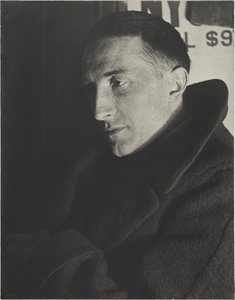
Marcel Duchamp: Rewolucyjny artysta, który rzucił wyzwanie definicji sztuki poprzez dadaizm i readymades, takie jak „Fontanna”. Odkryj jego ikoniczne dzieła oraz filozoficzny wpływ na świat sztuki.
§ 3Commentary
From Outside: A Dadaist Challenge to Perception
Marcel Duchamp’s *From Outside* stands as an arresting testament to the radical spirit of Dadaism, a movement born from the disillusionment and trauma of World War I. This seemingly simple painting—a depiction of a doorway framed by brick arches—holds within it layers of conceptual complexity that continue to fascinate art historians and collectors alike. The artist’s deliberate choice of materials – weathered wood, nails – speaks volumes about his rejection of traditional artistic conventions and his desire to provoke viewers into questioning their assumptions about what constitutes ‘art.’Style and Technique: Embracing Chance and Minimalism
Duchamp's approach defies easy categorization. He employs a minimalist style characterized by stark geometric forms and muted tones, prioritizing conceptual impact over visual ornamentation. The brushstrokes are deliberately absent, reflecting Duchamp’s belief that the artist’s role is not to represent reality but to disrupt it. This technique aligns perfectly with Dadaist principles of chance and spontaneity, mirroring the chaotic atmosphere of the era and rejecting the polished aesthetic of preceding movements like Impressionism. The painting's surface texture contributes to its overall mood—a sense of aged solidity juxtaposed with an unsettling emptiness.Historical Context: Reaction Against War’s Ideals
Duchamp created *From Outside* in 1917, amidst the fervor of the Great War. Dada emerged as a vehement critique of militarism, nationalism, and bourgeois morality—values that seemed utterly absurd to artists grappling with the horrors unfolding across Europe. Artists like Duchamp sought to dismantle established artistic hierarchies and challenge viewers’ intellectual complacency. They embraced absurdity, irrationality, and provocation as tools for dismantling accepted norms. The doorway itself can be interpreted symbolically – representing passage into an unknown realm, a confrontation with the unsettling realities of the time, and ultimately, a refusal to passively accept societal dictates.Symbolism: The Doorway as Metaphor
Beyond its formal qualities, *From Outside* operates on a deeper symbolic level. The doorway represents not merely physical access but also psychological exploration—a gateway into confronting uncomfortable truths and questioning preconceived notions. The nails securing the wooden frame serve as reminders of permanence and constraint, contrasting with the fluidity of perception and experience. Duchamp’s intention was to force viewers to reconsider their relationship with art and its role in shaping understanding of the world around them.Emotional Impact: A Quiet Disquiet
Despite its understated appearance, *From Outside* possesses a palpable emotional resonance. The painting evokes a feeling of melancholy contemplation—a quiet acknowledgement of decay and loss alongside an invitation to consider alternative perspectives. Duchamp’s masterful manipulation of visual elements achieves this effect without resorting to explicit sentimentality. It's a piece that lingers in the mind long after viewing, prompting reflection on themes of isolation, vulnerability, and the enduring power of artistic provocation.Pytania i odpowiedzi
Co przedstawia i jaką atmosferę oddaje „From outside” – Marcel Duchamp?
„From outside” – Marcel Duchamp przedstawia doorway, brick archway, wooden doors, nails, architecture, geometric form, avant-garde, wprowadzając Calm nastrój. Tematyka i atmosfera wspólnie definiują to dzieło.
Czy „From outside” – Marcel Duchamp to portret, pejzaż czy kompozycja kwadratowa?
„From outside” – Marcel Duchamp to kompozycja w formacie Portrait. Warto sprawdzić proporcje przed wyborem rozmiaru wydruku.
Czy dzieło "From outside" znajduje się w domenie publicznej?
„From outside” – Marcel Duchamp znajduje się w domenie publicznej (nadal objęte ochroną prawa autorskiego). Status ten określa zasady reprodukcji obrazu tego dzieła.


 Przełącz na wydania drukowane


 W przypadku dzieł sztuki lub reprodukcji, których którykolwiek z boków przekracza 105 cm (około 41 cali), rama zostanie wysłana w formie zestawu do samodzielnego montażu. Metoda ta zapewnia bezpieczną dostawę i zapobiega uszkodzeniom podczas transportu.


