


 Podgląd w skali 1:1
 Wyślij jako kartkę
 Udostępnij
 Szczegóły dzieła
 Przewodnik

 Pobierz obraz
 Podobne obiekty
 RTG
RTG Pokaz slajdów
 Statystyki
Tile

 Rozwiń treść
Giclée / Wydruk artystyczny
Wydruki giclée lub płótna o jakości muzealnej, szybka realizacja i szeroki wybór opcji wykończenia. ( Zamów ręcznie malowaną reprodukcję Przejdź do wersji cyfrowej)




































Wybierz spośród naszych standardowych rozmiarów, które zachowują oryginalne proporcje dzieła sztuki.

Wpisz wymaganą szerokość i wysokość, aby dopasować grafikę do ramy lub ściany. Wydruk można jedynie przyciąć, nigdy nie powiększając go poza oryginalny obraz, dlatego format o innych proporcjach spowoduje utratę części kompozycji. Przed rozpoczęciem druku prześlemy Ci cyfrowy podgląd do zatwierdzenia. Obraz wyświetlany na tej stronie nie pokazuje rzeczywistego przycięcia — jedynie podgląd oddaje ten efekt.
Dostawa na cały świat () w ciągu 2 tygodni zamiast standardowych 4/5 tygodni. (26 Październik)

Bezpłatna ekspresowa wysyłka na cały świat

Wysokiej jakości płótno lniane

Pełne ubezpieczenie przesyłki

Gwarancja zwrotu należności celnych i podatków importowych

Gwarancja wiernego odwzorowania kolorów

100-dniowa polityka zwrotów (tylko w przypadku wad)

Gwarancja 100% zwrotu pieniędzy

Zniżka przy zakupie wielu sztuk
 Opcja ze szkłem jest dostępna wyłącznie w rozmiarach poniżej 110 cm

Tile
Giclée / Wydruk artystyczny
Wymiary reprodukcji
-


Cena całkowita
zł 246
Podobne dzieła


Biografia artysty
Early Life and Education
Mikhail Aleksandrovich Vrubel, a name synonymous with the vibrant heart of Russian Symbolism and Art Nouveau, was born on March 17th, 1856, in Omsk, Russia – a city steeped in its own rich history. His lineage traced back to a noble family, his father a military lawyer, and his mother, a Danish woman who tragically passed away when Mikhail was just three years old. This early loss undoubtedly shaped the artist’s introspective nature and perhaps contributed to the melancholic beauty that would permeate much of his work. Despite graduating from the Faculty of Law at St. Petersburg University in 1880, Vrubel's true calling lay not within legal statutes but within the boundless realms of artistic expression. He immediately enrolled in the Imperial Academy of Arts, a decision driven by an undeniable passion and a burgeoning talent that demanded cultivation under the guidance of Pavel Chistyakov, a master draftsman whose influence would be profoundly felt throughout Vrubel’s career. Chistyakov instilled in him a meticulous attention to form, a deep understanding of composition, and a unique ability to capture fleeting moments with remarkable precision.Artistic Career: A Fusion of Styles
Vrubel's artistic journey was not one of simple adherence to a single style; rather, it was a dynamic exploration of diverse influences, culminating in a distinctive voice that resonated powerfully within the Russian art scene. Initially, he spent several years in Kiev (now Kyiv), Ukraine, where he undertook the monumental task of restoring murals and icons within St. Cyril’s Church – a project dating back to the 12th century. This immersion in medieval Christian art profoundly impacted his palette, introducing him to the rich, saturated tones reminiscent of precious stones, a characteristic that would become a hallmark of his later works. However, it was his time in Moscow, beginning in 1890, that truly ignited his creative fire. Here, he aligned himself with the influential patron Savva Mamontov and his circle, an environment deeply invested in Russian folklore and traditions. This connection fueled a series of paintings inspired by Russian fairy tales and legends – works like *Pan* (1899) and *The Swan Princess* (1900), each imbued with a captivating blend of symbolism and decorative splendor. His work on the Hotel Metropol in Moscow, particularly the mosaic panel “Princess of Dream,” showcased his mastery not only of painting but also of applied arts – a testament to his versatility as an artist.Technique and Innovation
Vrubel’s artistic approach was characterized by a relentless pursuit of innovative techniques and a willingness to challenge conventional notions of beauty. He wasn't interested in simply depicting reality; instead, he sought to capture the *essence* of a subject through a carefully orchestrated interplay of color, line, and texture. His paintings often featured fragmented compositions, an “unfinished” quality that suggested a perpetual state of becoming – a deliberate departure from the polished realism favored by many of his contemporaries. He experimented with creating textured surfaces reminiscent of Persian carpets or intricate mosaics, imbuing his works with a tactile dimension that invited viewers to engage with them on multiple levels. This dedication to technique, often described as “mania” by those who knew him, was not merely an aesthetic choice but rather a fundamental aspect of his artistic philosophy – a belief that the *process* of creation held equal importance to the final product.Legacy and Personal Struggles
Despite his undeniable talent and critical acclaim, Vrubel’s life was tragically marred by mental illness, exacerbated by tertiary syphilis contracted in his youth. In 1906, he experienced a severe nervous breakdown, leading to hospitalization and ultimately silencing his artistic voice for several years. He continued to work sporadically until his death on April 14th, 1910, in St. Petersburg, at the age of 54. His final years were marked by increasing physical and mental deterioration, culminating in blindness. While Soviet historians often attributed his illness solely to syphilis, minimizing the complexities of his psychological state, many contemporaries recognized the profound impact of his struggles on his art – a reflection of the inner turmoil that fueled his creative genius. Mikhail Vrubel’s legacy endures as one of Russia's most significant Symbolist painters, a visionary artist who pushed the boundaries of artistic expression and left an indelible mark on the landscape of modern art. His works continue to captivate audiences with their haunting beauty, intricate detail, and profound emotional resonance.
Mikhail Wrubel
1856 - 1910 , Rosja
Krótka nota
- Artistic Movement Or Style: Symbolizm i Art Nouveau
- Artists Or Movements Influenced By This Artist: ['Wien Secesja']
- Artists Who Influenced This Artist: ['Pawieł Chistjakow']
- Date Of Birth: 17 marca 1856
- Date Of Death: 14 kwietnia 1910
- Full Name: Mikhail Aleksandrovich Vrubel
- Nationality: Rosjanin
- Notable Artworks:
- Demon Siedzący
- Czarodziejska Krew
- Królowa Lilic
- Ptak-Skarb
- Place Of Birth: Omsk, Rosja
Powiązane artykuły

Byzantine Art Unveiled: The Divine Radiance of Golden Mosaics and Sacred Iconography
Journey through the luminous history of Byzantine art. Unveil the profound symbolism of sacred icons and the breathtaking brilliance of gold-leaf mosaics in this expert cultural retrospective. A soulful exploration for the discerning art lover.

Mikhail Nesterov: Spiritual Quests & Symbolic Landscapes of Russian Symbolism
Explore the captivating world of Mikhail Nesterov, a pioneer of Russian Symbolism. Discover his spiritual themes, iconic paintings like 'The Hermit,' and lasting influence on Russian art history. Learn more at AllPaintingsStore.

Blask Bizancjum: Dziedzictwo artystyczne imperium i jego wpływ na kulturę światową
Odkryj fascynujący świat sztuki bizantyjskiej! Poznaj historię, architekturę, ikonografię i wpływ tego imperium na kulturę. Ekspercka analiza, bogate ilustracje i unikalne spojrzenie na dziedzictwo Bizancjum.
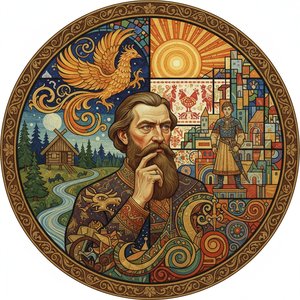
Ivan Bilibin: A Synthesis of Folklore, Modernism & National Identity in Russian Illustration
Explore the enchanting world of Ivan Bilibin, a master Russian illustrator who synthesized folklore, Art Nouveau & national identity. Discover his iconic fairy tale illustrations and legacy with AllPaintingsStore.

Byzantine Art: The Golden Era of Bold Icons, Divine Mosaics, and Imperial Grandeur
Step into the golden era of Byzantine art. Explore the breathtaking power of gold mosaics, sacred iconography, and imperial design that shaped history. Discover how this bold, divine aesthetic continues to inspire modern visual impact and luxury interiors.

