


 Zobacz w skali 1:1
 Wyślij
 Udostępnij
 Szczegóły
 Przewodnik

 Pobierz plik obrazu
 Podobne obiekty
 RTG
RTG Pokaz slajdów
 Statystyki
Rabbit
 Graphite Pencil
- Bay Area Figurative Movement
 1964
1964- Modern
 49.0 x 50.0 cm
 Czytaj więcej
Dzieło sztuki prezentowane na tej stronie podlega ochronie prawem autorskim, co oznacza, że nie mamy prawa do tworzenia ani sprzedaży jego identycznej reprodukcji. Ochrona ta jest egzekwowana na mocy umów międzynarodowych, takich jak Konwencja berneńska oraz przez przepisy prawa krajowego, w tym te określone w Prawo autorskie USA – Tytuł 17.
Metoda ta jest w pełni zgodna z przepisami prawa autorskiego, ponieważ nie polega na kopiowaniu ani powielaniu chronionego dzieła. Stanowi ona kreatywną reinterpretację – nowy obraz, który czerpie inspirację z oryginału, ale nie jest z nim tożsamy.
Giclée / Wydruk artystyczny
Wydruki giclée lub płótna o jakości muzealnej, szybka realizacja i szeroki wybór opcji wykończenia. ( Kup ręcznie malowany obraz Przełącz na wersję cyfrową)




P118B zł10

P118H zł10

P118W zł10

P438Z zł10

P508JH zł12

P508YH zł12

P805H zł10

P805Z zł10

P919BZ zł10

P919G zł10

P919XJ zł10

P959ZH zł10

P968JZ zł12

W106C zł8

W218G zł10

W218JH zł8

W218Y zł10

W307PJ zł10

W316G zł10

W316PJ zł8

W316Y zł10

W398PJ zł8

W4111J zł10

W500HY zł15

W500JH zł15

W692G zł12

W849H zł8

W940BG zł15

W953PJ zł8




Wybierz spośród naszych standardowych rozmiarów, które zachowują oryginalne proporcje dzieła sztuki.

Wpisz wymaganą szerokość i wysokość, aby dopasować grafikę do ramy lub ściany. Wydruk można jedynie przyciąć, nigdy nie powiększając go poza oryginalny obraz, dlatego format o innym proporcji spowoduje utratę części kompozycji. Przed rozpoczęciem druku prześlemy Ci cyfrowy podgląd do zatwierdzenia. Obraz wyświetlany na tej stronie nie pokazuje rzeczywistego przycięcia — jedynie podgląd oddaje ten efekt.
Dostawa na cały świat () w ciągu 2 tygodni zamiast standardowych 4/5 tygodni. (23 Październik)

Bezpłatna ekspresowa wysyłka na cały świat

Wysokiej jakości płótno lniane

Pełne ubezpieczenie transportowe

Gwarancja zwrotu należności celnych i podatków importowych

Gwarancja idealnego odwzorowania barw

100-dniowy okres na zwrot dzieła w przypadku wykrycia wad produkcyjnych

Gwarancja 100% zwrotu pieniędzy

Oferta przy zakupie wielu sztuk
 Opcja ze szkłem jest dostępna wyłącznie w rozmiarach poniżej 110 cm

Rabbit
Giclée / Wydruk artystyczny
Rozmiar reprodukcji
-


Suma do zapłaty
zł 246
A Quiet Encounter with Nature
In the delicate interplay of light and shadow, Nathan Oliveira’s 1964 drawing, Rabbit, invites the viewer into a moment of profound stillness. This monochromatic masterpiece captures a solitary rabbit resting upon a weathered wooden beam, presenting a scene that feels both intimately close and timelessly distant. The composition is anchored by the reclining form of the animal, which dominates the frame with a heavy, tactile presence. Through the masterful use of graphite, Oliveira transforms a simple observation of nature into an evocative study of existence. There is a palpable sense of quietude in the rabbit’s posture—a vulnerability that resonates deeply with anyone who has paused to witness the silent rhythms of the natural world.
The technique employed in this work is nothing short of virtuosic, showcasing Oliveira's ability to breathe life into dry media. Using graphite pencils on paper, the artist utilizes thick, gestural lines and varying degrees of pressure to build a sense of immense volume and texture. The surface of the drawing feels almost sculptural; one can trace the rhythmic layering of strokes that define the soft contours of the rabbit against the rugged, irregular grain of the wooden beam. This interplay between the organic softness of the subject and the coarse, structural elements of its environment creates a dynamic tension. The lighting, appearing to descend from the upper left, casts dramatic shadows that carve out the forms, lending the piece a three-dimensional depth that pulls the viewer into the very heart of the scene.
The Soul of Expressionism in Graphite
To understand Rabbit, one must look toward the artistic lineage of Nathan Oliveira. Influenced heavily by the emotional weight of European Expressionists such as Max Beckmann and Edvard Munch, Oliveira possessed a unique ability to infuse figurative subjects with psychological depth. While the subject matter here is straightforward, the execution is far from mere documentation. The loose, expressive rendering and the heavy, textured application of graphite suggest an internal emotional landscape. The piece transcends a simple biological study to become a meditation on solitude and the quiet strength found in repose.
For the discerning collector or interior designer, this artwork offers a sophisticated focal point that marries raw emotion with refined technique. Its monochromatic palette ensures a seamless integration into diverse decor styles, from contemporary minimalist galleries to more traditional, textured spaces. The piece does not merely decorate a wall; it commands attention through its atmospheric intensity and its ability to evoke a sense of peace and introspection. Owning a reproduction of such a significant work allows one to bring the profound, contemplative spirit of Oliveira’s mid-century mastery into the modern home, serving as a constant reminder of the beauty found in life's most silent moments.
Pytania i odpowiedzi
Do którego etapu rozwoju Nathan Oliveira należy dzieło „Rabbit”?
W dorobku artystycznym Nathan Oliveira, dzieło „Rabbit” przypada na Mature Period. Ten etap pozwala na zestawienie go z innymi pracami twórcy.
Jakie umiejscowienie najlepiej pasuje do formatu dzieła „Rabbit” autorstwa Nathan Oliveira?
Dzięki formatowi Square, reprodukcja dzieła „Rabbit” idealnie sprawdzi się w Bedroom.
Do którego pomieszczenia w domu najlepiej pasuje reprodukcja "Rabbit"?
Reprodukcja "Rabbit" doskonale pasuje do Bedroom.
Podobne dzieła


Biografia artysty
A Life Forged in Form: The World of Nathan Oliveira
Nathan Oliveira, a name synonymous with evocative figuration and profound emotional depth, emerged as a pivotal figure in American art during the latter half of the 20th century. Born in Oakland, California, in 1928 to Portuguese immigrant parents, his artistic journey was one of constant exploration, a synthesis of diverse influences tempered by an unwavering commitment to personal expression. Oliveira’s early exposure to the works of European Expressionists – artists like Oskar Kokoschka, Edvard Munch, and Max Beckmann encountered during formative visits to the M.H. de Young Memorial Museum – ignited within him a passion for conveying psychological states through distorted forms and emotive brushwork. This initial spark was further fanned by his formal training at the California College of Arts and Crafts, culminating in both a BFA (1951) and an MFA (1952). A particularly transformative experience was a summer course with Max Beckmann himself at Mills College, where Oliveira absorbed the German master’s emphasis on symbolic content and dramatic composition.Evolving Visions: From Figures to ‘Sites’
Oliveira's artistic reputation initially blossomed through his compelling depictions of isolated figures, rendered in a style that felt both improvisational and deeply considered. These early works hinted at the themes of alienation and introspection that would continue to resonate throughout his career. He often depicted solitary individuals caught in moments of quiet contemplation or intense emotional struggle – faces partially obscured, bodies subtly distorted, creating an atmosphere of vulnerability and mystery. However, Oliveira was not an artist content with stylistic stagnation. His creative path led him on a remarkable journey of exploration, encompassing animals – particularly birds of prey imbued with symbolic weight – human heads often masked or fragmented, nudes conveying vulnerability, and still lifes populated by what he termed “fetish objects,” items charged with personal meaning. These objects weren’t merely decorative; they held layers of significance, representing memories, relationships, and the artist's own internal landscape. A significant turning point arrived with the creation of his celebrated "Sites" series. These weren’t depictions of physical locations but rather imagined landscapes representing the story of an invented culture, steeped in shamanic traditions and imbued with a sense of ancient ritual. The ‘Sites’ became a vehicle for exploring themes of cultural identity, memory, and the enduring power of myth. Oliveira drew inspiration from pre-Columbian cultures, particularly those of South America, meticulously researching their iconography and spiritual practices to inform his compositions. He believed that these landscapes held keys to understanding the human condition, offering a glimpse into alternative ways of perceiving reality.A Master of Many Mediums
Oliveira’s versatility extended far beyond the canvas. Throughout his prolific career, he fearlessly embraced a wide range of media. Oil paintings remained central to his practice – characterized by bold colors, dynamic brushwork, and a palpable sense of energy. He also worked extensively with acrylics on paper, creating dynamic and expressive compositions that often explored similar themes as his oil paintings but with a more immediate and spontaneous quality. His drawings – executed in ink, charcoal, and pencil – revealed a remarkable sensitivity to line and texture, frequently serving as preparatory studies for his larger works. He was a gifted printmaker, mastering the techniques of lithography and etching, producing hauntingly beautiful images that captured both the beauty and the darkness of the human experience. Furthermore, Oliveira explored three-dimensional forms through sculpture, working with clay, wax, and bronze – often incorporating found objects into his sculptures to add layers of meaning and texture. Perhaps most notably, he became renowned for his monotype work – a unique printing process that allowed for spontaneous mark-making and atmospheric effects, creating images that felt both intimate and expansive.Recognition and Legacy
The impact of Nathan Oliveira’s art was widely recognized during his lifetime, and continues to grow in appreciation today. His work has been showcased in nearly one hundred solo exhibitions and countless group shows around the globe, solidifying his position as a major force in American art. A landmark moment came in 2002 with “The Art of Nathan Oliveira,” a comprehensive traveling retrospective organized by the San Jose Museum of Art and curated by Peter Selz. This exhibition, accompanied by a significant monograph published by the University of California Press, offered a sweeping overview of his career and cemented his place in art historical scholarship. In 1999, he received a prestigious honor from his ancestral homeland – the degree of “Commander” in "the Order of the Infante D. Henrique," bestowed upon him by the President of Portugal in recognition of his artistic and cultural contributions. Oliveira’s work is now held in numerous public collections, including the San Francisco Museum of Modern Art and the Smithsonian American Art Museum. His 1960 oil painting, “Seated Figure with Pink Background,” achieved $317,500 at Sotheby's New York in 2002, demonstrating his market recognition.An Enduring Influence
Nathan Oliveira’s legacy lies not only in the beauty and power of his individual artworks but also in his ability to synthesize diverse influences into a uniquely personal style. His exploration of universal themes – isolation, cultural identity, emotion, and spirituality – through both figurative representation and abstract expressionism established him as a significant figure within the Bay Area Figurative Movement and beyond. He possessed an uncommon capacity for conveying complex psychological states with remarkable economy of means. The Windhover Contemplative Center at Stanford University, designed to evoke the spirit of his “Windhover” series, stands as a lasting monument to his artistic vision and his commitment to fostering contemplation, ensuring that his influence will continue to inspire generations of artists and viewers alike. His work remains a powerful reminder of the enduring human need to find meaning and connection in a world often marked by uncertainty.
Nathan Oliveira
1928 - 2010 , Stany Zjednoczone
Najważniejsze informacje
- Artistic Movement Or Style: Bay Area Figurative
- Artists Or Movements Influenced By This Artist:
- Bay Area Figurative
- Expressionizm
- Artists Who Influenced This Artist:
- Kokoschka
- Beckmann
- de Kooning
- Date Of Birth: 1928
- Date Of Death: 2010
- Full Name: Nathan Oliveira
- Nationality: Amerykański
- Notable Artworks:
- Conversation
- Rabbit
- Untitled (Interior Site)
- Place Of Birth: Oakland, USA
Zobacz także powiązane artykuły

The Nuances of Graphite: Exploring Emotional Depth & Technical Mastery in Pencil Drawing
Explore the captivating world of graphite drawing! Discover its rich history, master essential techniques like chiaroscuro, and learn how artists evoke emotion through this timeless medium. Expert insights for art enthusiasts.

Mastering the Line: A Comprehensive Expert Guide to Technical Precision and Expressive Depth in Drawing
Elevate your artistic practice with this expert guide to mastering the line. Discover advanced techniques in graphite, charcoal, and contour drawing designed for art students seeking technical precision and expressive depth in their fine art studies.

The Power of Graphite: Mastering Depth, Texture, and Detail in the Art of Pencil Drawing
Explore the profound artistry of graphite drawing. Discover professional techniques for mastering depth, texture, and detail through a lens of art history, from classical sketches to modern masterpieces. Elevate your understanding of the pencil medium with our expert guide.

Siła Linii w Sztuce: Od Prymitywnych Znaków do Współczesnej Ekspresji
Odkryj fascynującą historię linii w sztuce – od prymitywnych znaków po współczesne ekspresje! Analiza technik, wpływ Leonarda da Vinci i renesansowego przełomu. Ekspercka wiedza dla miłośników sztuki.
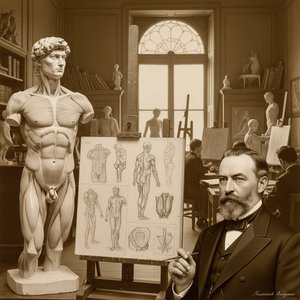
Frederick Bridgman: Anatomical Mastery & the Evolution of Figure Drawing Instruction
Explore the anatomical mastery of George B. Bridgman & his revolutionary figure drawing techniques. Discover how his methods transformed art instruction and continue to inspire artists today. Learn more at AllPaintingsStore.

