Gwarancja zwrotu pieniędzy · 100 dni Darmowa dostawa na cały świat
449 587dzieła sztuki 30 613artyści 4 660muzea 32język
Catalogue entry

Christopher Hatton

.

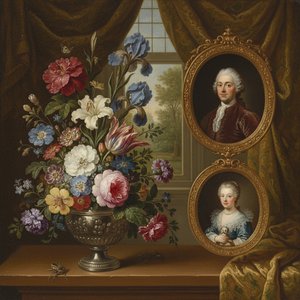
Fig. 1. Nikolaś Hilliard, Christopher Hatton. Shown as the reproduction you are specifying: , .

§ 1Catalogue data

§ 2Abstract

Opis obiektu

A detailed portrait of Christopher Hatton by Nicholas Hilliard, capturing the elegance and status of Elizabethan England's prominent figure.

Biografia artysty

Nicholas Hilliard (1547–1619): Angielski jubiler i iluminator książek, artysta malarz najbardziej znany z miniatur – portretów postaci z dworu królowej Elżbiety I. Jego styl definiował epokę.

§ 3Commentary

A Glimpse into Elizabethan Grandeur: Christopher Hatton by Nicholas Hilliard

This exquisite miniature portrait captures Sir Christopher Hatton, a prominent figure in the court of Queen Elizabeth I. Painted around 1570-1580 by the renowned English limner, Nicholas Hilliard, it offers a fascinating window into the opulence and formality of Elizabethan England. More than just a likeness, this artwork is a testament to status, power, and the artistic skill of its creator.

Style & Technique: The Art of Miniature Portraiture

Nicholas Hilliard was the undisputed master of miniature portraiture in England during the late 16th century. This piece exemplifies his signature style – characterized by meticulous detail, vibrant color palettes achieved through layering translucent glazes, and a remarkable ability to capture personality within a small format (typically oval). The technique involved applying thin layers of paint onto vellum or ivory, requiring immense precision and control. Hilliard’s use of gold leaf highlights the intricate embroidery on Hatton's doublet and adds an element of regal splendor. Notice how he skillfully renders the textures of fabric and skin, creating a remarkably lifelike representation despite its diminutive size.

Historical Context & Symbolism

Sir Christopher Hatton (1540-1591) served as Lord Chancellor under Queen Elizabeth I and was one of her closest confidants. The portrait’s historical significance lies in providing a visual record of a key figure within the Elizabethan court. Several symbolic elements are present:

  • The Elaborate Attire: Hatton's richly embroidered doublet, white ruff collar, and black cloak signify his high social standing and political importance. The dark colors were fashionable at the time and conveyed seriousness and authority.
  • The Book: The small book he holds suggests learning and intellectual pursuits, further reinforcing his image as a man of substance.
  • The Chair: His hand resting on the chair arm conveys a sense of relaxed confidence and power.
  • The Circular Format: The oval shape was typical for Hilliard's miniatures and was considered aesthetically pleasing, reflecting Renaissance ideals of harmony and balance.

Emotional Impact & Lasting Appeal

Beyond its historical and technical merits, this portrait evokes a sense of quiet dignity and understated power. Hatton’s gaze is direct yet reserved, conveying intelligence and perhaps a hint of melancholy. The overall impression is one of refined elegance and unwavering loyalty to the Crown. The enduring appeal of Hilliard's portraits lies in their ability to transcend mere representation; they offer intimate glimpses into the lives and personalities of individuals who shaped Elizabethan England, making them invaluable treasures for art lovers, collectors, and those seeking a touch of historical grandeur within their interiors.

Pytania i odpowiedzi

Czy kolory w „Christopher Hatton” – Nikolaś Hilliard są nasycone czy stonowane?

Paleta dzieła "Christopher Hatton" charakteryzuje się Subtle Color nasyceniem kolorów.

Kto jest autorem dzieła "Christopher Hatton"?

Autorem dzieła „Christopher Hatton” jest Nikolaś Hilliard. Praca ta figuruje w katalogu pod nazwiskiem Nikolaś Hilliard.

Jak mogę podejrzeć reprodukcję dzieła „Christopher Hatton” – Nikolaś Hilliard?

Podgląd dzieła „Christopher Hatton” – Nikolaś Hilliard można znaleźć na stronie Podgląd w pomieszczeniu.

§ 4The artist

Nikolaś Hilliard

Nikolaś Hilliard

1577 - 1619, Wielka Brytania

Quick facts about Nikolaś Hilliard

  • Artistic Movement Or Style: Miniatura
  • Artists Or Movements Influenced By This Artist: ['Elizabethan Art']
  • Artists Who Influenced This Artist:
    • Hans Holbein mł.
    • Albrecht Dürer
  • Date Of Birth: ok. 1547
  • Date Of Death: 7 stycznia 1619
  • Full Name: Nicholas Hilliard
  • Nationality: Angielski
  • Notable Artworks:
    • Portret Elżbiety I
    • Portret Roberta Dudley
  • Place Of Birth: Exeter, Wielka Brytania

Biografia artysty

A Goldsmith’s Son and the Soul of Elizabethan England

Nicholas Hilliard, a name inextricably linked to the refined elegance of the Elizabethan age, emerged from humble beginnings in Exeter around 1547. His father, Richard Hilliard, was a staunchly Protestant goldsmith, a profession that undoubtedly instilled in young Nicholas an appreciation for meticulous craftsmanship and the allure of precious materials. This early exposure to the jeweler’s art would profoundly shape his future artistic endeavors. The family's religious convictions led to a period of exile during Queen Mary I’s reign, with Hilliard accompanying John Bodley’s household to Geneva at the tender age of ten. This formative experience not only provided him with fluency in French but also immersed him in the heart of Calvinism – influences that would subtly permeate his artistic worldview. Even as a boy, Hilliard demonstrated an extraordinary talent; accounts suggest he painted a self-portrait at thirteen and was credited with a portrait of Mary, Queen of Scots, by the age of eighteen, hinting at a precocious gift for capturing likenesses. His formal training began with Robert Brandon, the queen’s jeweller, and likely included tutelage under Levina Teerlinc, a renowned manuscript illuminator, bridging the gap between goldsmithing, illumination, and the emerging art of portraiture. Becoming a freeman of the Worshipful Company of Goldsmiths in 1569 solidified his position within London’s artistic community, yet it was his burgeoning talent as a *limner* – a painter of miniatures – that would ultimately define his legacy.

Royal Patronage and Artistic Flourishing

The establishment of a workshop with his younger brother John marked the beginning of Hilliard's professional life, further cemented by his marriage to Alice Brandon, daughter of his former master, in 1576. However, it was his appointment as limner and goldsmith to Elizabeth I that propelled him into the heart of the Elizabethan court. While the exact date remains unknown, his association with the Queen began around 1572, evidenced by early miniatures depicting her regal presence. A lease reversion granted by the Queen in 1573 acknowledged his “good, true, and loyal service,” a testament to the growing esteem in which he was held. Prior to this royal favor, Hilliard had already begun to develop his distinctive style, as seen in works like the "Phoenix" and "Pelican" portraits (circa 1572-76). A pivotal moment came with the creation of a “booke of portraitures” for Robert Dudley, Earl of Leicester, in 1571, which likely paved the way for his court appointment. A sojourn to France from 1576 to 1579 exposed him to new artistic currents and secured patronage from the Duc d’Alençon, broadening his horizons and refining his technique before returning to England to fully embrace his role as the Queen’s favored artist. This period abroad was crucial in shaping his understanding of courtly portraiture and allowed him to refine a style that would become uniquely English.

The Art of Miniature: Style and Symbolism

Nicholas Hilliard revolutionized English portraiture through his mastery of the miniature form. Eschewing large-scale canvases, he focused on exquisitely detailed oval portraits, typically ranging up to ten inches in height – what are now known as cabinet miniatures. He also produced a smaller number of larger half-length panel portraits of Elizabeth I, but it was the intimacy and portability of his miniatures that truly captured the spirit of the age. His skill in capturing likenesses was unparalleled, yet he went beyond mere representation, imbuing each portrait with symbolic elements that spoke volumes about the sitter's status, beliefs, and aspirations. The miniatures were not simply images; they were treasured mementos, tokens of affection, often worn as pendants or incorporated into jewelry – intimate objects meant to be held close to the heart. Hilliard’s technique involved meticulous layering of watercolor on vellum, creating a luminous quality that seemed to bring his subjects to life. He was particularly adept at rendering textures—the sheen of silk, the glint of jewels, the delicate flush of skin—with astonishing realism. The use of symbolism was also paramount; pearls represented purity, rubies signified passion, and specific flowers conveyed hidden meanings, adding layers of complexity to his portraits.

A Lasting Legacy: The Mirror to an Era

Nicholas Hilliard is rightfully regarded as the “central artistic figure of the Elizabethan age.” His portraits offer invaluable visual records of the courts of Elizabeth I and James I, immortalizing figures like Queen Elizabeth herself, Robert Dudley, Sir Walter Raleigh, and countless other prominent individuals. More than just historical documents, however, his works provide a profound insight into the cultural values and aesthetic preferences of the time. He established a distinctive style of portrait miniature that profoundly influenced subsequent generations of English artists, shaping the course of English art for decades to come. His ability to blend realism with idealism, coupled with his masterful use of symbolism, created portraits that were both captivating and deeply meaningful. Despite facing ongoing financial difficulties throughout his career, Hilliard continued to work until his death before January 7, 1619. His legacy endures not only in the exquisite detail and psychological insight of his miniatures but also in their ability to transport us back to a bygone era—a world of courtly intrigue, religious fervor, and artistic innovation. His work truly reflects the world of Shakespeare’s earlier plays.

Notable Works & Continued Influence

Several works stand out as testaments to Hilliard’s genius. The portraits of Queen Elizabeth I, particularly those depicting her in old age – often referred to as the “Armada Portrait” variations – are iconic representations of Elizabethan power and majesty. His miniature of Sir Walter Raleigh showcases his ability to capture character and intellect, while his portrait of Mary, Queen of Scots, reveals a poignant vulnerability. Beyond these famous examples, Hilliard’s extensive body of work includes portraits of numerous courtiers, nobles, and members of the gentry, each meticulously rendered with his signature style. Today, his paintings are held in prestigious collections worldwide, including the Victoria and Albert Museum, the National Portrait Gallery, and the British Museum. The enduring appeal of Hilliard’s miniatures lies not only in their artistic merit but also in their historical significance. They offer a tangible connection to the past, allowing us to glimpse into the lives and personalities of those who lived during one of England's most fascinating periods. His influence continues to inspire artists and art historians alike, ensuring that his legacy will endure for generations to come.

§ 5Comparanda

§ 6Questions

Najważniejsze informacje

  • Subject or theme: Portrait of Christopher Hatton
  • Medium: Oil on panel
  • Notable elements or techniques:
    • Detailed clothing
    • Realistic portrayal
  • Artist: Nicholas Hilliard

Quiz o sztuce

Do każdego pytania dotyczy tylko jedna poprawna odpowiedź.

Pytanie 1:
Who is the artist credited with creating this portrait?
Pytanie 2:
What period in English history does this artwork primarily represent?
Pytanie 3:
Based on the description, what is Christopher Hatton holding in his right hand?
Pytanie 4:
What is a notable characteristic of the painting style used in this portrait, as described in the text?
Pytanie 5:
What is suggested about Christopher Hatton's status within Elizabethan society based on his attire and posture?

§ 7Cite this entry

AllPaintingsStore.com, “Nikolaś Hilliard, Christopher Hatton”, https://allpaintingsstore.com/pl/art/nicholas-hilliard-christopher-hatton-8BWLSA-en/ (accessed 4 Październik 2026).

§ 8The reproduction

Ręcznie malowana reprodukcja olejowa

Ręcznie malowany obraz olejny na płótnie, wykonany na zamówienie przez naszych artystów w wybranym przez Ciebie wymiarze i oprawie. ( Przełącz na wydania drukowane Przejdź do wersji cyfrowej)

It is specified on the order sheet in the margin; the present state of that sheet reads as follows.

Christopher Hatton

Technika reprodukcji

Wymiary reprodukcji

-

Wybitny mistrz artystyczny

Większa szczegółowość, finezja i dodatkowy czas na realizację

-

Opcje oprawy reprodukcji

-

-

W przypadku dzieł sztuki lub reprodukcji, których którykolwiek z boków przekracza 105 cm (około 41 cali), rama zostanie wysłana w formie zestawu do samodzielnego montażu. Metoda ta zapewnia bezpieczną dostawę i zapobiega uszkodzeniom podczas transportu.

Wymagany profesjonalny montaż – nie jest to produkt typu DIY.
Zestaw musi zostać złożony, a płótno naciągnięte przez doświadczonego profesjonalnego ramiarza, przy użyciu kleju do drewna (brak w zestawie), kleszczy do naciągania płótna oraz ścisków, które utrzymają krosna w równej pozycji podczas schnięcia kleju. Nieprawidłowy montaż lub nierównomierne napięcie płótna może trwale uszkodzić dzieło sztuki i nie podlega naszej gwarancji.

  • W zestawie znajdują się wszystkie listwy z litego drewna, precyzyjnie docięte do wymiarów.

  • Montaż odbywa się przy użyciu dołączonych wkrętów oraz kleju do drewna do łączenia narożników, którego zestaw nie zawiera i który musi zostać dostarczony przez ramiarza.

  • Wymagane są profesjonalne narzędzia, których nie ma w zestawie: kleszcze do naciągania płótna (napinacz) oraz zaciski, które pozwolą utrzymać listwy w równej pozycji podczas schnięcia kleju.

Ważne:
Do połączenia narożników niezbędny jest klej do drewna, listwy należy unieruchomić za pomocą ścisków do momentu całkowitego wyschnięcia kleju, a naciągnięcie płótna na złożoną ramę wymaga użycia kleszczy do naciągania płótna. Żaden z tych elementów nie jest dołączony do zestawu. Przed zamówieniem tego rozmiaru zalecamy konsultację z doświadczonym ramiarzem.

Etykieta obiektu

-

-

Lakier ochronny

Lakier z połyskiem (pogłębia kolory, chroni przed światłem i wilgocią)

-

Personalizacja dzieła

Przykłady możliwości personalizacji: zastąp twarz zdjęciem klienta; dodaj zwierzę domowe (np. zamień kota na psa); umieść ukrytą wiadomość w tle; zmień krajobraz lub elementy tła.

-

Ekspresowa

Dostawa na cały świat () w ciągu 3–4 tygodni zamiast standardowych 5 tygodni. (1 Listopad). Bez kompromisów w kwestii jakości.

-

Przesyłka ekspresowa

Dostawa na cały świat () w ciągu 5 tygodni. (8 Listopad).

W cenie

Cena całkowita

zł 1004

Included with every order

  • Bezpłatna ekspresowa wysyłka na cały świat
  • Wysokiej jakości płótno lniane
  • Pełne ubezpieczenie przesyłki
  • Gwarancja zwrotu należności celnych i podatków importowych
  • Gwarancja wiernego odwzorowania kolorów
  • 100-dniowa polityka zwrotów (tylko w przypadku wad)
  • Gwarancja 100% zwrotu pieniędzy
  • Zniżka przy zakupie wielu sztuk
Order sheet