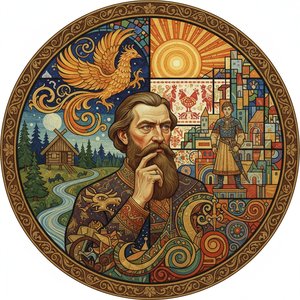
1912. Akryl na płótnie, 23.0 x 16.0 cm.

§ 1Dane katalogowe

- 23.0 x 16.0 cm


§ 2Abstrakcja
Opis obiektu
Wyjątkowa reprodukcja obrazu „Pastor” autorstwa Nikołasa Roericha – rosyjskiego malarza szkoły Symbolizmu i Art Nouveau. Zamów teraz piękną dekorację wnętrza!
 Rozwiń treść
§ 3Komentarz
A Vision of Tranquility: Exploring Nicholas Roerich’s “Shepherd”
“Shepherd,” painted in 1912 by Russian Symbolist artist Nicholas Roerich, stands as a testament to the artistic fervor of its time – specifically, the burgeoning influence of Art Nouveau. Measuring just 23 x 16 cm, this deceptively modest canvas encapsulates a profound exploration of spirituality and landscape, reflecting Roereich’s unwavering belief in the interconnectedness of art and nature.
- Composition & Perspective: The painting's central figure dominates the frame, positioned slightly to the left against a simplified backdrop depicting a snowy mountain range. Minimal perspective contributes to an ethereal atmosphere, flattening the image and prioritizing emotional resonance over realistic representation.
- Color Palette & Texture: Dominated by earthy hues – browns, whites, and muted reds – “Shepherd” employs a palette that evokes warmth amidst the cold grandeur of the Himalayas. Subtle blues-greens peek through in the fur coat and boots, hinting at hidden depths and adding textural richness achieved through layered brushstrokes.
- Style & Technique: Roereich’s approach aligns seamlessly with Art Nouveau principles: stylized forms, flowing lines, and a deliberate avoidance of sharp edges characterize his technique. The artist skillfully builds up texture on the fur coat and boots, conveying both materiality and spiritual significance.
Symbolism Rooted in Tradition
More than just a depiction of a shepherd—a figure traditionally associated with guidance and pastoral serenity—the painting carries deeper symbolic weight. The staff symbolizes strength and resilience against the harshness of the environment, mirroring Roereich’s own philosophical convictions about confronting challenges with grace and fortitude. The solitary shepherd embodies introspection and communion with the divine, themes central to Symbolist art.
Art Nouveau's Influence: Elegance and Flow
“Shepherd” exemplifies Art Nouveau’s aesthetic ideals – elegance, organic forms, and a harmonious blend of decorative elements. Roereich skillfully incorporates flowing lines into clothing details and the overall composition, mirroring the movement and fluidity characteristic of this influential artistic style. This stylistic choice underscores Roereich's desire to elevate visual art beyond mere representation, aiming instead for an experience that stirs the soul.
A Window Into Himalayan Mysticism
Ultimately, “Shepherd” transcends its formal elements to convey a palpable sense of tranquility and spiritual contemplation. It’s a painting that invites viewers to consider the beauty of the natural world alongside profound philosophical questions—a reflection of Roereich's lifelong fascination with Himalayan landscapes and his unwavering commitment to exploring the mysteries of consciousness.
Pytania i odpowiedzi
Któremu artyście przypisuje się "Pastor"?
Autorstwo dzieła "Pastor" przypisuje się Nikola Roerich.
Jakie emocje wywołują kolory w „Pastor” – Nikola Roerich?
„Pastor” – Nikola Roerich łączy w sobie Barwy neutralne paletę barw z Sielankowy tonem.
Jak opisany jest nastrój dzieła „Pastor” – Nikola Roerich?
Nastrój dzieła „Pastor” – Nikola Roerich opisuje się jako Pełen spokoju. Klasyfikacja ta może pomóc w dopasowaniu pracy do konkretnego wnętrza.


 Przełącz na wydania drukowane


 W przypadku dzieł sztuki lub reprodukcji, których którykolwiek z boków przekracza 105 cm (około 41 cali), rama zostanie wysłana w formie zestawu do samodzielnego montażu. Metoda ta zapewnia bezpieczną dostawę i zapobiega uszkodzeniom podczas transportu.