


 Podgląd w skali 1:1
 Wyślij jako kartkę
 Udostępnij
 Szczegóły dzieła
 Przewodnik

 Pobierz obraz
 Podobne obiekty
 RTG
RTG Pokaz slajdów
 Pytania i odpowiedzi
 Statystyki
Pieta

- 57.0 x 48.0 cm


 Rozwiń treść
Giclée / Wydruk artystyczny
Wydruki giclée lub płótna o jakości muzealnej, szybka realizacja i szeroki wybór opcji wykończenia. ( Zamów ręcznie malowaną reprodukcję Przejdź do wersji cyfrowej)




P118B zł10

P118H zł10

P118W zł10

P438Z zł10

P508JH zł12

P508YH zł12

P805H zł10

P805Z zł10

P919BZ zł10

P919G zł10

P919XJ zł10

P959ZH zł10

P968JZ zł12

W106C zł8

W218G zł10

W218JH zł8

W218Y zł10

W307PJ zł10

W316G zł10

W316PJ zł8

W316Y zł10

W398PJ zł8

W4111J zł10

W500HY zł15

W500JH zł15

W692G zł12

W849H zł8

W940BG zł15

W953PJ zł8




Wybierz spośród naszych standardowych rozmiarów, które zachowują oryginalne proporcje dzieła sztuki.

Wpisz wymaganą szerokość i wysokość, aby dopasować grafikę do ramy lub ściany. Wydruk można jedynie przyciąć, nigdy nie powiększając go poza oryginalny obraz, dlatego format o innych proporcjach spowoduje utratę części kompozycji. Przed rozpoczęciem druku prześlemy Ci cyfrowy podgląd do zatwierdzenia. Obraz wyświetlany na tej stronie nie pokazuje rzeczywistego przycięcia — jedynie podgląd oddaje ten efekt.
Dostawa na cały świat () w ciągu 2 tygodni zamiast standardowych 4/5 tygodni. (20 Listopad)

Bezpłatna ekspresowa wysyłka na cały świat

Wysokiej jakości płótno lniane

Pełne ubezpieczenie przesyłki

Gwarancja zwrotu należności celnych i podatków importowych

Gwarancja wiernego odwzorowania kolorów

100-dniowa polityka zwrotów (tylko w przypadku wad)

Gwarancja 100% zwrotu pieniędzy

Zniżka przy zakupie wielu sztuk
 Opcja ze szkłem jest dostępna wyłącznie w rozmiarach poniżej 110 cm

Pieta
Giclée / Wydruk artystyczny
Wymiary reprodukcji
-


Cena całkowita
zł 253
A Sacred Encounter of Sorrow and Grace
In the quiet, heavy atmosphere of Nicolas Poussin’s Pieta, time seems to suspend itself, capturing a moment of profound theological and human weight. The canvas presents us with the heartbreaking intimacy of the Virgin Mary cradling the lifeless body of her son, Jesus. It is not merely a depiction of death, but a testament to the enduring strength of maternal love amidst divine tragedy. Poussin, a master who bridged the gap between the visceral drama of the Baroque and the disciplined clarity of Classicism, imbues this scene with a stillness that invites deep contemplation. Every fold of the heavy drapery and every subtle tilt of a head serves to heighten the emotional resonance, drawing the viewer into a shared experience of grief and reverence.
The Mastery of Light and Form
Technically, the Pieta stands as a triumph of chiaroscuro, where light does not merely illuminate but actively narrates the spiritual struggle within the frame. Poussin employs a sophisticated interplay of shadow and luminescence to sculpt his figures, giving them a palpable, three-dimensional presence that feels almost statuesque. A soft, ethereal glow graces Mary’s countenance and the cascading textures of her garments, creating a striking contrast against the deep, mysterious recesses of the tomb behind them. This deliberate manipulation of light directs our gaze toward the central tragedy, ensuring that the viewer's eye is perpetually drawn back to the intersection of flesh and spirit. Through meticulous tonal gradations, Poussin achieves a sense of depth that transforms a two-dimensional surface into a window onto a sacred event.
A Timeless Addition to the Collector’s Eye
For the discerning collector or interior designer, this work offers more than just historical significance; it provides a focal point of unparalleled dignity. Born in France but shaped by the classical grandeur of Rome, Poussin’s approach to composition emphasizes balance, harmony, and intellectual rigor. This makes the piece uniquely versatile for sophisticated spaces, where its somber elegance can anchor a room with a sense of history and gravitas. Whether viewed as an exploration of 17th-century religious devotion or as a masterpiece of formal composition, the Pieta remains a powerful emblem of the human condition. Owning a reproduction of such a monumental work allows one to bring the quiet, commanding presence of Poussin’s classical vision into the modern home, fostering an environment of reflection and timeless beauty.
Pytania i odpowiedzi
W jakiej technice wykonano "Pieta" i jakie są jego wymiary?
Oryginalny utwór „Pieta” – Nicolas Poussin to praca wykonana w technice Oil On Canvas, o wymiarach 57 x 48 cm. Technika i rozmiar odnoszą się do obiektu oryginalnego.
Kiedy powstało i w jakim nurcie utrzymane jest dzieło „Pieta” – Nicolas Poussin?
„Pieta” – Nicolas Poussin datowane jest na 1627 rok i reprezentuje nurt Baroque.
Czy kolory w "Pieta" są intensywne czy stonowane?
Kolory w „Pieta” – Nicolas Poussin charakteryzują się Balanced intensywnością.
Podobne dzieła


Biografia artysty
Wczesne lata, rodzina i kształcenie
Aby w pełni zrozumieć surową dyscyplinę, jaką cechowała twórczość, którą pozostawił po sobie Nicolas Poussin, należy cofnąć się do jego korzeni w Les Andelys w Normandii. Urodzony w czerwcu 1594 roku, nie był dzieckiem nagłego natchnienia; jego rozwój był raczej owocem ustrukturyzowanego, metodycznego szkolenia. Swoją techniczną edukację rozpoczął w Rouen, co zapewniło mu fundamenty mechaniki niezbędne do tworzenia późniejszych, bardziej złożonych kompozycji. Ten wczesny okres wyznaczył wzorzec rygorystycznego przygotowania, który zdefiniował całą jego artystyczną drogę.
W 1612 roku Nicolas Poussin przeniósł się do Paryża, gdzie pozostał aż do 1623 roku. Ta dekada spędzona w francuskiej stolicy była czasem znaczącego wzrostu, wykraczającego daleko poza pierwotne nauki młodości. Jego wykształcenie nie ograniczało się jednak wyłącznie do sfery wizualnej; poddał się nauce łaciny, co dało mu narzędzia językowe niezbędne do bezpośredniego obcowania z klasycznymi tekstami, które w przyszłości miał przekładać na język obrazu. Ta biegłość w antycznym języku i strukturze sprawiła, że jego dzieła zostały zbudowane na fundamencie logiki, a nie jedynie na powierzchownym wrażeniu wizualnym.
Rzymskie lata i rozwój artystyczny
Nicolas Poussin przybył do Rzymu w 1624 roku, przemierzając drogę przez Wenecję. Na tym etapie był jeszcze malarzem nieukształtowanym, pozbawionym tej zdecydowanej wizji, która miała później zdefiniować jego karierę. Nie szukał swojego głosu w ojczystej Francji; zamiast tego większość swojego twórczego życia spędził w Rzymie – mieście, które dostarczyło niezbędnego krajobrazu intelektualnego i fizycznego dla jego ewolucji. Nie był to jedynie czas rezydencji, lecz fundamentalny zwrot w jego artystycznej trajektorii. Odchodził od zmysłowego, inspirowanego wenecką szkołą stylu swojej młodości w stronę bardziej zdyscyplinowanego, ustrukturyzowanego podejścia. Transformacja ta była napędzana głębokim zaangażowaniem w badanie antycznych ruin oraz uczestnictwem w kręgach uczonych Wiecznego Miasta.
Jego rozwój w Rzymie charakteryzował się odrzuceniem ekstrawaganckich, teatralnych gustów baroku, które dominowały w jego czasach. Zamiast stawiać na natychmiastowy efekt zmysłowy czy dramatyczny gest, poszukiwał ładu i logiki. Studiował antyczne pozostałości oraz dzieła Rafaela, aby zbudować język wizualny zakorzeniony w klarowności i równowadze. Ten okres przyniósł przejście od eksperymentalnych, niemal surowych prac z czasów przyjazdu, ku wysoce kontrolowanej metodzie kompozycji. Ostatecznie wypracował styl, który przedkładał linię nad kolor, skupiając się na intelektualnej wadze swoich tematów, a nie na powierzchownym widowisku. Pozostał w Rzymie aż do śmierci w 1665 roku, przeobrażając się z nieznanego imigranta w centralną postać tradycji klasycznej.
Mecenasi, warsztat i zamówienia
Kariera, którą prowadził Nicolas Poussin, nie była kształtowana przez szerokie, teatralne wymagania kontrreformacji, lecz przez wyselekcjonowane, intelektualne kręgi mecenasów. W Rzymie jego najważniejszą więzią był Cassiano dal Pozzo – uczony i archeolog, którego wpływ zakotwiczył artystę w specyficznej, wysoko postawionej warstwie społecznej. To właśnie ta relacja zapewniła Nicolasowi Poussinowi jego jedyne zamówienie papieskie w 1628 roku. Praca ta wymagała odejścia od ekstrawaganckiego, emocjonalnego stylu, tak popularnego w ówczesnym mieście, na rzecz strukturalnej jasności, której domagali się jego protektorzy. Umiejętność zaspokojenia potrzeb tych wymagających kolekcjonerów ugruntowała jego reputację jako malarza o głębokiej treści.
Jego pozycja zawodowa sięgnęła ostatecznie najwyższych szczebli francuskiego państwa. Podczas krótkiego powrotu do Paryża został mianowany Pierwszym Malarzem Króla za panowania Ludwika XIII i kardynała Richelieu. Stanowisko to niosło ze sobą ogromny prestiż, jednak presja administracyjna i dworska okazały się nie do pogodzenia z jego metodami pracy. Choć nosił tytuł Pierwszego Malarza Króla, wymagania dworu skłoniły go do porzucenia tej funkcji i powrotu do Rzymu. Preferencja towarzystwa uczonych nad dworskimi intrygami podkreśla zdyscyplinowany, niemal ascetyczny charakter jego życia zawodowego.
- Męczeństwo świętego Erasma (1628)
Technika i styl
Podejście Nicolas Poussin do kompozycji było zdyscyplinowanym ćwiczeniem z zakresu geometrii i logiki. Odrzucił on chaotyczną, emocjonalną spontaniczność baroku na rzecz klarowności i porządku. Aby to osiągnąć, działał bardziej jak architekt niż zwykły malarz. Korzystał ze specjalnych pudełek oświetlonych przez otwory w ściankach, aby planować swoje płótna, co pozwalało mu na wnikliwą analizę światła i cienia, zanim jeszcze nałożono pierwszą warstwę farby na ostateczną powierzchnię. Ta metodyczna praca przygotowawcza sprawiała, że każda postać oraz każdy element krajobrazu zajmowały precyzyjną, racjonalną przestrzeń.
Jego proces twórczy wiązał się z fizyczną, niemal teatralną inscenizacją podmiotów malarskich. Wykorzystywał małe sceny z woskowymi figurami i starannie układane draperie, aby dopracować skomplikowane układy kompozycyjne. Ta haptyczna metoda pozwoliła mu na mistrzowskie opanowanie gry światła i formy. Stosował chiaroscuro, by rzeźbić swoje postaci, używając światłocienia do nadania im głębi i emocjonalnego ciężaru, nie polegając przy tym na powierzchownej dramaturgii swoich współczesnych. Jego estetykę definiowało przedłożenie linii nad kolorem; priorytetem była dla niego strukturalna integralność sceny, co zapewniało, że nadrzędna logika kompozycji pozostawała dla widza głównym punktem odniesienia.
Kluczowe dzieła i tematyka
Twórczość, którą pozostawił po sobie Nicolas Poussin, definiowana była przez rygorystyczne przywiązanie do struktury, często wykorzystujące narracje historyczne i mitologiczne do zgłębiania ludzkiej moralności. Często przedstawiał sceny z dziejów starożytnych, traktując płótno niczym scenę dla stoickiej godności. To intelektualne podejście jest wyraźnie widoczne w jego dziełach religijnych, takich jak Męczeństwo świętego Erasma, namalowane dla kościoła świętego Piotra. Nawet w jego wcześniejszym, bardziej zmysłowym okresie, dzieła takie jak Karmienie Bacha ukazują przejście od inspirowanej wenecką kolorystyki ku zdyscyplinowanej linearności, która zdefiniowała jego dojrzały styl.
Jego zakres tematyczny wykraczał w stronę głębokich terytoriów filozoficznych, co najpełniej objawiło się w arcydziele Et in Arcadia Ego. Dzieło to wykorzystuje scenerię pejzażu, aby skłonić widza do kontemplacji nad śmiertelnością. Pod koniec lat 30. XVII wieku artysta zwrócił swoją uwagę ku sferze sacrum poprzez cykl Siedem Sakramentów. Obrazy te demonstrują jego niezwykłą zdolność do zachowania klasycznej powściągliwości nawet podczas poruszania ciężkich tematów teologicznych. Nie polegał on na emocjonalnym nadmiarze; zamiast tego stosował jasne, logiczne układy, aby przekazać głębokie znaczenie duchowe.
- Męczeństwo świętego Erasma
- Karmienie Bacha
- Et in Arcadia Ego
- Siedem Sakramentów
Dziedzictwo i wpływ
Wpływ, jaki Nicolas Poussin wywarł na sztukę francuską, miał charakter strukturalny, a nie tylko stylistyczny. Poprzez ustanowienie wzorca porządku i klarowności, stał się on fundamentem francuskiego klasycyzmu. Jego obecność w Académie Royale de Peinture et de Sculpture ugruntowała rygorystyczne podejście do kompozycji, które zdefiniowało całą epokę. Nicolas Poussin nie tylko malował; on dostarczył ramy teoretyczne, określające, w jaki sposób historia i mit powinny być organizowane na płótnie. Ta żelazna dyscyplina sprawiła, że jego artystyczne dziedzictwo przetrwało długo po jego śmierci w Rzymie.
Zasięg jego metody wykraczał poza jego czasy, kształtując kierunki wielkich nurtów artystycznych w kolejnym stuleciu. Artyści tacy jak Jacques-Louis David czy Paul Cézanne przyznawali, że zawdzięczają wiele jego intelektualnej głębi oraz przedkładaniu linii nad kolor. Podczas gdy David zaadaptował te zasady w nurcie neoklasycyzmu, Cézanne odnalazł zupełnie inne echa w ustrukturyzowanych krajobrazach, które tworzył Nicolas Poussin. Umiejętność narzucania logiki scenie pozostaje kluczowym punktem odniesienia dla każdego, kto zgłębia ewolucję zachodniej kompozycji.
- Et in Arcadia Ego
- Siedem Sakramentów
- Śmierć Germanika
- Orion oślepiony w poszukiwaniu słońca
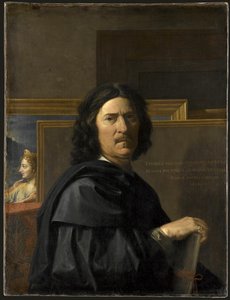
Nicolas Poussin
1594 - 1665 , Francja
Krótka nota
- Artistic Movement Or Style: Barok francuski, Klasycyzm francuski
- Artists Or Movements Influenced By This Artist:
- Jacques-Louis David
- Paul Cézanne
- Artists Who Influenced This Artist:
- Tycjan
- Rafael
- Date Of Birth: 1594
- Date Of Death: 1665
- Full Name: Nicolas Poussin
- Nationality: Francuski
- Notable Artworks:
- Śmierć Germanika
- Siedem sakramentów
- Rzymska droga
- Orion oślepiony w poszukiwaniu słońca
- Pory roku
- Place Of Birth: Le Havre, Francja
Powiązane artykuły

Mastering the Classics: The 25 Greatest Paintings by Nicolas Poussin
Journey through the grandeur of French Baroque with our curated list of the top 25 Nicolas Poussin masterpieces. Explore the stories behind these timeless classical paintings and find museum-quality art reproductions for your decor. Discover all masterpieces on AllPaintingsStore.com.


