Gwarancja zwrotu pieniędzy · 100 dni Darmowa dostawa na cały świat
449 564dzieła sztuki 30 613artyści 4 660muzea 32język
Wpis do katalogu

The Last Supper

1649. Oil On Canvas.

Ryc. 1. Nikola Poussin, The Last Supper, 1649. Przedstawiono jako wybraną przez Ciebie reprodukcję: , .

§ 1Dane katalogowe

§ 2Abstrakcja

Opis obiektu

Experience Nicolas Poussin's 'The Last Supper,' a masterpiece of classical art showcasing the intimate final meal of Jesus and his apostles. Explore its balanced composition & profound religious significance.

Biografia artysty

Klasyczne obraz Rousseau „Pythagoras wychodzący z podziemia” prezentuje umiejętności Poussina i jego fascynację klasyczną estetyką. Znajdź więcej dzieł tego mistrza sztuki na WikiArt!

§ 3Komentarz

The Last Supper: A Masterpiece of Classical Composition by Nicolas Poussin

Nicolas Poussin's "The Last Supper," painted in 1649, stands as a testament to the artist’s profound understanding of classical principles and his ability to imbue religious narratives with intellectual depth. This oil on canvas painting depicts the pivotal moment when Jesus shared his final meal with his twelve apostles, an event laden with foreshadowing and spiritual significance. The work is not merely a depiction of a historical scene; it's a carefully constructed visual argument about faith, sacrifice, and divine order.

Artistic Style and Technique

Poussin’s style firmly aligns with the Classical tradition, characterized by its emphasis on clarity, balance, and rational composition. Unlike the more exuberant Baroque styles of his contemporaries, Poussin favored a restrained palette and precise draftsmanship. In "The Last Supper," this manifests in the meticulously rendered figures, the harmonious color scheme dominated by earthy tones, and the carefully calibrated spatial relationships. The use of light is particularly noteworthy; it's not dramatic or theatrical but rather serves to illuminate the scene with a steady, almost intellectual glow. Poussin’s technique involved layering thin glazes of oil paint, creating subtle gradations of tone and a sense of depth without relying on harsh contrasts. The lines are clean and precise, contributing to the overall feeling of order and control.

Historical Context and Symbolism

Created during a period of religious and political upheaval in Europe, "The Last Supper" reflects Poussin’s deep engagement with classical antiquity and his commitment to portraying biblical narratives with intellectual rigor. The setting itself—a simple, Roman-style room—grounds the scene in a sense of timelessness and universality. Symbolism is woven throughout the composition. Jesus' central position and calm demeanor emphasize his role as the divine figure. The receding lines of the architecture draw the viewer’s eye towards him, reinforcing his importance. The presence of Judas, subtly distinguished from the other apostles, hints at the impending betrayal. The bowls and cups on the table are not merely decorative elements; they represent the Eucharist, a central sacrament in Christian faith.

Emotional Impact and Legacy

While Poussin’s work is often admired for its intellectual rigor, "The Last Supper" also possesses a profound emotional resonance. The somber atmosphere, created by the subdued lighting and restrained color palette, evokes a sense of solemnity and contemplation. The expressions on the faces of the apostles—ranging from attentive listening to quiet introspection—reveal a range of human emotions in response to Jesus’ words. Poussin's "The Last Supper" has had a lasting impact on Western art, influencing generations of artists with its masterful composition and profound exploration of religious themes. It exemplifies Poussin’s dedication to classical ideals and his ability to create works that are both intellectually stimulating and emotionally moving.

Acquire Your Own Reproduction

The Last Supper is available as a handmade oil painting reproduction on canvas at AllPaintingsStore.com. Bring the timeless beauty and spiritual depth of this masterpiece into your home or office.

Pytania i odpowiedzi

Co przedstawia i jaką atmosferę oddaje „The Last Supper” – Nikola Poussin?

"The Last Supper" przedstawia religious, last supper, jesus, disciples, biblical, composition, light, shadow, a jego nastrojowy charakter można określić jako Classic.

Ilu użytkowników ogląda "The Last Supper"?

Dla dzieła „The Last Supper” dostępna jest strona Statystyki wyświetleń. Przedstawia ona miesięczną liczbę odwiedzin tego dzieła oraz innych prac artysty, z podziałem na kraje i języki.

Jaki rozmiar wydruku jest zalecany dla dzieła "The Last Supper"?

Zalecany rozmiar wydruku dla „The Last Supper” – Nikola Poussin to Medium.
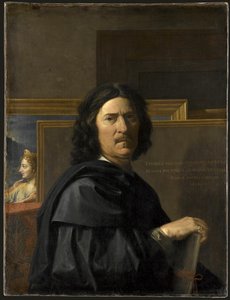
§ 4Artysta

Nikola Poussin

Nikola Poussin

1594 - 1665, Francja

Krótkie informacje o Nikola Poussin

  • Artistic Movement Or Style: Barok Klasyczny
  • Artists Or Movements Influenced By This Artist:
    • Jacques-Louis David
    • Paul Cézanne
  • Artists Who Influenced This Artist:
    • Raphael
    • Titian
  • Date Of Birth: 1594
  • Date Of Death: 1665
  • Full Name: Nicolas Poussin
  • Nationality: Francuzi
  • Notable Artworks:
    • Święcenia
    • Wenus prezentująca uzbrojenie dla Eneusza
    • Zimowa Rozkosz
  • Place Of Birth: Les Andelys, Francja

Biografia artysty

Nicolas Poussin - A Life Steeped in Classical Reverie

Nicolas Poussin, a name synonymous with the grandeur of French Baroque painting, was nonetheless a soul deeply rooted in Italian soil for much of his artistic life. Born in Les Andelys, Normandy, in June 1594, his early years remain somewhat veiled in mystery, yet they undoubtedly laid the foundation for a career that would become pivotal in shaping the classical tradition within French art. Though he briefly studied in Paris during the early 1610s, absorbing influences from lesser-known artists of the time—primarily Jean Baptiste Oudry and Nicolas Tourigny—it was his journey to Rome in 1624 that truly ignited his artistic destiny. This wasn’t merely a geographical relocation; it was an immersion into the heart of antiquity, a pilgrimage to the very source of inspiration that would define his aesthetic vision. Poussin's initial forays into painting were marked by a sensuous quality reminiscent of Venetian masters like Titian—particularly in his early landscapes—yet even in these works, a nascent sense of order and intellectual rigor began to emerge—a foreshadowing of the style he would so masterfully refine. He experimented with color palettes inspired by Venetian painters, capturing atmospheric effects with remarkable subtlety.

The Roman Years: Forging a Classical Ideal

Rome proved to be more than just a studio for Poussin; it became his intellectual crucible. He found himself amidst a vibrant circle of scholars, archaeologists, and fellow artists, notably Cassiano dal Pozzo, whose profound understanding of classical antiquity profoundly influenced the artist’s approach. Dal Pozzo's dedication to meticulously documenting ancient remains instilled in Poussin a deep respect for historical accuracy and a desire to imbue his paintings with a sense of timelessness. This period saw Poussin move away from the flamboyant exuberance of some of his contemporaries, instead embracing a style characterized by clarity, balance, and a deliberate emphasis on linear composition. He meticulously studied Raphael’s works—particularly *The School of Athens*—absorbing their harmonious arrangements and graceful forms, while simultaneously drawing inspiration from ancient sculptures and literary sources like Ovid's *Metamorphoses*. His paintings began to populate with figures drawn from classical history and mythology, rendered not as mere decorative elements but as embodiments of moral virtues and philosophical ideals. He sought to emulate Raphael’s masterful use of perspective and idealized forms, striving for a visual elegance that transcended the conventions of his time.

Influences and Artistic Development

Poussin's artistic development was shaped by several key influences. Initially drawn to Venetian painting—particularly Titian’s luminous color palettes—he quickly recognized the superiority of Raphael’s classical style as a model for achieving artistic excellence. He absorbed the principles of linear perspective, mastering techniques that allowed him to create illusionistic depth and convey a sense of grandeur. Furthermore, his engagement with humanist scholarship fostered an appreciation for moral philosophy and informed his thematic choices. The rediscovery of classical sculpture—particularly Michelangelo’s Pietà—provided him with visual references that would resonate throughout his oeuvre. He diligently studied the works of Agrippa Vespasiani and Andrea Palladio, incorporating architectural elements into his landscapes to heighten their sense of scale and harmony.

Major Achievements: Mythological Narratives and Landscape Visions

Poussin’s artistic output was remarkably diverse, yet consistently united by his commitment to these core principles. He achieved international renown for his monumental mythological paintings—particularly *Et in Arcadia ego*, which became a symbol of humanist contemplation on mortality and the enduring power of memory. This masterpiece exemplifies his mastery of classical composition and his ability to convey profound philosophical ideas through visual imagery. Beyond mythology, he produced stunning landscapes that captured the beauty and sublimity of nature with unparalleled sensitivity. His series depicting the Seasons—a testament to his artistic virtuosity—demonstrated his command of color and light, creating vistas that evoked a sense of serenity and timelessness. He skillfully blended realism with idealized forms, elevating landscape painting to new heights of aesthetic achievement.

A Lasting Legacy: Shaping French Art

Despite spending the majority of his career abroad—primarily in Rome—Poussin’s influence on French art was immense. He briefly returned to Paris in 1640 at the behest of Cardinal Richelieu, appointed as First Painter to the King—a position he held until his death in 1665—but found himself stifled by the demands and intrigues of court life. He soon returned to Rome, where he continued to paint until his final days, refining his style and exploring new artistic horizons. His dedication to classical principles helped establish a standard for artistic training and practice within France, influencing generations of artists who followed. Artists like Jacques-Louis David and Paul Cézanne openly acknowledged their debt to Poussin’s rigorous approach and intellectual depth—a testament to an artist who sought not simply to depict the world but to elevate it through the lens of reason and beauty. He became a cornerstone of French Classicism, securing his place as one of the most celebrated painters of his era.
  • Notable Works: *The Death of Germanicus*, *The Seven Sacraments Series*, *A Roman Road*, *Orion Blinded Searching for the Sun*, *The Seasons*.
  • Key Characteristics: Classical Composition, Linearity, Historical and Mythological Themes, Serene Landscapes.

§ 5Podobne dzieła

§ 6Pytania

Najważniejsze informacje

  • Notable elements or techniques:
    • Dramatic light and shadow
    • Balanced composition
  • Subject or theme: Religious event (Last Supper)
  • Medium: Oil on canvas
  • Artistic style: Classical
  • Artist: Nicolas Poussin

Quiz o sztuce

Do każdego pytania dotyczy tylko jedna poprawna odpowiedź.

Pytanie 1:
Who is the artist of 'The Last Supper'?
Pytanie 2:
In what year was 'The Last Supper' created?
Pytanie 3:
What artistic style is prominently featured in Poussin’s ‘The Last Supper’?
Pytanie 4:
According to the image description, what is a dominant characteristic of the color palette in 'The Last Supper'?
Pytanie 5:
What is a key element that adds depth and emotion to the scene in 'The Last Supper'?

§ 7Cytuj ten wpis

AllPaintingsStore.com, “Nikola Poussin, The Last Supper (1649)”, https://allpaintingsstore.com/pl/art/nicolas-poussin-the-last-supper-8EWMGD-en/ArtistReproduction/ (dostęp dnia 7 Październik 2026).

§ 8Reprodukcja dzieła

Ręcznie malowana reprodukcja olejowa

Ręcznie malowany obraz olejny na płótnie, wykonany na zamówienie przez naszych artystów w wybranym przez Ciebie wymiarze i oprawie. ( Przełącz na wydania drukowane Przejdź do wersji cyfrowej)

Informacja ta widnieje na marginesie arkusza zamówienia; obecny stan tego arkusza przedstawia się następująco.

The Last Supper

Technika reprodukcji

Wymiary reprodukcji

-

Wybitny mistrz artystyczny

Większa szczegółowość, finezja i dodatkowy czas na realizację

-

Opcje oprawy reprodukcji

-

-

W przypadku dzieł sztuki lub reprodukcji, których którykolwiek z boków przekracza 105 cm (około 41 cali), rama zostanie wysłana w formie zestawu do samodzielnego montażu. Metoda ta zapewnia bezpieczną dostawę i zapobiega uszkodzeniom podczas transportu.

Wymagany profesjonalny montaż – nie jest to produkt typu DIY.
Zestaw musi zostać złożony, a płótno naciągnięte przez doświadczonego profesjonalnego ramiarza, przy użyciu kleju do drewna (brak w zestawie), kleszczy do naciągania płótna oraz ścisków, które utrzymają krosna w równej pozycji podczas schnięcia kleju. Nieprawidłowy montaż lub nierównomierne napięcie płótna może trwale uszkodzić dzieło sztuki i nie podlega naszej gwarancji.

  • W zestawie znajdują się wszystkie listwy z litego drewna, precyzyjnie docięte do wymiarów.

  • Montaż odbywa się przy użyciu dołączonych wkrętów oraz kleju do drewna do łączenia narożników, którego zestaw nie zawiera i który musi zostać dostarczony przez ramiarza.

  • Wymagane są profesjonalne narzędzia, których nie ma w zestawie: kleszcze do naciągania płótna (napinacz) oraz zaciski, które pozwolą utrzymać listwy w równej pozycji podczas schnięcia kleju.

Ważne:
Do połączenia narożników niezbędny jest klej do drewna, listwy należy unieruchomić za pomocą ścisków do momentu całkowitego wyschnięcia kleju, a naciągnięcie płótna na złożoną ramę wymaga użycia kleszczy do naciągania płótna. Żaden z tych elementów nie jest dołączony do zestawu. Przed zamówieniem tego rozmiaru zalecamy konsultację z doświadczonym ramiarzem.

Etykieta obiektu

-

-

Lakier ochronny

Lakier z połyskiem (pogłębia kolory, chroni przed światłem i wilgocią)

-

Personalizacja dzieła

Przykłady możliwości personalizacji: zastąp twarz zdjęciem klienta; dodaj zwierzę domowe (np. zamień kota na psa); umieść ukrytą wiadomość w tle; zmień krajobraz lub elementy tła.

-

Ekspresowa

Dostawa na cały świat () w ciągu 3–4 tygodni zamiast standardowych 5 tygodni. (4 Listopad). Bez kompromisów w kwestii jakości.

-

Przesyłka ekspresowa

Dostawa na cały świat () w ciągu 5 tygodni. (11 Listopad).

W cenie

Cena całkowita

zł 2555

W każdym zamówieniu

  • Bezpłatna ekspresowa wysyłka na cały świat
  • Wysokiej jakości płótno lniane
  • Pełne ubezpieczenie przesyłki
  • Gwarancja zwrotu należności celnych i podatków importowych
  • Gwarancja wiernego odwzorowania kolorów
  • 100-dniowa polityka zwrotów (tylko w przypadku wad)
  • Gwarancja 100% zwrotu pieniędzy
  • Zniżka przy zakupie wielu sztuk
Arkusz zamówień