

Acrylic On Canvas.

§ 1Catalogue data

§ 2Abstract
Opis obiektu
Paul Cézanne's 'Self-Portrait (Hermitage)' is a pivotal work demonstrating his groundbreaking approach to portraiture. Painted in 1881–82, it embodies the stylistic evolution from Impressionism towards Cubism, characterized by repetitive brushstrokes, vibrant colors, and geometric forms—a testament to Cézanne’s enduring influence on artistic expression.
 Rozwiń treść
Biografia artysty
Key Works and Recurring Motifs</h2> Cézanne’s oeuvre is remarkably diverse
§ 3Commentary
Paul Cézanne: A Revolutionary Vision
Paul Cézanne, born on January 19, 1839, in Aix-en-Provence, France, was a pivotal figure in the transition from late 19th-century Impressionism to early 20th-century Cubism. His father was a successful hatmaker who later became a banker, providing Cézanne with financial security that allowed him to pursue his artistic passions without immediate economic pressure. Initially intended to follow in his father’s footsteps and enter the legal profession, Cézanne eventually abandoned these plans to dedicate himself fully to art.
Early influences included Romanticism and the Barbizon school of landscape painting. He studied briefly at the Académie Suisse in Paris but largely developed his style independently. The works of Paul Gauguin and Georges Seurat, particularly their explorations of color and form, also played a significant role in shaping Cézanne’s artistic direction.
The Painting Style
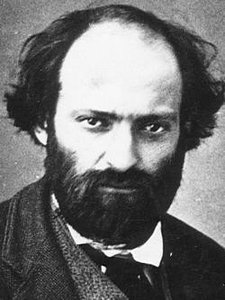
Self-Portrait (Hermitage) is characterized by repetitive, exploratory brushstrokes and an emphasis on geometric forms. The painting features bold and vibrant colors, which were a hallmark of Cézanne's Post-Impressionist style. The artist’s use of thick and heavy brushstrokes adds a sense of texture and depth to the painting.
The image is a painting of a man with a beard and mustache, wearing glasses. He has a bald head and appears to be looking at the viewer. The man’s attire includes a suit and tie, giving him a formal appearance. The painting is in black and white, which adds an artistic touch to the image. The background of the painting features a yellow color that contrasts with the man’s outfit, creating a visually appealing composition.
Overall, the painting captures the essence of the man’s personality and style through its details and colors.
Significance in Portrait Painting
Self-Portrait (Hermitage) is an important work in the history of portrait painting, as it showcases Cézanne’s ability to capture the essence of his subjects while also experimenting with new techniques and approaches. The painting is housed in the State Hermitage Museum in Russia, where it remains one of the most popular attractions.
- For more information on https://AllPaintingsStore.com
- Explore the collection of hand-made oil paintings reproductions at https://AllPaintingsStore.com
- Learn more about Post-Impressionism and its key artists on Wikipedia
Discover the beauty of Cézanne’s works and the significance of Self-Portrait (Hermitage) in the world of art. Visit https://AllPaintingsStore.com to explore a wide range of hand-made oil paintings reproductions, including works by Cézanne and other renowned artists.
Experience the magic of Post-Impressionism and the innovative style of Cézanne through his remarkable painting, Self-Portrait (Hermitage).
Pytania i odpowiedzi
W jaki sposób tematyka dzieła "Self-portrait (Hermitage)" odnosi się do typowych motywów twórczości Paul Cézanne?
Wśród motywów charakterystycznych dla twórczości Paul Cézanne – takich jak romanticism & realism, artist’s exploration of form, formal qualities of art, breaking academic rules, influence on modern art, iconic post-impressionist piece, central to cézanne's oeuvre – dzieło „Self-portrait (Hermitage)” wprowadza własne skupienie na portrait, self-portrait, hermitage, brushstrokes, color, geometric forms, post-impressionism.
Do którego etapu twórczości Paul Cézanne należy dzieło „Self-portrait (Hermitage)”?
„Self-portrait (Hermitage)” pochodzi z okresu Mature Period w twórczości Paul Cézanne. Klasyfikacja ta wiąże dzieło z rozwojem artysty.
Do jakiego pomieszczenia, biorąc pod uwagę kolorystykę, polecane jest dzieło „Self-portrait (Hermitage)” – Paul Cézanne?
Dzięki swojej palecie barw Dark, dzieło „Self-portrait (Hermitage)” – Paul Cézanne idealnie sprawdzi się w Living Room. Kolorystyka jest jedną z przyczyn tej rekomendacji.


 Przełącz na wydania drukowane


 W przypadku dzieł sztuki lub reprodukcji, których którykolwiek z boków przekracza 105 cm (około 41 cali), rama zostanie wysłana w formie zestawu do samodzielnego montażu. Metoda ta zapewnia bezpieczną dostawę i zapobiega uszkodzeniom podczas transportu.


