Gwarancja zwrotu pieniędzy · 100 dni Darmowa dostawa na cały świat
449 587dzieła sztuki 30 613artyści 4 660muzea 32język
Catalogue entry

Number 5

1948. Oil On Canvas, 243.0 x 121.0 cm.

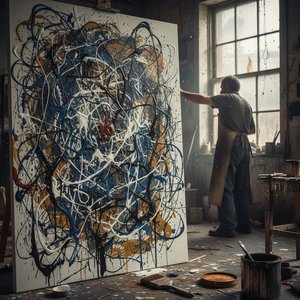
Fig. 1. Jackson Pollock, Number 5, 1948. Shown as the reproduction you are specifying: , .

§ 1Catalogue data

Wymiary
243.0 x 121.0 cm

§ 2Abstract

Opis obiektu

Explore Jackson Pollock’s iconic ‘No. 5, 1948’! A groundbreaking drip painting of abstract expressionism, chaos & vibrant color. Discover its history & lasting influence.

Biografia artysty

Paul Jackson Pollock (1912-1956) – amerykański malarz, pionier ekspresjonizmu abstrakcyjnego i techniki "dripping". Znany z dynamicznych, spontanicznych obrazów, które rewolucjonizowały sztukę XX wieku. #Pollock #sztukaabstraktna

§ 3Commentary

A Universe Unfurled: Decoding Jackson Pollock’s No. 5, 1948

Jackson Pollock’s *No. 5, 1948* isn't simply a painting; it is an event frozen in time – a visual record of energy, gesture, and the very act of creation. This monumental work stands as perhaps the most iconic example of Abstract Expressionism, captivating viewers for decades with its complex layering and seemingly chaotic beauty. It’s a piece that demands attention, sparking dialogue about art's purpose and the boundaries of representation.

The Birth of Action Painting: Technique & Style

Pollock revolutionized painting by abandoning traditional methods. *No. 5, 1948* was created using his signature “drip” technique – pouring and flinging synthetic resin paints (often referred to as enamel) onto a fiberboard canvas laid horizontally on the floor. This allowed him complete physical freedom, moving around and *within* the painting itself. The result is an all-over composition devoid of focal points, where lines intertwine and overlap in a mesmerizing dance. The dominant hues of yellow, black, and white aren’t blended but rather exist as distinct strands, creating both depth and a sense of restless movement. This isn't about depicting something *from* the world; it’s about expressing an internal state *onto* the canvas.

A Post-War Psyche: Historical Context

Created in the aftermath of World War II, *No. 5, 1948* reflects a broader cultural shift. The horrors of war had shattered traditional values and beliefs, leading artists to seek new forms of expression that could grapple with existential anxieties and the fragmented nature of modern life. Abstract Expressionism emerged as a response – an attempt to convey raw emotion and subjective experience through non-representational means. Pollock’s work, in particular, resonated with a generation grappling with uncertainty and seeking authenticity. He wasn't alone; artists like Mark Rothko and Willem de Kooning were also exploring similar themes, but Pollock’s radical technique set him apart.

Beyond the Surface: Symbolism & Interpretation

While devoid of recognizable imagery, *No. 5, 1948* is rich in symbolic potential. The intricate web of lines can be interpreted as a representation of the subconscious mind – a tangled network of thoughts, feelings, and memories. Some see echoes of Native American sand paintings, reflecting Pollock’s early exposure to Indigenous art forms. Others find parallels with jazz music, particularly its improvisational nature and emphasis on rhythm and energy. Ultimately, the painting's meaning is open-ended, inviting viewers to project their own interpretations onto its surface. It’s a testament to the power of abstraction to evoke emotion without dictating narrative.

Emotional Resonance & Lasting Legacy

*No. 5, 1948* evokes a range of emotions – from exhilaration and awe to anxiety and unease. Its scale is immersive, drawing the viewer into its swirling depths. The painting’s energy is palpable, conveying a sense of both control and abandon. Its influence on subsequent generations of artists is undeniable. Figures like Yayoi Kusama, with her obsessive patterns, and Clyfford Still, known for his jagged fields of color, owe a debt to Pollock’s pioneering spirit. Today, it remains one of the most valuable paintings in the world – a symbol of artistic innovation and the enduring power of abstract expressionism.

Bringing the Masterpiece Home: Reproductions & Appreciation

Experiencing art shouldn't be limited by location or price tag. High-quality reproductions of *No. 5, 1948* allow you to bring Pollock’s vision into your own space. These meticulously crafted replicas capture the essence of the original – its texture, color palette, and dynamic energy – offering a compelling way to appreciate this landmark work of art. Whether adorning a modern living room or inspiring a creative workspace, *No. 5, 1948* continues to ignite imaginations and challenge perceptions.
  • Style: Abstract Expressionism, Action Painting
  • Materials: Synthetic resin paints (enamel) on fiberboard
  • Dimensions: 243 x 121 cm (8 ft x 4 ft)
  • Current Location: Private Collection

Pytania i odpowiedzi

Do czego zaleca się wykorzystanie reprodukcji „Number 5” – Jackson Pollock?

Reprodukcja dzieła „Number 5” – Jackson Pollock jest polecana do Statement. Sugestia ta wynika z tematyki, nastroju oraz kolorystyki pracy.

Czy dzieło "Number 5" posiada podgląd w rozszerzonej rzeczywistości?

Dzieło „Number 5” – Jackson Pollock możesz zobaczyć na własnej ścianie dzięki stronie Podgląd w AR, wykorzystując rozszerzoną rzeczywistość na kompatybilnym urządzeniu.

Gdzie najlepiej powiesić reprodukcję „Number 5” – Jackson Pollock?

Format Tall dzieła „Number 5” – Jackson Pollock jest rekomendowany do Living Room. Format oraz przestrzeń wspólnie pomagają w odpowiednim rozmieszczeniu reprodukcji.

§ 4The artist

Jackson Pollock

Jackson Pollock

1912 - 1956, Stany Zjednoczone

Quick facts about Jackson Pollock

  • Artistic Movement Or Style: Ekspresjonizm abstrakcyjny
  • Artists Or Movements Influenced By This Artist: ['Color Field painting']
  • Artists Who Influenced This Artist: ['Thomas Hart Benton']
  • Date Of Birth: 28 stycznia 1912
  • Date Of Death: 11 sierpnia 1956
  • Full Name: Paul Jackson Pollock
  • Nationality: Amerykański
  • Notable Artworks:
    • Number 1, 1950
    • Blue Poles
    • Convergence
  • Place Of Birth: Cody, Wyoming

Biografia artysty

Early Life and the Seeds of Innovation

Paul Jackson Pollock, born in Cody, Wyoming, in 1912, was a restless spirit from the outset. His early life was marked by frequent relocation as his father pursued work as a land surveyor across the vast landscapes of the American West. This itinerant existence instilled in young Pollock a deep connection to the natural world and an exposure to diverse cultures, particularly through encounters with Native American art during those surveying trips – impressions that would subtly permeate his artistic vision later in life. Though he never explicitly imitated Indigenous styles, the raw energy and spiritual resonance of these early experiences undoubtedly left their mark.

Pollock’s formal artistic training began at the Manual Arts High School in Los Angeles, followed by studies at the Art Students League of New York under the tutelage of Thomas Hart Benton. Benton, a prominent figure in the Regionalist movement, emphasized rhythmic composition and narrative themes rooted in American life. While Pollock initially absorbed these lessons, his inherent inclination leaned toward more abstract explorations. He was also profoundly impacted by Mexican muralists like José Clemente Orozco, whose powerful depictions of social struggle resonated deeply with him. These early influences laid a foundation, but it was the burgeoning world of Surrealism that truly unlocked Pollock’s artistic potential.

The Birth of Action Painting and a Revolutionary Technique

The 1930s saw Pollock experimenting with various techniques, seeking alternatives to traditional brushwork. He began pouring paint, exploring its fluidity and unpredictable nature. However, it was around 1947 that his artistic trajectory underwent a radical transformation. Abandoning the easel altogether, Pollock laid canvases directly on the floor, initiating what would become known as his “drip technique.” He then proceeded to drip, splash, and fling paint onto the canvas from above, orchestrating a dynamic dance between artist, medium, and surface.

This wasn’t merely about applying paint; it was about embodying the act of creation itself. Pollock's canvases became arenas for physical expression, capturing the immediacy of his gestures and emotions. The resulting paintings are characterized by their “all-over” composition – a lack of central focus that invites the viewer to explore the entire surface as a unified field of energy. Intricate networks of lines and colors intertwine, creating a visual complexity that is both captivating and challenging. He employed unconventional tools—sticks, knives, even syringes—to manipulate the paint in unpredictable ways, further emphasizing the spontaneous nature of his process.

Pollock’s approach was deeply influenced by Jungian psychology, seeking to tap into universal symbols and primal energies. The paintings became a record of this performance, imbued with the artist's physical presence and emotional intensity. The dynamic energy that emanates from these canvases is palpable, drawing viewers into a world of pure abstraction.

Iconic Works and Lasting Legacy

Pollock’s most celebrated works—such as Number 1, 1950 (Lavender Mist), One: Number 31, 1950, Blue Poles: Number 11, 1952, and Convergence—are testaments to his revolutionary technique. These paintings are not simply images; they are records of a performance, imbued with the artist’s physical presence and emotional intensity. The dynamic energy that emanates from these canvases is palpable, drawing viewers into a world of pure abstraction.

His style transcends mere aesthetics; it's an exploration of process over product. Pollock sought to capture the immediacy of his actions and emotions on canvas, rejecting traditional notions of composition and representation. He delved into Jungian psychology, exploring archetypes and the subconscious in his art, seeking to tap into universal symbols and primal energies.

Influence and Recognition

Pollock’s work quickly gained recognition within the burgeoning Abstract Expressionist movement, challenging established artistic norms and paving the way for future generations of artists. His innovative approach influenced a wide range of painters, including Lee Krasner, his wife and collaborator, who played a crucial role in shaping his artistic vision. Despite initial skepticism from some critics, Pollock’s reputation steadily grew throughout the 1950s, culminating in a landmark retrospective exhibition at the Museum of Modern Art in New York City in 1967. This event solidified his place as one of the most important and influential artists of the 20th century.

His legacy extends beyond the art world, impacting popular culture and inspiring countless individuals to embrace creativity and self-expression. Jackson Pollock’s daring experimentation with materials and techniques continues to resonate today, reminding us of the power of art to transcend boundaries and capture the essence of human experience.

§ 5Comparanda

§ 6Questions

Najważniejsze informacje

  • movement: Abstract Expressionism
  • year: 1948
  • medium: synthetic resin paints on fiberboard panel
  • dimensions: 2.4 x 1.2 meters
  • style: Action Painting

Quiz o sztuce

Do każdego pytania dotyczy tylko jedna poprawna odpowiedź.

Pytanie 1:
What artistic movement is Jackson Pollock's 'No. 5, 1948' most closely associated with?
Pytanie 2:
Pollock’s unique painting technique for 'No. 5, 1948' is commonly referred to as:
Pytanie 3:
What was the primary support (surface) used by Pollock for 'No. 5, 1948'?
Pytanie 4:
The dominant color present in 'No. 5, 1948', alongside black and white, is:
Pytanie 5:
Which of the following artists is mentioned as being influenced by Pollock's work?

§ 7Cite this entry

AllPaintingsStore.com, “Jackson Pollock, Number 5 (1948)”, https://allpaintingsstore.com/pl/art/paul-jackson-pollock-number-5-8XYAGW-en/ArtistReproduction/ (accessed 4 Październik 2026).

§ 8The reproduction

Ręcznie malowana reprodukcja olejowa

Ręcznie malowany obraz olejny na płótnie, wykonany na zamówienie przez naszych artystów w wybranym przez Ciebie wymiarze i oprawie. ( Przełącz na wydania drukowane Przejdź do wersji cyfrowej)

It is specified on the order sheet in the margin; the present state of that sheet reads as follows.

Number 5

Technika reprodukcji

Wymiary reprodukcji

-

Wybitny mistrz artystyczny

Większa szczegółowość, finezja i dodatkowy czas na realizację

-

Opcje oprawy reprodukcji

-

-

W przypadku dzieł sztuki lub reprodukcji, których którykolwiek z boków przekracza 105 cm (około 41 cali), rama zostanie wysłana w formie zestawu do samodzielnego montażu. Metoda ta zapewnia bezpieczną dostawę i zapobiega uszkodzeniom podczas transportu.

Wymagany profesjonalny montaż – nie jest to produkt typu DIY.
Zestaw musi zostać złożony, a płótno naciągnięte przez doświadczonego profesjonalnego ramiarza, przy użyciu kleju do drewna (brak w zestawie), kleszczy do naciągania płótna oraz ścisków, które utrzymają krosna w równej pozycji podczas schnięcia kleju. Nieprawidłowy montaż lub nierównomierne napięcie płótna może trwale uszkodzić dzieło sztuki i nie podlega naszej gwarancji.

  • W zestawie znajdują się wszystkie listwy z litego drewna, precyzyjnie docięte do wymiarów.

  • Montaż odbywa się przy użyciu dołączonych wkrętów oraz kleju do drewna do łączenia narożników, którego zestaw nie zawiera i który musi zostać dostarczony przez ramiarza.

  • Wymagane są profesjonalne narzędzia, których nie ma w zestawie: kleszcze do naciągania płótna (napinacz) oraz zaciski, które pozwolą utrzymać listwy w równej pozycji podczas schnięcia kleju.

Ważne:
Do połączenia narożników niezbędny jest klej do drewna, listwy należy unieruchomić za pomocą ścisków do momentu całkowitego wyschnięcia kleju, a naciągnięcie płótna na złożoną ramę wymaga użycia kleszczy do naciągania płótna. Żaden z tych elementów nie jest dołączony do zestawu. Przed zamówieniem tego rozmiaru zalecamy konsultację z doświadczonym ramiarzem.

Etykieta obiektu

-

-

Lakier ochronny

Lakier z połyskiem (pogłębia kolory, chroni przed światłem i wilgocią)

-

Personalizacja dzieła

Przykłady możliwości personalizacji: zastąp twarz zdjęciem klienta; dodaj zwierzę domowe (np. zamień kota na psa); umieść ukrytą wiadomość w tle; zmień krajobraz lub elementy tła.

-

Ekspresowa

Dostawa na cały świat () w ciągu 3–4 tygodni zamiast standardowych 5 tygodni. (1 Listopad). Bez kompromisów w kwestii jakości.

-

Przesyłka ekspresowa

Dostawa na cały świat () w ciągu 5 tygodni. (8 Listopad).

W cenie

Cena całkowita

zł 1004

Included with every order

  • Bezpłatna ekspresowa wysyłka na cały świat
  • Wysokiej jakości płótno lniane
  • Pełne ubezpieczenie przesyłki
  • Gwarancja zwrotu należności celnych i podatków importowych
  • Gwarancja wiernego odwzorowania kolorów
  • 100-dniowa polityka zwrotów (tylko w przypadku wad)
  • Gwarancja 100% zwrotu pieniędzy
  • Zniżka przy zakupie wielu sztuk
Order sheet