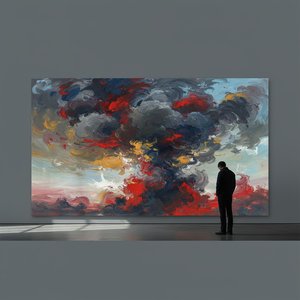
Oil On Canvas.

§ 1Catalogue data


§ 2Abstract
Opis obiektu
Explore Jackson Pollock's 'Number 8,' a dynamic abstract expressionist masterpiece. Witness the energy of his drip technique & vibrant colors in this iconic work.
 Rozwiń treść
Biografia artysty
Paul Jackson Pollock (1912-1956) – amerykański malarz, pionier ekspresjonizmu abstrakcyjnego i techniki "dripping". Znany z dynamicznych, spontanicznych obrazów, które rewolucjonizowały sztukę XX wieku. #Pollock #sztukaabstraktna
§ 3Commentary
Number 8: A Dynamic Exploration of Abstract Expressionism by Jackson Pollock
- Title: Number 8
- Artist: Jackson Pollock
- Date: 1949
- Medium: Oil, enamel, and aluminum paint on canvas
- Dimensions: Unknown
The Essence of Action Painting
Jackson Pollock's "Number 8," created in 1949, stands as a pivotal work within the Abstract Expressionist movement. This piece exemplifies Pollock’s revolutionary “drip technique,” where paint was poured and flung onto a canvas laid horizontally on the floor. This method allowed for a complete immersion of the artist into the creative process, moving beyond traditional easel painting to embrace a dynamic, almost performative act. The absence of recognizable imagery forces viewers to engage directly with the raw energy and materiality of the paint itself. "Number 8" isn't about depicting something; it’s about *doing* – capturing a moment of spontaneous creation.
Technique and Composition
The composition of "Number 8" is a complex web of interwoven lines, drips, and splatters. Pollock utilized a variety of tools—sticks, knives, even hardened brushes—to manipulate the paint's flow, creating layers of texture and depth. The dominant color palette features greens, blacks, yellows, and rust tones, all blended in an intricate dance across the canvas. Notice how the lines don’t simply stop at the edges; they seem to extend beyond the frame, suggesting a boundless energy contained within the work's boundaries. This "all-over" composition, where every inch of the canvas is treated with equal importance, was a hallmark of Pollock’s style and challenged traditional notions of pictorial space.
Historical Context and Symbolism
"Number 8" emerged during a period of significant cultural change in post-World War II America. Abstract Expressionism reflected a desire to break from European artistic traditions and establish a uniquely American voice in the art world. The movement was also influenced by psychological theories, particularly Jungian psychology, which explored the power of the unconscious mind. While Pollock’s work is largely non-representational, some critics have interpreted his drip paintings as symbolic representations of primal forces, emotional turmoil, or even cosmic energies. The act of creation itself became a form of self-expression and exploration.
Emotional Impact and Legacy
Viewing "Number 8" can be an intensely visceral experience. The chaotic yet controlled arrangement of paint evokes feelings of energy, movement, and perhaps even anxiety. It’s a work that demands active engagement from the viewer – there's no passive observation here. Pollock’s innovative technique and his commitment to pure abstraction profoundly influenced subsequent generations of artists, solidifying his place as one of the most important figures in modern art history. The painting continues to inspire awe and debate, prompting viewers to reconsider the very nature of artistic creation and the power of abstract expression.
Pytania i odpowiedzi
W jaki sposób kolory dzieła „Number 8” – Jackson Pollock korespondują z jego ładunkiem emocjonalnym?
Paleta Dark dzieła „Number 8” – Jackson Pollock współgra z jego Dramatic wydźwiękiem emocjonalnym. Kolor jest jednym ze sposobów, w jakie praca przekazuje emocje.
Jaki nastrój oddaje „Number 8” – Jackson Pollock w ramach nurtu Abstract Expressionism?
"Number 8" emanuje Dramatic emocjonalnym ładunkiem, wpisując się w nurt Abstract Expressionism.
Czy dostępna jest prezentacja w formie pokazu slajdów dla „Number 8” – Jackson Pollock?
Dzieło „Number 8” – Jackson Pollock można obejrzeć w formie pokazu slajdów na stronie Prezentacja slajdów danego dzieła.


 Przełącz na wydania drukowane


 W przypadku dzieł sztuki lub reprodukcji, których którykolwiek z boków przekracza 105 cm (około 41 cali), rama zostanie wysłana w formie zestawu do samodzielnego montażu. Metoda ta zapewnia bezpieczną dostawę i zapobiega uszkodzeniom podczas transportu.