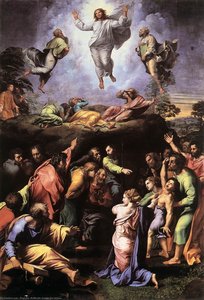
1515. Oil.

§ 1Dane katalogowe


§ 2Abstrakcja
Opis obiektu
Witness the divine: Raphael's "The Handing-over the Keys" depicts Christ gifting Saint Peter with authority, a masterpiece of Renaissance religious art from 1515.
 Rozwiń treść
Biografia artysty
Rafael Santi (1483-1520): Wszechstronny malarz renesansu, znany z Madonn i fresków, takich jak "Szkoła Ateńska". Jego dzieła emanują elegancją i harmonią. Odkryj jego życie i twórczość!
§ 3Komentarz
A Divine Mandate: The Spiritual Majesty of Raphael’s Masterpiece
In the hallowed halls of art history, few moments capture the intersection of the earthly and the divine as poignantly as Raphael’s 1515 masterpiece, The Handing-over the Keys. This monumental work serves as a profound testament to faith, capturing the precise instant when Jesus Christ confers spiritual authority upon Saint Peter. It is not merely a depiction of a biblical event, but a visual manifestation of the establishment of the Catholic Church. As the viewer’s eye wanders through the richly detailed interior, one feels the weight of history and the solemnity of a divine mandate being passed from hand to hand. The composition breathes with a sense of sacred responsibility, inviting collectors and admirers alike to contemplate the eternal continuity of leadership and grace.
Raphael’s technical virtuosity is on full display through his masterful command of disegno, the Italian Renaissance tradition of precise drawing and anatomical accuracy. Every figure in this crowded, sacred assembly is rendered with a remarkable realism that elevates them from mere mortals to embodiments of spiritual virtue. Through the delicate application of sfumato, Raphael softens the edges of the world, creating a luminous atmosphere where light seems to emanately from the figures themselves. This seamless blend of linear perspective and ethereal depth creates a window into another realm, making the painting an ideal centerpiece for any space seeking to evoke a sense of profound peace and intellectual depth.
Symbolism and the Renaissance Spirit
Beyond its breathtaking aesthetic, the painting is a complex tapestry of theological symbolism designed to inspire contemplation. The central act—the exchange of the keys—is the heartbeat of the work, representing the divine authority entrusted to Peter to oversee the mission of the Church. Yet, Raphael weaves subtle narratives throughout the periphery; a boat positioned near the upper reaches of the composition serves as a metaphor for the pilgrimage of faith, while a solitary sheep in the foreground reminds the viewer of the flock under Peter's eternal care. These elements converge to tell a story of salvation and divine providence that transcends time.
The historical context of this work is as rich as its imagery. Created during Raphael’s formative years in Rome, the painting reflects the humanist ideals of an era defined by intellectual fervor and artistic patronage. Influenced by the sophisticated courtly environment of Urbino and the scholarly atmosphere of Rome, Raphael was able to infuse his religious subjects with a humanistic dignity that resonates even today. For the discerning interior designer or art enthusiast, owning a reproduction of this work means bringing into one's home not just a beautiful image, but a piece of the High Renaissance soul—a fragment of an era where art, faith, and human intellect were in perfect, harmonious alignment.
Pytania i odpowiedzi
Jaki jest ogólny nastrój dzieła „The Handing-over the Keys” – Rafael?
Nastrój dzieła „The Handing-over the Keys” – Rafael opisuje się jako Calm. Klasyfikacja ta może pomóc w dopasowaniu pracy do konkretnego wnętrza.
W jaki sposób High Renaissance dzieła „The Handing-over the Keys” nawiązuje do kraju pochodzenia artysty?
"The Handing-over the Keys" powstało dzięki Rafael, urodzonemu w Włochy, w ramach nurtu High Renaissance. Pochodzenie artysty wiąże to dzieło z High Renaissance w wydaniu twórców z Włochy.
Jaka technika i styl charakteryzują „The Handing-over the Keys” – Rafael?
„The Handing-over the Keys” – Rafael łączy technikę Oil z nurtem High Renaissance. Technika i styl określają sposób wykonania oraz estetykę dzieła.


 Przełącz na wydania drukowane


 W przypadku dzieł sztuki lub reprodukcji, których którykolwiek z boków przekracza 105 cm (około 41 cali), rama zostanie wysłana w formie zestawu do samodzielnego montażu. Metoda ta zapewnia bezpieczną dostawę i zapobiega uszkodzeniom podczas transportu.