Gwarancja zwrotu pieniędzy · 100 dni Darmowa dostawa na cały świat
449 587dzieła sztuki 30 613artyści 4 660muzea 32język
Waluta
    Język
      Atelier · Est. 2015 · Paryż, Francja
      AllPaintingsStore
      allpaintingsstore.com
      Catalogue entry

      Copper handcuffs

      1931. Fotografia. Królewski Muzeum Sztuk Pięknych w Belgii.

      Fig. 1. René Magritte, Copper handcuffs, 1931. Shown as the reproduction you are specifying: , .

      § 1Catalogue data

      § 2Abstract

      Opis obiektu

      Explore René Magritte’s ‘Copper Handcuffs,’ a neoclassical sculpture of Venus de Milo. Discover the surrealist's iconic style & detailed bronze execution – a captivating art piece.

      Biografia artysty

      René Magritte (1898-1967): Belgijski mistrz surrealizmu! Odkryj jego niezwykłe obrazy, takie jak 'Kochankowie', które kwestionują rzeczywistość i percepcję. #Magritte #Surrealizm

      § 3Commentary

      A Surreal Collision of Antiquity and Constraint


      In 1931, René Magritte captured a moment of profound visual tension in his evocative work, Copper Handcuffs. At first glance, the viewer is met with the familiar, dignified grace of classical antiquity—the upper torso and flowing drapery of the iconic Venus de Milo. Yet, this reverence for the past is abruptly interrupted by a jarring, modern intrusion: a pair of copper handcuffs tightly binding the bronze figure. This is not merely a depiction of sculpture, but a masterful manipulation of reality through the lens of Surrealism. Magritte utilizes a meticulous, almost photographic realism to render the textures of the aged bronze and the subtle play of light across the surface, making the illogical presence of the metal restraints feel disturbingly tangible. The composition is tightly focused, pulling the eye toward the center where beauty and bondage meet in an unsettling embrace.

      The Poetics of the Unconscious


      To understand Copper Handcuffs is to step into the dreamlike logic that defined the Surrealist movement. Emerging from the psychological shadows of the post-World War I era, Magritte sought to bypass rational thought and tap into the raw power of the unconscious mind. Here, the symbolism operates on a plane of deep ambiguity, inviting the observer to look beyond the surface. The Venus de Milo stands as an eternal emblem of beauty, freedom, and artistic perfection, while the handcuffs serve as a stark reminder of restriction, imprisonment, and the weight of societal control. By placing these two opposing forces in such close, intimate contact, Magritte creates a visual riddle that prompts contemplation on the struggle between the ideal and the real, and the invisible constraints placed upon even the most magnificent forms of existence.

      An Evocative Presence for the Discerning Collector


      For the art enthusiast or interior designer, a high-quality reproduction of this piece offers far more than mere decoration; it provides a profound intellectual anchor for any curated space. The work’s dramatic use of light and shadow—accentuating the rich patina of the bronze against a dark, undefined background—allows it to command attention in even the most minimalist contemporary settings. Whether integrated into a sophisticated gallery-style room or used as a focal point in a classic study, the piece acts as an enduring conversation starter. The interplay of organic human forms with the cold, industrial texture of copper creates a sensory experience that is both unsettling and deeply captivating, making it an essential acquisition for those seeking to infuse their environment with mystery, history, and a touch of the unexpected.

      Pytania i odpowiedzi

      Czy dostępny jest przewodnik do dzieła „Copper handcuffs” – René Magritte?

      Strona Karta informacyjna dla uczniów dzieła „Copper handcuffs” – René Magritte oferuje dwustronicową kartę informacyjną w formacie do druku: samo dzieło wraz z tabelą identyfikacyjną, oś czasu umieszczającą je w latach życia artysty, inne prace tego twórcy, zmierzoną paletę kolorystyczną oraz gotowe do skopiowania cytaty w czterech stylach.

      W jaki sposób mogę uzyskać plik cyfrowy dzieła „Copper handcuffs” – René Magritte?

      Cyfrową wersję dzieła „Copper handcuffs” – René Magritte można zakupić na stronie Cyfrowy obraz: wysokiej rozdzielczości cyfrowe zdjęcie do pobrania.

      Jakie emocje budzi „Copper handcuffs” – René Magritte?

      „Copper handcuffs” – René Magritte emanuje Tajemniczy emocjami, wpisując się w ogólnie Mistyczny nastrój.
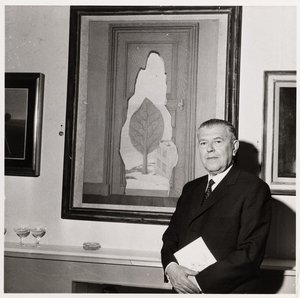
      § 4The artist

      René Magritte

      René Magritte

      1898 - 1967, Belgia

      Quick facts about René Magritte

      • Artistic Movement Or Style: Surrealizm
      • Artists Or Movements Influenced By This Artist:
        • Pop art
        • Minimalist sztuka
      • Artists Who Influenced This Artist: ['Giorgio de Chirico']
      • Date Of Birth: 21 listopada 1898
      • Date Of Death: 15 sierpnia 1967
      • Full Name: René François Ghislain Magritte
      • Nationality: Belgijski
      • Notable Artworks:
        • Les Amants
        • The Treachery of Images
        • Time Transfixed
      • Place Of Birth: Lessines, Belgia

      Biografia artysty

      Early Life and the Seeds of Surrealism

      René Magritte, born René François Ghislain Magritte on November 21, 1898, in Lessines, Belgium, emerged into a world that would profoundly shape his enigmatic artistic vision. His early years were marked by an unsettling event – the suicide of his mother when he was just thirteen. The image of her body being recovered from the River Sambre, with her dress obscuring her face, became a haunting motif that would subtly permeate his later work, manifesting in veiled figures and a persistent exploration of hidden realities. This early trauma instilled within him a fascination with mystery, loss, and the unsettling power of what remains unseen. While details of his childhood remain somewhat elusive, it’s clear this formative experience laid the groundwork for his lifelong questioning of perception and representation. He began drawing lessons at age ten, revealing an innate inclination towards visual expression, but initially explored Impressionism before embarking on a path that would lead him to become one of the most significant figures in Surrealist art.

      Artistic Development and Influences

      Magritte’s artistic journey was not immediate or straightforward. He studied at the Académie Royale des Beaux-Arts in Brussels, yet found its traditional methods stifling. His early work experimented with Futurism and Cubism, absorbing elements of these avant-garde movements but ultimately rejecting their purely formal concerns. It wasn't until encountering Giorgio de Chirico’s painting *The Song of Love* in 1922 that Magritte discovered a resonance that would irrevocably alter his artistic course. De Chirico’s dreamlike landscapes and unsettling juxtapositions unlocked within Magritte a new way of seeing – a world where the familiar could be rendered strange, and the ordinary imbued with profound mystery. This encounter sparked his commitment to Surrealism, though he often maintained a unique distance from its more overtly psychological or automatic approaches. He preferred a meticulous, almost clinical precision in his painting, using realistic techniques to depict illogical scenarios.

      The Heart of Surrealism: Challenging Reality

      By 1926, Magritte had fully embraced the tenets of Surrealism, producing *Le Jockey Perdu (The Lost Jockey)*, widely considered his first truly surrealist work. However, his brand of Surrealism was distinct. He wasn’t interested in exploring the subconscious through free association or dream imagery in the manner of some of his contemporaries. Instead, Magritte sought to challenge viewers' perceptions of reality by presenting ordinary objects in unexpected contexts, forcing them to question their assumptions about the world around them. Iconic works like *The Treachery of Images (This is not a pipe)* (1929) brilliantly deconstructs the relationship between image and object, reminding us that a representation is never the thing itself. *Les Amants (The Lovers)* (1927-1928), with its shrouded figures, echoes the trauma of his mother’s death while simultaneously exploring themes of concealment and intimacy. *Time Transfixed* (1938) presents a locomotive bursting through a brick wall, disrupting our sense of space and time. And *The Human Condition* (1933), a canvas within a canvas, blurs the boundaries between representation and reality, prompting us to consider how we perceive and interpret the world.

      Later Life, Recognition, and Enduring Legacy

      Despite initial struggles for recognition, Magritte’s work gradually gained prominence, particularly in the United States with exhibitions in 1936 and later retrospective shows at the Museum of Modern Art (1965) and the Metropolitan Museum of Art (1992). He remained politically engaged throughout his life, advocating for artistic autonomy. He continued to refine his signature style, exploring themes of repetition, illusion, and the power of language in paintings that are both intellectually stimulating and visually arresting. Magritte died on August 15, 1967, leaving behind a body of work that continues to captivate and challenge audiences worldwide. His influence extends far beyond the realm of painting, impacting pop art, minimalist art, conceptual art, and even advertising and film. Today, his paintings are held in major museum collections around the globe, including the Musées royaux des beaux-arts de Belgique in Brussels, which houses the Magritte Museum – dedicated entirely to his work and boasting the world’s largest collection of his creations.
      • Museum Collections: Musées royaux des beaux-arts de Belgique, Brussels; Magritte Museum.

      Magritte's enduring legacy lies in his ability to make us see the familiar anew, to question our assumptions about reality, and to appreciate the power of art to provoke thought and inspire wonder. He wasn’t simply painting images; he was crafting visual paradoxes that continue to resonate with viewers decades after their creation, solidifying his position as a true master of Surrealism and a pivotal figure in 20th-century art.

      § 5Comparanda

      § 6Questions

      § 7Cite this entry

      AllPaintingsStore.com, “René Magritte, Copper handcuffs (1931)”, https://allpaintingsstore.com/pl/art/rene-magritte-copper-handcuffs-D2WE8L-en/ArtistReproduction/ (accessed 3 Październik 2026).

      § 8The reproduction

      Ręcznie malowana reprodukcja olejowa

      Ręcznie malowany obraz olejny na płótnie, wykonany na zamówienie przez naszych artystów w wybranym przez Ciebie wymiarze i oprawie. ( Przełącz na wydania drukowane Przejdź do wersji cyfrowej)

      It is specified on the order sheet in the margin; the present state of that sheet reads as follows.

      Copper handcuffs

      Technika reprodukcji

      Wymiary reprodukcji

      -

      Wybitny mistrz artystyczny

      Większa szczegółowość, finezja i dodatkowy czas na realizację

      -

      Opcje oprawy reprodukcji

      -

      -

      W przypadku dzieł sztuki lub reprodukcji, których którykolwiek z boków przekracza 105 cm (około 41 cali), rama zostanie wysłana w formie zestawu do samodzielnego montażu. Metoda ta zapewnia bezpieczną dostawę i zapobiega uszkodzeniom podczas transportu.

      Wymagany profesjonalny montaż – nie jest to produkt typu DIY.
      Zestaw musi zostać złożony, a płótno naciągnięte przez doświadczonego profesjonalnego ramiarza, przy użyciu kleju do drewna (brak w zestawie), kleszczy do naciągania płótna oraz ścisków, które utrzymają krosna w równej pozycji podczas schnięcia kleju. Nieprawidłowy montaż lub nierównomierne napięcie płótna może trwale uszkodzić dzieło sztuki i nie podlega naszej gwarancji.

      • W zestawie znajdują się wszystkie listwy z litego drewna, precyzyjnie docięte do wymiarów.

      • Montaż odbywa się przy użyciu dołączonych wkrętów oraz kleju do drewna do łączenia narożników, którego zestaw nie zawiera i który musi zostać dostarczony przez ramiarza.

      • Wymagane są profesjonalne narzędzia, których nie ma w zestawie: kleszcze do naciągania płótna (napinacz) oraz zaciski, które pozwolą utrzymać listwy w równej pozycji podczas schnięcia kleju.

      Ważne:
      Do połączenia narożników niezbędny jest klej do drewna, listwy należy unieruchomić za pomocą ścisków do momentu całkowitego wyschnięcia kleju, a naciągnięcie płótna na złożoną ramę wymaga użycia kleszczy do naciągania płótna. Żaden z tych elementów nie jest dołączony do zestawu. Przed zamówieniem tego rozmiaru zalecamy konsultację z doświadczonym ramiarzem.

      Etykieta obiektu

      -

      -

      Lakier ochronny

      Lakier z połyskiem (pogłębia kolory, chroni przed światłem i wilgocią)

      -

      Personalizacja dzieła

      Przykłady możliwości personalizacji: zastąp twarz zdjęciem klienta; dodaj zwierzę domowe (np. zamień kota na psa); umieść ukrytą wiadomość w tle; zmień krajobraz lub elementy tła.

      -

      Ekspresowa

      Dostawa na cały świat () w ciągu 3–4 tygodni zamiast standardowych 5 tygodni. (31 Październik). Bez kompromisów w kwestii jakości.

      -

      Przesyłka ekspresowa

      Dostawa na cały świat () w ciągu 5 tygodni. (7 Listopad).

      W cenie

      Cena całkowita

      zł 1002

      Included with every order

      • Bezpłatna ekspresowa wysyłka na cały świat
      • Wysokiej jakości płótno lniane
      • Pełne ubezpieczenie przesyłki
      • Gwarancja zwrotu należności celnych i podatków importowych
      • Gwarancja wiernego odwzorowania kolorów
      • 100-dniowa polityka zwrotów (tylko w przypadku wad)
      • Gwarancja 100% zwrotu pieniędzy
      • Zniżka przy zakupie wielu sztuk
      Order sheet