Gwarancja zwrotu pieniędzy · 100 dni Darmowa dostawa na cały świat
449 564dzieła sztuki 30 613artyści 4 660muzea 32język
Wpis do katalogu

Landscape

1926. Acrylic On Canvas.

Ryc. 1. René Magritte, Landscape, 1926. Przedstawiono jako wybraną przez Ciebie reprodukcję: , .

§ 1Dane katalogowe

§ 2Abstrakcja

Opis obiektu

René Magritte’s surreal "Landscape" presents a haunting vision of a naked woman intertwined with tree roots against an ocean vista, embodying the artist's signature style and exploring themes of mystery and hidden realities. Discover this iconic piece and bring its captivating dreamscape into your home.

Biografia artysty

René Magritte (1898-1967): Belgijski mistrz surrealizmu! Odkryj jego niezwykłe obrazy, takie jak 'Kochankowie', które kwestionują rzeczywistość i percepcję. #Magritte #Surrealizm

§ 3Komentarz

A Descent into the Unseen: René Magritte’s “Landscape”

René Magritte's "Landscape," painted in 1926, is not merely a depiction of a scene; it’s an immersion into the unsettling realm of the subconscious. This arresting work, emerging from the fertile ground of early Surrealism, immediately confronts the viewer with a profoundly disquieting image: a nude woman standing atop a precipice, her back intertwined with the gnarled roots of trees that seem to erupt directly from her form. The vast ocean and distant mountains provide a dramatic backdrop, yet it is the intimate, almost claustrophobic relationship between the figure and the landscape that commands our attention, demanding contemplation long after the initial visual impact has faded.

  • Surrealist Roots: Created at the dawn of Magritte’s career, “Landscape” exemplifies the movement's core tenets – a deliberate disruption of reality to expose hidden anxieties and challenge conventional perceptions. It aligns with the broader Surrealist interest in dreams, mythology, and the irrational, seeking to unlock the power of the unconscious mind.
  • Technical Mastery: Magritte’s meticulous technique is evident in the incredibly detailed rendering of both the woman's form and the surrounding natural elements. The smooth blending of colors, characteristic of his style, creates a sense of almost photographic realism that only amplifies the unsettling nature of the scene. He employed oil paints on canvas with careful attention to light and shadow, achieving a remarkable level of detail despite the surreal subject matter.

Symbolism and the Weight of Memory

The symbolism within “Landscape” is layered and profoundly personal, deeply rooted in Magritte’s own life experiences. The most potent element is undoubtedly the naked woman, a recurring motif in his work – a direct echo of his mother's death. Her exposed form, combined with the tree roots emerging from her back, evokes a sense of vulnerability, loss, and perhaps even a confrontation with mortality. The ocean, often associated with the unconscious, adds to this feeling of depth and mystery. The trees themselves can be interpreted as symbols of life, growth, and connection – yet here, they are inextricably linked to the woman’s body, blurring the boundaries between the natural world and the human psyche.

  • The Mother's Shadow: Art historians frequently link this image to Magritte’s childhood trauma. The depiction of his mother’s corpse in the River Sambre – her dress obscuring her face – became a powerful, haunting memory that informed his artistic vision throughout his career.
  • Juxtaposition and Discomfort: Magritte expertly utilizes juxtaposition to create discomfort and provoke thought. The seemingly natural setting is rendered utterly unnatural by the woman’s presence, forcing the viewer to question the stability of reality itself.

Historical Context and Artistic Influence

"Landscape" was created during a period of significant artistic experimentation in Europe. Magritte was influenced by the works of artists like Giorgio de Chirico, whose metaphysical paintings explored similar themes of illusion and disorientation. However, unlike de Chirico’s often more overtly theatrical style, Magritte favored a quieter, more restrained approach – one that prioritized psychological impact over overt narrative. The painting reflects the growing interest in psychoanalysis during the 1920s, which encouraged artists to explore the hidden depths of the human mind.

  • Early Surrealism: This work represents a crucial early example of Surrealist art, demonstrating Magritte’s commitment to challenging conventional artistic norms and exploring the realm of dreams and the unconscious.
  • Impact on Later Artists: “Landscape” has had a lasting influence on subsequent generations of artists, particularly those working in surrealism and conceptual art.

Emotional Resonance and Artistic Value

“Landscape” transcends mere visual representation; it’s an emotionally charged experience. The painting's unsettling beauty evokes feelings of unease, mystery, and perhaps even a sense of profound sadness. It invites the viewer to confront uncomfortable truths about mortality, identity, and the nature of reality. As a significant work from one of the 20th century’s most influential artists, “Landscape” holds considerable artistic value – a testament to Magritte's innovative vision and his ability to capture the complexities of the human condition. A hand-painted reproduction offers an unparalleled opportunity to bring this iconic image into your space, sparking conversation and contemplation for years to come.

Pytania i odpowiedzi

Czy mogę zobaczyć podgląd „Landscape” – René Magritte przed złożeniem zamówienia?

Aby podglądnąć reprodukcję dzieła „Landscape” – René Magritte, otwórz stronę Podgląd w pomieszczeniu danego utworu.

Do jakiego pomieszczenia polecane jest dzieło „Landscape” – René Magritte?

Reprodukcja "Landscape" doskonale pasuje do Living Room.

Czy „Landscape” – René Magritte to portret, pejzaż czy kompozycja kwadratowa?

Dzieło „Landscape” – René Magritte ma format Portrait. Format ten określa proporcje kompozycji.
§ 4Artysta

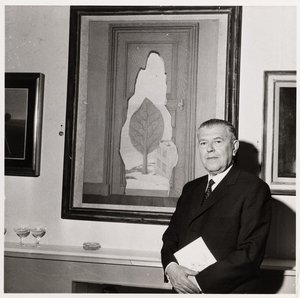
René Magritte

René Magritte

1898 - 1967, Belgia

Krótkie informacje o René Magritte

  • Artistic Movement Or Style: Surrealizm
  • Artists Or Movements Influenced By This Artist:
    • Pop art
    • Minimalist sztuka
  • Artists Who Influenced This Artist: ['Giorgio de Chirico']
  • Date Of Birth: 21 listopada 1898
  • Date Of Death: 15 sierpnia 1967
  • Full Name: René François Ghislain Magritte
  • Nationality: Belgijski
  • Notable Artworks:
    • Les Amants
    • The Treachery of Images
    • Time Transfixed
  • Place Of Birth: Lessines, Belgia

Biografia artysty

Early Life and the Seeds of Surrealism

René Magritte, born René François Ghislain Magritte on November 21, 1898, in Lessines, Belgium, emerged into a world that would profoundly shape his enigmatic artistic vision. His early years were marked by an unsettling event – the suicide of his mother when he was just thirteen. The image of her body being recovered from the River Sambre, with her dress obscuring her face, became a haunting motif that would subtly permeate his later work, manifesting in veiled figures and a persistent exploration of hidden realities. This early trauma instilled within him a fascination with mystery, loss, and the unsettling power of what remains unseen. While details of his childhood remain somewhat elusive, it’s clear this formative experience laid the groundwork for his lifelong questioning of perception and representation. He began drawing lessons at age ten, revealing an innate inclination towards visual expression, but initially explored Impressionism before embarking on a path that would lead him to become one of the most significant figures in Surrealist art.

Artistic Development and Influences

Magritte’s artistic journey was not immediate or straightforward. He studied at the Académie Royale des Beaux-Arts in Brussels, yet found its traditional methods stifling. His early work experimented with Futurism and Cubism, absorbing elements of these avant-garde movements but ultimately rejecting their purely formal concerns. It wasn't until encountering Giorgio de Chirico’s painting *The Song of Love* in 1922 that Magritte discovered a resonance that would irrevocably alter his artistic course. De Chirico’s dreamlike landscapes and unsettling juxtapositions unlocked within Magritte a new way of seeing – a world where the familiar could be rendered strange, and the ordinary imbued with profound mystery. This encounter sparked his commitment to Surrealism, though he often maintained a unique distance from its more overtly psychological or automatic approaches. He preferred a meticulous, almost clinical precision in his painting, using realistic techniques to depict illogical scenarios.

The Heart of Surrealism: Challenging Reality

By 1926, Magritte had fully embraced the tenets of Surrealism, producing *Le Jockey Perdu (The Lost Jockey)*, widely considered his first truly surrealist work. However, his brand of Surrealism was distinct. He wasn’t interested in exploring the subconscious through free association or dream imagery in the manner of some of his contemporaries. Instead, Magritte sought to challenge viewers' perceptions of reality by presenting ordinary objects in unexpected contexts, forcing them to question their assumptions about the world around them. Iconic works like *The Treachery of Images (This is not a pipe)* (1929) brilliantly deconstructs the relationship between image and object, reminding us that a representation is never the thing itself. *Les Amants (The Lovers)* (1927-1928), with its shrouded figures, echoes the trauma of his mother’s death while simultaneously exploring themes of concealment and intimacy. *Time Transfixed* (1938) presents a locomotive bursting through a brick wall, disrupting our sense of space and time. And *The Human Condition* (1933), a canvas within a canvas, blurs the boundaries between representation and reality, prompting us to consider how we perceive and interpret the world.

Later Life, Recognition, and Enduring Legacy

Despite initial struggles for recognition, Magritte’s work gradually gained prominence, particularly in the United States with exhibitions in 1936 and later retrospective shows at the Museum of Modern Art (1965) and the Metropolitan Museum of Art (1992). He remained politically engaged throughout his life, advocating for artistic autonomy. He continued to refine his signature style, exploring themes of repetition, illusion, and the power of language in paintings that are both intellectually stimulating and visually arresting. Magritte died on August 15, 1967, leaving behind a body of work that continues to captivate and challenge audiences worldwide. His influence extends far beyond the realm of painting, impacting pop art, minimalist art, conceptual art, and even advertising and film. Today, his paintings are held in major museum collections around the globe, including the Musées royaux des beaux-arts de Belgique in Brussels, which houses the Magritte Museum – dedicated entirely to his work and boasting the world’s largest collection of his creations.
  • Museum Collections: Musées royaux des beaux-arts de Belgique, Brussels; Magritte Museum.

Magritte's enduring legacy lies in his ability to make us see the familiar anew, to question our assumptions about reality, and to appreciate the power of art to provoke thought and inspire wonder. He wasn’t simply painting images; he was crafting visual paradoxes that continue to resonate with viewers decades after their creation, solidifying his position as a true master of Surrealism and a pivotal figure in 20th-century art.

§ 5Podobne dzieła

§ 6Pytania

Najważniejsze informacje

  • Year: 1926
  • Title: Landscape
  • Notable elements: Naked woman, roots
  • Subject or theme: Landscape, Mystery
  • Influences:
    • Trauma
    • Loss

§ 7Cytuj ten wpis

AllPaintingsStore.com, “René Magritte, Landscape (1926)”, https://allpaintingsstore.com/pl/art/rene-magritte-landscape-8XYU9P-en/ArtistReproduction/ (dostęp dnia 9 Październik 2026).

§ 8Reprodukcja dzieła

Ręcznie malowana reprodukcja olejowa

Ręcznie malowany obraz olejny na płótnie, wykonany na zamówienie przez naszych artystów w wybranym przez Ciebie wymiarze i oprawie. ( Przełącz na wydania drukowane Przejdź do wersji cyfrowej)

Informacja ta widnieje na marginesie arkusza zamówienia; obecny stan tego arkusza przedstawia się następująco.

Landscape

Technika reprodukcji

Wymiary reprodukcji

-

Wybitny mistrz artystyczny

Większa szczegółowość, finezja i dodatkowy czas na realizację

-

Opcje oprawy reprodukcji

-

-

W przypadku dzieł sztuki lub reprodukcji, których którykolwiek z boków przekracza 105 cm (około 41 cali), rama zostanie wysłana w formie zestawu do samodzielnego montażu. Metoda ta zapewnia bezpieczną dostawę i zapobiega uszkodzeniom podczas transportu.

Wymagany profesjonalny montaż – nie jest to produkt typu DIY.
Zestaw musi zostać złożony, a płótno naciągnięte przez doświadczonego profesjonalnego ramiarza, przy użyciu kleju do drewna (brak w zestawie), kleszczy do naciągania płótna oraz ścisków, które utrzymają krosna w równej pozycji podczas schnięcia kleju. Nieprawidłowy montaż lub nierównomierne napięcie płótna może trwale uszkodzić dzieło sztuki i nie podlega naszej gwarancji.

  • W zestawie znajdują się wszystkie listwy z litego drewna, precyzyjnie docięte do wymiarów.

  • Montaż odbywa się przy użyciu dołączonych wkrętów oraz kleju do drewna do łączenia narożników, którego zestaw nie zawiera i który musi zostać dostarczony przez ramiarza.

  • Wymagane są profesjonalne narzędzia, których nie ma w zestawie: kleszcze do naciągania płótna (napinacz) oraz zaciski, które pozwolą utrzymać listwy w równej pozycji podczas schnięcia kleju.

Ważne:
Do połączenia narożników niezbędny jest klej do drewna, listwy należy unieruchomić za pomocą ścisków do momentu całkowitego wyschnięcia kleju, a naciągnięcie płótna na złożoną ramę wymaga użycia kleszczy do naciągania płótna. Żaden z tych elementów nie jest dołączony do zestawu. Przed zamówieniem tego rozmiaru zalecamy konsultację z doświadczonym ramiarzem.

Etykieta obiektu

-

-

Lakier ochronny

Lakier z połyskiem (pogłębia kolory, chroni przed światłem i wilgocią)

-

Personalizacja dzieła

Przykłady możliwości personalizacji: zastąp twarz zdjęciem klienta; dodaj zwierzę domowe (np. zamień kota na psa); umieść ukrytą wiadomość w tle; zmień krajobraz lub elementy tła.

-

Ekspresowa

Dostawa na cały świat () w ciągu 3–4 tygodni zamiast standardowych 5 tygodni. (6 Listopad). Bez kompromisów w kwestii jakości.

-

Przesyłka ekspresowa

Dostawa na cały świat () w ciągu 5 tygodni. (13 Listopad).

W cenie

Cena całkowita

zł 1008

W każdym zamówieniu

  • Bezpłatna ekspresowa wysyłka na cały świat
  • Wysokiej jakości płótno lniane
  • Pełne ubezpieczenie przesyłki
  • Gwarancja zwrotu należności celnych i podatków importowych
  • Gwarancja wiernego odwzorowania kolorów
  • 100-dniowa polityka zwrotów (tylko w przypadku wad)
  • Gwarancja 100% zwrotu pieniędzy
  • Zniżka przy zakupie wielu sztuk
Arkusz zamówień