Gwarancja zwrotu pieniędzy · 100 dni Darmowa dostawa na cały świat
449 587dzieła sztuki 30 613artyści 4 660muzea 32język
Waluta
    Język
      Atelier · Est. 2015 · Paryż, Francja
      AllPaintingsStore
      allpaintingsstore.com
      Catalogue entry

      Nid d'oiseau

      Akryl na płótnie.

      Fig. 1. René Magritte, Nid d'oiseau. Shown as the reproduction you are specifying: , .

      § 1Catalogue data

      § 2Abstract

      Opis obiektu

      René Magritte's 'Nid d'oiseau': Surrealist masterpiece featuring a bird atop a plant, challenging reality & perception. Explore the enigmatic art of Magritte and its influence on modern art.

      Biografia artysty

      René Magritte (1898-1967): Belgijski mistrz surrealizmu! Odkryj jego niezwykłe obrazy, takie jak 'Kochankowie', które kwestionują rzeczywistość i percepcję. #Magritte #Surrealizm

      § 3Commentary

      A Surrealist Echo of Innocence and Uncertainty

      René Magritte’s “Nid d’oiseau,” or “Bird’s Nest,” transcends mere depiction; it’s an invitation to contemplate the elusive nature of reality itself—a cornerstone of surrealist thought and a testament to Magritte's masterful manipulation of visual language. Painted in 1967, this deceptively simple composition captures a profound paradox: a bird perched atop a plant laden with lush green foliage against a backdrop of distant mountains. Yet, the unsettling stillness of the scene belies a deeper interrogation of perception and representation—questions that continue to resonate within the art world today.

      The Artist’s Vision: Magritte's Surrealist Approach

      Born in Lessines, Belgium, in 1898, René Magritte emerged from a childhood marked by tragedy – the untimely death of his mother – an experience that instilled within him a preoccupation with loss and hidden meanings. Initially drawn to Impressionism, Magritte swiftly embraced Surrealism, aligning himself with André Breton and fellow artists who sought to liberate art from rational constraints. He achieved this liberation through meticulous technique—primarily oil on canvas—employing precise blending and layering to create an illusion of depth and atmosphere. However, unlike many of his contemporaries, Magritte deliberately avoided overtly expressive brushstrokes, prioritizing clarity and intellectual provocation over emotional intensity. This stylistic choice is crucial to understanding the artwork’s impact.

      Symbolism Within Simplicity: Decoding the Image

      The bird itself—often interpreted as an angelic figure—represents purity and innocence, juxtaposed against the plant symbolizing growth and vitality. The mountain serves as a monumental counterpoint, grounding the scene while simultaneously emphasizing its remoteness and impenetrability. Magritte’s genius lies in presenting these elements together without explicit explanation, prompting viewers to actively engage with the artwork's symbolism. The bird’s wings are spread out, conveying an ethereal quality that elevates it beyond the mundane—a deliberate disruption of conventional visual conventions. This subtle gesture underscores Magritte’s desire to unsettle expectations and challenge our assumptions about how we perceive the world around us.

      Historical Context: Surrealism's Quest for Dreamlike Reality

      “Nid d’oiseau” emerged during the height of Surrealist fervor—a movement born from Dada nihilism and fueled by psychoanalytic theories pioneered by Sigmund Freud. Surrealists aimed to tap into the subconscious mind, exploring dreams, fantasies, and irrational impulses as sources of artistic inspiration. Magritte's work embodies this ethos perfectly, mirroring the Surrealists’ fascination with juxtaposing incongruous elements—creating images that defy logic yet evoke powerful emotional responses. The painting reflects broader anxieties about societal norms and intellectual dogma prevalent in post-war Europe.

      Emotional Resonance: A Meditation on Perception

      Ultimately, “Nid d’oiseau” compels us to confront the fundamental question of how we know what we see—a preoccupation that defines Magritte's oeuvre. It isn’t merely a beautiful landscape; it’s a carefully constructed puzzle designed to provoke contemplation and invite multiple interpretations. Like many Surrealist masterpieces, it lingers in the mind long after viewing, prompting viewers to reconsider their understanding of reality and questioning the boundaries between conscious thought and unconscious desire. Its enduring appeal lies precisely in its ability to capture the unsettling beauty of uncertainty—a timeless reminder that art can illuminate hidden truths and challenge our preconceived notions about existence.

      Pytania i odpowiedzi

      Co przedstawia i jaką atmosferę oddaje „Nid d'oiseau” – René Magritte?

      „Nid d'oiseau” – René Magritte łączy w sobie bird symbolism, mountain landscape, plant imagery, surreal composition, optical illusion, magritte style, hidden reality, symbolic art z Sielski atmosferą.

      Jaki kolor dominuje w kompozycji „Nid d'oiseau” – René Magritte?

      Dominującym kolorem dzieła „Nid d'oiseau” – René Magritte jest Szary (#7c7851).

      Jaki jest ogólny nastrój dzieła „Nid d'oiseau” – René Magritte?

      Nastrój dzieła „Nid d'oiseau” – René Magritte opisuje się jako Sielski. Klasyfikacja ta może pomóc w dopasowaniu pracy do konkretnego wnętrza.
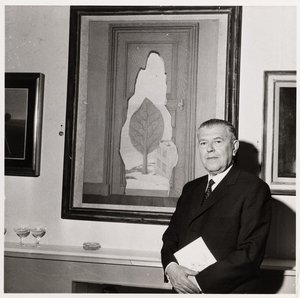
      § 4The artist

      René Magritte

      René Magritte

      1898 - 1967, Belgia

      Quick facts about René Magritte

      • Artistic Movement Or Style: Surrealizm
      • Artists Or Movements Influenced By This Artist:
        • Pop art
        • Minimalist sztuka
      • Artists Who Influenced This Artist: ['Giorgio de Chirico']
      • Date Of Birth: 21 listopada 1898
      • Date Of Death: 15 sierpnia 1967
      • Full Name: René François Ghislain Magritte
      • Nationality: Belgijski
      • Notable Artworks:
        • Les Amants
        • The Treachery of Images
        • Time Transfixed
      • Place Of Birth: Lessines, Belgia

      Biografia artysty

      Early Life and the Seeds of Surrealism

      René Magritte, born René François Ghislain Magritte on November 21, 1898, in Lessines, Belgium, emerged into a world that would profoundly shape his enigmatic artistic vision. His early years were marked by an unsettling event – the suicide of his mother when he was just thirteen. The image of her body being recovered from the River Sambre, with her dress obscuring her face, became a haunting motif that would subtly permeate his later work, manifesting in veiled figures and a persistent exploration of hidden realities. This early trauma instilled within him a fascination with mystery, loss, and the unsettling power of what remains unseen. While details of his childhood remain somewhat elusive, it’s clear this formative experience laid the groundwork for his lifelong questioning of perception and representation. He began drawing lessons at age ten, revealing an innate inclination towards visual expression, but initially explored Impressionism before embarking on a path that would lead him to become one of the most significant figures in Surrealist art.

      Artistic Development and Influences

      Magritte’s artistic journey was not immediate or straightforward. He studied at the Académie Royale des Beaux-Arts in Brussels, yet found its traditional methods stifling. His early work experimented with Futurism and Cubism, absorbing elements of these avant-garde movements but ultimately rejecting their purely formal concerns. It wasn't until encountering Giorgio de Chirico’s painting *The Song of Love* in 1922 that Magritte discovered a resonance that would irrevocably alter his artistic course. De Chirico’s dreamlike landscapes and unsettling juxtapositions unlocked within Magritte a new way of seeing – a world where the familiar could be rendered strange, and the ordinary imbued with profound mystery. This encounter sparked his commitment to Surrealism, though he often maintained a unique distance from its more overtly psychological or automatic approaches. He preferred a meticulous, almost clinical precision in his painting, using realistic techniques to depict illogical scenarios.

      The Heart of Surrealism: Challenging Reality

      By 1926, Magritte had fully embraced the tenets of Surrealism, producing *Le Jockey Perdu (The Lost Jockey)*, widely considered his first truly surrealist work. However, his brand of Surrealism was distinct. He wasn’t interested in exploring the subconscious through free association or dream imagery in the manner of some of his contemporaries. Instead, Magritte sought to challenge viewers' perceptions of reality by presenting ordinary objects in unexpected contexts, forcing them to question their assumptions about the world around them. Iconic works like *The Treachery of Images (This is not a pipe)* (1929) brilliantly deconstructs the relationship between image and object, reminding us that a representation is never the thing itself. *Les Amants (The Lovers)* (1927-1928), with its shrouded figures, echoes the trauma of his mother’s death while simultaneously exploring themes of concealment and intimacy. *Time Transfixed* (1938) presents a locomotive bursting through a brick wall, disrupting our sense of space and time. And *The Human Condition* (1933), a canvas within a canvas, blurs the boundaries between representation and reality, prompting us to consider how we perceive and interpret the world.

      Later Life, Recognition, and Enduring Legacy

      Despite initial struggles for recognition, Magritte’s work gradually gained prominence, particularly in the United States with exhibitions in 1936 and later retrospective shows at the Museum of Modern Art (1965) and the Metropolitan Museum of Art (1992). He remained politically engaged throughout his life, advocating for artistic autonomy. He continued to refine his signature style, exploring themes of repetition, illusion, and the power of language in paintings that are both intellectually stimulating and visually arresting. Magritte died on August 15, 1967, leaving behind a body of work that continues to captivate and challenge audiences worldwide. His influence extends far beyond the realm of painting, impacting pop art, minimalist art, conceptual art, and even advertising and film. Today, his paintings are held in major museum collections around the globe, including the Musées royaux des beaux-arts de Belgique in Brussels, which houses the Magritte Museum – dedicated entirely to his work and boasting the world’s largest collection of his creations.
      • Museum Collections: Musées royaux des beaux-arts de Belgique, Brussels; Magritte Museum.

      Magritte's enduring legacy lies in his ability to make us see the familiar anew, to question our assumptions about reality, and to appreciate the power of art to provoke thought and inspire wonder. He wasn’t simply painting images; he was crafting visual paradoxes that continue to resonate with viewers decades after their creation, solidifying his position as a true master of Surrealism and a pivotal figure in 20th-century art.

      § 5Comparanda

      § 6Questions

      Najważniejsze informacje

      • Influences: Cubism
      • Subject or theme: Bird and Mountain
      • Year: 1967
      • Movement: Surrealism
      • Title: Nid d'oiseau
      • Medium: Lithograph

      Quiz o sztuce

      Do każdego pytania dotyczy tylko jedna poprawna odpowiedź.

      Pytanie 1:
      Jak nazywa się obraz René Magritte?
      Pytanie 2:
      Co przedstawiono na obrazie?
      Pytanie 3:
      Jaka jest charakterystyczna cecha stylu Magritte'a?
      Pytanie 4:
      Jakiego kolorystycznego efektu można oczekiwać od obrazu?
      Pytanie 5:
      Dlaczego obraz Magritte'a jest uważany za dzieło sztuki?

      § 7Cite this entry

      AllPaintingsStore.com, “René Magritte, Nid d'oiseau”, https://allpaintingsstore.com/pl/art/rene-magritte-nid-d-oiseau-9HTKNV-pl/ArtistReproduction/ (accessed 2 Październik 2026).

      § 8The reproduction

      Ręcznie malowana reprodukcja olejowa

      Ręcznie malowany obraz olejny na płótnie, wykonany na zamówienie przez naszych artystów w wybranym przez Ciebie wymiarze i oprawie. ( Przełącz na wydania drukowane Przejdź do wersji cyfrowej)

      It is specified on the order sheet in the margin; the present state of that sheet reads as follows.

      Nid d'oiseau

      Technika reprodukcji

      Wymiary reprodukcji

      -

      Wybitny mistrz artystyczny

      Większa szczegółowość, finezja i dodatkowy czas na realizację

      -

      Opcje oprawy reprodukcji

      -

      -

      W przypadku dzieł sztuki lub reprodukcji, których którykolwiek z boków przekracza 105 cm (około 41 cali), rama zostanie wysłana w formie zestawu do samodzielnego montażu. Metoda ta zapewnia bezpieczną dostawę i zapobiega uszkodzeniom podczas transportu.

      Wymagany profesjonalny montaż – nie jest to produkt typu DIY.
      Zestaw musi zostać złożony, a płótno naciągnięte przez doświadczonego profesjonalnego ramiarza, przy użyciu kleju do drewna (brak w zestawie), kleszczy do naciągania płótna oraz ścisków, które utrzymają krosna w równej pozycji podczas schnięcia kleju. Nieprawidłowy montaż lub nierównomierne napięcie płótna może trwale uszkodzić dzieło sztuki i nie podlega naszej gwarancji.

      • W zestawie znajdują się wszystkie listwy z litego drewna, precyzyjnie docięte do wymiarów.

      • Montaż odbywa się przy użyciu dołączonych wkrętów oraz kleju do drewna do łączenia narożników, którego zestaw nie zawiera i który musi zostać dostarczony przez ramiarza.

      • Wymagane są profesjonalne narzędzia, których nie ma w zestawie: kleszcze do naciągania płótna (napinacz) oraz zaciski, które pozwolą utrzymać listwy w równej pozycji podczas schnięcia kleju.

      Ważne:
      Do połączenia narożników niezbędny jest klej do drewna, listwy należy unieruchomić za pomocą ścisków do momentu całkowitego wyschnięcia kleju, a naciągnięcie płótna na złożoną ramę wymaga użycia kleszczy do naciągania płótna. Żaden z tych elementów nie jest dołączony do zestawu. Przed zamówieniem tego rozmiaru zalecamy konsultację z doświadczonym ramiarzem.

      Etykieta obiektu

      -

      -

      Lakier ochronny

      Lakier z połyskiem (pogłębia kolory, chroni przed światłem i wilgocią)

      -

      Personalizacja dzieła

      Przykłady możliwości personalizacji: zastąp twarz zdjęciem klienta; dodaj zwierzę domowe (np. zamień kota na psa); umieść ukrytą wiadomość w tle; zmień krajobraz lub elementy tła.

      -

      Ekspresowa

      Dostawa na cały świat () w ciągu 3–4 tygodni zamiast standardowych 5 tygodni. (30 Październik). Bez kompromisów w kwestii jakości.

      -

      Przesyłka ekspresowa

      Dostawa na cały świat () w ciągu 5 tygodni. (6 Listopad).

      W cenie

      Cena całkowita

      zł 1002

      Included with every order

      • Bezpłatna ekspresowa wysyłka na cały świat
      • Wysokiej jakości płótno lniane
      • Pełne ubezpieczenie przesyłki
      • Gwarancja zwrotu należności celnych i podatków importowych
      • Gwarancja wiernego odwzorowania kolorów
      • 100-dniowa polityka zwrotów (tylko w przypadku wad)
      • Gwarancja 100% zwrotu pieniędzy
      • Zniżka przy zakupie wielu sztuk
      Order sheet