Gwarancja zwrotu pieniędzy · 100 dni Darmowa dostawa na cały świat
449 582dzieła sztuki 30 618artyści 4 705muzea 32języki
Waluta
    Język
      Atelier · Est. 2015 · Paryż, Francja
      AllPaintingsStore
      allpaintingsstore.com
      Zobacz w skali 1:1 Zobacz w AR Przełącz na wersję drukowaną Przełącz na wersję cyfrową Wyślij
      Szczegóły Przewodnik Dodaj do ulubionych Pobierz plik obrazu Podobne obiekty RTG Pokaz slajdów Statystyki

      Diptych

      Rogier van der Weyden (c. 1400-1464): Mistrz flamandzkiego malarstwa, znany z emocjonalnych obrazów religijnych i niezwykłej precyzji wykonania. Odkryj 'Lamentację' i więcej!

      Ręcznie malowana reprodukcja olejowa

      Ręcznie malowany obraz olejny na płótnie, wykonany na zamówienie przez naszych artystów w wybranym przez Ciebie wymiarze i oprawie. ( Przełącz na wersję drukowaną Przełącz na wersję cyfrową)

      Corner sample of the P118B picture frame: moulded polystyrene, 5 cm wide and 3 cm thick
      P118B 10
      Corner sample of the P118H picture frame: moulded polystyrene, 5 cm wide and 3 cm thick
      P118H 10
      Corner sample of the P118W picture frame: moulded polystyrene, 5 cm wide and 3 cm thick
      P118W 10
      Corner sample of the P438Z picture frame: moulded polystyrene, 5.5 cm wide and 3.5 cm thick
      P438Z 10
      Corner sample of the P508JH picture frame: moulded polystyrene, 7 cm wide and 3.5 cm thick
      P508JH 12
      Corner sample of the P508YH picture frame: moulded polystyrene, 7 cm wide and 3.5 cm thick
      P508YH 12
      Corner sample of the P805H picture frame: moulded polystyrene, 5 cm wide and 3.5 cm thick
      P805H 10
      Corner sample of the P805Z picture frame: moulded polystyrene, 5 cm wide and 3.5 cm thick
      P805Z 10
      Corner sample of the P919BZ picture frame: moulded polystyrene, 7 cm wide and 3.5 cm thick
      P919BZ 10
      Corner sample of the P919G picture frame: moulded polystyrene, 7 cm wide and 3.5 cm thick
      P919G 10
      Corner sample of the P919XJ picture frame: moulded polystyrene, 7 cm wide and 3.5 cm thick
      P919XJ 10
      Corner sample of the P959ZH picture frame: moulded polystyrene, 5 cm wide and 3 cm thick
      P959ZH 10
      Corner sample of the P968JZ picture frame: moulded polystyrene, 6 cm wide and 4 cm thick
      P968JZ 12
      Corner sample of the W106C picture frame: solid wood, 5 cm wide and 3 cm thick
      W106C 8
      Corner sample of the W218G picture frame: solid wood, 5 cm wide and 3 cm thick
      W218G 10
      Corner sample of the W218JH picture frame: solid wood, 5 cm wide and 3 cm thick
      W218JH 8
      Corner sample of the W218Y picture frame: solid wood, 5 cm wide and 3 cm thick
      W218Y 10
      Corner sample of the W307PJ picture frame: solid wood, 6 cm wide and 3 cm thick
      W307PJ 10
      Corner sample of the W316G picture frame: solid wood, 6 cm wide and 3 cm thick
      W316G 10
      Corner sample of the W316PJ picture frame: solid wood, 6 cm wide and 3 cm thick
      W316PJ 8
      Corner sample of the W316Y picture frame: solid wood, 6 cm wide and 3 cm thick
      W316Y 10
      Corner sample of the W398PJ picture frame: solid wood, 5 cm wide and 3 cm thick
      W398PJ 8
      Corner sample of the W4111J picture frame: solid wood, 6.5 cm wide and 3.5 cm thick
      W4111J 10
      Corner sample of the W500HY picture frame: solid wood, 7 cm wide and 5 cm thick
      W500HY 15
      Corner sample of the W500JH picture frame: solid wood, 7 cm wide and 5 cm thick
      W500JH 15
      Corner sample of the W692G picture frame: solid wood, 8 cm wide and 4 cm thick
      W692G 12
      Corner sample of the W849H picture frame: solid wood, 5 cm wide and 3 cm thick
      W849H 8
      Corner sample of the W940BG picture frame: solid wood, 7.5 cm wide and 4.5 cm thick
      W940BG 15
      Corner sample of the W953PJ picture frame: solid wood, 6 cm wide and 3.5 cm thick
      W953PJ 8

      Standardowy
      na zamówienie
      CM
      INCH

      Wybierz spośród naszych standardowych rozmiarów, które zachowują oryginalne proporcje dzieła sztuki.

      szerokość
      wysokość

      Możesz wprowadzić własne wymiary, aby dopasować obraz do konkretnej ramy lub przestrzeni. Jeśli wybrany rozmiar nie będzie odpowiadał proporcjom oryginału, przytniecie dzieło sztuki lub rozszerzymy je o dodatkowe elementy, ręcznie domalowane przez artystę. Przed rozpoczęciem produkcji wyślemy projekt cyfrowy do Twojej akceptacji.
      Należy pamiętać, że podgląd na ekranie nie odzwierciedla rzeczywistego przycinania ani rozszerzania obrazu. Tylko projekt dokładnie pokaże ostateczną kompozycję.
      Choć oferujemy możliwość zamówienia niestandardowych rozmiarów, zalecamy wybór wymiaru z gotowej listy, aby zachować oryginalne proporcje dzieła.

      Przykłady możliwych zmian: Zamień twarz na zdjęcie klienta; Dodaj zwierzę domowe (np. zamień kota na psa); Ukryj wiadomość w tle; Zmień krajobraz lub elementy tła.
      Po złożeniu zamówienia zespół AllPaintingsStore.com skontaktuje się z klientem drogą mailową w celu uzyskania instrukcji i prześle wizualizację projektu

      Dostawa na całym świecie () w ciągu 3–4 tygodni zamiast standardowych 5 tygodni. (9 Październik). Bez kompromisów w kwestii jakości.

      Bezpłatna ekspresowa wysyłka na cały świat
      Wysokiej jakości płótno lniane
      Pełne ubezpieczenie transportowe
      Gwarancja zwrotu należności celnych i podatków importowych
      Gwarancja idealnego odwzorowania barw
      100-dniowy okres na zwrot dzieła w przypadku wykrycia wad produkcyjnych
      Gwarancja 100% zwrotu pieniędzy
      Oferta przy zakupie wielu sztuk

      Cena całkowita

      zł 961

      Diptych

      Technika wykonania

      Rozmiar reprodukcji

      -

      Suma do zapłaty

      zł 961

      Kluczowe informacje

      • Location: Private Collection
      • Artistic style: International Gothic Revival
      • Dimensions: 18 x 12 cm
      • Medium: Oil paint on wood
      • Title: Diptych
      • Notable elements or techniques: Detailed realism, expressive drapery
      • Influences: Jan van Eyck

      A Testament to Faith: Examining Rogier van der Weyden’s Diptych

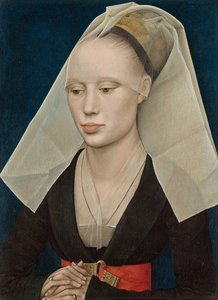
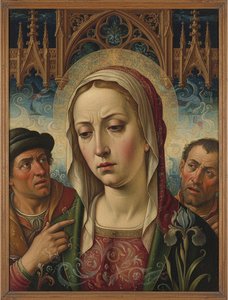
      The image presented is a masterful depiction of two figures—a woman holding a child, and another woman adorned with a crown—captured within the confines of an 18 x 12 cm canvas. Executed in 1440 by Rogier van der Weyden, this “Philadelphia Diptych,” as it’s commonly known, transcends mere representation; it embodies the profound spiritual convictions characteristic of Early Netherlandish art and stands as a testament to the artistic prowess of its creator. The meticulous attention to detail—a hallmark of Van der Weyden's oeuvre—is immediately apparent in every brushstroke, reflecting his unwavering dedication to capturing reality with breathtaking accuracy.

      The Composition: A Narrative of Devotion

      At first glance, the scene unfolds as a poignant tableau of maternal tenderness and solemn piety. The woman on the left cradles her infant son, gazing upwards with an expression imbued with serene contemplation—a gaze that directs our attention beyond the frame, hinting at a divine presence. Her attire is rendered in rich blues, symbolizing purity and spiritual grace, while the crown signifies royalty – perhaps referencing Mary’s role as Queen of Heaven and Mother of God, a central theme within Christian iconography. Conversely, the woman on the right holds another child, albeit less prominently displayed, conveying a similar sense of maternal care. She wears scarlet robes—a color traditionally associated with martyrdom and sacrifice—and grasps a sword, symbolizing strength and defense of faith; this juxtaposition underscores the duality inherent in spiritual devotion – vulnerability alongside unwavering conviction.

      Technical Brilliance: Van der Weyden’s Pioneering Approach

      Rogier van der Weyden's technique exemplifies the groundbreaking innovations that defined the Northern Renaissance. He employed oil paint—a relatively new medium at the time—allowing for unprecedented luminosity and tonal subtlety, surpassing the limitations of tempera painting. The artist meticulously layered pigments to achieve astonishing realism, capturing textures like fabric folds and skin pores with remarkable precision. Observe particularly the rendering of the infant’s face; it possesses an uncanny likeness to life, achieved through masterful blending and shading techniques that would inspire generations of artists. Furthermore, Van der Weyden skillfully incorporated landscapes—a burgeoning trend in Northern Renaissance art—creating a backdrop that enhances the emotional impact of the figures depicted. The left landscape features dense foliage and towering trees, symbolizing earthly paradise and divine providence, while the right landscape presents a mountainous vista—representing challenges to faith and the grandeur of God’s creation.

      Symbolism and Spiritual Resonance

      The Diptych operates on multiple symbolic levels, reflecting the dominant theological concerns of its time. The depiction of Mary and Jesus embodies the Virgin Mother's role as protector and intercessor before God, a cornerstone of Christian belief. The sword symbolizes courage and resilience in upholding religious dogma against adversity—a motif prevalent throughout medieval art. Beyond these explicit references, however, lies a deeper resonance with humanist ideals emerging from Italy; the figures’ expressions convey profound emotion – sorrow, compassion, and unwavering faith – mirroring the burgeoning interest in portraying human psychology with psychological depth.

      A Legacy of Emotion: Why This Artwork Matters Today

      More than six centuries after its creation, Rogier van der Weyden's Diptych continues to captivate audiences worldwide. Its enduring appeal stems from its masterful execution—a triumph of artistic technique—and its profound spiritual message. It serves as a poignant reminder of the importance of faith, compassion, and unwavering devotion – qualities that remain relevant in our contemporary world. Reproductions of this iconic artwork offer an opportunity to experience firsthand the beauty and emotional power of Early Netherlandish painting, transporting viewers back to a period defined by artistic innovation and religious fervor.

      Pytania i odpowiedzi

      Jaka jest data powstania dzieła „Diptych” autorstwa Rogier van der Weyden?

      Powstanie „Diptych” autorstwa Rogier van der Weyden datuje się na 1440.

      Ile lat miał(a) Rogier van der Weyden, tworząc "Diptych" w 1440 roku?

      Gdy w 1440 roku powstało dzieło „Diptych”, Rogier van der Weyden – urodzony/a w 1400 – miał/a 40 lat.

      Kto jest autorem dzieła "Diptych"?

      „Diptych” zostało stworzone przez Rogier van der Weyden. Informacje na tej stronie opisują oryginalne dzieło autorstwa Rogier van der Weyden.

      Do jakiego pomieszczenia polecane jest dzieło „Diptych” autorstwa Rogier van der Weyden?

      Dzieło „Diptych” autorstwa Rogier van der Weyden jest rekomendowane do Living Room. Sugestia ta opiera się na tematyce, kolorystyce oraz nastroju pracy.

      Gdzie mogę znaleźć statystyki dotyczące „Diptych” autorstwa Rogier van der Weyden?

      Dla dzieła „Diptych” istnieje strona Statystyki. Przedstawia ona miesięczną liczbę odwiedzin tego dzieła oraz innych prac artysty, z podziałem na kraje i języki.

      Gdzie mogę kupić cyfrowy obraz dzieła „Diptych” autorstwa Rogier van der Weyden?

      „Diptych” jest dostępny jako wysokiej rozdzielczości cyfrowe zdjęcie do pobrania, zakupiony bezpośrednio na ta strona.

      Czy kolory dzieła „Diptych” autorstwa Rogier van der Weyden są żywe czy stonowane?

      Dzieło „Diptych” autorstwa Rogier van der Weyden zostało utrwalone z nasyceniem na poziomie Balanced Soft oraz intensywnością Balanced.


      Biografia artysty

      A Master of Emotion: The Life and Legacy of Rogier van der Weyden

      Rogier de la Pasture – known to history as Rogier van der Weyden – emerged around 1400 in the vibrant city of Tournai, nestled within what is now Belgium. His early life remains somewhat shrouded in mystery, but it’s believed he initially honed his skills not with brush and pigment alone, but as a goldsmith. This formative training instilled within him an unwavering dedication to meticulous detail and a refined sensibility for craftsmanship – qualities that would become hallmarks of his artistic style. The precision demanded by working with precious metals undoubtedly translated into the exquisite rendering of textures, fabrics, and expressions that define his masterpieces. He wasn’t merely depicting reality; he was recreating it with painstaking accuracy, imbued with an almost reverent attention to detail.

      From Tournai to Brussels: A Rising Star

      By 1427, van der Weyden had ascended to the rank of master within the Guild of Saint Luke in Tournai, a testament to his burgeoning talent and skill. This marked a significant turning point, solidifying his position as a professional artist and opening doors to important commissions. His ascent continued when he entered the service of Philip the Good, Duke of Burgundy, in 1435 – a patronage that would profoundly shape his career for the remainder of his life. Serving as court painter afforded him not only financial security but also access to an elite circle of influence and exposure to some of the most discerning eyes of the era. It was during this period that van der Weyden’s artistic vision truly began to mature, moving away from the somewhat rigid conventions of earlier Netherlandish painters towards a more emotionally resonant and naturalistic approach. He wasn't simply painting religious scenes; he was striving to evoke genuine feeling in the viewer, to create an experience that transcended mere observation.

      The Language of Feeling: Style and Technique

      Rogier van der Weyden’s artistic signature is immediately recognizable through several defining characteristics. His palette was remarkably rich and diverse, a vibrant tapestry of colors carefully chosen to avoid repetition and create depth and complexity within his compositions. He possessed an extraordinary ability to convey profound emotion – *pathos* – particularly in depictions of religious subjects like the Lamentation, where grief and sorrow are palpable. This emotional intensity wasn’t achieved through dramatic gestures or exaggerated expressions; rather, it was subtly woven into the very fabric of the painting, conveyed through delicate nuances of facial expression, body language, and composition. His figures, while adhering to the conventions of the time, demonstrate a growing interest in realistic representation – not just in anatomy and drapery, but also in capturing the psychological states of his subjects. They possess a dignified, almost sculptural quality, particularly evident in his grand triptychs, lending them an air of solemnity and reverence. He masterfully employed oil paint, building up layers of translucent glazes to achieve luminous effects and create a sense of depth and realism that was revolutionary for its time.

      Notable Works and Enduring Masterpieces

      Throughout his prolific career, van der Weyden produced numerous works that stand as testaments to his artistic prowess. *St Luke Drawing a Portrait of the Madonna*, housed in the Museum of Fine Arts, Boston, showcases his mastery of oil on panel and meticulous observation. The *Lamentation*, residing in the Musée des Beaux-Arts Tournai, Belgium, is perhaps his most celebrated work – a powerfully emotive depiction of Christ’s mourning, renowned for its dramatic use of *chiaroscuro* and its ability to evoke profound sorrow in the viewer. Multiple versions of *The Deposition* exist, each demonstrating his skill in conveying grief and drama with breathtaking sensitivity. The *Annunciation*, a masterpiece of refined style and attention to detail, exemplifies his ability to imbue even the most traditional subjects with a sense of freshness and vitality. And finally, the intricate and richly detailed *Bladelin Triptych* stands as a monumental achievement – a complex altarpiece that showcases the full range of van der Weyden’s artistic abilities. These works, and many others, continue to captivate audiences today, solidifying his position as one of the most important painters of the 15th century.

      Lasting Influence: A Legacy Forged in Paint

      Van der Weyden’s influence extended far beyond the borders of his native Flanders. His works were highly sought after throughout Europe, particularly in Italy and Spain, where they introduced a new level of emotional depth and naturalism to local artistic traditions. Although his fame experienced a period of relative decline in the 17th century, a rediscovery during the 19th century cemented his place as one of the most important painters of the 15th century. He stands alongside Jan van Eyck and Robert Campin as one of the “three great” Early Flemish masters, each contributing uniquely to the development of Northern Renaissance art. His innovative techniques and emotionally charged compositions paved the way for future generations of artists, inspiring countless imitators and influencing the course of Western painting for centuries to come. He helped establish oil painting as the dominant medium and elevated the status of the artist within society, transforming them from skilled craftsmen into revered creators. Rogier van der Weyden’s legacy continues to resonate today, a testament to his enduring genius and his profound understanding of the human condition.
      Rogier van der Weyden

      Rogier van der Weyden

      1400 - 1464 , Belgia

      Najważniejsze informacje

      • Artistic Movement Or Style: Rannolatyńska malarstwo
      • Artists Or Movements Influenced By This Artist:
        • Włoskie renesans
        • Hiszpańskie malarstwo
      • Artists Who Influenced This Artist:
        • Robert Campin
        • Jan van Eyck
      • Date Of Birth: c. 1400
      • Date Of Death: 1464
      • Full Name: Rogier van der Weyden
      • Nationality: Belgijczyk
      • Notable Artworks:
        • Lamentacja
        • Odpoczynek
        • Obmówienie Marii
      • Place Of Birth: Tournai, Belgia
      Odkryj dzieła sztuki uporządkowane według tematów, stylów i cech charakterystycznych.