Gwarancja zwrotu pieniędzy · 100 dni Darmowa dostawa na cały świat
449 564dzieła sztuki 30 613artyści 4 660muzea 32język
Wpis do katalogu

Arctic landscape

Acrylic On Canvas.

Ryc. 1. Roy Lichtenstein, Arctic landscape. Przedstawiono jako wybraną przez Ciebie reprodukcję: , .

§ 1Dane katalogowe

§ 2Abstrakcja

Opis obiektu

Arctic Landscape by Roy Lichtenstein embodies Pop Art's fascination with everyday subjects and bold color palettes. This abstract depiction of mountains utilizes vibrant blues, yellows, and white clouds to create a dynamic composition reminiscent of Lichtenstein’s signature style.

Biografia artysty

Roy Lichtenstein – pionier Pop Artu, znany z Ben-Day dots i inspiracji komiksami, krytyk konsumpcjonizmu oraz twórca ikon takich dzieł jak 'Whaam!' i 'Drowning Girl'. Odkryj jego wpływ na sztukę współczesną!

§ 3Komentarz

A Bold Vision of the Frozen North

Roy Lichtenstein’s “Arctic Landscape,” painted in 1964, stands as a cornerstone of Pop Art—a movement that deliberately rejected the emotional seriousness of Abstract Expressionism and instead embraced imagery derived from popular culture. More than just a depiction of a desolate Arctic environment, it's a meticulously crafted illusion designed to provoke contemplation about perception and representation.

  • Subject Matter: The painting captures a stylized mountain range bathed in an ethereal blue sky punctuated by fluffy white clouds.
  • Style: Lichtenstein’s signature style—characterized by bold outlines, halftone printing techniques, and vibrant color palettes—transforms the familiar landscape into something strikingly unfamiliar.

The technique employed is remarkably precise for Pop Art. Lichtenstein utilized halftone dots to simulate shading and texture, a process borrowed from commercial printing where images are reproduced using multiple shades of gray. This method lends an almost photographic quality to the artwork while simultaneously maintaining its artistic integrity.

Historical Context: Challenging Artistic Conventions

Painted during the height of the Cold War era, “Arctic Landscape” reflects anxieties about geopolitical tensions and the perceived threat posed by Soviet expansionism. However, Lichtenstein wasn’t simply responding to political concerns; he was actively dismantling established artistic hierarchies. By appropriating imagery from advertising and comic strips—sources considered lowbrow by critics of the time—he asserted that art could derive inspiration from anywhere.

This deliberate provocation aimed to disrupt the prevailing aesthetic sensibilities of the 1960s, where artists were striving for profound emotional expression. Lichtenstein’s approach was deliberately antithetical to this trend, prioritizing visual impact and intellectual engagement over sentimental sentimentality.

Symbolism Beyond the Surface

While seemingly straightforward, “Arctic Landscape” is laden with symbolic significance. The blue sky represents serenity and vastness—a deliberate contrast to the harsh realities of the Arctic wilderness. Yet, it’s also a color associated with authority and stability, subtly reinforcing Lichtenstein's critique of traditional artistic values.

The stylized mountains themselves serve as visual anchors, grounding the composition while simultaneously emphasizing the artist’s manipulation of perspective. The small figures positioned at the base of the mountains are deliberately ambiguous—they could represent explorers or simply points of reference—further enhancing the artwork's enigmatic quality.

Emotional Resonance: A Quiet Discomfort

Despite its vibrant colors, “Arctic Landscape” evokes a feeling of quiet discomfort. Lichtenstein’s masterful use of halftone printing creates an illusion of depth and texture that draws the viewer into the scene—but simultaneously reinforces the idea that what we see is merely a constructed representation.

Ultimately, Lichtenstein's Arctic Landscape compels us to question our assumptions about art and perception. It remains a testament to his innovative spirit and a powerful emblem of Pop Art’s enduring legacy – a celebration of visual pleasure tempered by intellectual curiosity.

Pytania i odpowiedzi

Czy dostępna jest prezentacja w formie pokazu slajdów dla „Arctic landscape” – Roy Lichtenstein?

Dostępna jest prezentacja zdjęć: strona Prezentacja slajdów dzieła „Arctic landscape” – Roy Lichtenstein.

W jaki sposób kolory dzieła „Arctic landscape” – Roy Lichtenstein korespondują z jego ładunkiem emocjonalnym?

W "Arctic landscape" kolorystyka Dark współgra z Calm nastrojem.

Gdzie mogę znaleźć dzieła sztuki podobne do „Arctic landscape” – Roy Lichtenstein?

Dzieła podobne do „Arctic landscape” można znaleźć na stronie Podobne dzieła danego dzieła.
§ 4Artysta

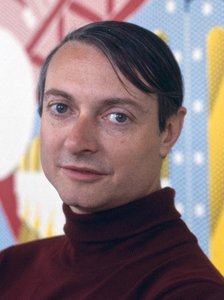
Roy Lichtenstein

Roy Lichtenstein

1923 - 1997, Stany Zjednoczone

Krótkie informacje o Roy Lichtenstein

  • Artistic Movement Or Style: Pop Art
  • Artists Or Movements Influenced By This Artist:
    • Graficy
    • Ilustratorzy
  • Artists Who Influenced This Artist:
    • Reginald Marsh
    • Allan Kaprow
  • Date Of Birth: 27 października 1923
  • Date Of Death: 29 września 1997
  • Full Name: Roy Fox Lichtenstein
  • Nationality: Amerykański
  • Notable Artworks:
    • Whaam!
    • Drowning Girl
    • Oh, Jeff...
    • Masterpiece
  • Place Of Birth: Nowy Jork, USA

Biografia artysty

The Genesis of a Pop Visionary

Roy Fox Lichtenstein, born in the vibrant metropolis of New York City on October 27, 1923, indelibly altered the landscape of twentieth-century art. Emerging as a pivotal figure within the Pop Art movement, Lichtenstein didn’t simply reflect his era; he actively interrogated it, transforming commonplace imagery into compelling artistic statements. His upbringing in an upper-middle-class Jewish family fostered both a cultural awareness and an early artistic inclination. Childhood exposure to museums and concerts, coupled with a deep appreciation for jazz music, laid the groundwork for a creative spirit that would challenge conventional notions of fine art. Though initially drawn to realistic drawing and painting during his formative years, Lichtenstein’s formal training commenced at the Art Students League in 1939 under Reginald Marsh, followed by studies at Ohio State University – interrupted briefly by wartime service in the Army. These experiences provided a robust technical foundation that would later be brilliantly re-contextualized through the lens of mass culture and commercial aesthetics. The seeds of his signature style weren’t sown within the hallowed halls of artistic tradition but rather in the often-overlooked world of everyday imagery, particularly comic books and advertising.

From Abstraction to Appropriation: A Pivotal Shift

Lichtenstein's early work demonstrated a clear engagement with Abstract Expressionism, mirroring the dominant aesthetic trends of the post-war period. Figures like Jackson Pollock and Willem de Kooning were significant influences during this phase, reflecting the dynamism and emotional intensity that characterized the movement. However, this phase proved transitional, a stepping stone towards his revolutionary style. A crucial moment arrived during his tenure at Rutgers University where he encountered Allan Kaprow, whose influence reignited Lichtenstein’s interest in proto-pop imagery – artists like Robert Rauschenberg were already experimenting with collage and assemblage. This encounter sparked a critical shift in his artistic trajectory, leading him to question the established boundaries between “high” and “low” art. He began looking beyond the subjective expression of Abstract Expressionism towards the objective language of popular culture – specifically, comic books and advertising. The year 1961 marked a turning point with *Look Mickey*, a work that boldly appropriated characters from Disney comics, signaling the beginning of his signature style. This wasn’t mere imitation; it was an act of artistic re-evaluation, elevating commonplace imagery to the status of fine art. He didn't simply copy comic strips; he meticulously recreated them using techniques mimicking commercial printing processes, a deliberate blurring of the lines between original artwork and mass production. This appropriation wasn’t about celebrating consumerism uncritically but rather examining its pervasive influence on American society and challenging traditional artistic hierarchies.

The Language of Ben-Day Dots and Bold Lines

Lichtenstein's artistic vocabulary is instantly recognizable: bold, primary colors, thick black outlines, and most famously, Ben-Day dots – a technique borrowed directly from the mechanical reproduction of comic books. These dots weren’t merely decorative; they were integral to his conceptual framework, representing the very process of mass production and challenging the traditional emphasis on the artist's hand. His paintings often enlarged details from comic strips to monumental scale, forcing viewers to confront the aesthetic qualities of an art form typically dismissed as trivial. Works like *Whaam!* (1963), *Drowning Girl* (1963), and *Oh, Jeff…I Love You, Too…But…* (1964) became iconic representations of Pop Art, capturing the anxieties and desires of a rapidly changing consumer culture. These weren’t simply depictions of comic book scenes; they were commentaries on themes of war, romance, and societal expectations, filtered through the visual language of mass media. He aimed to strip away any pretense of artistic subjectivity, presenting his work as objective reflections of American society – a mirror held up to its own manufactured reality. The deliberate flatness and lack of painterly gesture further emphasized this detachment, mimicking the impersonal nature of commercial printing.

Major Achievements and Lasting Impact

Roy Lichtenstein’s influence extends far beyond the realm of painting. His innovative use of commercial techniques and appropriation paved the way for new generations of artists exploring themes of consumerism, media saturation, and cultural identity. The sale of *Masterpiece* in 2017 for $165 million solidified his position as one of the most commercially successful American artists of all time, but his legacy is not solely defined by monetary value. He challenged traditional notions of artistic authorship and originality, forcing a re-evaluation of what constitutes “art” itself. His work continues to inspire graphic designers, illustrators, and visual artists across various disciplines.
  • Major Achievements: Pioneered Pop Art style; achieved international recognition with groundbreaking exhibitions.
  • Notable Works: *Whaam!*, *Drowning Girl*, *Oh, Jeff…I Love You, Too…But…*, *Masterpiece*.
  • Teaching Career: Influenced aspiring artists at SUNY Oswego and Rutgers University.
Lichtenstein passed away on September 29, 1997, leaving behind a body of work that remains as relevant and provocative today as it was during the height of the Pop Art movement. His art serves as a powerful reminder of the pervasive influence of mass media and its ability to shape our perceptions of reality. He didn’t just reflect his time; he actively interrogated it, leaving an indelible mark on the history of 20th-century art and continuing to inspire critical dialogue about the relationship between art, culture, and commerce.

§ 5Podobne dzieła

§ 6Pytania

Najważniejsze informacje

  • Location: Museum of Modern Art, New York
  • Medium: Acrylic on Canvas
  • Year: 1964
  • Movement: Pop Art
  • Artist: Roy Lichtenstein
  • Subject or theme: Arctic wilderness

§ 7Cytuj ten wpis

AllPaintingsStore.com, “Roy Lichtenstein, Arctic landscape”, https://allpaintingsstore.com/pl/art/roy-lichtenstein-arctic-landscape-AE3NKJ-en/ArtistReproduction/ (dostęp dnia 9 Październik 2026).

§ 8Reprodukcja dzieła

Ręcznie malowana reprodukcja olejowa

Ręcznie malowany obraz olejny na płótnie, wykonany na zamówienie przez naszych artystów w wybranym przez Ciebie wymiarze i oprawie. ( Przełącz na wydania drukowane Przejdź do wersji cyfrowej)

Informacja ta widnieje na marginesie arkusza zamówienia; obecny stan tego arkusza przedstawia się następująco.

Arctic landscape

Technika reprodukcji

Wymiary reprodukcji

-

Wybitny mistrz artystyczny

Większa szczegółowość, finezja i dodatkowy czas na realizację

-

Opcje oprawy reprodukcji

-

-

W przypadku dzieł sztuki lub reprodukcji, których którykolwiek z boków przekracza 105 cm (około 41 cali), rama zostanie wysłana w formie zestawu do samodzielnego montażu. Metoda ta zapewnia bezpieczną dostawę i zapobiega uszkodzeniom podczas transportu.

Wymagany profesjonalny montaż – nie jest to produkt typu DIY.
Zestaw musi zostać złożony, a płótno naciągnięte przez doświadczonego profesjonalnego ramiarza, przy użyciu kleju do drewna (brak w zestawie), kleszczy do naciągania płótna oraz ścisków, które utrzymają krosna w równej pozycji podczas schnięcia kleju. Nieprawidłowy montaż lub nierównomierne napięcie płótna może trwale uszkodzić dzieło sztuki i nie podlega naszej gwarancji.

  • W zestawie znajdują się wszystkie listwy z litego drewna, precyzyjnie docięte do wymiarów.

  • Montaż odbywa się przy użyciu dołączonych wkrętów oraz kleju do drewna do łączenia narożników, którego zestaw nie zawiera i który musi zostać dostarczony przez ramiarza.

  • Wymagane są profesjonalne narzędzia, których nie ma w zestawie: kleszcze do naciągania płótna (napinacz) oraz zaciski, które pozwolą utrzymać listwy w równej pozycji podczas schnięcia kleju.

Ważne:
Do połączenia narożników niezbędny jest klej do drewna, listwy należy unieruchomić za pomocą ścisków do momentu całkowitego wyschnięcia kleju, a naciągnięcie płótna na złożoną ramę wymaga użycia kleszczy do naciągania płótna. Żaden z tych elementów nie jest dołączony do zestawu. Przed zamówieniem tego rozmiaru zalecamy konsultację z doświadczonym ramiarzem.

Etykieta obiektu

-

-

Lakier ochronny

Lakier z połyskiem (pogłębia kolory, chroni przed światłem i wilgocią)

-

Personalizacja dzieła

Przykłady możliwości personalizacji: zastąp twarz zdjęciem klienta; dodaj zwierzę domowe (np. zamień kota na psa); umieść ukrytą wiadomość w tle; zmień krajobraz lub elementy tła.

-

Ekspresowa

Dostawa na cały świat () w ciągu 3–4 tygodni zamiast standardowych 5 tygodni. (6 Listopad). Bez kompromisów w kwestii jakości.

-

Przesyłka ekspresowa

Dostawa na cały świat () w ciągu 5 tygodni. (13 Listopad).

W cenie

Cena całkowita

zł 1008

W każdym zamówieniu

  • Bezpłatna ekspresowa wysyłka na cały świat
  • Wysokiej jakości płótno lniane
  • Pełne ubezpieczenie przesyłki
  • Gwarancja zwrotu należności celnych i podatków importowych
  • Gwarancja wiernego odwzorowania kolorów
  • 100-dniowa polityka zwrotów (tylko w przypadku wad)
  • Gwarancja 100% zwrotu pieniędzy
  • Zniżka przy zakupie wielu sztuk
Arkusz zamówień