Gwarancja zwrotu pieniędzy · 100 dni Darmowa dostawa na cały świat
449 587dzieła sztuki 30 613artyści 4 660muzea 32język
Waluta
    Język
      Atelier · Est. 2015 · Paryż, Francja
      AllPaintingsStore
      allpaintingsstore.com
      Catalogue entry

      The Tempest

      1825. Oil On Canvas. High Museum of Art.

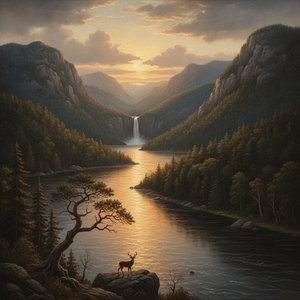
      Fig. 1. Tomasz Cole, The Tempest, 1825. Shown as the reproduction you are specifying: , .

      § 1Catalogue data

      § 2Abstract

      Opis obiektu

      Thomas Cole's "The Tempest" captures a dramatic American landscape scene, embodying the Hudson River School’s romanticism and exploration of nature's power. A masterpiece of 1826.

      Biografia artysty

      Thomas Cole (1801-1848) – pionier amerykańskiej sztuki krajobrazowej, założyciel Hudson River School. Jego malarstwo łączy romantyzm z alegorią i głębokim oddaniem naturze. Odkryj jego legendy!

      § 3Commentary

      The Tempest by Thomas Cole: A Vision of American Romanticism

      Thomas Cole’s “The Tempest,” painted in 1825, isn't merely a landscape; it’s a profound meditation on the relationship between humanity and nature, a cornerstone of the Hudson River School movement, and a hauntingly beautiful embodiment of early American Romanticism. More than two centuries after its creation, this oil-on-panel masterpiece continues to resonate with viewers, inviting contemplation on themes of power, vulnerability, and the sublime—the awe-inspiring grandeur that simultaneously terrifies and elevates the human spirit.

      The painting depicts a dramatic, almost apocalyptic scene set within the Catskill Mountains. A brooding sky, choked with swirling clouds and illuminated by flashes of lightning, dominates the composition. Below, a small clearing reveals two figures—a man and a woman—standing on a rocky outcrop, gazing out at an unseen horizon. The landscape itself is rendered with meticulous detail: ancient trees twisted by wind and weather, a turbulent river rushing through a narrow gorge, and distant peaks shrouded in mist. Cole’s masterful use of chiaroscuro – the dramatic contrast between light and dark – intensifies the scene's emotional impact, creating a palpable sense of tension and foreboding.

      A Synthesis of European Tradition and American Identity

      Cole, born in Bolton le Moors, England, in 1801, brought with him a deep appreciation for European artistic traditions, particularly those of the Romantic movement. However, he quickly developed a distinctly American sensibility, rejecting the prevalent historical and mythological subjects favored by his European counterparts. Instead, Cole turned his gaze to the untamed wilderness of his adopted homeland, seeking to capture its raw beauty and spiritual significance. “The Tempest” exemplifies this shift—it’s not a depiction of a biblical scene or a classical allegory, but rather an intensely personal response to the grandeur of the American landscape.

      The painting's composition is deliberately ambiguous, inviting multiple interpretations. The figures in the foreground are dwarfed by the immensity of nature, suggesting humanity’s vulnerability and insignificance in the face of the sublime. Yet, their gaze—directed towards something beyond the viewer’s sight—hints at a deeper connection to the natural world, a yearning for transcendence. Cole skillfully employs symbolism throughout the work: the storm represents chaos and uncertainty, while the distant peaks symbolize aspiration and hope. The horse and birds scattered across the scene further emphasize the dynamism and energy of the natural world.

      Symbolism and the Concept of the Sublime

      Central to understanding “The Tempest” is Cole’s concept of the sublime—a term popularized by Edmund Burke in his 1757 treatise *A Philosophical Enquiry into the Origin of Our Ideas of Beauty*. The sublime, as Cole understood it, wasn't simply about beauty; it was about an overwhelming experience that evoked both terror and delight. It was a feeling triggered by encountering something vast, powerful, and beyond human comprehension—something that simultaneously threatened to overwhelm us and inspire awe.

      The storm in “The Tempest” is a prime example of this concept. The sheer scale of the clouds, the ferocity of the wind, and the potential for destruction all contribute to a sense of overwhelming power. Yet, within this chaos, there’s also a strange beauty—a raw, untamed energy that captivates the viewer's imagination. Cole masterfully captures this duality, creating an image that is both terrifying and exhilarating.

      A Legacy in Reproduction

      Today, “The Tempest” remains one of Thomas Cole’s most celebrated works, housed at the High Museum of Art in Atlanta. High-quality reproductions allow art lovers to experience the painting's power and beauty firsthand, bringing its evocative imagery into their homes or offices. The meticulous detail, dramatic lighting, and profound symbolism continue to inspire admiration and contemplation. Reproductions are available through AllPaintingsStore.com, offering a tangible connection to this pivotal moment in American art history.

      Beyond its aesthetic appeal, “The Tempest” serves as a reminder of the enduring power of nature—and our own place within it. It’s an invitation to pause, reflect, and appreciate the sublime beauty that surrounds us, even amidst the storms of life.

      Pytania i odpowiedzi

      Czy „The Tempest” – Tomasz Cole to portret, pejzaż czy kompozycja kwadratowa?

      „The Tempest” – Tomasz Cole to kompozycja w formacie Landscape. Warto sprawdzić proporcje przed wyborem rozmiaru wydruku.

      Czy dzieło „The Tempest” autorstwa Tomasz Cole znajduje się w domenie publicznej i dlaczego?

      „The Tempest” – Tomasz Cole jest należy do domeny publicznej – autorskie prawa majątkowe wygasły. Okres ochrony praw autorskich liczony jest od śmierci artysty, która nastąpiła w 1848.

      Do jakiego nurtu i epoki zalicza się „The Tempest” – Tomasz Cole?

      „The Tempest” – Tomasz Cole reprezentuje nurt Hudson River School, powstały w epoce – Wiek XIX swojego twórcy.

      § 4The artist

      Tomasz Cole

      Tomasz Cole

      1801 - 1848, Wielka Brytania

      Quick facts about Tomasz Cole

      • Artistic Movement Or Style: Szkoła Hudson
      • Artists Or Movements Influenced By This Artist: ['Asher B. Durand']
      • Date Of Birth: 1 lutego 1801
      • Date Of Death: 11 lutego 1848
      • Full Name: Thomas Cole
      • Nationality: Amerykanin
      • Notable Artworks:
        • Course of Empire
        • Oxbow
        • Voyage of Life
      • Place Of Birth: Bolton, Wielka Brytania

      Biografia artysty

      A Pioneer of American Landscape Painting

      Thomas Cole, a name inextricably linked to the birth of distinctly American art, stands as a pivotal figure in 19th-century painting. Born in Bolton le Moors, Lancashire, England, in 1801, his early life offered little indication of the profound impact he would have on the artistic landscape. Emigrating to the United States with his family in 1818 and settling in Ohio, Cole’s journey was one of self-discovery and artistic awakening. Initially working as an itinerant portrait painter—a common trade at the time—he soon found himself drawn to the untamed beauty of the American wilderness. This shift wasn't merely a change in subject matter; it represented a fundamental divergence from European artistic traditions, which often focused on historical or mythological narratives. Cole’s landscapes weren’t simply depictions of scenery; they were imbued with a spiritual and allegorical depth that resonated deeply with a nation forging its own identity. His move to Catskill, New York, in 1825 proved transformative, providing him with both inspiration and a permanent base from which to explore the surrounding Hudson River Valley—a region that would become inextricably linked with his artistic legacy.

      The Hudson River School and Romantic Ideals

      Cole is rightfully regarded as the founder of the Hudson River School, an art movement characterized by its romantic portrayal of the American landscape. However, to label him simply a “landscape painter” feels inadequate. His work transcended mere representation; it was deeply philosophical, often exploring themes of humanity’s relationship with nature, the passage of time, and the rise and fall of civilizations. Influenced by European Romanticism—particularly the works of Claude Lorrain and J.M.W. Turner—Cole adapted these sensibilities to an American context. Where European Romantics often depicted dramatic, sublime landscapes as a reflection of inner turmoil, Cole’s paintings frequently conveyed a sense of optimism and divine presence within the natural world. He saw in the vastness of the American wilderness a symbol of national potential and spiritual renewal. The Oxbow (1836), perhaps his most iconic work, exemplifies this perfectly—a sweeping vista that contrasts the wild, untamed river valley with the cultivated farmlands, representing both the promise and the challenges of westward expansion. The painting’s meticulous detail and subtle color variations capture not just a scene but also a feeling – a sense of awe and wonder at the power and beauty of nature.

      Allegory and The Course of Empire

      While celebrated for his realistic depictions of nature, Cole’s artistic ambition extended beyond pure landscape painting. He frequently employed allegory to convey complex moral and philosophical ideas. This is most powerfully demonstrated in his monumental series The Course of Empire, created between 1833 and 1836. Comprising five canvases—“Savage State,” “Pastoral State,” “Arcadian State,” “Consummation,” and “Destruction”—the series traces the cyclical history of a civilization, from its pristine origins to its inevitable decline. The paintings are not merely historical narratives; they serve as cautionary tales about the dangers of unchecked ambition and the fragility of human achievement. The series was inspired by the writings of Count de Volney, whose book *Ruines; or Meditations on the Ruins of Empires* explored similar themes. The dramatic lighting and carefully chosen symbols in each painting—ranging from towering forests to crumbling ruins—invite viewers to contemplate the consequences of their actions and the impermanence of worldly power.

      Technique and Style

      Cole’s artistic style was characterized by a remarkable blend of observation, skill, and imagination. He meticulously studied nature, often making numerous pencil sketches *en plein air* (outdoors) to capture the nuances of light, shadow, and color. However, he wasn't simply a recorder of reality; he skillfully manipulated these elements to create emotionally resonant compositions. Cole’s use of atmospheric perspective—the subtle blurring of distant objects—and his mastery of chiaroscuro (the contrast between light and dark) added depth and drama to his paintings. He was acutely aware of the limitations of his own technical abilities, famously stating that he avoided depicting human figures prominently in his landscapes, preferring instead to focus on the grandeur of nature itself. This decision allowed him to prioritize the spiritual and philosophical themes he sought to convey.

      Legacy and Enduring Influence

      Thomas Cole’s untimely death in 1848 at the age of 47 marked a significant loss for the American art world. However, his influence continued to reverberate through generations of artists. He directly mentored Frederic Edwin Church, who would become one of the leading figures of the second generation of Hudson River School painters. His emphasis on observation from nature, combined with a deeply personal and symbolic approach to landscape painting, laid the foundation for a distinctly American artistic tradition. Cole’s work continues to be exhibited in major museums across the United States, including the New-York Historical Society, the National Gallery of Art in Washington D.C., and the Smithsonian American Art Museum. His paintings are not merely historical artifacts; they remain powerfully evocative and relevant today, prompting viewers to contemplate their own relationship with nature and the enduring questions about humanity’s place in the world. The Thomas Cole National Historic Site in Catskill, New York, preserves his home and studio, offering visitors a glimpse into the life and work of this remarkable artist.

      § 5Comparanda

      § 6Questions

      Najważniejsze informacje

      • Movement: Hudson River School
      • Subject or theme: Stormy landscape
      • Location: High Museum of Art
      • Year: 1825
      • Medium: Oil on panel

      Quiz o sztuce

      Do każdego pytania dotyczy tylko jedna poprawna odpowiedź.

      Pytanie 1:
      What artistic movement is Thomas Cole primarily associated with?
      Pytanie 2:
      In 'The Tempest,' what primary element does the stormy weather symbolize?
      Pytanie 3:
      What year was 'The Tempest' painted by Thomas Cole?
      Pytanie 4:
      Which of the following best describes the setting of 'The Tempest'?
      Pytanie 5:
      What is a key characteristic of the Hudson River School paintings like 'The Tempest'?

      § 7Cite this entry

      AllPaintingsStore.com, “Tomasz Cole, The Tempest (1825)”, https://allpaintingsstore.com/pl/art/thomas-cole-the-tempest-8YE4QA-en/ArtistReproduction/ (accessed 1 Październik 2026).

      § 8The reproduction

      Ręcznie malowana reprodukcja olejowa

      Ręcznie malowany obraz olejny na płótnie, wykonany na zamówienie przez naszych artystów w wybranym przez Ciebie wymiarze i oprawie. ( Przełącz na wydania drukowane Przejdź do wersji cyfrowej)

      It is specified on the order sheet in the margin; the present state of that sheet reads as follows.

      The Tempest

      Technika reprodukcji

      Wymiary reprodukcji

      -

      Wybitny mistrz artystyczny

      Większa szczegółowość, finezja i dodatkowy czas na realizację

      -

      Opcje oprawy reprodukcji

      -

      -

      W przypadku dzieł sztuki lub reprodukcji, których którykolwiek z boków przekracza 105 cm (około 41 cali), rama zostanie wysłana w formie zestawu do samodzielnego montażu. Metoda ta zapewnia bezpieczną dostawę i zapobiega uszkodzeniom podczas transportu.

      Wymagany profesjonalny montaż – nie jest to produkt typu DIY.
      Zestaw musi zostać złożony, a płótno naciągnięte przez doświadczonego profesjonalnego ramiarza, przy użyciu kleju do drewna (brak w zestawie), kleszczy do naciągania płótna oraz ścisków, które utrzymają krosna w równej pozycji podczas schnięcia kleju. Nieprawidłowy montaż lub nierównomierne napięcie płótna może trwale uszkodzić dzieło sztuki i nie podlega naszej gwarancji.

      • W zestawie znajdują się wszystkie listwy z litego drewna, precyzyjnie docięte do wymiarów.

      • Montaż odbywa się przy użyciu dołączonych wkrętów oraz kleju do drewna do łączenia narożników, którego zestaw nie zawiera i który musi zostać dostarczony przez ramiarza.

      • Wymagane są profesjonalne narzędzia, których nie ma w zestawie: kleszcze do naciągania płótna (napinacz) oraz zaciski, które pozwolą utrzymać listwy w równej pozycji podczas schnięcia kleju.

      Ważne:
      Do połączenia narożników niezbędny jest klej do drewna, listwy należy unieruchomić za pomocą ścisków do momentu całkowitego wyschnięcia kleju, a naciągnięcie płótna na złożoną ramę wymaga użycia kleszczy do naciągania płótna. Żaden z tych elementów nie jest dołączony do zestawu. Przed zamówieniem tego rozmiaru zalecamy konsultację z doświadczonym ramiarzem.

      Etykieta obiektu

      -

      -

      Lakier ochronny

      Lakier z połyskiem (pogłębia kolory, chroni przed światłem i wilgocią)

      -

      Personalizacja dzieła

      Przykłady możliwości personalizacji: zastąp twarz zdjęciem klienta; dodaj zwierzę domowe (np. zamień kota na psa); umieść ukrytą wiadomość w tle; zmień krajobraz lub elementy tła.

      -

      Ekspresowa

      Dostawa na cały świat () w ciągu 3–4 tygodni zamiast standardowych 5 tygodni. (29 Październik). Bez kompromisów w kwestii jakości.

      -

      Przesyłka ekspresowa

      Dostawa na cały świat () w ciągu 5 tygodni. (5 Listopad).

      W cenie

      Cena całkowita

      zł 993

      Included with every order

      • Bezpłatna ekspresowa wysyłka na cały świat
      • Wysokiej jakości płótno lniane
      • Pełne ubezpieczenie przesyłki
      • Gwarancja zwrotu należności celnych i podatków importowych
      • Gwarancja wiernego odwzorowania kolorów
      • 100-dniowa polityka zwrotów (tylko w przypadku wad)
      • Gwarancja 100% zwrotu pieniędzy
      • Zniżka przy zakupie wielu sztuk
      Order sheet