Gwarancja zwrotu pieniędzy · 100 dni Darmowa dostawa na cały świat
449 564dzieła sztuki 30 613artyści 4 660muzea 32język
Wpis do katalogu

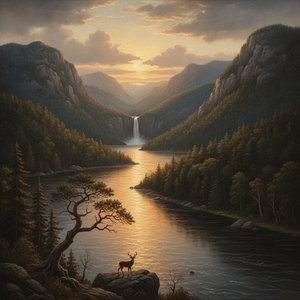
The Titan's Goblet

1833. Farba olejna, 49.0 x 41.0 cm. Metropolitan Museum of Art.

Ryc. 1. Tomasz Cole, The Titan's Goblet, 1833. Przedstawiono jako wybraną przez Ciebie reprodukcję: , .

§ 1Dane katalogowe

Wymiary
49.0 x 41.0 cm

§ 2Abstrakcja

Opis obiektu

Thomas Cole's 'The Titan’s Goblet' (1833) is an enigmatic landscape masterpiece, blending natural beauty with mythological elements. Explore a world of water, temples, and ancient mysteries in this captivating painting.

Biografia artysty

Thomas Cole (1801-1848) – pionier amerykańskiej sztuki krajobrazowej, założyciel Hudson River School. Jego malarstwo łączy romantyzm z alegorią i głębokim oddaniem naturze. Odkryj jego legendy!

§ 3Komentarz

The Titan’s Goblet: A Landscape of Myth and Time

Thomas Cole's "The Titan’s Goblet," painted in 1833, is not merely a landscape; it’s an immersive allegory, a visual poem steeped in the Romantic tradition yet profoundly rooted in American identity. This monumental oil painting, now housed at the Metropolitan Museum of Art, immediately captivates with its sheer scale and dramatic composition – a vast bowl or vase dominating a rugged mountainscape. Yet, beyond the immediate spectacle lies a complex layering of meaning, inviting viewers to contemplate themes of creation, time, civilization, and the relationship between humanity and nature.

Cole’s artistic journey is crucial to understanding this enigmatic work. Born in England but deeply influenced by European Romanticism, he arrived in America with a desire to forge a distinctly American art—one that moved beyond the historical narratives favored in Europe and instead focused on the sublime beauty of the American wilderness. “The Titan’s Goblet” exemplifies this shift; it's not a depiction of a specific place but rather an imagined realm, a constructed landscape brimming with symbolic weight. The painting’s genesis is intertwined with Cole’s own artistic struggles and his relationship with his patron, Luman Reed, who initially requested a series of paintings depicting the course of empire. The difficulties he encountered in completing this ambitious project—and his subsequent decision to paint a single, self-contained landscape—contributed significantly to the painting's open-ended interpretation.

A World Within a World

The immediate visual impact is striking: a colossal golden bowl, seemingly carved from stone, rests precariously on a mountain’s edge. Water cascades dramatically over its rim, feeding a lush, verdant landscape below – a miniature world teeming with tiny buildings reminiscent of Greek temples and Italian palaces. Scattered throughout this idyllic scene are figures engaged in leisurely activities—boating, strolling, and seemingly oblivious to the grandeur surrounding them. This internal world is juxtaposed against the stark, rocky terrain of the mountain itself, creating a powerful visual dichotomy.

However, Cole doesn’t simply present a picturesque vista. The water flowing from the goblet acts as a transformative agent. It nourishes the land below, fostering a civilization that appears both idyllic and somewhat fragile. The contrast between the cultivated world within the bowl and the desolate mountainside suggests a commentary on the impact of human activity upon nature—a subtle critique of unchecked expansion and the potential for environmental degradation. The placement of the two small buildings is particularly significant; they represent the ambition of civilization, attempting to impose order onto the untamed wilderness.

Symbolism and Interpretation

The painting’s enduring mystery stems from Cole's deliberate refusal to offer a definitive explanation. He famously refrained from providing any accompanying text, leaving the interpretation entirely open to the viewer. Over time, various theories have emerged, ranging from interpretations rooted in Norse mythology—linking the goblet to Yggdrasil, the world tree—to comparisons with Bosch’s *Garden of Earthly Delights*, suggesting a parallel creation narrative. Cole himself alluded to the idea of a “picture within a picture,” and some scholars believe he drew inspiration from J.M.W. Turner's *Ulysses Deriding Polyphemus*, reflecting his own complex relationship with the British painter’s dynamic style.

Interestingly, Cole’s initial sketches for the painting reveal a deeper engagement with the concept of time and its passage. The presence of a setting sun evokes a sense of twilight and the inevitable decline of empires—a theme that resonates throughout his “Course of Empire” series. The small figure in the foreground, often interpreted as Cole himself, gazing out over the scene, adds another layer of introspection, inviting us to contemplate our own place within this vast and timeless landscape.

A Reproduction for Your Space

AllPaintingsStore offers meticulously crafted hand-painted reproductions of Thomas Cole’s “The Titan’s Goblet,” capturing the painting's rich detail, atmospheric depth, and evocative symbolism. Each reproduction is created by skilled artists using traditional oil painting techniques, ensuring a faithful representation of Cole’s original vision. Whether you seek to add a touch of Romantic grandeur to your living room, study, or gallery space, our reproductions provide an authentic and captivating way to experience this iconic American masterpiece. The scale of the original is faithfully replicated, allowing you to fully appreciate the painting's monumental scope and immersive quality. Bring the mystery and beauty of “The Titan’s Goblet” into your home – a timeless testament to Cole’s artistic genius.

Pytania i odpowiedzi

Gdzie mogę kupić wydruk „The Titan's Goblet” – Tomasz Cole?

„The Titan's Goblet” jest dostępny jako szlachetna odbitka na płótnie bawełnianym lub archiwalnym papierze o strukturze płótna. Zamówienia można składać na stronie Wydruk artystyczny premium, wybierając dowolny rozmiar.

Co to za dzieło: "The Titan's Goblet"?

W katalogu dzieło „The Titan's Goblet” – Tomasz Cole zostało sklasyfikowane jako Sztuka ścienna. Kategoria ta ułatwia odnajdywanie podobnych prac.

Do którego etapu twórczości Tomasz Cole należy dzieło „The Titan's Goblet”?

W dorobku artystycznym Tomasz Cole dzieło „The Titan's Goblet” przypada na Mature Period. Ten etap pozwala zestawić je z innymi pracami twórcy.

§ 4Artysta

Tomasz Cole

Tomasz Cole

1801 - 1848, Wielka Brytania

Krótkie informacje o Tomasz Cole

  • Artistic Movement Or Style: Szkoła Hudson
  • Artists Or Movements Influenced By This Artist: ['Asher B. Durand']
  • Date Of Birth: 1 lutego 1801
  • Date Of Death: 11 lutego 1848
  • Full Name: Thomas Cole
  • Nationality: Amerykanin
  • Notable Artworks:
    • Course of Empire
    • Oxbow
    • Voyage of Life
  • Place Of Birth: Bolton, Wielka Brytania

Biografia artysty

A Pioneer of American Landscape Painting

Thomas Cole, a name inextricably linked to the birth of distinctly American art, stands as a pivotal figure in 19th-century painting. Born in Bolton le Moors, Lancashire, England, in 1801, his early life offered little indication of the profound impact he would have on the artistic landscape. Emigrating to the United States with his family in 1818 and settling in Ohio, Cole’s journey was one of self-discovery and artistic awakening. Initially working as an itinerant portrait painter—a common trade at the time—he soon found himself drawn to the untamed beauty of the American wilderness. This shift wasn't merely a change in subject matter; it represented a fundamental divergence from European artistic traditions, which often focused on historical or mythological narratives. Cole’s landscapes weren’t simply depictions of scenery; they were imbued with a spiritual and allegorical depth that resonated deeply with a nation forging its own identity. His move to Catskill, New York, in 1825 proved transformative, providing him with both inspiration and a permanent base from which to explore the surrounding Hudson River Valley—a region that would become inextricably linked with his artistic legacy.

The Hudson River School and Romantic Ideals

Cole is rightfully regarded as the founder of the Hudson River School, an art movement characterized by its romantic portrayal of the American landscape. However, to label him simply a “landscape painter” feels inadequate. His work transcended mere representation; it was deeply philosophical, often exploring themes of humanity’s relationship with nature, the passage of time, and the rise and fall of civilizations. Influenced by European Romanticism—particularly the works of Claude Lorrain and J.M.W. Turner—Cole adapted these sensibilities to an American context. Where European Romantics often depicted dramatic, sublime landscapes as a reflection of inner turmoil, Cole’s paintings frequently conveyed a sense of optimism and divine presence within the natural world. He saw in the vastness of the American wilderness a symbol of national potential and spiritual renewal. The Oxbow (1836), perhaps his most iconic work, exemplifies this perfectly—a sweeping vista that contrasts the wild, untamed river valley with the cultivated farmlands, representing both the promise and the challenges of westward expansion. The painting’s meticulous detail and subtle color variations capture not just a scene but also a feeling – a sense of awe and wonder at the power and beauty of nature.

Allegory and The Course of Empire

While celebrated for his realistic depictions of nature, Cole’s artistic ambition extended beyond pure landscape painting. He frequently employed allegory to convey complex moral and philosophical ideas. This is most powerfully demonstrated in his monumental series The Course of Empire, created between 1833 and 1836. Comprising five canvases—“Savage State,” “Pastoral State,” “Arcadian State,” “Consummation,” and “Destruction”—the series traces the cyclical history of a civilization, from its pristine origins to its inevitable decline. The paintings are not merely historical narratives; they serve as cautionary tales about the dangers of unchecked ambition and the fragility of human achievement. The series was inspired by the writings of Count de Volney, whose book *Ruines; or Meditations on the Ruins of Empires* explored similar themes. The dramatic lighting and carefully chosen symbols in each painting—ranging from towering forests to crumbling ruins—invite viewers to contemplate the consequences of their actions and the impermanence of worldly power.

Technique and Style

Cole’s artistic style was characterized by a remarkable blend of observation, skill, and imagination. He meticulously studied nature, often making numerous pencil sketches *en plein air* (outdoors) to capture the nuances of light, shadow, and color. However, he wasn't simply a recorder of reality; he skillfully manipulated these elements to create emotionally resonant compositions. Cole’s use of atmospheric perspective—the subtle blurring of distant objects—and his mastery of chiaroscuro (the contrast between light and dark) added depth and drama to his paintings. He was acutely aware of the limitations of his own technical abilities, famously stating that he avoided depicting human figures prominently in his landscapes, preferring instead to focus on the grandeur of nature itself. This decision allowed him to prioritize the spiritual and philosophical themes he sought to convey.

Legacy and Enduring Influence

Thomas Cole’s untimely death in 1848 at the age of 47 marked a significant loss for the American art world. However, his influence continued to reverberate through generations of artists. He directly mentored Frederic Edwin Church, who would become one of the leading figures of the second generation of Hudson River School painters. His emphasis on observation from nature, combined with a deeply personal and symbolic approach to landscape painting, laid the foundation for a distinctly American artistic tradition. Cole’s work continues to be exhibited in major museums across the United States, including the New-York Historical Society, the National Gallery of Art in Washington D.C., and the Smithsonian American Art Museum. His paintings are not merely historical artifacts; they remain powerfully evocative and relevant today, prompting viewers to contemplate their own relationship with nature and the enduring questions about humanity’s place in the world. The Thomas Cole National Historic Site in Catskill, New York, preserves his home and studio, offering visitors a glimpse into the life and work of this remarkable artist.

§ 5Podobne dzieła

§ 6Pytania

§ 7Cytuj ten wpis

AllPaintingsStore.com, “Tomasz Cole, The Titan's Goblet (1833)”, https://allpaintingsstore.com/pl/art/thomas-cole-the-titan-s-goblet-8Y34XP-en/ArtistReproduction/ (dostęp dnia 6 Październik 2026).

§ 8Reprodukcja dzieła

Ręcznie malowana reprodukcja olejowa

Ręcznie malowany obraz olejny na płótnie, wykonany na zamówienie przez naszych artystów w wybranym przez Ciebie wymiarze i oprawie. ( Przełącz na wydania drukowane Przejdź do wersji cyfrowej)

Informacja ta widnieje na marginesie arkusza zamówienia; obecny stan tego arkusza przedstawia się następująco.

The Titan's Goblet

Technika reprodukcji

Wymiary reprodukcji

-

Wybitny mistrz artystyczny

Większa szczegółowość, finezja i dodatkowy czas na realizację

-

Opcje oprawy reprodukcji

-

-

W przypadku dzieł sztuki lub reprodukcji, których którykolwiek z boków przekracza 105 cm (około 41 cali), rama zostanie wysłana w formie zestawu do samodzielnego montażu. Metoda ta zapewnia bezpieczną dostawę i zapobiega uszkodzeniom podczas transportu.

Wymagany profesjonalny montaż – nie jest to produkt typu DIY.
Zestaw musi zostać złożony, a płótno naciągnięte przez doświadczonego profesjonalnego ramiarza, przy użyciu kleju do drewna (brak w zestawie), kleszczy do naciągania płótna oraz ścisków, które utrzymają krosna w równej pozycji podczas schnięcia kleju. Nieprawidłowy montaż lub nierównomierne napięcie płótna może trwale uszkodzić dzieło sztuki i nie podlega naszej gwarancji.

  • W zestawie znajdują się wszystkie listwy z litego drewna, precyzyjnie docięte do wymiarów.

  • Montaż odbywa się przy użyciu dołączonych wkrętów oraz kleju do drewna do łączenia narożników, którego zestaw nie zawiera i który musi zostać dostarczony przez ramiarza.

  • Wymagane są profesjonalne narzędzia, których nie ma w zestawie: kleszcze do naciągania płótna (napinacz) oraz zaciski, które pozwolą utrzymać listwy w równej pozycji podczas schnięcia kleju.

Ważne:
Do połączenia narożników niezbędny jest klej do drewna, listwy należy unieruchomić za pomocą ścisków do momentu całkowitego wyschnięcia kleju, a naciągnięcie płótna na złożoną ramę wymaga użycia kleszczy do naciągania płótna. Żaden z tych elementów nie jest dołączony do zestawu. Przed zamówieniem tego rozmiaru zalecamy konsultację z doświadczonym ramiarzem.

Etykieta obiektu

-

-

Lakier ochronny

Lakier z połyskiem (pogłębia kolory, chroni przed światłem i wilgocią)

-

Personalizacja dzieła

Przykłady możliwości personalizacji: zastąp twarz zdjęciem klienta; dodaj zwierzę domowe (np. zamień kota na psa); umieść ukrytą wiadomość w tle; zmień krajobraz lub elementy tła.

-

Ekspresowa

Dostawa na cały świat () w ciągu 3–4 tygodni zamiast standardowych 5 tygodni. (3 Listopad). Bez kompromisów w kwestii jakości.

-

Przesyłka ekspresowa

Dostawa na cały świat () w ciągu 5 tygodni. (10 Listopad).

W cenie

Cena całkowita

zł 1009

W każdym zamówieniu

  • Bezpłatna ekspresowa wysyłka na cały świat
  • Wysokiej jakości płótno lniane
  • Pełne ubezpieczenie przesyłki
  • Gwarancja zwrotu należności celnych i podatków importowych
  • Gwarancja wiernego odwzorowania kolorów
  • 100-dniowa polityka zwrotów (tylko w przypadku wad)
  • Gwarancja 100% zwrotu pieniędzy
  • Zniżka przy zakupie wielu sztuk
Arkusz zamówień