1876. Acrylic On Canvas. Metropolitan Museum of Art.

§ 1Dane katalogowe


§ 2Abstrakcja
Opis obiektu
Experience Thomas Eakins' masterpiece – 'The Chess Players'! This iconic oil on wood panel captures a poignant moment of fatherhood and artistic influence at the Metropolitan Museum of Art.
 Rozwiń treść
Biografia artysty
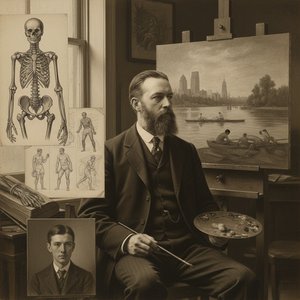
Thomas Eakins – amerykański malarz realizmu, znany z bezkompromisowych portretów, dynamicznych scen wioślarskich i precyzyjnego oddania anatomii. Jego dzieła inspirują do obserwacji rzeczywistości.
§ 3Komentarz
The Chess Player: A Portrait of Time and Fatherhood
Thomas Eakins’s *The Chess Players*, completed in 1876, transcends mere depiction; it embodies a profound meditation on human relationships and the relentless march of time. More than just capturing a moment in a Philadelphia parlor—a space meticulously rendered with late afternoon light—the painting speaks to themes of legacy, mentorship, and psychological complexity.
- Subject Matter: The scene centers around three men engaged in a game of chess, featuring Bertrand Gardel, an elderly French teacher, and George Holmes, a painter. Benjamin Eakins, the artist’s father, observes intently from across the room, anchoring the composition with a quiet dignity that reflects familial devotion.
- Style & Technique: Eakins employed his signature realist style—characterized by unflinching anatomical precision and meticulous attention to detail—to create an image imbued with palpable atmosphere. The oil on wood panel medium lends itself beautifully to capturing subtle tonal variations, enhancing the sense of depth and realism.
- Historical Context: Painted during Eakins’s formative years at the École des Beaux-Arts under Jean-Léon Gérôme, *The Chess Players* reflects the influence of academic tradition while simultaneously asserting Eakins's independent artistic vision. The inclusion of Gérôme’s print—a depiction of Caesar saluting the dying—adds a layer of symbolic resonance, referencing Roman mythology and contemplating mortality.
The painting’s symbolism extends beyond its immediate subject matter. The chess game itself serves as an allegory for conflict and resolution, mirroring the dynamic between father and son – Benjamin Eakins and Thomas Eakins—and highlighting the importance of guidance and experience. Holmes's strategic maneuvering represents youthful ambition, while Gardel embodies wisdom gained through years of observation.
Furthermore, Eakins’s masterful use of light contributes significantly to the painting’s emotional impact. The diffused afternoon sun casts shadows across the room, creating a sense of stillness and contemplation—a visual counterpoint to the intense concentration displayed by the players. This careful illumination underscores the artist's desire to convey not just what he sees but also how he feels about it.
- Notable Details: The inclusion of Eakins’s signature in Latin (“BENJAMINI. EAKINS. FILIUS. PINXIT. ’76”—“the son of Benjamin Eakins painted this”) on the drawer of the table is a deliberate gesture, emphasizing the artist's personal connection to his father and acknowledging Gérôme’s influence as a mentor.
- Legacy & Reproduction: *The Chess Players* stands as a cornerstone of American realist painting—a testament to Eakins’s ability to distill complex psychological ideas into visual form. At AllPaintingsStore.com, you can acquire a stunning, handcrafted oil painting reproduction that faithfully captures the essence of this iconic masterpiece.
To delve deeper into Eakins’s artistic journey and explore his broader oeuvre, visit /art/list/?Filter=8XX6G7-Thomas-Eakins-The-Chess-Player. For insights into the Metropolitan Museum of Art’s role in preserving and showcasing artistic heritage, explore https://en.wikipedia.org/wiki/Metropolitan_Museum_of_Art.
Pytania i odpowiedzi
Czy dzieło „The Chess Player” – Thomas Eakins znajduje się w kraju pochodzenia artysty?
Nie – dzieło znajduje się poza granicami kraju artysty. Dzieło "The Chess Player" znajduje się w zbiorach United States of America, podczas gdy Thomas Eakins urodził(a) się w Stany Zjednoczone.
Kto stworzył "The Chess Player" i w jakim roku?
Thomas Eakins, "The Chess Player", 1876 rok
Gdzie najlepiej powiesić reprodukcję „The Chess Player” – Thomas Eakins?
Format Landscape dzieła „The Chess Player” – Thomas Eakins jest rekomendowany do Living Room. Format oraz przestrzeń wspólnie pomagają w odpowiednim rozmieszczeniu reprodukcji.


 Przełącz na wydania drukowane


 W przypadku dzieł sztuki lub reprodukcji, których którykolwiek z boków przekracza 105 cm (około 41 cali), rama zostanie wysłana w formie zestawu do samodzielnego montażu. Metoda ta zapewnia bezpieczną dostawę i zapobiega uszkodzeniom podczas transportu.