


 Podgląd w skali 1:1
 Wyślij jako kartkę
 Udostępnij
 Szczegóły dzieła
 Przewodnik

 Pobierz obraz
 Podobne obiekty
 RTG
RTG Pokaz slajdów
 Statystyki
James Hope
 Acrylic On Canvas
- WallArt
- Victorian Portraiture
 1841
1841- 19th Century
 Royal College of Physicians of London
 Rozwiń treść
Giclée / Wydruk artystyczny
Wydruki giclée lub płótna o jakości muzealnej, szybka realizacja i szeroki wybór opcji wykończenia. ( Zamów ręcznie malowaną reprodukcję Przejdź do wersji cyfrowej)




P118B zł10

P118H zł10

P118W zł10

P438Z zł10

P508JH zł12

P508YH zł12

P805H zł10

P805Z zł10

P919BZ zł10

P919G zł10

P919XJ zł10

P959ZH zł10

P968JZ zł12

W106C zł8

W218G zł10

W218JH zł8

W218Y zł10

W307PJ zł10

W316G zł10

W316PJ zł8

W316Y zł10

W398PJ zł8

W4111J zł10

W500HY zł15

W500JH zł15

W692G zł12

W849H zł8

W940BG zł15

W953PJ zł8




Wybierz spośród naszych standardowych rozmiarów, które zachowują oryginalne proporcje dzieła sztuki.

Wpisz wymaganą szerokość i wysokość, aby dopasować grafikę do ramy lub ściany. Wydruk można jedynie przyciąć, nigdy nie powiększając go poza oryginalny obraz, dlatego format o innych proporcjach spowoduje utratę części kompozycji. Przed rozpoczęciem druku prześlemy Ci cyfrowy podgląd do zatwierdzenia. Obraz wyświetlany na tej stronie nie pokazuje rzeczywistego przycięcia — jedynie podgląd oddaje ten efekt.
Dostawa na cały świat () w ciągu 2 tygodni zamiast standardowych 4/5 tygodni. (25 Październik)

Bezpłatna ekspresowa wysyłka na cały świat

Wysokiej jakości płótno lniane

Pełne ubezpieczenie przesyłki

Gwarancja zwrotu należności celnych i podatków importowych

Gwarancja wiernego odwzorowania kolorów

100-dniowa polityka zwrotów (tylko w przypadku wad)

Gwarancja 100% zwrotu pieniędzy

Zniżka przy zakupie wielu sztuk
 Opcja ze szkłem jest dostępna wyłącznie w rozmiarach poniżej 110 cm

James Hope
Giclée / Wydruk artystyczny
Wymiary reprodukcji
-


Cena całkowita
zł 246
A Portrait of Intellectual Intensity: James Hope by Thomas Phillips
Thomas Phillips’s “James Hope,” painted in 1841, is more than simply a likeness; it's a carefully constructed tableau of Victorian intellect and restrained emotion. The portrait captures James Hope (1801-1841), a prominent English physician and cardiologist, not as a flamboyant figure, but as a man deeply engaged with the complexities of his profession and the world around him. Phillips, a master of the British portrait style, eschews dramatic gestures or overtly expressive features, instead favoring a subtle yet profound exploration of Hope’s inner life.
The painting's composition is remarkably restrained. Hope sits in a simple, dark-toned chair, his gaze fixed directly on the viewer – an act of directness that immediately establishes a connection. His hands, resting calmly on his lap, are rendered with meticulous detail, hinting at both intellectual prowess and a quiet dignity. The background is deliberately muted, almost entirely devoid of distraction, drawing all attention to the subject himself. This deliberate lack of ornamentation speaks volumes about Phillips’s approach: he believed that true character resided not in outward display but in the subtle nuances of expression and demeanor.
The Language of Victorian Portraiture
Phillips was a key figure in the development of Victorian portraiture, a style characterized by its realism, psychological depth, and often, a sense of moral seriousness. He inherited much from his mentor, Benjamin West, but he developed a distinctive approach that prioritized capturing the inner life of his subjects. Unlike earlier portraits which frequently emphasized wealth or social status, Phillips sought to reveal something deeper about the individual’s character – their intellect, their values, and perhaps even their anxieties.
The painting's palette is deliberately subdued, dominated by dark browns, grays, and greens. This somber coloration contributes to the overall sense of introspection and gravitas. The use of light is equally strategic; it highlights Hope’s face and hands, drawing the viewer’s eye to these points of focus while leaving the rest of the composition in shadow. This chiaroscuro effect – the dramatic contrast between light and dark – was a hallmark of Phillips's technique and creates a powerful sense of depth and atmosphere.
Symbolism and Context
“James Hope” must be viewed within the context of 19th-century British society, a period marked by rapid scientific advancement, social reform, and a growing emphasis on education and intellectual pursuits. Hope’s profession as a physician reflected this era's burgeoning interest in science and medicine, and his portrait serves as a testament to the rising status of the medical profession. The serious expression on Hope’s face suggests a man deeply committed to his work, burdened perhaps by the responsibility of caring for others.
Furthermore, the painting can be interpreted through the lens of Victorian moral philosophy. The restrained demeanor and thoughtful gaze reflect the Victorian ideal of self-control and intellectual rigor. Phillips was known for portraying subjects who embodied these values, suggesting that true virtue lay in cultivating one’s mind and resisting impulsive desires.
A Legacy of Psychological Realism
“James Hope” remains a compelling example of Victorian portraiture's ability to capture the complexities of human character. Phillips’s masterful use of light, color, and composition creates an image that is both visually striking and psychologically profound. It’s not merely a representation of a man; it’s a window into his soul – a testament to the enduring power of art to reveal the hidden depths of the human experience. Reproductions of this work offer a valuable opportunity to appreciate Phillips's skill and gain insight into the intellectual currents of Victorian England.
Pytania i odpowiedzi
Jaki kolor dominuje w kompozycji „James Hope” – Thomas Phillips?
Kolorem, który najbardziej wyróżnia się w "James Hope", jest Driftwood (#baa060). Dominujący kolor ułatwia dopasowanie dzieła sztuki do wnętrza.
Do jakiego pomieszczenia polecane jest dzieło „James Hope” – Thomas Phillips?
Reprodukcja "James Hope" doskonale pasuje do Living Room.
Czy dzieło „James Hope” – Thomas Phillips, znajdujące się w zbiorach Royal College of Physicians of London, może być legalnie reprodukowane?
Oryginał dzieła „James Hope” znajduje się w Royal College of Physicians of London, a utwór jest należy do domeny publicznej – autorskie prawa majątkowe wygasły.
Podobne dzieła


Biografia artysty
Early Life and Artistic Foundations
Thomas Phillips, born in Dudley, Worcestershire, in 1770, emerged from relatively modest beginnings to become a prominent figure in the British art scene of the late 18th and early 19th centuries. His initial artistic training wasn’t within the traditional confines of painting, but rather in the craft of glass-painting under Francis Eginton in Birmingham. This foundational experience instilled in him a meticulous attention to detail and an understanding of color and light – skills crucial for capturing the nuances of human expression – that would later characterize his portraiture. The intricate designs and vibrant hues of stained glass demanded precision and a keen eye for composition, qualities Phillips readily applied to his future work on canvas. A pivotal moment arrived in 1790 when Phillips journeyed to London, armed with an introduction to Benjamin West, a leading artist of the time and a key figure in the Royal Academy. West’s guidance proved invaluable, securing him employment on the painted-glass windows of St George's Chapel at Windsor Castle – a project that allowed him to hone his skills within a grand architectural context and provided exposure to large-scale decorative work. This early immersion in elaborate designs undoubtedly shaped his compositional sensibilities and appreciation for narrative storytelling in art, influencing the dramatic lighting and carefully arranged elements often found in his portraits. In 1791, Phillips formally enrolled as a student at the Royal Academy, marking the beginning of his formal artistic education and his integration into the established art world.A Rising Portraitist: Style and Subject Matter
Phillips quickly found his niche in portraiture, though not without navigating a competitive landscape already populated by renowned artists like Thomas Lawrence and John Hoppner. Initially, his sitters were largely unknown individuals – members of the gentry, clergymen, and local notables – but through dedication and skill, he steadily ascended the social ladder, attracting increasingly prominent figures to his studio. His style was characterized by a meticulous realism, reflecting both the influence of his early training in glass-painting and the prevailing artistic tastes of the era. He possessed an ability to capture not just physical likeness, but also something of the sitter’s character and intellect – a subtle expression of their personality that went beyond mere representation. This talent proved particularly valuable when portraying the “men of genius” – scientists, writers, poets, and explorers – who became a recurring theme in his work. He was known for his ability to convey not just outward appearance but also inner thoughts and emotions through carefully observed details: the furrowed brow suggesting contemplation, the twinkle in the eye hinting at wit and intelligence. His portraits were often imbued with a sense of dignity and gravitas, reflecting the status and accomplishments of their subjects.Royal Patronage and Academic Recognition
The year 1804 marked a significant turning point in Phillips’ career with his election as an associate of the Royal Academy, alongside William Owen. This recognition solidified his position within the artistic establishment and signaled growing confidence in his abilities. Shortly thereafter, he relocated to 8 George Street, Hanover Square, a prestigious address that would remain his home and studio for the next four decades – a symbol of his rising status and access to influential circles. His clientele continued to expand, encompassing members of the royal family, including Prince William IV, as well as prominent figures from Parliament, the military, and the literary world. He painted portraits of the Prince of Wales (later George IV), the Marchioness of Stafford, and Lord Thurlow, among others – each portrait a testament to his skill and ability to capture the essence of his subjects. In 1824, Phillips achieved full academician status, presenting his diploma work *Venus and Adonis*, considered one of his most imaginative compositions, demonstrating a departure from purely portraiture into more ambitious narrative painting. The subject matter – inspired by the classical poet—showcased his evolving artistic vision and his willingness to experiment with allegorical themes.Later Years: Professorship and Legacy
Phillips’s contributions to the art world extended beyond his own paintings. In 1825, he was appointed Professor of Painting at the Royal Academy, succeeding Henry Fuseli – a position he held until 1832. This role allowed him to share his knowledge and expertise with aspiring artists, shaping the next generation of British painters. He published *Lectures on the History and Principles of Painting* in 1833, offering insights into his artistic philosophy and pedagogical approach—a valuable resource for students eager to understand the foundations of art. His lectures emphasized careful observation, meticulous technique, and a deep understanding of composition and color theory. While his later years saw a slight decline in public acclaim – partly due to shifts in artistic taste – Phillips remained a respected figure within the art community until his death in 1845. His legacy lies not only in the numerous portraits he created – capturing the likenesses of many notable figures of his time—but also in his dedication to artistic education and his contribution to the development of British portraiture. He left behind a body of work that reflects both the technical skill and the intellectual curiosity of an artist deeply engaged with the cultural landscape of his era, demonstrating a remarkable ability to capture not just outward appearance but also inner thoughts and emotions. His attention to detail, combined with a sensitivity to character, ensures his place as a significant figure in 19th-century British art.
Thomas Phillips
1770 - 1845 , Wielka Brytania
Krótka nota
- Artistic Movement Or Style: Romanticizm
- Artists Or Movements Influenced By This Artist: ['Benjamin West']
- Artists Who Influenced This Artist: ['Benjamin West']
- Date Of Birth: 1770
- Date Of Death: 1845
- Full Name: Thomas Phillips
- Nationality: Brytyjski
- Notable Artworks:
- Venus i Adonis
- Lord Byron
- Place Of Birth: Dudley, UK
Powiązane artykuły

Thomas Cantrell Dugdale: Capturing Victorian Life & Beyond
Explore the life & work of Thomas Cantrell Dugdale, a renowned Victorian portraitist and war artist. Discover his captivating paintings, textile designs, and lasting impact on British art history. Learn more at AllPaintingsStore.

James Sant: Capturing Victorian Childhood & the Evolving Landscape of British Genre Painting
Explore the life & art of James Sant (1820-1916), renowned Victorian portraitist to Queen Victoria. Discover his captivating depictions of childhood, landscapes, and aristocratic society. Learn about his legacy & find fine art reproductions.

Thomas Phillips: Portraiture, Patronage & the Rise of Victorian Society Art
Explore the life & work of Thomas Phillips (1770-1845), a leading Victorian portrait painter renowned for his captivating portrayals of Britain's 'men of genius'. Discover his artistic journey, patronage, and lasting legacy.
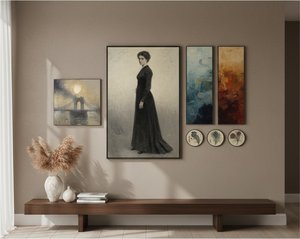
James Abbott McNeill Whistler: 25 Arcydzieł Sztuki Pejzażowej i Portretowej | AllPaintingsStore
Odkryj 25 arcydzieł Jamesa Abbotta McNeilla Whistler'a! Poznaj historię impresjonistycznych pejzaży, portretów i słynnych 'Nokturnów'. Reprodukcje obrazów najwyższej jakości na AllPaintingsStore.com – inspiracje dla Twojego wnętrza.
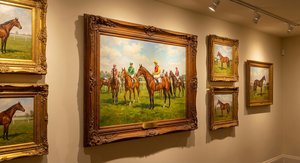
Sir Alfred James Munnings: 25 Arcydzieł Malarstwa Koni i Angielskiej Wsi | AllPaintingsStore.com
Odkryj 25 arcydzieł Sir Alfreda Jamesa Munningsa – mistrza malarstwa koni i angielskiego krajobrazu. Poznaj historię, technikę i piękno jego obrazów. Reprodukcje najwyższej jakości na AllPaintingsStore.com! Eksploruj pełną kolekcję online.

