Gwarancja zwrotu pieniędzy · 100 dni Darmowa dostawa na cały świat
449 582dzieła sztuki 30 618artyści 4 705muzea 32języki
Waluta
    Język
      Atelier · Est. 2015 · Paryż, Francja
      AllPaintingsStore
      allpaintingsstore.com
      Zobacz w skali 1:1 Zobacz w AR Przełącz na wersję drukowaną Przełącz na wersję cyfrową Wyślij
      Szczegóły Przewodnik Dodaj do ulubionych Pobierz plik obrazu Podobne obiekty RTG Pokaz slajdów Statystyki

      St Christopher

      Titian's 'St. Christopher' (1524) is a vibrant fresco depicting the saint carrying Christ, showcasing masterful color and symbolism of love & faith within a Venetian scene. Explore its rich details and artistic significance.

      Tiziano Vecellio (Titian): Wenecki mistrz koloru i światła, znany z portretów, scen mitycznych i rewolucyjnych technik malarskich. Odkryj życie artystyczne tego legendy!

      Ręcznie malowana reprodukcja olejowa

      Ręcznie malowany obraz olejny na płótnie, wykonany na zamówienie przez naszych artystów w wybranym przez Ciebie wymiarze i oprawie. ( Przełącz na wersję drukowaną Przełącz na wersję cyfrową)

      Corner sample of the P118B picture frame: moulded polystyrene, 5 cm wide and 3 cm thick
      P118B 10
      Corner sample of the P118H picture frame: moulded polystyrene, 5 cm wide and 3 cm thick
      P118H 10
      Corner sample of the P118W picture frame: moulded polystyrene, 5 cm wide and 3 cm thick
      P118W 10
      Corner sample of the P438Z picture frame: moulded polystyrene, 5.5 cm wide and 3.5 cm thick
      P438Z 10
      Corner sample of the P508JH picture frame: moulded polystyrene, 7 cm wide and 3.5 cm thick
      P508JH 12
      Corner sample of the P508YH picture frame: moulded polystyrene, 7 cm wide and 3.5 cm thick
      P508YH 12
      Corner sample of the P805H picture frame: moulded polystyrene, 5 cm wide and 3.5 cm thick
      P805H 10
      Corner sample of the P805Z picture frame: moulded polystyrene, 5 cm wide and 3.5 cm thick
      P805Z 10
      Corner sample of the P919BZ picture frame: moulded polystyrene, 7 cm wide and 3.5 cm thick
      P919BZ 10
      Corner sample of the P919G picture frame: moulded polystyrene, 7 cm wide and 3.5 cm thick
      P919G 10
      Corner sample of the P919XJ picture frame: moulded polystyrene, 7 cm wide and 3.5 cm thick
      P919XJ 10
      Corner sample of the P959ZH picture frame: moulded polystyrene, 5 cm wide and 3 cm thick
      P959ZH 10
      Corner sample of the P968JZ picture frame: moulded polystyrene, 6 cm wide and 4 cm thick
      P968JZ 12
      Corner sample of the W106C picture frame: solid wood, 5 cm wide and 3 cm thick
      W106C 8
      Corner sample of the W218G picture frame: solid wood, 5 cm wide and 3 cm thick
      W218G 10
      Corner sample of the W218JH picture frame: solid wood, 5 cm wide and 3 cm thick
      W218JH 8
      Corner sample of the W218Y picture frame: solid wood, 5 cm wide and 3 cm thick
      W218Y 10
      Corner sample of the W307PJ picture frame: solid wood, 6 cm wide and 3 cm thick
      W307PJ 10
      Corner sample of the W316G picture frame: solid wood, 6 cm wide and 3 cm thick
      W316G 10
      Corner sample of the W316PJ picture frame: solid wood, 6 cm wide and 3 cm thick
      W316PJ 8
      Corner sample of the W316Y picture frame: solid wood, 6 cm wide and 3 cm thick
      W316Y 10
      Corner sample of the W398PJ picture frame: solid wood, 5 cm wide and 3 cm thick
      W398PJ 8
      Corner sample of the W4111J picture frame: solid wood, 6.5 cm wide and 3.5 cm thick
      W4111J 10
      Corner sample of the W500HY picture frame: solid wood, 7 cm wide and 5 cm thick
      W500HY 15
      Corner sample of the W500JH picture frame: solid wood, 7 cm wide and 5 cm thick
      W500JH 15
      Corner sample of the W692G picture frame: solid wood, 8 cm wide and 4 cm thick
      W692G 12
      Corner sample of the W849H picture frame: solid wood, 5 cm wide and 3 cm thick
      W849H 8
      Corner sample of the W940BG picture frame: solid wood, 7.5 cm wide and 4.5 cm thick
      W940BG 15
      Corner sample of the W953PJ picture frame: solid wood, 6 cm wide and 3.5 cm thick
      W953PJ 8

      Standardowy
      na zamówienie
      CM
      INCH

      Wybierz spośród naszych standardowych rozmiarów, które zachowują oryginalne proporcje dzieła sztuki.

      szerokość
      wysokość

      Możesz wprowadzić własne wymiary, aby dopasować obraz do konkretnej ramy lub przestrzeni. Jeśli wybrany rozmiar nie będzie odpowiadał proporcjom oryginału, przytniecie dzieło sztuki lub rozszerzymy je o dodatkowe elementy, ręcznie domalowane przez artystę. Przed rozpoczęciem produkcji wyślemy projekt cyfrowy do Twojej akceptacji.
      Należy pamiętać, że podgląd na ekranie nie odzwierciedla rzeczywistego przycinania ani rozszerzania obrazu. Tylko projekt dokładnie pokaże ostateczną kompozycję.
      Choć oferujemy możliwość zamówienia niestandardowych rozmiarów, zalecamy wybór wymiaru z gotowej listy, aby zachować oryginalne proporcje dzieła.

      Przykłady możliwych zmian: Zamień twarz na zdjęcie klienta; Dodaj zwierzę domowe (np. zamień kota na psa); Ukryj wiadomość w tle; Zmień krajobraz lub elementy tła.
      Po złożeniu zamówienia zespół AllPaintingsStore.com skontaktuje się z klientem drogą mailową w celu uzyskania instrukcji i prześle wizualizację projektu

      Dostawa na całym świecie () w ciągu 3–4 tygodni zamiast standardowych 5 tygodni. (7 Październik). Bez kompromisów w kwestii jakości.

      Bezpłatna ekspresowa wysyłka na cały świat
      Wysokiej jakości płótno lniane
      Pełne ubezpieczenie transportowe
      Gwarancja zwrotu należności celnych i podatków importowych
      Gwarancja idealnego odwzorowania barw
      100-dniowy okres na zwrot dzieła w przypadku wykrycia wad produkcyjnych
      Gwarancja 100% zwrotu pieniędzy
      Oferta przy zakupie wielu sztuk

      Cena całkowita

      zł 957

      St Christopher

      Technika wykonania

      Rozmiar reprodukcji

      -

      Suma do zapłaty

      zł 957

      Kluczowe informacje

      • Influences: Christianity
      • Artist: Titian
      • Subject or theme: Religious painting
      • Movement: High Renaissance
      • Artistic style: Venetian School
      • Dimensions: 310 x 186 cm
      • Notable elements: Symbolic figures

      Quiz wiedzy o sztuce

      Do każdego pytania dotyczy tylko jedna poprawna odpowiedź.

      Pytanie 1:
      What is the primary symbolic significance of the roses held by Venus in Titian’s ‘St. Christopher’?
      Pytanie 2:
      The toga worn by the man holding the infant Jesus in ‘St. Christopher’ most likely suggests his status as:
      Pytanie 3:
      The fresco ‘St. Christopher’ was created in which year?
      Pytanie 4:
      According to the description, what effect does the light pouring in at the window have on the scene?
      Pytanie 5:
      What artistic style is ‘St. Christopher’ primarily associated with?

      A Venetian Masterpiece: Unveiling Titian’s St. Christopher

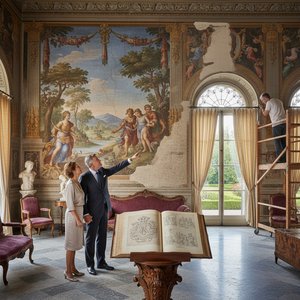
      Titian’s “St. Christopher,” painted in 1524, is more than just a religious depiction; it's a vibrant snapshot of Renaissance Venice, brimming with humanist ideals and masterful technique. This fresco, now residing within a private collection, offers a captivating glimpse into the artist’s genius – his ability to infuse everyday scenes with profound symbolism and breathtaking color. The painting immediately draws the eye to St. Christopher himself, a powerfully rendered figure wading through water, his strong physique and determined gaze embodying both physical strength and spiritual devotion. He carries the infant Jesus upon his shoulder, a gesture laden with religious significance, representing Christ’s journey towards salvation and the saint's role as a humble servant of God.

      The scene unfolds within a domestic setting – two servant girls are subtly integrated into the composition, perhaps searching for garments, providing a touch of earthly realism that anchors the divine narrative. This seemingly simple inclusion is deliberate; Titian expertly uses these figures to create a sense of *conviviality*, a feeling of warmth and human connection. The light streaming through the window, meticulously rendered with delicate brushstrokes, isn’t merely illumination but an active participant in the scene, generating a near-musical effect that enhances the overall atmosphere. Notice how this light dramatically highlights Venus, holding roses and myrtle – potent symbols of constancy and love, reinforcing the painting's central theme of devotion.

      The Renaissance Palette: Technique and Style

      Titian’s signature style is immediately apparent in “St. Christopher.” He employs a loose, expressive brushwork, characteristic of his *arte moderna*, moving away from the rigid conventions of earlier Italian art. This technique allows for a remarkable dynamism within the composition – the water seems to ripple beneath St. Christopher's feet, and the figures possess a palpable sense of movement. The color palette is equally captivating; Titian masterfully utilizes rich reds, blues, and golds, creating a visual feast that’s both opulent and deeply resonant. The subtle gradations of color, particularly in the depiction of light and shadow, contribute to the painting's three-dimensionality, making it feel remarkably alive.

      The fresco itself is executed with remarkable skill, demonstrating Titian’s mastery of *trompe l'oeil* – creating an illusion of depth. The architectural details in the background, though stylized, convincingly suggest a distant landscape, further immersing the viewer within the scene. This careful attention to detail underscores Titian’s commitment to realism while simultaneously allowing him to explore his artistic vision.

      Symbolism and Context: A Venetian Tapestry

      Beyond its immediate narrative, “St. Christopher” is rich in symbolism. The dog, roses, and myrtle – all carefully placed within the composition – serve as visual reminders of love’s enduring power. St. Christopher himself was a popular saint among travelers, embodying protection and safe journeys. His association with Venice—as depicted here over a staircase leading to the Doge's private chambers—highlights the city’s strategic importance and its reliance on divine favor for security. The presence of the servant girls adds another layer of meaning, suggesting the everyday lives that underpinned the grandeur of Venetian society.

      Painted during a period of immense artistic innovation in Venice, “St. Christopher” reflects the city's flourishing cultural landscape. Titian was deeply influenced by classical antiquity and humanist ideals, which are evident in his emphasis on human form and emotion. This fresco stands as a testament to his ability to seamlessly blend religious themes with secular observations, creating a work of art that is both profoundly spiritual and remarkably engaging.

      Bringing the Masterpiece Home: Reproductions for Your Space

      AllPaintingsStore offers meticulously crafted hand-painted reproductions of Titian’s “St. Christopher,” allowing you to bring this iconic masterpiece into your home or office. Our skilled artists replicate Titian's vibrant colors, dynamic brushwork, and masterful composition with unparalleled accuracy. Available in a range of sizes and materials – from luxurious canvas to elegant framed prints – our reproductions capture the essence of this Venetian treasure.

      Whether you’re an art enthusiast, a collector, or simply seeking to add a touch of Renaissance elegance to your space, a AllPaintingsStore reproduction of “St. Christopher” is a stunning investment that will grace your walls for generations to come. Explore the artwork details here.

      Pytania i odpowiedzi

      Jak nasycona jest paleta kolorystyczna dzieła "St Christopher"?

      Paleta dzieła "St Christopher" charakteryzuje się Muted nasyceniem kolorów.

      Do czego sugerowane jest wykorzystanie „St Christopher” autorstwa Tycjan?

      Sugerowanym zastosowaniem dla „St Christopher” autorstwa Tycjan jest Statement. Może on jednak służyć również do innych celów.

      Czy dzieło "St Christopher" znajduje się w kraju swojego twórcy?

      Tak – dzieło znajduje się w kraju pochodzenia artysty. Krajem pochodzenia artysty jest Włochy, natomiast muzeum przechowujące oryginał znajduje się w Włochy.

      Jaki nastrój oddaje „St Christopher” autorstwa Tycjan w ramach nurtu High Renaissance?

      "St Christopher" niesie ze sobą Spiritual wydźwięk emocjonalny w obrębie nurtu High Renaissance.

      Ile lat miał Tycjan, gdy powstało dzieło „St Christopher”?

      Tycjan stworzył/a "St Christopher" w wieku 34 lat. Artysta urodził/a się w 1490, a datowanie dzieła to 1524.

      W którym roku powstało „St Christopher” autorstwa Tycjan?

      Dzieło "St Christopher" pochodzi z 1524 roku. Data ta pozwala umiejscowić pracę w kontekście twórczości Tycjan oraz epoki, w której powstała.

      Kto stworzył "St Christopher"?

      „St Christopher” zostało stworzone przez Tycjan. Informacje na tej stronie opisują oryginalne dzieło autorstwa Tycjan.


      Biografia artysty

      The Venetian Titan: A Life in Color and Canvas

      Tiziano Vecellio, znany na całym świecie jako Titian, stanowi monumentalną postać renesansu włoskiego – być może jego najbardziej wybitnego kolorysty i mistrza, który zdefiniował możliwości malarstwa olejne. Urodzony około 1490 roku w Pieve di Cadore, ukrytej wśród dramatycznych krajobrazów Wenecjackich Alp, jego podróż od skromnych początków do międzynarodowej chwały jest świadectwem niezwykłego talentu i niezachwianej dedykacji dla innowacji artystycznych. Szczegóły dotyczące wczesnego życia Tytiana pozostają częściowo owiane tajemnicą, jednak wiemy, że był jednym z wielu dzieci urodzonych dla Gregorio Vecellio, wojskowego, i Lucji. Rozumiejąc ich potencjał, rodzina zaaranżowała, aby młody Tiziano i jego brat Francesco podjęli naukę u artysty w Wenecji – decyzja, która na zawsze zmieniła bieg historii sztuki. Wenecja o początku XVI wieku była tętniącym życiem centrum handlu, kultury i artystycznego fermentu. Początki szkolenia Tytiana przypadły na warsztat Sebastiano Zuccato, mozaikisty, a następnie krótkie okresy pod opieką Gentile Bellini i, co najważniejsze, jego brata Giovanni. Jednak to jego związek z Giorgione – współczesnym malarzem, którego twórczość posiadała eteryczną, liryczną poetykę – okazał się najbardziej formatujący. Obaj artyści współpracowali nad kilkoma projektami, w tym na freskach zewnętrznych dla Fondaco dei Tedeschi, tętniącego życiem domu handlowego dla kupców niemieckich. Już we wczesnych pracach Tytiana jego wyjątkowe umiejętności były widoczne, zyskując uznanie wśród współczesnych i zapowiadając blask, który miał rozkwitnąć.

      Rozwój Artystyczny Mistrza

      Artystyczny rozwój Tytiana charakteryzował się niezwykłą wszechstronnością i ciągłą eksploracją technik malarskich. Jego wczesne prace, silnie inspirowane przez Giorgione, cechują się delikatnym liryzmem i mistrzowskim wykorzystaniem koloru do tworzenia efektów atmosferycznych. Malowidła takie jak *A Man with a Quilted Sleeve* (około 1509) demonstrują jego wschodzące talenty w portrecie, uchwycując nie tylko fizyczne podobieństwo podmiotów, ale także ich wewnętrzny charakter. Wraz z dojrzałem Tytian zaczął odchodzić od subtelnych tonalności Giorgione i przyjmował bardziej zdecydowany, dramatyczny styl w użyciu koloru. *The Visitation of Mary and Elizabeth* (obecnie w Accademia, Wenecja) ilustruje tę zmianę, prezentując jego rosnącą pewność siebie w operowaniu skomplikowanymi kompozycjami i żywymi barwami. Przez całą swoją długą karierę Tytian konsekwentnie wykraczał poza granice ekspresji artystycznej. Eksperymentował z różnymi pociągnięciami pędzla – od gładkich, połączonych powierzchni po luźne, ekspresywne znaki – i opracował unikalną technikę warstwowego nakładania kolorów w celu tworzenia luminescencyjnych efektów. Jego portrety stały się znane z głębi psychologicznej i realistycznego oddawania faktur i tkanin. Jednocześnie doskonalił tematy mitologiczne i religijne, wnikając w nie z emocjonalną głębią i dramatyczną intensywnością, która urzekła odbiorców. Przykładowo *Venus of Urbino* to arcydzieło, które zdefiniowało przedstawienie nude kobiety i ugruntowało pozycję Tytiana jako lidera malarstwa weneckiego.

      Patronat, Prestige i Długotrwałe Wpływy

      Talent Tytiana przyciągnął uwagę wpływowych mecenasów z całej Europy. Był malarzem dworskim cesarza Karola V, króla Filipa II Hiszpańskiego i papieża Pawła III, wśród innych. Ten patronat nie tylko zapewnił mu bezpieczeństwo finansowe, ale także umożliwił tworzenie monumentalnych dzieł, które prezentowały jego artystyczne umiejętności na szeroką skalę. Jego zdolność do adaptowania stylu do gustów różnych dworów, zachowując jednocześnie swój charakterystyczny głos, jest świadectwem jego niezwykłych umiejętności i dyplomatycznej zręczności. Tytian zmarł w Wenecji w 1576 roku podczas epidemii dżumy. Jego obrazy znajdują się w muzeach na całym świecie, w tym Galleria Palatina we Florencji, Prado Museum w Madrycie i National Gallery w Londynie. Doświadczenie Tytiana to spotkanie z mistrzem rzemiosła na szczycie swoich sił – malarzem, który posiadał niezrównaną zdolność do uchwycenia piękna, dramatu i złożoności ludzkiego stanu.

      Odkrywanie Dalszych Szczegółów

      • Muzea & Kolekcje: Odkryj prace Tytiana w Scuola del Santo w Paduli i San Salvador w Wenecji, prezentujących jego zapierające dech w piersiach freski.
      • Powiązane Artyści: Zbadaj wpływ Giorgione na wczesny styl Tytiana i późniejszy wpływ Tytiana na takich artystów jak Rubens i Delacroix.
      • Kontekst Historyczny: Zanurz się w świat renesansu włoskiego i malarstwa weneckiego, aby w pełni docenić artystyczne osiągnięcia Tytiana.
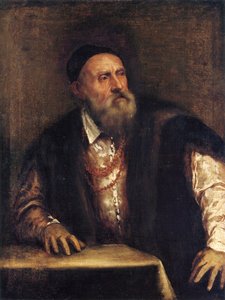
      Tycjan

      Tycjan

      1490 - 1576 , Włochy

      Najważniejsze informacje

      • Artistic Movement Or Style: Renesans, malarstwo Wenecjańskie
      • Artists Or Movements Influenced By This Artist:
        • Rubens
        • Delacroix
      • Artists Who Influenced This Artist:
        • Giovanni Bellini
        • Giorgione
      • Date Of Birth: c. 1490
      • Date Of Death: 1576
      • Full Name: Tiziano Vecellio
      • Nationality: Włoski
      • Notable Artworks:
        • A Man with a Quilted Sleeve
        • Venus Urbinońska
      • Place Of Birth: Pieve di Cadore, Włochy
      Odkryj dzieła sztuki uporządkowane według tematów, stylów i cech charakterystycznych.