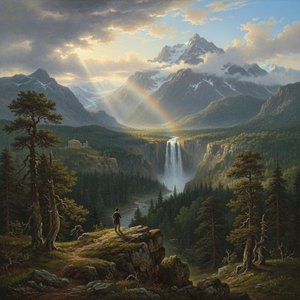
Jedburgh Abbey
Romantic Landscape
71.0 x 92.0 cm
Harris Museum - Art Gallery
Ręcznie malowana reprodukcja olejowa
Ręcznie malowany olej na płótnie w Twoim wymiarze i ramie, tworzony na zamówienie przez naszych artystów. ( Switch to Print
Switch to Image)
Wybierz spośród naszych predefiniowanych rozmiarów, które zachowują oryginalne proporcje dzieła sztuki.
Możesz wprowadzić własne wymiary, aby dopasować obraz do konkretnej ramy lub przestrzeni. Jeśli wybrany rozmiar nie będzie odpowiadał proporcjom oryginału, przytniecie dzieło sztuki lub rozszerzymy je o dodatkowe elementy, ręcznie domalowane przez artystę. Przed rozpoczęciem produkcji wyślemy projekt cyfrowy do Twojej akceptacji.
Należy pamiętać, że podgląd na ekranie nie odzwierciedla rzeczywistego przycinania ani rozszerzania obrazu. Tylko projekt dokładnie pokaże ostateczną kompozycję.
Choć oferujemy możliwość zamówienia niestandardowych rozmiarów, zalecamy wybór wymiaru z gotowej listy, aby zachować oryginalne proporcje dzieła.
Po złożeniu zamówienia zespół AllPaintingsStore.com skontaktuje się z klientem drogą mailową w celu uzyskania instrukcji i prześle wizualizację projektu
Dostawa na całym świecie () w ciągu 3/4 tygodni zamiast standardowych 5 tygodni. (28 Lipiec). Bez kompromisów w kwestii jakości.
Bezpłatna ekspresowa wysyłka na cały świat
Wysokiej jakości płótno lniane
Pełne ubezpieczenie przesyłki
Gwarancja zwrotu należności celnych
Gwarancja pełnego zgodności kolorystycznej
Polityka 60-dniowego zwrotu (tylko w przypadku wad)
Gwarancja 100% zwrotu pieniędzy
Zniżka przy większych zamówieniach
Jedburgh Abbey
Technika reprodukcji
Wymiary reprodukcji
-
Cena całkowita
$ 258
Podobne dzieła sztuki
Biografia artysty
Tom Anderton: Pioneer of Canadian Landscape Painting
Tom Anderton (1894–1956) was a British-born Canadian landscape painter who achieved international acclaim for his distinctive style and contribution to the Group of Seven movement. Born in London, England, he emigrated to Canada in 1920 seeking inspiration from the vast wilderness landscapes of Ontario and Quebec. This move profoundly shaped his artistic vision and cemented his place as one of Canada’s most celebrated artists.- Early Life & Education: Anderton received a formal education at Marlborough College and later studied at Slade School of Fine Art in London, honing his skills in traditional academic painting techniques. However, he quickly abandoned these conventions for a more expressive approach rooted in observation and emotion.
- Influences: His artistic sensibilities were significantly impacted by Impressionism and Post-Impressionism, particularly the works of Claude Monet and Vincent van Gogh. These influences instilled in him a fascination with capturing fleeting moments of light and color—a characteristic that would become central to his oeuvre.
The Group of Seven & Canadian Landscape Style
Anderton joined the Group of Seven in 1923, alongside artists like Franklin Carmichael, Arthur Hemingway, Lawren Harris, Albert Moore, J.E.H MacDonald and Frederick Varley. This influential collective championed a bold new vision for Canadian art—one that prioritized capturing the grandeur and spirit of the Canadian wilderness. Anderton’s paintings exemplify this style through their masterful use of impasto technique—thickly applied paint—creating textured surfaces that convey palpable energy and atmosphere. He skillfully rendered landscapes with luminous colors, emphasizing tonal variations and dramatic compositions.- Signature Style: Anderton's distinctive approach involved layering brushstrokes to build up texture and depth, mirroring the rugged beauty of Canadian vistas. His palette favored muted hues—greens, browns, blues—reflecting the subtle nuances of natural light.
- Notable Works: Among his most iconic paintings are “Fisherman,” “Brindle Village Evening” and “Upland Landscape with Bridge.” These pieces showcase Anderton’s ability to convey both visual splendor and psychological resonance.
Development & Artistic Evolution
Throughout his career, Anderton continued to refine his technique and explore new subjects—primarily focusing on Canadian landscapes and portraits. He embraced experimentation with color and texture, pushing the boundaries of traditional painting while maintaining a steadfast commitment to capturing the essence of nature’s majesty. His artistic journey mirrored the broader cultural shifts occurring in Canada during the interwar period, reflecting a growing appreciation for indigenous traditions and a desire to forge a uniquely Canadian artistic identity.- Later Years: Anderton established a studio in Toronto and taught at Ontario College of Art, nurturing young talent and disseminating his artistic principles.
- Legacy: Tom Anderton’s enduring legacy resides in his pioneering role within the Group of Seven and his contribution to establishing Canadian landscape painting as an internationally recognized genre. His paintings continue to inspire artists and viewers alike—serving as a testament to the transformative power of observation and artistic expression.
Historical Significance & Recognition
Anderton’s work gained considerable acclaim during his lifetime, securing prominent positions in Canadian art history. He was recognized for his stylistic innovation and emotional depth, solidifying his reputation as a visionary artist who captured the spirit of Canada's wilderness. Today, Anderton’s paintings are housed in major museums across North America—including the National Gallery of Canada and the Art Institute of Chicago—demonstrating the lasting impact of his artistic endeavors on Canadian culture and art scholarship.tom anderton
1894 - 1956
Kluczowe informacje
- Artistic Movement Or Style: Group of Seven
- Artists Or Movements Influenced By This Artist: ['Group of Seven']
- Artists Who Influenced This Artist: ['Maurice Whistler']
- Date Of Death: 1956
- Full Name: Tom Anderton
- Nationality: Australian
- Notable Artworks:
- Fisherman, Upland Landscape with Bridge (1)
- Fisherman, Upland Landscape with Bridge (2)
- Brindle Village Evening
- Place Of Birth: Melbourne, Australia

Opcja szkła jest dostępna wyłącznie w rozmiarach poniżej 110 cm