Gwarancja zwrotu pieniędzy · 100 dni Darmowa dostawa na cały świat
449 564dzieła sztuki 30 613artyści 4 660muzea 32język
Wpis do katalogu

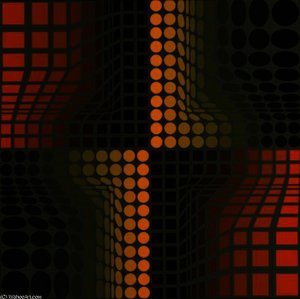
Opal

Akryl na płótnie.

Ryc. 1. Wiktór Wasaryli, Opal. Przedstawiono jako wybraną przez Ciebie reprodukcję: , .

§ 1Dane katalogowe

§ 2Abstrakcja

Opis obiektu

Opal - abstrakcyjne dzieło Victora Vasarely'ego z kolekcji Op Art. Geometryczne okręgi i kola tworzą fascynujące iluzje wzrokowe, reprezentowane przez jednego z najważniejszych twórców XX wieku.

Biografia artysty

Victor Vasarely (1906-1997) – pionier op-art i sztuki kinetycznej. Jego geometryczne abstrakcje, iluzje optyczne i wpływ na współczesny design są niezapomniane.

§ 3Komentarz

Opale – A Symphony of Geometric Illusion

Victor Vasarely’s “Opale” isn't merely a painting; it’s an invitation to perceive reality differently. Created sometime in the mid-century, this artwork embodies the spirit of Op Art—Optical Art—a movement that emerged in the 1960s and captivated audiences with its mesmerizing ability to generate visual illusions. The image itself presents a deceptively simple composition: circles of varying hues – crimson reds, sapphire blues, emerald greens, sunny yellows, tangerine oranges, amethyst purples, and delicate pinks – arranged in an intricate pattern that dances across the canvas. At first glance, it appears as a collection of colorful dots, yet upon closer inspection, these circles generate a subtle movement, creating an optical effect that tricks the eye into perceiving depth and dynamism where none exists.

The Genesis of Geometric Abstraction

Vasarely’s artistic journey began unexpectedly—with medical studies—but his passion for visual expression swiftly steered him toward painting. Influenced profoundly by the Bauhaus school's emphasis on functional design and geometric abstraction, he honed his craft under Sándor Bortnyik, mastering techniques that would become synonymous with his distinctive style. This formative period instilled in him a belief that art could communicate ideas beyond representational imagery, prioritizing fundamental visual principles. The resulting canvases are characterized by precise lines and shapes—primarily circles—that overlap and intersect to generate complex patterns. These geometric forms aren’t randomly placed; they adhere to a rigorously defined system based on mathematical concepts like Voronoi diagrams and fractal geometry – techniques that Vasarely himself championed, aiming to democratize visual experience and challenge conventional notions of artistic expression.

A Reflection of the Zeitgeist

“Opale” speaks directly to the anxieties and aspirations of its era. The 1960s witnessed a burgeoning interest in psychology and neuroscience, fueled by breakthroughs in understanding perception and consciousness. Artists like Vasarely responded to these developments by exploring how visual stimuli could manipulate our senses and alter our subjective experience. This fascination with illusion aligns perfectly with the broader cultural movement questioning established norms and embracing experimentation—a hallmark of the time. The bold colors and dynamic arrangement of circles aren’t simply aesthetically pleasing; they represent a deliberate effort to disrupt passive observation, prompting viewers to actively engage with the artwork and contemplate its underlying structure.

Symbolism Beyond Color

While color plays a crucial role in conveying emotion – reds symbolizing passion and energy, blues evoking tranquility – Vasarely's use of geometric forms transcends mere chromatic association. Circles represent wholeness, unity, and infinite expansion—concepts that resonate deeply with philosophical ideas prevalent during the period. The repetition of these shapes reinforces their significance, creating a visual rhythm that draws the eye inward while simultaneously suggesting limitless possibilities. It’s as if Vasarely invites us to abandon preconceived notions about how we perceive the world and embrace a more fluid, dynamic understanding of reality.

A Legacy of Innovation

Victor Vasarely's “Opale” stands as a testament to his unwavering commitment to artistic innovation. He wasn’t merely creating beautiful images; he was constructing visual puzzles that challenged viewers intellectually while simultaneously stimulating their senses emotionally. His pioneering approach to Op Art cemented his place in art history and continues to inspire artists today. Reproductions of this captivating artwork offer an opportunity to bring a piece of modernist brilliance into any interior space, capturing the essence of geometric abstraction and its enduring power to provoke contemplation and wonder.

Pytania i odpowiedzi

Jaka paleta i dominujący kolor definiują "Opal"?

„Opal” – Wiktór Wasaryli wykorzystuje paletę w odcieniach Ciemne tony, w której dominuje kolor Brązowy (#a03431).

Jak mogę odkryć dzieła podobne do „Opal” – Wiktór Wasaryli?

Strona Podobne dzieła dzieła „Opal” – Wiktór Wasaryli prezentuje powiązane utwory.

Jakie umiejscowienie najlepiej pasuje do formatu dzieła „Opal” – Wiktór Wasaryli?

Format (Kwadrat) oraz rekomendowana przestrzeń (Salon lub strefa dzienna) to dwa parametry dotyczące rozmieszczenia dzieła „Opal” – Wiktór Wasaryli.

§ 4Artysta

Wiktór Wasaryli

Wiktór Wasaryli

1906 - 1997, Chorwacja

Krótkie informacje o Wiktór Wasaryli

  • Artistic Movement Or Style: Op Art, Kinoart
  • Artists Or Movements Influenced By This Artist: ['Projektowanie graficzne']
  • Artists Who Influenced This Artist:
    • Mondrian
    • Malevich
  • Date Of Birth: 9 kwietnia 1906
  • Date Of Death: 15 marca 1997
  • Full Name: Victor Vasarely
  • Nationality: Węgiersko-Francuz
  • Notable Artworks:
    • Blue Study
    • Green Study
  • Place Of Birth: Pécs, Chorwacja

Biografia artysty

A Life Forged in Geometry: The World of Victor Vasarely

Victor Vasarely (węg. Vásárhelyi Győző), (ur. 9 kwietnia 1906, Pecz, Węgry, zm. 15 marca 1997, Paryż, Francja) – artysta węgierskiego pochodzenia, który tworzył i pracował we Francji aż do śmierci. Jeden z czołowych przedstawicieli abstrakcji geometrycznej. Uważany za prekursora i przedstawiciela nurtu op-art. Tworzył poprzez komponowanie układów, wykorzystując geometryczne kształty (najbardziej charakterystyczne są kompozycje w kształcie kostki). Tworzył iluzję przestrzennej głębi na powierzchniach dwuwymiarowych, wykorzystując do tego jedynie abstrakcyjne plamy barwne. Pierwotnie w jego pracach dominowała czarno-biała kolorystyka, którą znacznie urozmaicił w swojej późniejszej działalności. Pierwotnie studiował medycynę, jednak po dwóch latach zmienił kierunek na malarstwo. Vasarely działał w węgierskim oddziale Bauhausu (Muhely) w Budapeszcie pod koniec lat 20. XX wieku. Here, Vasarely absorbed the tenets of functional design and geometric abstraction, seeds that would blossom into his signature style. These formative years weren't simply about acquiring technique; they were about dismantling traditional artistic conventions and embracing a new visual language rooted in logic and precision. From Early Abstraction to the Dawn of Op ArtThe late 1920s and early 1930s witnessed Vasarely’s gradual departure from representational art, as he delved deeper into the realm of geometric abstraction. Works like “Blue Study” and “Green Study,” created in 1929, exemplify this transition – a deliberate shedding of narrative content in favor of pure form and color relationships. While influenced by masters such as Piet Mondrian and Kazimir Malevich, Vasarely wasn’t content to simply emulate their styles. He sought to transcend the static compositions of his predecessors, aiming for a dynamism that would actively engage the viewer's perception. This quest led him to Paris in 1930, where he established himself as a graphic designer and advertising artist, honing his skills while continuing to develop his unique artistic vision. It was during this period that he began experimenting with techniques that would later become hallmarks of Op Art – manipulating shapes and colors to create illusions of movement and depth. The seeds were sown for a revolution in visual experience.

The Systematic Illusion: Defining a Movement

By the 1960s, Victor Vasarely had fully emerged as a leading figure in the burgeoning Op Art movement. Unlike many artists who relied on intuition and spontaneous expression, Vasarely approached his work with a distinctly systematic methodology. He employed grids and mathematical principles to generate patterns that created powerful optical illusions – visual vibrations, swirling effects, and sensations of depth where none physically existed. This wasn’t about trickery; it was about revealing the inherent dynamism within perception itself. He believed in reproducibility and mass appeal, aiming to democratize art by making it accessible beyond the confines of galleries and museums. His work challenged viewers to question their own visual experience, forcing them to actively participate in the creation of meaning. He wasn't merely painting pictures; he was constructing experiences.

Historical Significance

Vasarely’s contribution to art history is multifaceted. He moved beyond traditional painting techniques to create works that actively engage the viewer’s perception. His systematic approach challenged conventional notions of artistic creativity and paved the way for computer-generated art and digital design. By embracing reproducibility and commercial applications, Vasarely blurred the boundaries between fine art and popular culture, leaving an enduring mark on both. He wasn't simply creating aesthetically pleasing objects; he was conducting visual experiments that revealed fundamental truths about how we see the world. His work continues to resonate today, reminding us of the power of abstraction, the beauty of geometry, and the endless possibilities of human creativity.

Influences and Development

Vasarely’s artistic journey began with a medical education in Budapest, but he quickly realized his true passion lay in visual expression. His enrollment at Sándor Bortnyik’s workshop – Műhely – profoundly shaped his early style, exposing him to the principles of functional design and geometric abstraction deeply rooted in the Bauhaus movement. This environment fostered a critical approach to traditional art forms, encouraging him to dismantle established conventions and develop a new visual language based on logic and precision. His time in Paris solidified this shift, as he honed his skills as a graphic designer and advertising artist while continuing to experiment with abstract forms and color relationships. The influence of Piet Mondrian’s reductive style and Kazimir Malevich's Suprematist explorations are evident in Vasarely’s early works, yet he ultimately sought to transcend mere imitation, aiming for a dynamic visual experience that engaged the viewer’s perception directly.

Major Achievements

Vasarely’s legacy extends far beyond his paintings. He pioneered techniques of optical illusion and kinetic art, creating works that challenged our understanding of space and movement. His collaboration with Rosenthal porcelain resulted in the iconic “Suomi” tableware series, demonstrating his ability to integrate artistic principles into everyday objects. Perhaps most remarkably, Vasarely’s work was selected for display aboard the French-Soviet spacecraft Salyut 7 in 1982 – a testament to its universal appeal and groundbreaking nature. His Fondation Vasarely in Aix-en-Provence continues to preserve and promote his extensive body of work, ensuring that his innovative vision endures.

§ 5Podobne dzieła

§ 6Pytania

Najważniejsze informacje

  • Title: Opale
  • Dimensions: Nieznane
  • Movement: Op Art
  • Notable elements or techniques: Geometryczna abstrakcja, iluzje optyczne
  • Influences: Bauhaus
  • Artist: Victor Vasarely

Quiz o sztuce

Do każdego pytania dotyczy tylko jedna poprawna odpowiedź.

Pytanie 1:
Jak nazywa się obraz?
Pytanie 2:
Kto jest twórcą tego dzieła sztuki?
Pytanie 3:
Czy obraz wykorzystuje technikę Op Art?
Pytanie 4:
Ile okrągów można dostrzec na obrazie?
Pytanie 5:
Jakie kolory dominują na obrazie?

§ 7Cytuj ten wpis

AllPaintingsStore.com, “Wiktór Wasaryli, Opal”, https://allpaintingsstore.com/pl/art/victor-vasarely-opal-8EWRZC-pl/ArtistReproduction/ (dostęp dnia 7 Październik 2026).

§ 8Reprodukcja dzieła

Ręcznie malowana reprodukcja olejowa

Ręcznie malowany obraz olejny na płótnie, wykonany na zamówienie przez naszych artystów w wybranym przez Ciebie wymiarze i oprawie. ( Przełącz na wydania drukowane Przejdź do wersji cyfrowej)

Informacja ta widnieje na marginesie arkusza zamówienia; obecny stan tego arkusza przedstawia się następująco.

Opal

Technika reprodukcji

Wymiary reprodukcji

-

Wybitny mistrz artystyczny

Większa szczegółowość, finezja i dodatkowy czas na realizację

-

Opcje oprawy reprodukcji

-

-

W przypadku dzieł sztuki lub reprodukcji, których którykolwiek z boków przekracza 105 cm (około 41 cali), rama zostanie wysłana w formie zestawu do samodzielnego montażu. Metoda ta zapewnia bezpieczną dostawę i zapobiega uszkodzeniom podczas transportu.

Wymagany profesjonalny montaż – nie jest to produkt typu DIY.
Zestaw musi zostać złożony, a płótno naciągnięte przez doświadczonego profesjonalnego ramiarza, przy użyciu kleju do drewna (brak w zestawie), kleszczy do naciągania płótna oraz ścisków, które utrzymają krosna w równej pozycji podczas schnięcia kleju. Nieprawidłowy montaż lub nierównomierne napięcie płótna może trwale uszkodzić dzieło sztuki i nie podlega naszej gwarancji.

  • W zestawie znajdują się wszystkie listwy z litego drewna, precyzyjnie docięte do wymiarów.

  • Montaż odbywa się przy użyciu dołączonych wkrętów oraz kleju do drewna do łączenia narożników, którego zestaw nie zawiera i który musi zostać dostarczony przez ramiarza.

  • Wymagane są profesjonalne narzędzia, których nie ma w zestawie: kleszcze do naciągania płótna (napinacz) oraz zaciski, które pozwolą utrzymać listwy w równej pozycji podczas schnięcia kleju.

Ważne:
Do połączenia narożników niezbędny jest klej do drewna, listwy należy unieruchomić za pomocą ścisków do momentu całkowitego wyschnięcia kleju, a naciągnięcie płótna na złożoną ramę wymaga użycia kleszczy do naciągania płótna. Żaden z tych elementów nie jest dołączony do zestawu. Przed zamówieniem tego rozmiaru zalecamy konsultację z doświadczonym ramiarzem.

Etykieta obiektu

-

-

Lakier ochronny

Lakier z połyskiem (pogłębia kolory, chroni przed światłem i wilgocią)

-

Personalizacja dzieła

Przykłady możliwości personalizacji: zastąp twarz zdjęciem klienta; dodaj zwierzę domowe (np. zamień kota na psa); umieść ukrytą wiadomość w tle; zmień krajobraz lub elementy tła.

-

Ekspresowa

Dostawa na cały świat () w ciągu 3–4 tygodni zamiast standardowych 5 tygodni. (4 Listopad). Bez kompromisów w kwestii jakości.

-

Przesyłka ekspresowa

Dostawa na cały świat () w ciągu 5 tygodni. (11 Listopad).

W cenie

Cena całkowita

zł 1002

W każdym zamówieniu

  • Bezpłatna ekspresowa wysyłka na cały świat
  • Wysokiej jakości płótno lniane
  • Pełne ubezpieczenie przesyłki
  • Gwarancja zwrotu należności celnych i podatków importowych
  • Gwarancja wiernego odwzorowania kolorów
  • 100-dniowa polityka zwrotów (tylko w przypadku wad)
  • Gwarancja 100% zwrotu pieniędzy
  • Zniżka przy zakupie wielu sztuk
Arkusz zamówień