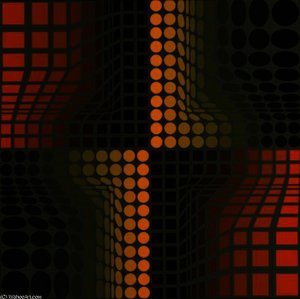
Acrylic On Canvas. Bechtler Museum of Modern Art.

§ 1Dane katalogowe


Ten utwór podlega ochronie prawem autorskim
Dzieło sztuki prezentowane na tej stronie podlega ochronie prawem autorskim, co oznacza, że nie mamy prawa do tworzenia ani sprzedaży jego identycznej reprodukcji. Ochrona ta jest egzekwowana na mocy umów międzynarodowych, takich jak Konwencja berneńska oraz przez przepisy prawa krajowego, w tym te określone w Prawo autorskie USA – Tytuł 17.
Jako pełną szacunku i legalną alternatywę oferujemy personalizowane, malowane ręcznie dzieła sztuki inspirowane oryginałem. Nasi wykwalifikowani i profesjonalni artyści starannie analizują styl, nastrój oraz artystyczną esencję pierwowzoru, aby stworzyć nowe, unikalne dzieło, które przywołuje te same emocje – pozostając jednocześnie w pełni oryginalną kreacją.
Metoda ta jest w pełni zgodna z przepisami prawa autorskiego, ponieważ nie polega na kopiowaniu ani powielaniu chronionego dzieła. Stanowi ona kreatywną reinterpretację – nowy obraz, który czerpie inspirację z oryginału, ale nie jest z nim tożsamy.
 Dowiedz się więcej
§ 2Abstrakcja
Opis obiektu
Experience Victor Vasarely's 'SIR-RIS': A mesmerizing Op Art sculpture of geometric abstraction! Explore its reflective surface, dynamic lines & optical illusions – a true masterpiece of modern art.
Biografia artysty
Pionier Op Art, Victor Vasarely, mistrz iluzji optycznych. Odkryj jego hipnotyzujące abstrakcje geometryczne już dziś.
§ 3Komentarz
SIR-RIS: A Geometric Dance of Perception by Victor Vasarely
Victor Vasarely’s ‘SIR-RIS,’ a captivating sculpture rendered in meticulous black and white, stands as a cornerstone of Op Art – a movement that fundamentally challenged our understanding of visual perception. This isn't merely a representation of form; it’s an invitation to actively participate in the illusion, a testament to Vasarely’s mastery of manipulating space and light through geometric precision. The photograph captures ‘SIR-RIS’ in all its arresting complexity: a stylized cube, seemingly fractured by intersecting lines that generate a dynamic, almost dizzying effect. The stark contrast between the sculpture's intricate pattern and the clean white pedestal immediately draws the eye, emphasizing the artwork’s deliberate disruption of conventional visual experience.
Deconstructing Illusion: Vasarely’s Op Art Technique
Vasarely’s approach was rooted in a rigorous exploration of mathematical principles and their application to artistic creation. ‘SIR-RIS’ exemplifies this perfectly. The sculpture's design relies heavily on parallel lines that curve and intersect, creating a powerful sense of movement and distortion. These aren’t random arrangements; they are precisely calculated to exploit the way our eyes perceive depth and distance. The use of black and white amplifies this effect, eliminating color as a distraction and forcing the viewer to focus solely on the interplay of lines and shapes. The polished metal surface, likely chosen for its reflective qualities, further enhances this illusion, creating an almost three-dimensional experience within the two-dimensional image.
A Legacy of Kinetic Art and Modern Design
Born in 1906 in Pécs, Croatia (then part of Austria-Hungary), Victor Vasarely’s journey began far from the world of abstract art. Initially studying medicine, he was drawn to visual expression, a path solidified by his enrollment in Sándor Bortnyik's workshop – a hub for Bauhaus-influenced design. This formative experience instilled within him a fascination with functional geometry and its potential to create dynamic visual experiences. ‘SIR-RIS’ is a direct descendant of this lineage, echoing the principles of Op Art—a movement that sought to stimulate the eye through optical illusions. Vasarely's work anticipated many developments in kinetic art and influenced generations of designers and artists who explored the relationship between perception and form. The sculpture’s creation involved careful planning and execution, likely utilizing templates or precise tools to ensure the accuracy of the repeating pattern – a testament to the artist’s dedication to his craft.
Symbolism and the City of Tomorrow
Beyond its purely visual impact, ‘SIR-RIS’ reflects Vasarely's broader vision for the future. His work often explored themes of urban development and technological advancement, envisioning a world shaped by geometric order and rational design. The sculpture can be interpreted as a representation of a structured, yet dynamic, cityscape – a “city of tomorrow” where form and function are inextricably linked. The deliberate fragmentation and distortion suggest a critical engagement with the complexities of modern life, prompting viewers to question their own perceptions and assumptions about reality. Vasarely’s legacy extends beyond artistic innovation; it represents a profound exploration of how we experience and interpret the world around us.
Pytania i odpowiedzi
Jakie miejsce w historii sztuki zajmuje „SIR-RIS” – Victor Vasarely?
Pod względem historycznym „SIR-RIS” to dzieło z nurtu Op Art, powstałe w szerszej epoce Modern.
Czy „SIR-RIS” – Victor Vasarely to portret, pejzaż czy kompozycja kwadratowa?
„SIR-RIS” – Victor Vasarely to kompozycja w formacie Portrait. Warto sprawdzić proporcje przed wyborem rozmiaru wydruku.
Czy dostępny jest plik do pobrania w wysokiej rozdzielczości dla "SIR-RIS"?
„SIR-RIS” jest dostępny jako wysokiej rozdzielczości cyfrowe zdjęcie do pobrania; można go nabyć bezpośrednio na stronie Cyfrowy obraz.


 Przełącz na wydania drukowane


 W przypadku dzieł sztuki lub reprodukcji, których którykolwiek z boków przekracza 105 cm (około 41 cali), rama zostanie wysłana w formie zestawu do samodzielnego montażu. Metoda ta zapewnia bezpieczną dostawę i zapobiega uszkodzeniom podczas transportu.