Gwarancja zwrotu pieniędzy · 100 dni Darmowa dostawa na cały świat
449 587dzieła sztuki 30 613artyści 4 660muzea 32język
Catalogue entry

Torony-Nagy

1969. Screenprint.

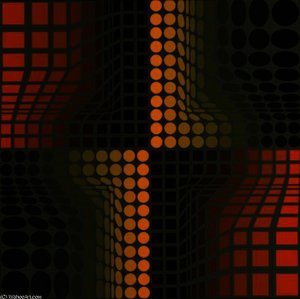
Fig. 1. Wiktór Wasaryli, Torony-Nagy, 1969. Shown as the reproduction you are specifying: , .

§ 1Catalogue data

§ 2Abstract

Opis obiektu

Experience the vibrant optical illusions of Victor Vasarely's 1969 Op Art masterpiece, Torony-Nagy, featuring geometric towers that play with depth and color; discover this modern vision today.

Biografia artysty

Victor Vasarely (1906-1997) – pionier op-art i sztuki kinetycznej. Jego geometryczne abstrakcje, iluzje optyczne i wpływ na współczesny design są niezapomniane.

§ 3Commentary

The Illusion of Structure: Exploring Vasarely's Geometric Vision

To stand before Victor Vasarely’s "Torony-Nagy" is not merely to observe paint on canvas; it is to engage in a sophisticated dialogue with perception itself. This vibrant 1969 composition plunges the viewer into a world governed by pure geometry, where structure becomes both subject and illusion. The piece presents four stylized tower forms arranged in a meticulously balanced square. These are not representations of buildings as we know them, but rather abstract meditations on architectural permanence and visual dynamism. Vasarely, a master cartographer of the eye, uses color and line to construct an environment that seems simultaneously solid and utterly ephemeral.

Mastery of Op Art: Technique and Visual Vibration

The defining characteristic of "Torony-Nagy" is its unwavering commitment to Op Art. This style, which flourished in the mid-20th century, challenges the viewer's assumptions about pictorial space. Vasarely achieves this breathtaking effect through rigorous geometric construction. Notice how the grid-like patterns within each tower appear to recede into an impossible depth, despite the flatness of the surface. The artist employs a bold, contrasting palette—vivid blues against sharp greens, punctuated by warm yellows and reds—all held together by crisp white lines that define every plane. This precise application of color and line creates what art historians call optical vibration; your eye is forced to work overtime, oscillating between recognizing pattern and experiencing the dizzying sense of depth.

A Dialogue with Modernity: Symbolism and Context

Created in 1969, this work sits at a fascinating intersection of post-war modernism and burgeoning technological optimism. The towers themselves can be interpreted as allegories for the skyscraper age—symbols of human ambition, industrial scale, and the relentless march of progress. However, Vasarely resists simple narrative reading. Instead, he invites contemplation on how we perceive reality itself. Are these structures real? Do they exist in physical space or only within the mechanics of our vision? This ambiguity is the core strength of the piece; it speaks to the intellectual currents of the era—the rise of abstract thought and man's increasing reliance on constructed systems.

Bringing Geometric Brilliance Home

For collectors, interior designers, or anyone seeking a focal point imbued with intellectual energy, "Torony-Nagy" offers unparalleled visual impact. Reproducing this piece allows one to incorporate high art that is both visually arresting and conceptually rich into any space. Its bold color blocking means it anchors a room without adhering to traditional decorative motifs. It demands attention while simultaneously inviting quiet study. Owning a reproduction of this work is acquiring not just decoration, but a conversation starter—a testament to the enduring power of abstract thought rendered in breathtaking, vibrant form.

Pytania i odpowiedzi

W jaki sposób tematyka dzieła "Torony-Nagy" odnosi się do typowych motywów twórczości Wiktór Wasaryli?

Powracające motywy w twórczości Wiktór Wasaryli obejmują bauhaus geometric abstraction influence, exploration of visual perception, modernist architectural representation, key op art period work; „Torony-Nagy” koncentruje się na op art, geometric, abstract, towers, pattern, illusion, modernism.

Czy kolory w „Torony-Nagy” – Wiktór Wasaryli są nasycone czy stonowane?

Dzieło „Torony-Nagy” – Wiktór Wasaryli charakteryzuje się Balanced Soft nasyceniem kolorów.

Czy „Torony-Nagy” – Wiktór Wasaryli to portret, pejzaż czy kompozycja kwadratowa?

Dzieło „Torony-Nagy” – Wiktór Wasaryli ma format Square. Format ten określa proporcje kompozycji.

§ 4The artist

Wiktór Wasaryli

Wiktór Wasaryli

1906 - 1997, Chorwacja

Quick facts about Wiktór Wasaryli

  • Artistic Movement Or Style: Op Art, Kinoart
  • Artists Or Movements Influenced By This Artist: ['Projektowanie graficzne']
  • Artists Who Influenced This Artist:
    • Mondrian
    • Malevich
  • Date Of Birth: 9 kwietnia 1906
  • Date Of Death: 15 marca 1997
  • Full Name: Victor Vasarely
  • Nationality: Węgiersko-Francuz
  • Notable Artworks:
    • Blue Study
    • Green Study
  • Place Of Birth: Pécs, Chorwacja

Biografia artysty

A Life Forged in Geometry: The World of Victor Vasarely

Victor Vasarely (węg. Vásárhelyi Győző), (ur. 9 kwietnia 1906, Pecz, Węgry, zm. 15 marca 1997, Paryż, Francja) – artysta węgierskiego pochodzenia, który tworzył i pracował we Francji aż do śmierci. Jeden z czołowych przedstawicieli abstrakcji geometrycznej. Uważany za prekursora i przedstawiciela nurtu op-art. Tworzył poprzez komponowanie układów, wykorzystując geometryczne kształty (najbardziej charakterystyczne są kompozycje w kształcie kostki). Tworzył iluzję przestrzennej głębi na powierzchniach dwuwymiarowych, wykorzystując do tego jedynie abstrakcyjne plamy barwne. Pierwotnie w jego pracach dominowała czarno-biała kolorystyka, którą znacznie urozmaicił w swojej późniejszej działalności. Pierwotnie studiował medycynę, jednak po dwóch latach zmienił kierunek na malarstwo. Vasarely działał w węgierskim oddziale Bauhausu (Muhely) w Budapeszcie pod koniec lat 20. XX wieku. Here, Vasarely absorbed the tenets of functional design and geometric abstraction, seeds that would blossom into his signature style. These formative years weren't simply about acquiring technique; they were about dismantling traditional artistic conventions and embracing a new visual language rooted in logic and precision. From Early Abstraction to the Dawn of Op ArtThe late 1920s and early 1930s witnessed Vasarely’s gradual departure from representational art, as he delved deeper into the realm of geometric abstraction. Works like “Blue Study” and “Green Study,” created in 1929, exemplify this transition – a deliberate shedding of narrative content in favor of pure form and color relationships. While influenced by masters such as Piet Mondrian and Kazimir Malevich, Vasarely wasn’t content to simply emulate their styles. He sought to transcend the static compositions of his predecessors, aiming for a dynamism that would actively engage the viewer's perception. This quest led him to Paris in 1930, where he established himself as a graphic designer and advertising artist, honing his skills while continuing to develop his unique artistic vision. It was during this period that he began experimenting with techniques that would later become hallmarks of Op Art – manipulating shapes and colors to create illusions of movement and depth. The seeds were sown for a revolution in visual experience.

The Systematic Illusion: Defining a Movement

By the 1960s, Victor Vasarely had fully emerged as a leading figure in the burgeoning Op Art movement. Unlike many artists who relied on intuition and spontaneous expression, Vasarely approached his work with a distinctly systematic methodology. He employed grids and mathematical principles to generate patterns that created powerful optical illusions – visual vibrations, swirling effects, and sensations of depth where none physically existed. This wasn’t about trickery; it was about revealing the inherent dynamism within perception itself. He believed in reproducibility and mass appeal, aiming to democratize art by making it accessible beyond the confines of galleries and museums. His work challenged viewers to question their own visual experience, forcing them to actively participate in the creation of meaning. He wasn't merely painting pictures; he was constructing experiences.

Historical Significance

Vasarely’s contribution to art history is multifaceted. He moved beyond traditional painting techniques to create works that actively engage the viewer’s perception. His systematic approach challenged conventional notions of artistic creativity and paved the way for computer-generated art and digital design. By embracing reproducibility and commercial applications, Vasarely blurred the boundaries between fine art and popular culture, leaving an enduring mark on both. He wasn't simply creating aesthetically pleasing objects; he was conducting visual experiments that revealed fundamental truths about how we see the world. His work continues to resonate today, reminding us of the power of abstraction, the beauty of geometry, and the endless possibilities of human creativity.

Influences and Development

Vasarely’s artistic journey began with a medical education in Budapest, but he quickly realized his true passion lay in visual expression. His enrollment at Sándor Bortnyik’s workshop – Műhely – profoundly shaped his early style, exposing him to the principles of functional design and geometric abstraction deeply rooted in the Bauhaus movement. This environment fostered a critical approach to traditional art forms, encouraging him to dismantle established conventions and develop a new visual language based on logic and precision. His time in Paris solidified this shift, as he honed his skills as a graphic designer and advertising artist while continuing to experiment with abstract forms and color relationships. The influence of Piet Mondrian’s reductive style and Kazimir Malevich's Suprematist explorations are evident in Vasarely’s early works, yet he ultimately sought to transcend mere imitation, aiming for a dynamic visual experience that engaged the viewer’s perception directly.

Major Achievements

Vasarely’s legacy extends far beyond his paintings. He pioneered techniques of optical illusion and kinetic art, creating works that challenged our understanding of space and movement. His collaboration with Rosenthal porcelain resulted in the iconic “Suomi” tableware series, demonstrating his ability to integrate artistic principles into everyday objects. Perhaps most remarkably, Vasarely’s work was selected for display aboard the French-Soviet spacecraft Salyut 7 in 1982 – a testament to its universal appeal and groundbreaking nature. His Fondation Vasarely in Aix-en-Provence continues to preserve and promote his extensive body of work, ensuring that his innovative vision endures.

§ 5Comparanda

§ 6Questions

Najważniejsze informacje

  • Year: 1969
  • Artist: Victor Vasarely
  • Subject or theme: Abstract architecture

Quiz o sztuce

Do każdego pytania dotyczy tylko jedna poprawna odpowiedź.

Pytanie 1:
What artistic movement is most evident in Victor Vasarely's 'Torony-Nagy'?
Pytanie 2:
What is the primary visual effect that characterizes 'Torony-Nagy'?
Pytanie 3:
In what year was the artwork 'Torony-Nagy' created?
Pytanie 4:
The subject matter of the towers in 'Torony-Nagy' is best described as:
Pytanie 5:
Which element contributes to the illusion of depth in the composition?

§ 7Cite this entry

AllPaintingsStore.com, “Wiktór Wasaryli, Torony-Nagy (1969)”, https://allpaintingsstore.com/pl/art/victor-vasarely-torony-nagy-D2DRBL-en/ArtistReproduction/ (accessed 3 Październik 2026).

§ 8The reproduction

Ręcznie malowana reprodukcja olejowa

Ręcznie malowany obraz olejny na płótnie, wykonany na zamówienie przez naszych artystów w wybranym przez Ciebie wymiarze i oprawie. ( Przełącz na wydania drukowane Przejdź do wersji cyfrowej)

It is specified on the order sheet in the margin; the present state of that sheet reads as follows.

Torony-Nagy

Technika reprodukcji

Wymiary reprodukcji

-

Wybitny mistrz artystyczny

Większa szczegółowość, finezja i dodatkowy czas na realizację

-

Opcje oprawy reprodukcji

-

-

W przypadku dzieł sztuki lub reprodukcji, których którykolwiek z boków przekracza 105 cm (około 41 cali), rama zostanie wysłana w formie zestawu do samodzielnego montażu. Metoda ta zapewnia bezpieczną dostawę i zapobiega uszkodzeniom podczas transportu.

Wymagany profesjonalny montaż – nie jest to produkt typu DIY.
Zestaw musi zostać złożony, a płótno naciągnięte przez doświadczonego profesjonalnego ramiarza, przy użyciu kleju do drewna (brak w zestawie), kleszczy do naciągania płótna oraz ścisków, które utrzymają krosna w równej pozycji podczas schnięcia kleju. Nieprawidłowy montaż lub nierównomierne napięcie płótna może trwale uszkodzić dzieło sztuki i nie podlega naszej gwarancji.

  • W zestawie znajdują się wszystkie listwy z litego drewna, precyzyjnie docięte do wymiarów.

  • Montaż odbywa się przy użyciu dołączonych wkrętów oraz kleju do drewna do łączenia narożników, którego zestaw nie zawiera i który musi zostać dostarczony przez ramiarza.

  • Wymagane są profesjonalne narzędzia, których nie ma w zestawie: kleszcze do naciągania płótna (napinacz) oraz zaciski, które pozwolą utrzymać listwy w równej pozycji podczas schnięcia kleju.

Ważne:
Do połączenia narożników niezbędny jest klej do drewna, listwy należy unieruchomić za pomocą ścisków do momentu całkowitego wyschnięcia kleju, a naciągnięcie płótna na złożoną ramę wymaga użycia kleszczy do naciągania płótna. Żaden z tych elementów nie jest dołączony do zestawu. Przed zamówieniem tego rozmiaru zalecamy konsultację z doświadczonym ramiarzem.

Etykieta obiektu

-

-

Lakier ochronny

Lakier z połyskiem (pogłębia kolory, chroni przed światłem i wilgocią)

-

Personalizacja dzieła

Przykłady możliwości personalizacji: zastąp twarz zdjęciem klienta; dodaj zwierzę domowe (np. zamień kota na psa); umieść ukrytą wiadomość w tle; zmień krajobraz lub elementy tła.

-

Ekspresowa

Dostawa na cały świat () w ciągu 3–4 tygodni zamiast standardowych 5 tygodni. (31 Październik). Bez kompromisów w kwestii jakości.

-

Przesyłka ekspresowa

Dostawa na cały świat () w ciągu 5 tygodni. (7 Listopad).

W cenie

Cena całkowita

zł 1003

Included with every order

  • Bezpłatna ekspresowa wysyłka na cały świat
  • Wysokiej jakości płótno lniane
  • Pełne ubezpieczenie przesyłki
  • Gwarancja zwrotu należności celnych i podatków importowych
  • Gwarancja wiernego odwzorowania kolorów
  • 100-dniowa polityka zwrotów (tylko w przypadku wad)
  • Gwarancja 100% zwrotu pieniędzy
  • Zniżka przy zakupie wielu sztuk
Order sheet